Hindupedia, the Hindu Encyclopedia, is devoted to educating the public about all aspects of Hinduism ranging from history and philosophy to current events that
The latest skeletal evidence places anatomically modern humans on Earth somewhere between 180,000 and 200,000 years ago. That is approximately 7,000 generations of people biologically identical to us - with the same brains, the same cognitive capacity, and presumably the same drive to organise, build, and innovate.
And yet, by the conventional account, civilisation only appeared in the last few hundred generations. The question Randall Carlson raises is not rhetorical. It is one of the most uncomfortable in all of science. How is it that across all those long generations, nothing we would recognise as civilisation took root and flourished?
The most parsimonious answer, Randall argues, may not be that civilisation simply hadn't started yet. It may be that it had - and that what we are living in now is not the origin of human civilisation, but its reboot.
A Hindu boy in Mussoorie started singing the Hanuman Chalisa by the roadside - no stage, no big setup, just a mic and a guitar.
He sang so beautifully and melodiously that his voice made people stop and listen. Gradually, a crowd gathered, and many joined him in singing the Hanuman Chalisa together.
The entire atmosphere turned devotional and spiritually uplifting.
Our new generation is truly unapologetic and deeply rooted in their faith.
Hats off to the young man.
8 minutes that will truly touch your soul - watch it completely. ❤️🚩
Sarvam’s 105B model (and its smaller 2B sibling, Sarvam-1) solved a problem that global giants like OpenAI & DeepSeek ignored: the Tokenization Tax.
In most AI models, an Indian word like Namaste takes 4-8 tokens to process, while an English word takes only 1.4 & this makes AI 4x more expensive for us.
Sarvam built a custom tokenizer from the ground up that brought Indian language fertility down to 1.4 tokens/word, matching English for the first time in history. This is how 40 people outperformed others in local efficiency :)
THE LIE THEY REPEAT:
The British saved Hindu women from burning in fire.
THE REALITY:
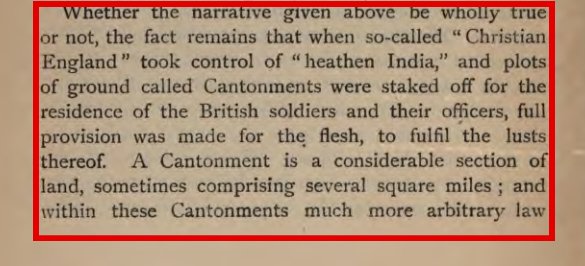
1. The British were running prostitution rackets, kidnapping Hindu women & prostituting them to their soldiers. Widows without their husband's protection were their major target which was forcing widows to immolate themselves to save themselves from that gruesome fate.
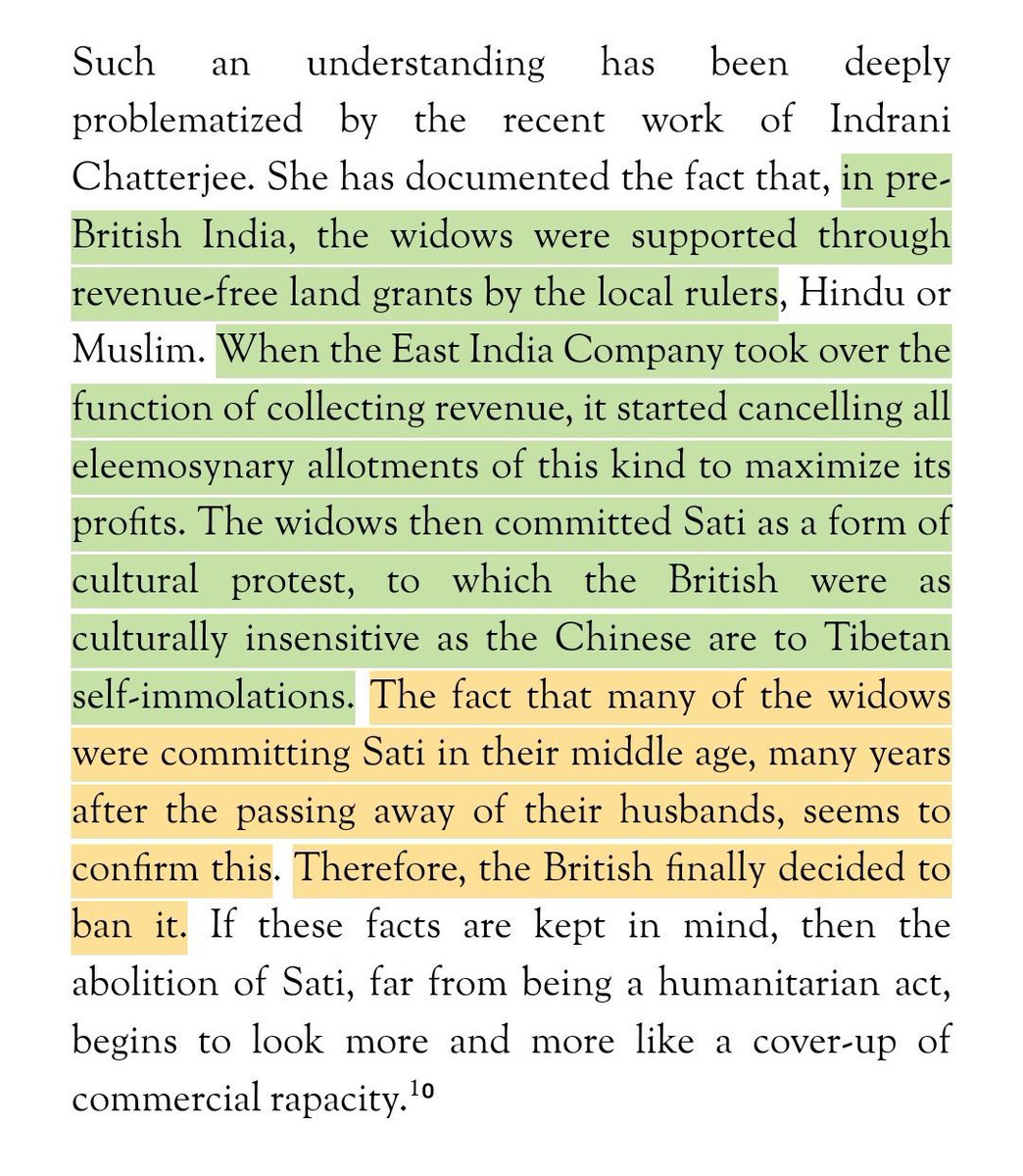
2. The British abolished the Hindu practice of grants being given to widows to fill up their own treasury.
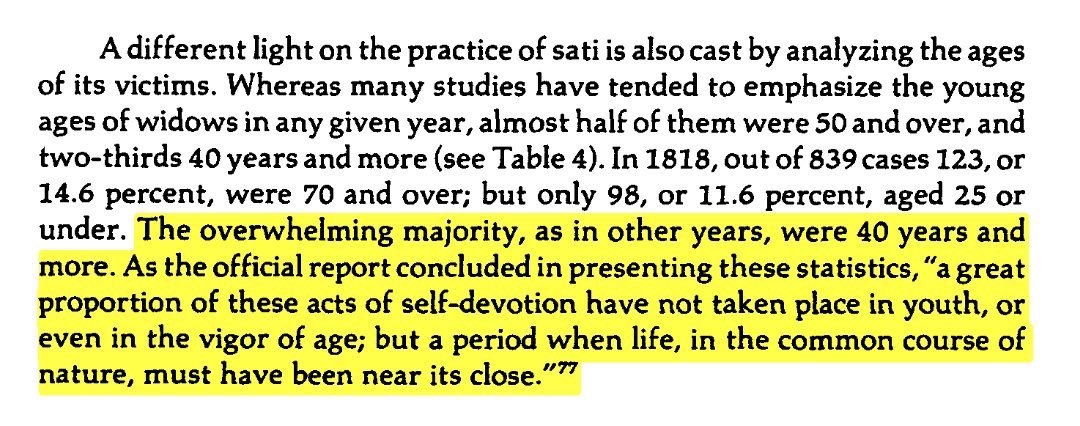
Women unable to sustain after their husbands death were committing Sati
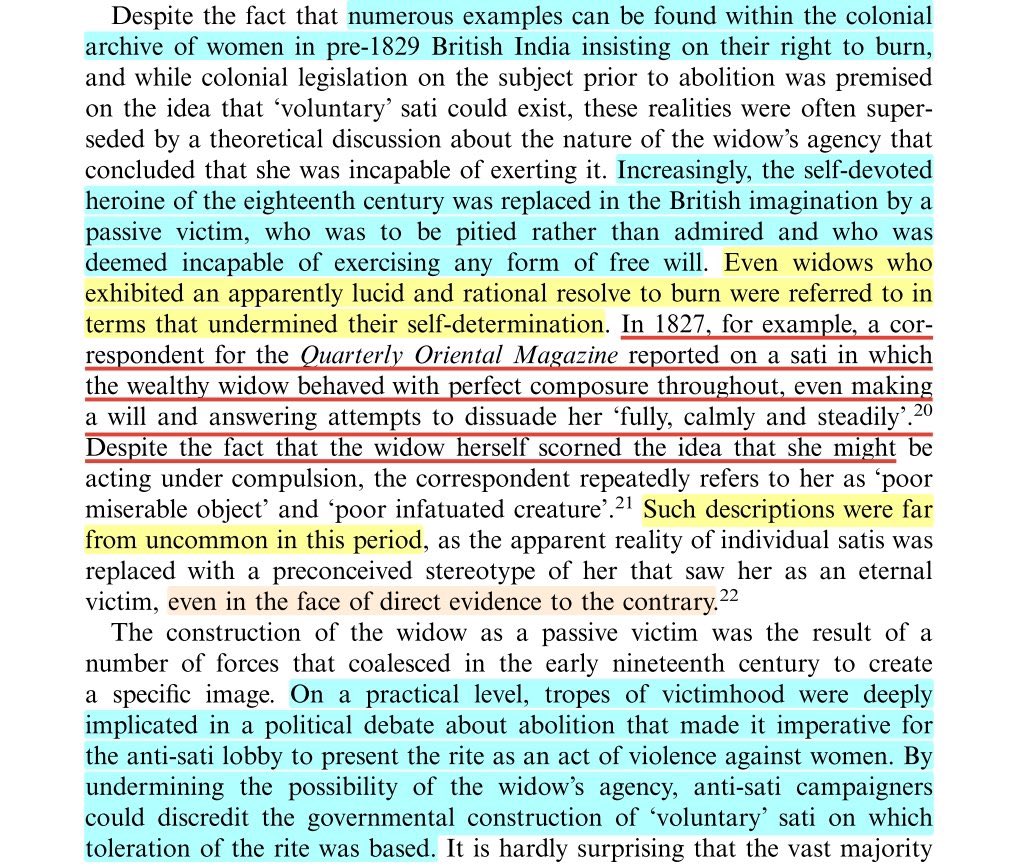
3. British banned Sati not to save them but to not lose their escort base. This is why when British banned Sati, numerous women actually protested the ban & their right to Sati.
4. Additionally many school going girls were also there target for prostitution racket forcing girls to be homschooled & drop of girls in schools.
This white man saviour syndrome when they were the perpetrators themselves is so nauseous.
Please share this post so that more people know the truth buried under colonial propaganda.
My 12 yr old has been asked to write an apology letter and make a kindness poster for his Religion teacher in his school.
And we couldn't be more proud of him.
Yesterday, in his Religion class in Ireland, my son's teacher was explaining sacred symbols in Hinduism and added that Hitler took the Swastika from Hinduism and used it as a base to perform the horrific crimes. (This was no where written in the book, but she added this detail by herself.)
To this, my son raised his hand and pointed out that the symbol used by Hitler was not Swastika (He forgot its actual name, Hakenkreuz). He mentioned that the symbol Hitler took was originally taken by Christian churches itself and not only from Hinduism. His obsession with the Aryan Race theory originating from India and Hindus made him use the Swastika.
Another boy in the class cut him and said that, "Come off it, it's the same thing, just 45 ° tilted."
To that my son replied (our hearts just swell in pride at this) - "Your cross ✝️ is a holy cross, but when its upside down, its called a Devil's cross not Holy cross. So, this symbol tilted at 45° cannot be called Swastika."
At this, my son was yelled at, and I quote his teacher- "Shut up Arjun, how dare you say that?!"
Things escalated from one thing to another, she complained to the teacher incharge and also cried.
He said that she heard her say that He was blasphemous in a school run by the church.
Well, the school administrators were kind, and they accepted his apology today. Ireland has the best teaching staff one could hope for. Extremely patient, accommodating, accepting and welcoming. I can understand the teacher just couldn't expect that at that moment.
But he still has to submit the apology letter on Monday. Which he will, and we will make sure the apology letter has some history lesson on how Sir Alan Bullock, a British Historian and the most Influential Biographer of Hitler made this misconception quite common in the world.
He is the only Hindu in his class, and we are proud he has an extremely strong opinion.
His next chapter has the explanation of Natraj!
We are looking forward to it.
An art form born in the deserts of Gujarat and Rajasthan to fight heat and reflect light at night 🪔
Lippan art is a traditional mural craft from Kutch, made using natural clay and mirrors to create textured, reflective surfaces.
Crafted with natural materials, its raised patterns helped reflect heat and keep desert homes cool. In a time before electricity, the mirrors also reflected and spread the light from candles and oil lamps, gently brightening the home at night.
Lippan art was used both inside and outside the home. While there is no evidence that it was created to deter animals, the reflective surfaces on exterior walls may have incidentally unsettled wildlife.
Once a practical response to desert living, Lippan art today stands as a balance of sustainability, heritage and handcrafted tradition.
An Indian fungus that eats pollution? 🌿
Ajith Kumar Parab didn’t build a machine — he worked with life itself.
Inspired by ancient wisdom and tested in Pune’s polluted Ram Nadi, Kalki is a fungus-based culture that turns toxic air, water, and soil into nutrients for the earth.
Today, hundreds of farmers use it to grow chemical-free food.
Would you try it? Tell us what you think.
#Sustainability #IndianInnovations #CleanEnvironment #EcoSolutions #GreenIndia
[Air Pollution Solution, Eco Friendly Innovation, Sustainable Farming India, Natural Pollution Control, Environmental Solutions India]
Decolonise? 🤪😜🤣
The shape of time
In the 19th century, the linear idea of time became dominant – with profound implications for how we experience the world
https://t.co/zjQkExWZBP
For decades, they said Kerala lost its soul.
Tonight, the soul answered back. 🪔
🪔 Nila Aarati at Kerala Kumbh Mela🔥🔥
On the sacred banks of Bharathapuzha,
faith rises, lamps glow, and Sanatana breathes again.What was once tried to be erased is now returning with divine force and pride.
This is Kerala remembering its soul. 🕉️🔥
Indian Jewellery and Its Proven Scientific Health Benefits
For a long time, Western science dismissed Indian jewellery traditions as superstition or symbolism, reducing them to aesthetics while ignoring their functional intelligence. Colonial scholarship actively undermined indigenous knowledge systems, presenting applied science as “belief”. Ironically, modern research has since validated many of the principles that were once rejected. What Indian civilisation understood through observation, Ayurveda, metallurgy and lived experience is now being re-explained through physiology, neurology, materials science and biomedicine.
Indian jewellery was never created merely to decorate the body. It functioned as a wearable health system, carefully integrating metal science, thermoregulation, nerve stimulation, hormonal balance and psychological wellbeing. The fact that Western science is only now recognising these effects does not diminish the sophistication of the original knowledge.
Gold, for example, is biologically inert, non-reactive and an excellent conductor of heat and energy. These qualities explain why modern medicine uses gold in implants, dentistry and even cancer treatment. In Indian tradition, gold, or Swarna, was associated with vitality, immunity and longevity. When worn near pulse points such as the neck, ears and wrists, it helps regulate body temperature and support circulation, aligning directly with its proven physical properties.
Silver’s antimicrobial and anti-inflammatory qualities are now beyond dispute, widely used in hospitals, wound dressings and water purification. Traditionally, silver was worn on the lower body in the form of anklets, toe rings and waist chains because it is cooling and grounding. This was particularly important in hot climates and for women, whose bodies experience cyclical hormonal and thermal changes. Modern science now acknowledges silver’s ability to dissipate heat and inhibit bacterial growth.
Copper and traditional alloys such as Panchaloha were also used deliberately. Copper plays a crucial role in nerve function, iron metabolism and immune health. Today, copper bracelets are sold globally for joint pain and inflammation, a rediscovery of what Indian communities practised for centuries. Trace mineral absorption through skin contact and sweat is a documented dermatological process, not folklore.
The placement of jewellery on the body was equally intentional. Earrings stimulate nerve endings in the ear that are connected to the brain and sensory organs, a principle mirrored today in auricular acupuncture. Nose rings, particularly worn on the left nostril, correspond to the parasympathetic nervous system and female reproductive health, a connection recognised in both Ayurveda and modern neurophysiology.
Neck ornaments and the Mangalsutra rest near the thyroid and thymus glands, which regulate metabolism and immunity. Traditional Mangalsutras often incorporated black beads believed to absorb negative influences; scientifically, they reduce static charge and provide constant tactile stimulation, supporting circulation in the cervical region.
Bangles were designed to be loose rather than rigid, allowing continuous contact and gentle impact against the wrist. This stimulates nerve endings, improves blood flow and prevents stagnation in the hands and joints. Toe rings, worn on the second toe, apply gentle pressure to nerves connected to the uterus and heart, helping regulate menstrual and reproductive health. Anklets stimulate lymphatic flow and enhance balance while walking. Waist chains support posture, digestion and core awareness by providing constant sensory feedback that encourages spinal alignment.
Beyond physical health, Indian jewellery also supports psychological wellbeing. Adornment linked to identity, lineage and life stages strengthens emotional stability and self-worth. Modern psychology recognises that symbolic wear improves confidence, emotional regulation and cognitive grounding. What was dismissed as ritual is now understood as somatic and psychological reinforcement.
Today, many of these principles are repackaged as wellness technology, biohacking or somatic therapy. Yet Indian civilisation embedded them effortlessly into everyday life thousands of years ago. Indian jewellery represents functional design rooted in empirical observation, not superstition.
Indian jewellery stands as clear evidence of an advanced indigenous health science that Western systems once dismissed and are now slowly validating. The failure was never in the tradition, but in the refusal to recognise non-Western knowledge as science. When examined without colonial bias, Indian jewellery reveals itself for what it always was: applied health science worn on the body.
माघ मास का आगमन भारतीय चेतना में केवल ऋतु-परिवर्तन नहीं है; यह अन्तःकरण के परिष्कार का ऋ��ु-उत्सव है। गंगा-यमुना के पावन तटों पर सजा माघ मेला हमारे राष्ट्र-जीवन की उस धड़कन का नाम है, जहाँ धर्म केवल मात्र ��ूजा-पाठ ही नहीं रहता, वह संस्कार, अनुशासन, करुणा और सामूहिक आत्मजागरण बनकर प्रवाहित होने लगता है। यह मेला मानो कहता है कि मनुष्य के भीतर जो देवत्व सुप्त है, उसे जगाने के लिए प्रकृति, तीर्थ और परम्परा स्वयं एक महाविद्यालय बन जाते हैं।
माघ मेला भारतीय संस्कृति का चलता-फिरता इतिहास है। यहाँ शास्त्रों की सूक्तियाँ केवल ग्रन्थों में ही नहीं रहतीं वे आचरण में उतरती दिखाई देती हैं। प्रातःकाल का ���्नान, संध्या का दीपदान, सत्संग की दिव्यता, भजन की रसधारा, साधु-संतों का सान्निध्य; ये सब मिलकर एक ऐसी सांस्कृतिक धारा रचते हैं, जिसमें व्यक्ति अपनी जड़ों से जुड़ता है और समा�� अपनी आत्मा पहचानता है।
यहाँ तीर्थ-तट “भूगोल” नहीं रह जाता वह धर्म-भूगोल बन जाता है; जहाँ हर कदम पर स्मरण होता है कि जीवन का लक्ष्य केवल सुविधा नहीं, सद्गुण है; केवल संग्रह नहीं, समर्पण है।
माघ मेला सामाजिक जीवन का वह दुर्लभ क्षण है, जहाँ धनी-निर्धन, ग्राम-नगर, विद्वान-सरल: सब एक ही तट पर, एक ही भावना में खड़े दिखाई देते हैं। यहाँ दान किसी प्रदर्शन का नाम नहीं, बल्कि मानवता की भाषा है।
अन्नदान, वस���त्रदान, कम्बलदान, औषधदान ये सब दान नहीं, सामाजिक मर्यादा हैं; क्योंकि भारतीय परम्परा जानती है कि किसी भूखे को रोटी देना केवल परोपकार नहीं, वह ईश्वर-पूजन है; किसी पीड़ित को सहारा देना केवल सहायता नहीं, वह धर्म का प्राण है।
माघ मेला हमें यह भी सिखाता है कि समाज तब सशक्त होता है जब उसमें सेवा का संस्कार और समरसता की दृष्टि जागृत रहती है।
माघ की शीतल प्रातःवेला में तीर्थ-स्नान का दृश्य केवल एक परम्परा नहीं; यह आत्मशुद्धि का प्रतीक है। जल शरीर की मलिनता हरता है, पर नाम-स्मरण मन की मलिनता हरता है; और विवेक भीतर की अज्ञान-घनीभूतता को काटता है।
यही कारण है कि माघ मेला शास्त्र-समर्थित साधना का अवसर बनकर आता है; नियम, संयम, जप, ध्यान, सत्संग, स्वाध्याय इन सबका समवेत रूप। यह मेला व्यक्ति को स्मरण कराता है कि जीवन की वास्तविक उन्नति बाह्य उपलब्धिय��ं से नहीं, अन्तःकरण की निर्मलता से है।
मौनी अमावस्या माघ-परम्परा का शिखर है क्योंकि यह दिन हमें “बोलने” से अधिक “होने” का अभ्यास कराता है। अमावस्या की रात्रि में बाह्य प्रकाश घटता है, ताकि साधक भीतर का दीपक देख सके।
“मौन” केवल वाणी का विराम नहीं; यह मन का अनुशासन, इन्द्रियों का संयम, और अहंकार की शिथिलता है। मौन में शब्द थमते हैं तो भीतर की ��र्जा बिखरने के स्थान पर एकाग्र होने लगती है। मौन में क्रोध का ताप शान्त होता है, वासनाओं का उफान धीमा पड़ता है, और आत्मचिन्तन की धारा गहरी होने लगती है। इस दिन का संदेश अत्यन्त सरल, पर अत्यन्त गहन है- कम बोलो, अधिक सुनो; कम चाहो, अधिक जपो; कम दिखाओ, अधिक करो ।
आज जब जीवन की गति तेज है और मन बिखराव से थका हुआ, तब माघ मेला और मौनी अमावस्या हमें भीतर लौटने का मार्ग देते हैं। यह पर्व-परम्परा आधुनिक समाज ���ो भी वही शाश्वत सूत्र देती है ।
माघ मेला बताता है कि तीर्थ वही नहीं जहाँ नदियाँ मिलती हैं; तीर्थ वह भी है जहाँ मन निर्मल होता है। और मौनी अमावस्या यह सिखाती है कि सबसे बड़ा स्नान जल में नहीं, अहंकार के त्याग में है; सबसे बड़ा दान धन का नहीं, करुणा का है; और सबसे बड़ी पूजा बाह्य कर्मकाण्ड नहीं, अन्तःकरण की जागृति है।
गंगा-तट की यह परम्परा हमें आमंत्रित करती है कि “चलो, कुछ क्षण के लिए कोलाहल से बा��र निकल��ं; मौन के आश्रय में आत्मा का स्वर सुनें और पारमार्थिक प्रवृत्तियों में संलग्न हों !
@narendramodi @AmitShah @myogiadityanath
#MaghMela2026 #नमामी_गंगे #हर_हर_गंगे #तीर्थराज_प्रयाग #AvdheshanandG_Quotes
Today, according to the English calendar, the New Year is being celebrated. I know that many of you will celebrate it as your New Year—and there is nothing wrong in that.
But keep one thing in mind: a year does not truly become new just because a calendar page changes. On this day, seasons do not change, nature does not alter its rhythm, and the Earth does not signal new life. Our Hindu New Year—Gudi Padwa, Ugadi—is special because it moves in harmony with nature.
It begins when spring arrives, when new buds bloom on trees, when fields prepare for a fresh harvest, and when the Sun changes its course. That is when a true New Year begins.
Therefore, the Hindu New Year is not just a date—it is the beginning of a new cycle of life. Celebrate, rejoice, but never forget: the true New Year comes with nature, not with the calendar.
Radhe Radhe
Butter & ghee lie hidden in milk — just as quantum reality hides infinite states in one field.
The unseen becomes seen when churned by awareness…
Shubh Ratri 🙏🏽