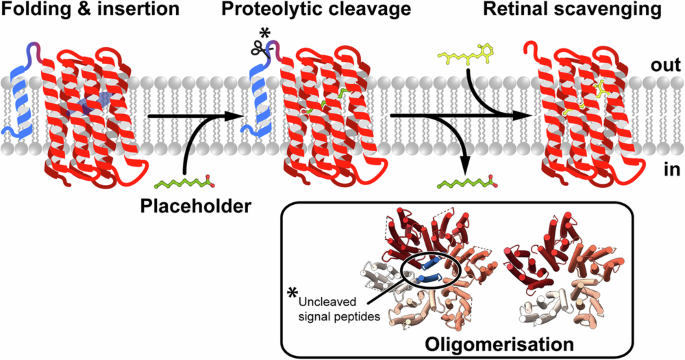
Researchers @hirschi_stephan, @LemminThomas and collaborators from @IBMM_UniBE propose a role for decanoate in retinal incorporation into microbial rhodopisn
https://t.co/yfkb5hZlgz
If you have ever wondered why proteorhodopsin can form pentamers and hexamers, and how the retinal cofactor is incorporated, or if you just like cryo-EM and pretty protein pictures, this is for you. Check out my latest paper in Nature Communications! https://t.co/jBhvA3w74P
@OliBClarke Congratulations on the nice work! The high dose is interesting, did you try higher mag alone? Also, did you have to throw away more fractions this way?
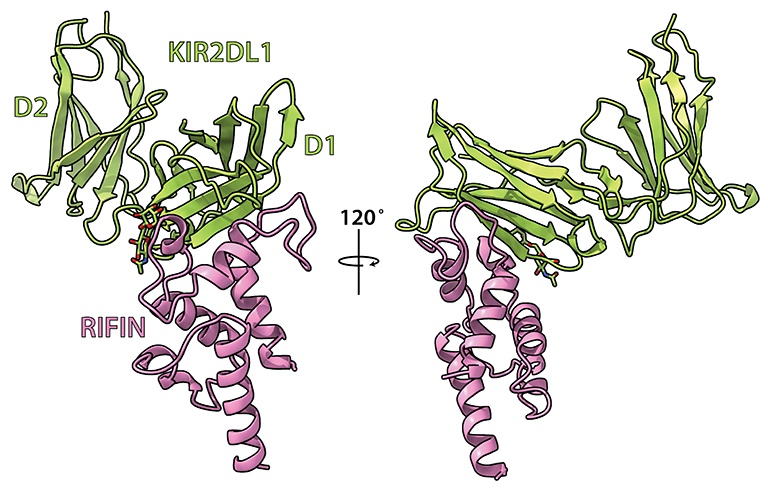
Our latest preprint reveals an amazing evolutionary battle between malaria parasite and human. The parasite evolved RIFINs to bind to inhibitory KIR receptors and suppress immune cell function while humans evolved activating KIR receptors to bind these RIFINs to kill parasites!
Over the moon to share that this has now been published in @Nature! Congrats to everyone involved! Check it out here - https://t.co/QlxblnVV6Z
Or watch us chat about it here - https://t.co/GVz8H07vgq
Over the moon to share that this has now been published in @Nature! Congrats to everyone involved! Check it out here - https://t.co/QlxblnVV6Z
Or watch us chat about it here - https://t.co/GVz8H07vgq
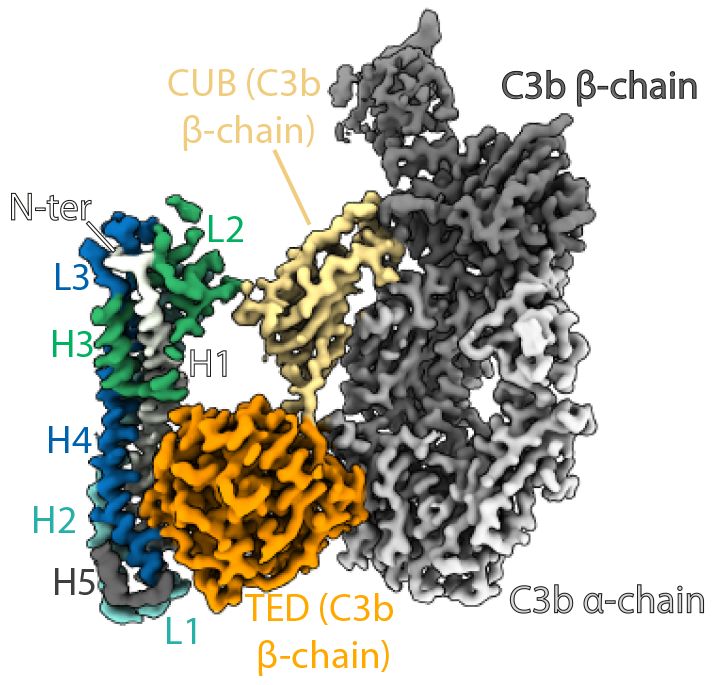
We have a new pre-print! The cryoEM structure of the trypanosome C3b receptor, ISG65 bound to C3b and what we learn about how these cunning parasites evade complement-mediated killing when they infect us. All done by @BiochemCook in collaboration with Mark Carrington
We have a new pre-print! The cryoEM structure of the trypanosome C3b receptor, ISG65 bound to C3b and what we learn about how these cunning parasites evade complement-mediated killing when they infect us. All done by @BiochemCook in collaboration with Mark Carrington
Finally out!
Please have a look at our cryo-EM structure of the canine distemper virus (CDV) attachment glycoprotein (H protein). Amazing architecture of this morbillivirus ectodomain.
https://t.co/XiZeBw3FIQ
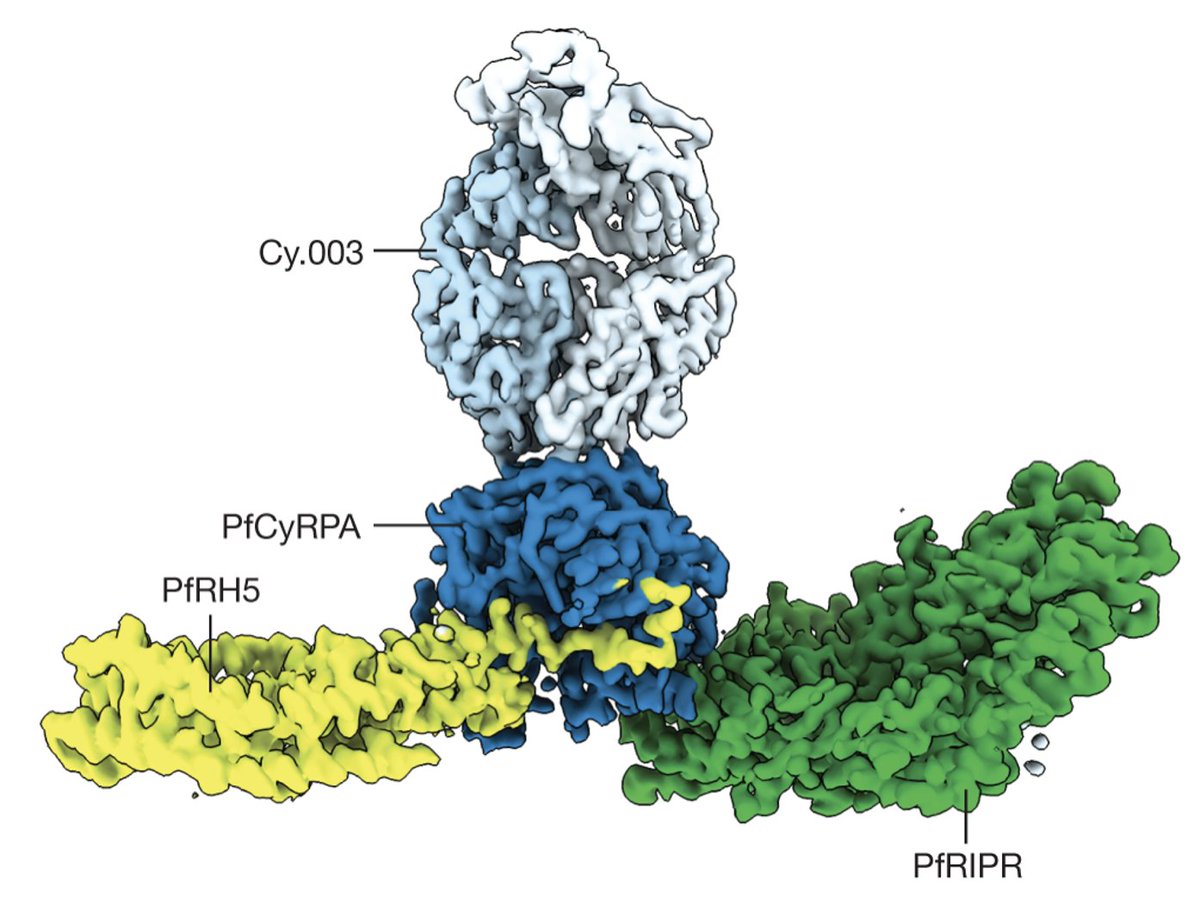
Delighted to share our latest work, led by @brendanfarrell. The PfRCR complex is essential for the most deadly malaria parasite to get inside red blood cells. We show what it looks like and make new discoveries about how it works.
https://t.co/Pk7p4vZkqu
Delighted to share our latest work, led by @brendanfarrell. The PfRCR complex is essential for the most deadly malaria parasite to get inside red blood cells. We show what it looks like and make new discoveries about how it works.
https://t.co/Pk7p4vZkqu