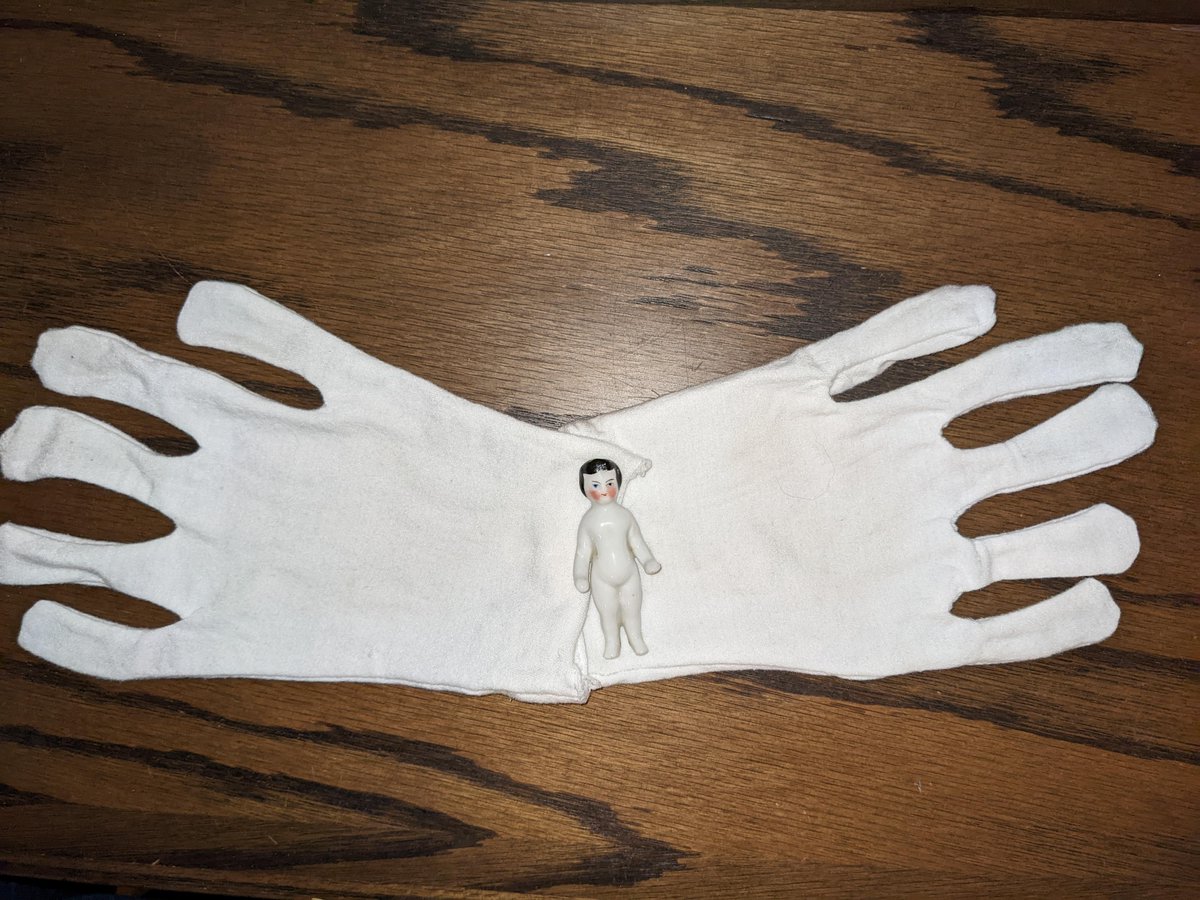
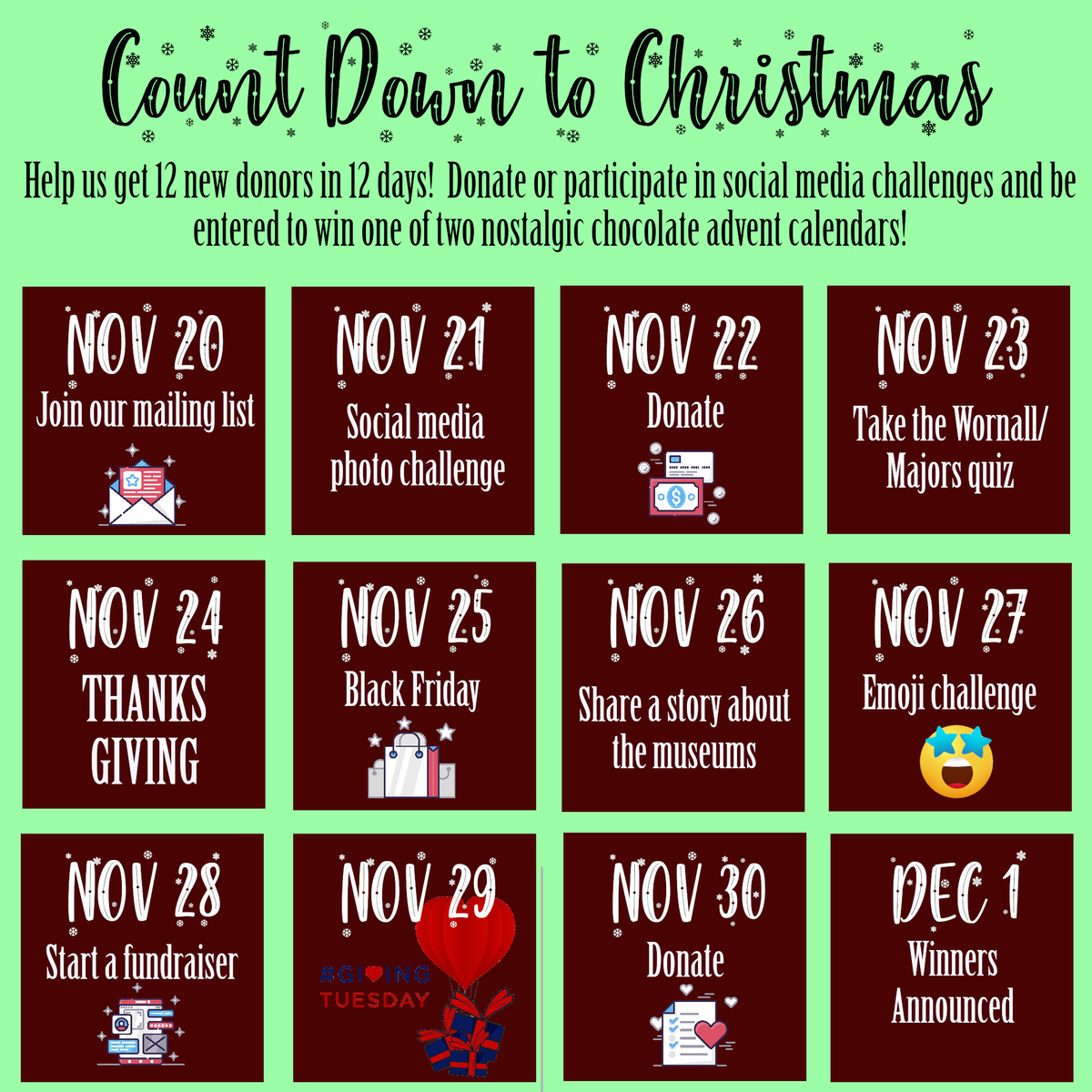
Every time you donate, a curator gets a white glove! Would you consider starting a Facebook fundraising campaign (https://t.co/dlMmxCYtid) or donating at https://t.co/wWt1PtHjpi to help us gain 12 new donors in 12 days?
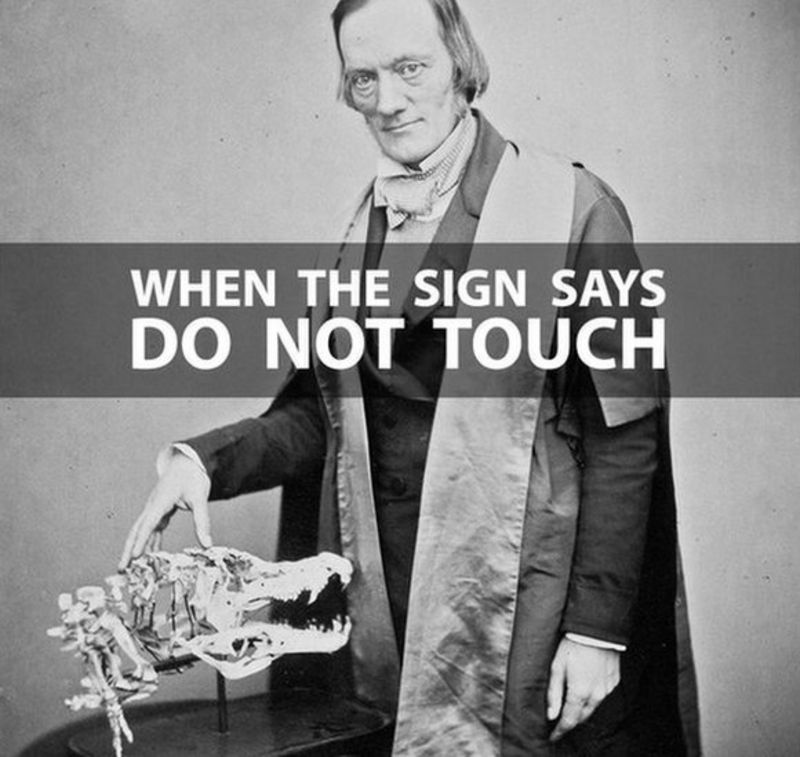
Today's #CountdowntoChristmas is a fun one! Share a gif, meme, or emoji that makes you think of Wornall/Majors and be entered into our drawing! We'll go first. h/t to @NHM_London
How has Wornall/Majors been a part of your life? Share your story by replying or tweeting us @historyaliveKC and be entered into our #CountdowntoChristmas drawing for a chocolate advent calendar!
It’s #BlackFriday! Purchase a gift membership today at https://t.co/XLuFvWD2l3 and we’ll mail you a giftable package that includes a membership certificate, chocolate bar, coaster, and Christmas card, so you’ll have something great to wrap and place under the tree.
Happy #Thanksgiving! We have a lot to be thankful for this year, but we especially want to highlight our volunteers! Our volunteer group is an extremely talented group of people who donate their valuable time to us in a huge variety of ways.
Test your knowledge of the Wornall & Majors Houses with this quick 10 question quiz! Participants will be entered into our #CountdowntoChristmas drawing. Take the quiz at https://t.co/z77lk4Nqyf.
Help us achieve our goal of 12 new donors in 12 days by donating at https://t.co/wWt1PtHjpi.
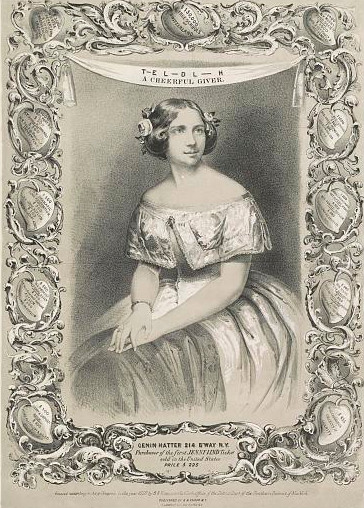
Pictured: Jenny Lind, 19th century opera singer and philanthropist (Courtesy @librarycongress)
#CountdowntoChristmas with us! For the next 12 days, we'll be posting challenges with a goal of gaining 12 new donors in 12 days. Join our mailing list at https://t.co/FTGWSXjDOX for one entry to win an advent calendar!
Many thanks to State Representative @Patty4MO Patty Lewis (MO, 25th District) for gifting us with a flag that was flown over the Missouri State Capitol. It now has a home flying over the Wornall House.
5. The funeral industry began developing and professionalizing at the end of the Civil War. This allowed funerals to become more elaborate and expensive over the rest of the 19th century. The development of life insurance at the same time helped to make death a financial event.
4. People used death and funeral sermons to give directions to the living, this could be anything from calls to model good behavior or instructions not to remarry. The deathbed could be a good opportunity for women to speak their minds to an audience.
3. Women tended to take on most of the display of mourning. Across class and region, women tended to wear clothes to indicate deep mourning for ~3 months, then a second mourning for 3 more. Men wore arm bands, but not for nearly as long.
2. After death, bodies were shrouded and many families chose to hold wakes. Funeral services usually included a sermon, a liturgy, a burial, and a meal. The familiar pattern helped to comfort the living and to manage their grief.
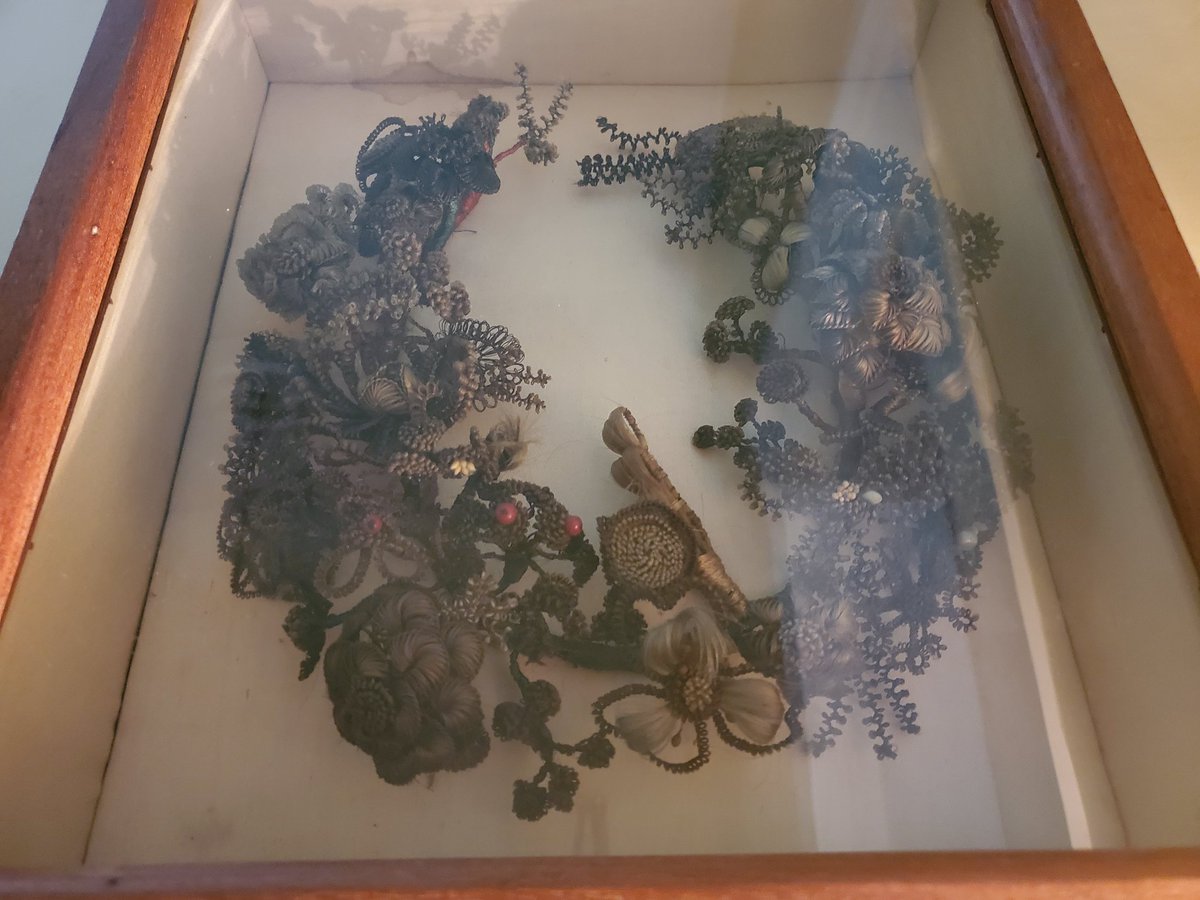
1. Before the Civil War, people tended to die and be buried at their homes. Funerals were meant to not only commemorate the dead but also to comfort the living. One way the living comforted themselves was by producing funeral goods like mourning jewelry and hair art.
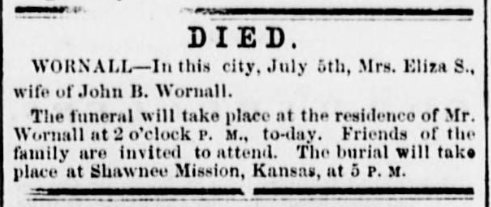
Today is the 157th anniversary of Eliza S.J. Wornall's funeral so we're going to learn all about Victorian funerals and mourning!
Eliza died in 1865 due to complications from childbirth after the birth of her son, T.J. Birth practices, like funeral practices, have changed a lot.
Details: These bottles represent an important part of Civil War history - the medicine! The Civil War was a testing ground for improving medical care through institutions like the Red Cross and doctors had access to important drugs like quinine and iodine as well as anesthetics.
Behind the scenes: Check out this detail from the Wornall House's Strangers Rooms! Here you can see a printed pattern of pineapples along the top of the wall. Pineapples were a symbol of hospitality, making them the perfect decor for visitors.
Get excited! The first ever Wornall/Majors Institute is coming soon to computers near you. The first session will be released July 1 and covers Mental Health in the 19th century! Visit the link to sign up: https://t.co/YFlK8DhGMg
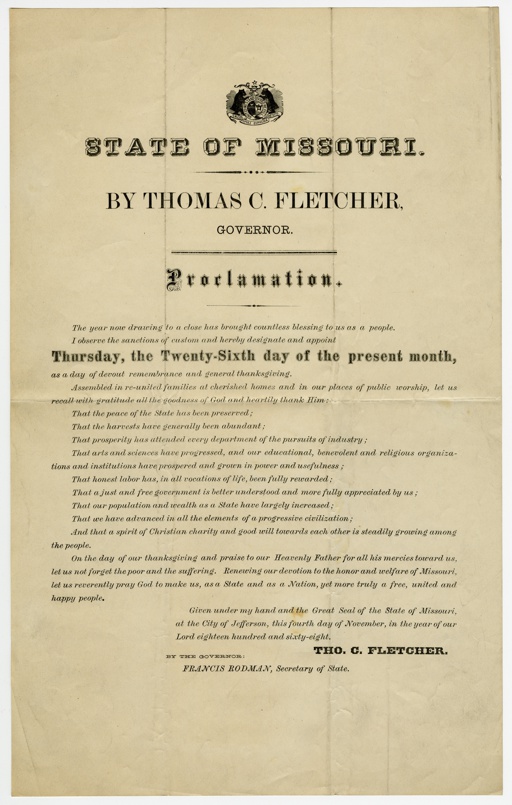
Did you know that Thanksgiving was first celebrated nationally in 1863? It became a federal holiday in 1870.
Pictured: A Proclamation designating November 26 as Thanksgiving in 1868. Courtesy of the @SHSofMo (Check out their great online archives!)