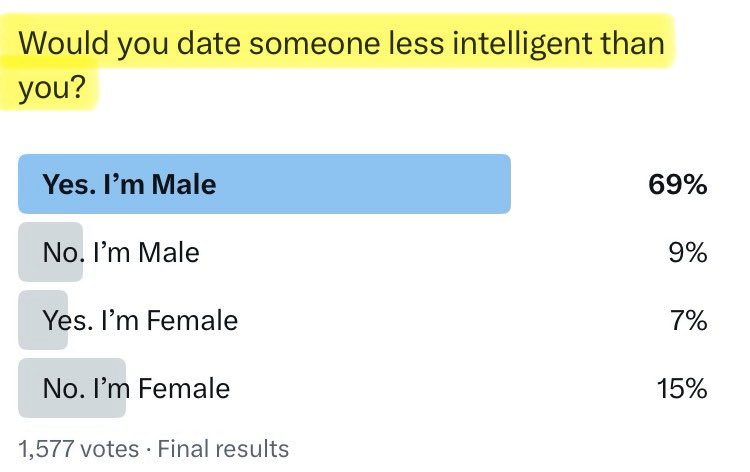
Women rate higher IQ men as more attractive for both short term and long term relationships.
In a 2009 study, women watched videos of men performing verbal and physical tasks. Higher IQs (WAIS scores) and higher creativity both independently predicted greater mate appeal for both short and long term partner prospects. No menstrual cycle effects were found.
This was one of the earliest studies linking objective IQ (WAIS scores) to women’s mate ratings.
These results replicate a well known sex difference in mate selection.
Women tend to prefer a partner with equal or higher intelligence. Men are more flexible, and sometimes actively avoid more intelligent partners.
Why the difference? It’s likely rooted in parental investment. Women have a higher reproductive cost and value traits that signal a man’s ability to provide resources and pass on good genes.
Women rate higher IQ men as more attractive for both short term and long term relationships.
In a 2009 study, women watched videos of men performing verbal and physical tasks. Higher IQs (WAIS scores) and higher creativity both independently predicted greater mate appeal for both short and long term partner prospects. No menstrual cycle effects were found.
This was one of the earliest studies linking objective IQ (WAIS scores) to women’s mate ratings.
@therapy_bites You look 300 IQ my friend. The objective intelligence part refers to the participants actual IQ scores as they were given the WAIS which was then correlated with female preference.
These results replicate a well known sex difference in mate selection.
Women tend to prefer a partner with equal or higher intelligence. Men are more flexible, and sometimes actively avoid more intelligent partners.
Why the difference? It’s likely rooted in parental investment. Women have a higher reproductive cost and value traits that signal a man’s ability to provide resources and pass on good genes.
@VigilantFox Most of the money is wasted. Schools don’t explain performance. It’s mostly down to the students abilities.
“only about 10% of school achievement can be attributed to schools and teachers while the remaining 90% is due to characteristics associated with students.”