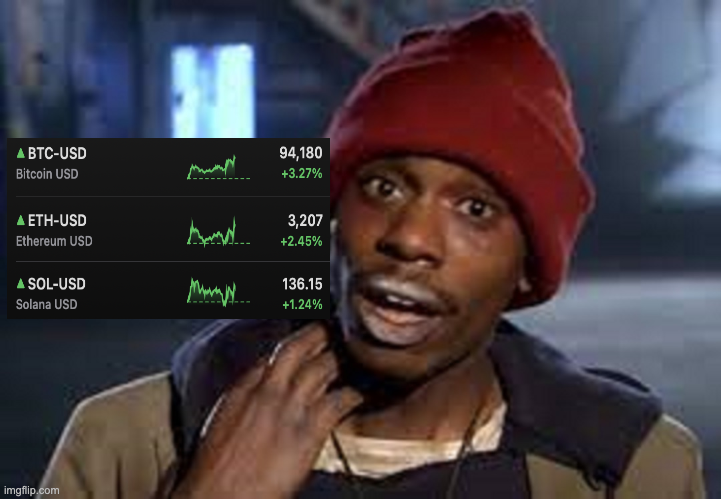
i’m long btc again. i might be early, but all the signs are there. panic on low liquidity weekend over unconfirmed military strikes, binance fud at peak levels, everyone convinced there’s “no demand”, i think we’re due for a bounce
also, who cares man, if we die we die
Digital ID was debated in Parliament, in a Westminster Hall debate opened by Robbie Moore MP on behalf of the Petitions Committee and triggered by a petition signed by nearly three million people.
The response from MPs across parties was overwhelmingly NO.
Across all parties, Conservatives, Labour backbenchers, Liberal Democrats, Greens, the SNP, Reform and Independents raised the same core concerns:
• Moves Britain toward a surveillance state
• Irreversible centralisation of personal data
• Major cyber security risk
• Serious risk of mission creep• Not in the manifesto and no democratic mandate
• Constituents do not want it
• Would become mandatory in practice
• Harms the most vulnerable and the digitally excluded
• Creates a two tier society
Reading from a constituent's message, Jeremy Corbyn, an independent MP, said:
"Digital ID is a deeply illiberal idea that threatens privacy, autonomy and the open access we should be standing for.
It risks creating a two tier Britain where access to basic services, healthcare, housing, employment, even voting, depends on whether someone has the right app, paperwork or digital trail."
Reflecting the vast cross party consensus in the debate, Corbyn endorsed an intervention from Andrew Griffith MP warning about civil liberties, the presumption of innocence and surveillance concerns, saying "he's making an important point," before going on to warn that digital ID is "being pushed by commercial interests" and urging Parliament to "say no to the government, as we have said no before."
In the debate, opposition to the proposals spanned both the political right and left.
Speaker after speaker warned that once this infrastructure exists, it will expand into work, housing, banking, benefits and public services, regardless of today's assurances.
What this debate showed very clearly is that left versus right is no longer the most meaningful divide.
The real divide is libertarian versus authoritarian.
MPs from across the political spectrum lined up on the liberty side. That matters, particularly in a country with a growing reputation for restricting free speech and quietly sleepwalking into authoritarianism.
It also raises uncomfortable questions ... If no one wants this, and Parliament agrees it is dangerous, why is it being pushed so hard?
Jeremy Corbyn was clear about the role of commercial interests, a concern reinforced by policy advocacy from groups such as the Tony Blair Institute and Visa, which has openly argued for the introduction of digital ID's.
Others also raised concerns about lobbying, infrastructure vendors, payments firms, and ID adjacent technology providers.
This petition and debate offered a rare moment of reassurance in our parliamentary system. MPs listened, understood the risks, and spoke up.
You can watch the full debate here:
https://t.co/6LVmFnBCzJ
@_RobbieMoore@JeremyCorbyn@griffitha
In just a few hours, Trump took over the largest oil reserve in the world.
303 billion barrels, at $60 per barrel that's $18 trillion $.
It's more than the combined GDP of all European countries.
As crazy as it may sound, those 18 trillion wouldn’t even be enough to pay back half of the US national debt (38 trillion).
Buy Bitcoin.
Public debate on the environmental impact of crypto often rests on assumptions that no longer reflect the reality of the sector. Evidence shared at last week’s Treasury Committee session underlined how rapidly the industry has progressed, and how outdated much of the commentary has become.
One of the clearest shifts has been in blockchain efficiency. Ethereum’s transition from proof-of-work (PoW) to proof-of-stake (PoS) reduced its energy consumption by more than 99% overnight. Meanwhile, emissions intensity across Bitcoin mining has fallen sharply, from around 650g CO₂ per kWh five years ago to roughly 250g CO₂ today - lower than the estimated 400g CO₂ associated with parts of the traditional financial system.
Furthermore, over half of global Bitcoin mining now uses renewable or sustainably sourced energy, and we are increasingly seeing mining used to reduce emissions. On-site conversion of flared gas can cut related emissions by up to 63%, while surplus wind energy can be directed to mining rather than wasted. @DecentraSuze and @freddienew at @bitcoinpolicyuk have been instrumental in raising awareness of these opportunities among policymakers.
Texas has shown how miners can positively contribute to grid management by acting as a flexible buyer of surplus energy. During periods of high generation they absorb excess supply, and when demand rises they can scale down within seconds. This ability to adjust in real time helps balance the grid, reduces renewable energy curtailment and improves the financial feasibility of new renewable installations.
Innovation is also accelerating at the hardware level. High-performance chips originally developed for mining are increasingly being repurposed for AI workloads, supporting the growing demand for compute capacity and extending the usefulness of this infrastructure far beyond crypto.
Last week’s Committee session made one point clear: UK discussions on sustainability must be informed by up-to-date evidence. With a proportionate, forward-looking regulatory framework, the UK can encourage responsible innovation while supporting the continued shift towards cleaner, more efficient blockchain technologies.
At CryptoUK, we will continue to provide policymakers with accurate data and highlight the advances driving down emissions across the digital asset sector — ensuring decisions are grounded in evidence rather than outdated narratives.
Bitcoin dips. People freak out.
I get it. You are fragile.
Your bank owns you.
Your landlord owns you.
Your boss owns you.
Your emotions own you.
Bitcoin dips thirty percent.
Your life dips eighty percent every time a bill shows up.
Stack Bitcoin.
It is the only thing in your life that is not actively trying to destroy you.
JANUARY 2025: E.U. Central Bank President Christine Lagarde says, "I'm confident bitcoins will not enter the reserves of any European central banks."
TODAY: Czech Republic central bank buys $1 million bitcoin for its reserves