@lowmegatron Possibly more effective absorption of the CO2 in the water medium compared to a plastic bag, but I’m curious if continuous carbonation of the water would be necessary to maintain a sufficient concentration
@rileyanderz It’s confusing, almost like how an HTMA could show a mineral well above or below the ref range but that doesn’t always reflect the reality of your tissue or cell status
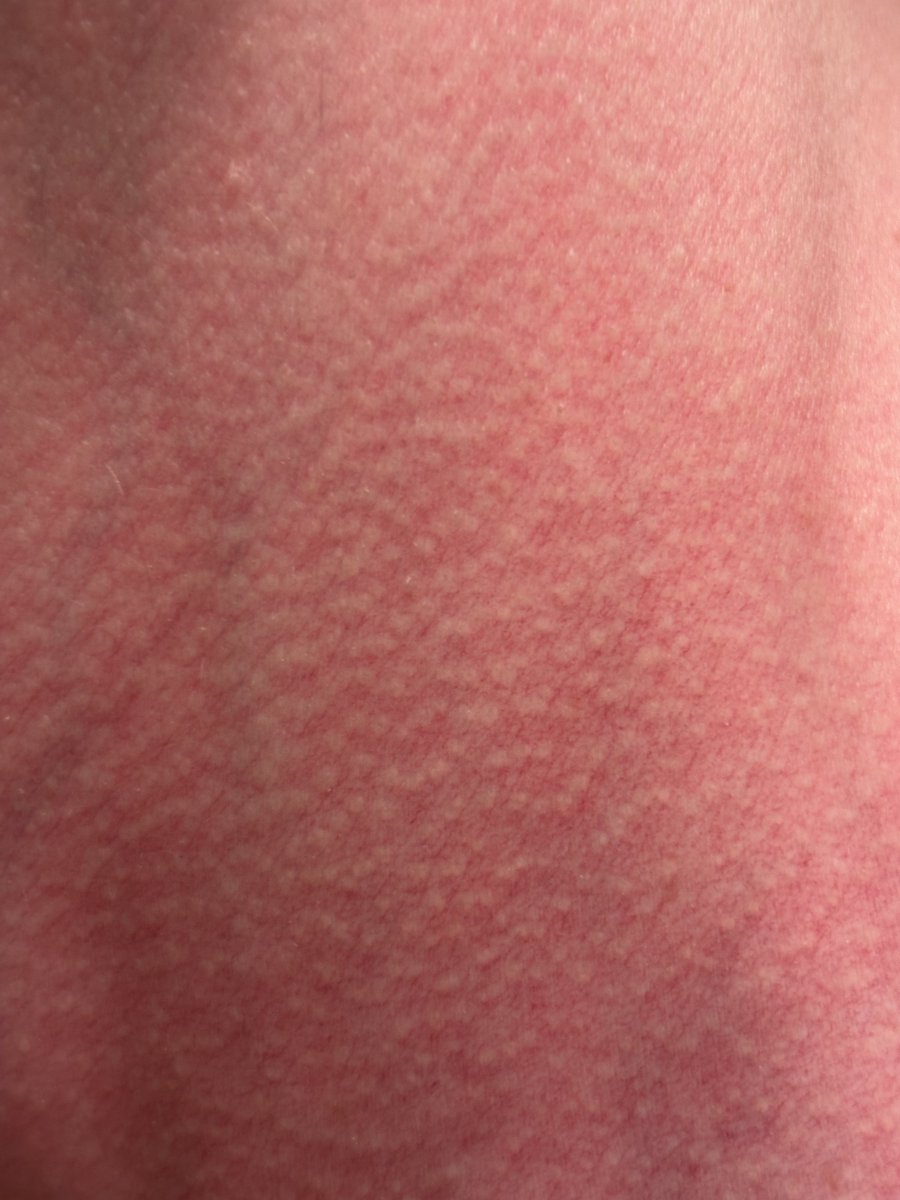
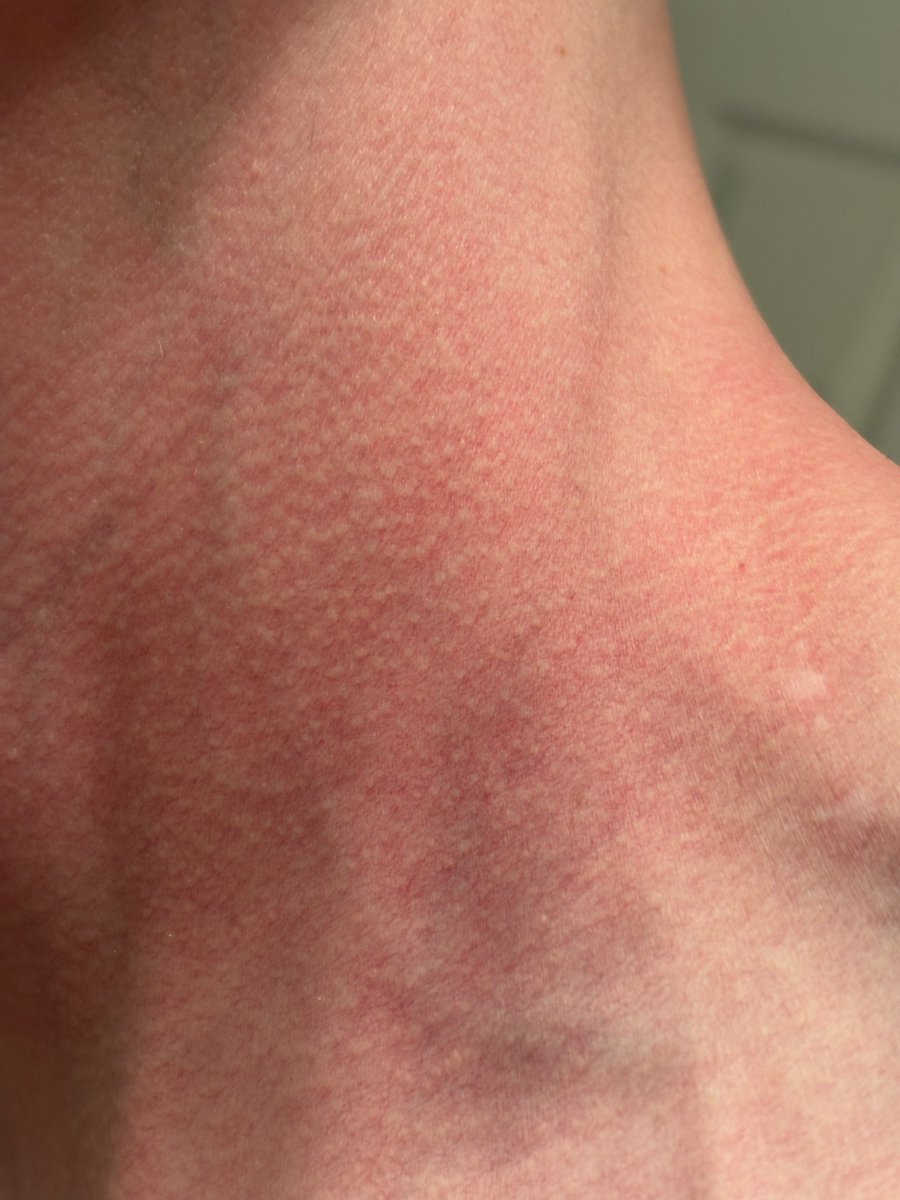
@MattZirwas@eurekaskastle@kristyalpert Have you seen someone rapidly develop it as young as 30 with no history of long, unprotected sun exposure? My neck is wrecked on the left side but I presume it’s related to EDS/dysautonomia and the apparent collapse of my vascular plus connective tissue system
@rileyanderz Do you have blood labs showing low copper (ceruloplasmin, serum or urinary copper), or do you just suspect it based on histamine/MCAS symptoms? There seems to be a paradox where those markers are low, but the person is actually copper toxic.
One of the very few well-designed studies comparing natural desiccated thyroid USP (NDT) to levothyroxine showed a massive difference in symptoms between the two treatments.
When taking levo, common hypothyroid symptoms were much higher than when taking NDT:
• Constipation: 2.9× higher
• Headache: 3.7× higher
• Muscle cramps: 6.5× higher
• Depression: 2.7× higher
• Rheumatoid: 2.7× higher
• Cold: 3.6× higher
• Fatigue 2.5x higher
NDT was dosed based on symptoms, not on TSH. TSH is not suitable for this purpose.
“The dose adjustment depends on the clinical symptoms.”
Their approach was:
• Increase NDT by 30 mg/day every 2 weeks
• Adjust based on clinical symptoms/status
• Use 24 h urine-free T3 for biological follow-up
• NOT dose by TSH
It’s important to note that NDT's efficacy depends on the amount of active thyroid hormone T3 in the medication, and its beneficial effects are entirely dependent on tailored, individualized dosing based on symptoms and basal temperature.
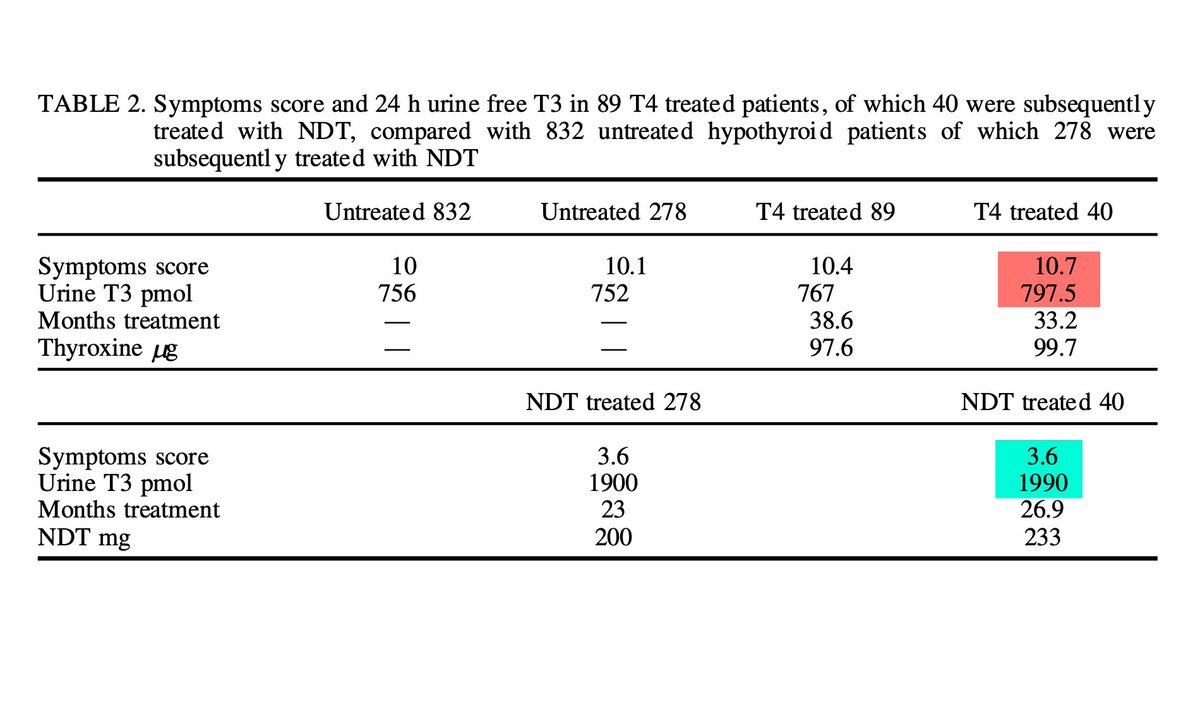
The researchers tested the amount of active thyroid hormone (free T3) in the urine. The levels of free T3 in untreated hypothyroid patients were the same as those in those treated with levothyroxine (750-790).
Free T3 in urine was nearly 2.5 times higher in patients switched to NDT (1900-1990).
“Combined T4 + T3 treatment is definitely more efficient than T4 treatment alone. Since the TSH is chiefly regulated by feedback from the inactive prohormone T4, rather than with the active hormone T3, the reliable 24 h urine free T3 test should preferably be used instead.”
The reduction in symptom scores (10.7 to 3.6) mirrored the increase in urinary free T3 in the NDT group.
“(levo)Thyroxine itself has little or no biological activity, and tissue effects attributed to T4 can indeed only be explained by conversion of T4 into T3. The cell receptors exclusively bind T3.
We did not conduct a double-blind trial, comparing the effects of T4 with those of placebo. We had bad clinical experiences with T4 (Euthyrox) some years ago, and considered it unethical in this case to submit our patients to such a treatment.
We had, however, the opportunity to meet hypothyroid patients who had been treated elsewhere with T4 and were still complaining of hypothyroid symptoms. These patients improved with the combined T3 + T4 treatment (NDT).
We also had the opportunity to meet patients, suitably stabilized under NDT, who had been taken off NDT by their GP and reinstated on T4, who presented with the same symptoms as before. Renewed treatment with NDT corrected the situation.
Improvement under NDT treatment cannot be attributed simply to a placebo effect. A placebo effect rarely exceeds a 25% improvement. In this study, the improvement range averaged 69.15% and varied between 53.6% and 84.5% according to the symptom examined.”
Ref: Thyroid Insufficiency. Is Thyroxine the Only Valuable Drug?
@rileyanderz Luteolin flares my symptoms but I have relied on Ketotifen to control itching and urticaria for a few years now. I'm down to just 1 mg per day but get hives without it.