A major milestone in citrus innovation!🌱 The newly developed Carricea rootstock has moved closer to commercialization, marking progress in the fight against citrus greening (HLB) and strengthening long-term recovery efforts for the industry. Read more: https://t.co/o5UCxa3qNj
Not grapes, but cool: Dropcopter drones “robot bees” to pollinate orchards as bee numbers fall and costs rise. The dinner-plate-size drones cover ~40 acres in 4 hours and have boosted yields by ~25% in almonds and ~45% in cherries. #graperesearch https://t.co/LngHQ4AmK5
Florida's citrus industry has collapsed from 244 million boxes of oranges in 1997-98 to just 12 million projected for 2024-25—a devastating 95% decline driven by citrus greening disease.
This catastrophe resulted from decades of industrial farming that abandoned soil-building practices for chemical-intensive methods, creating weakened trees vulnerable to disease.
As Brazil's citrus industry now follows the same path with 44% of trees already infected, Florida's empty groves serve as both a warning about industrial agriculture's risks and proof that regenerative farming can still restore even severely degraded systems.
Now, the plant is fully loaded with lush green leaves and good number of fruits, which is a good sign of its recovery and better hope for the upcoming season.<<-
Pic -2 plant condition right now
🌳🍊
(🍊) Recovery mode(🍊)
->>With the synergistic effect of the new sapling on the old plant's root system as well as repeated application of fungicides and fertilizers (organic + chemical), we have saved a 10 years old Kinnow plant.
#kinnow_mandarin#HLB#phytophthora#citrus
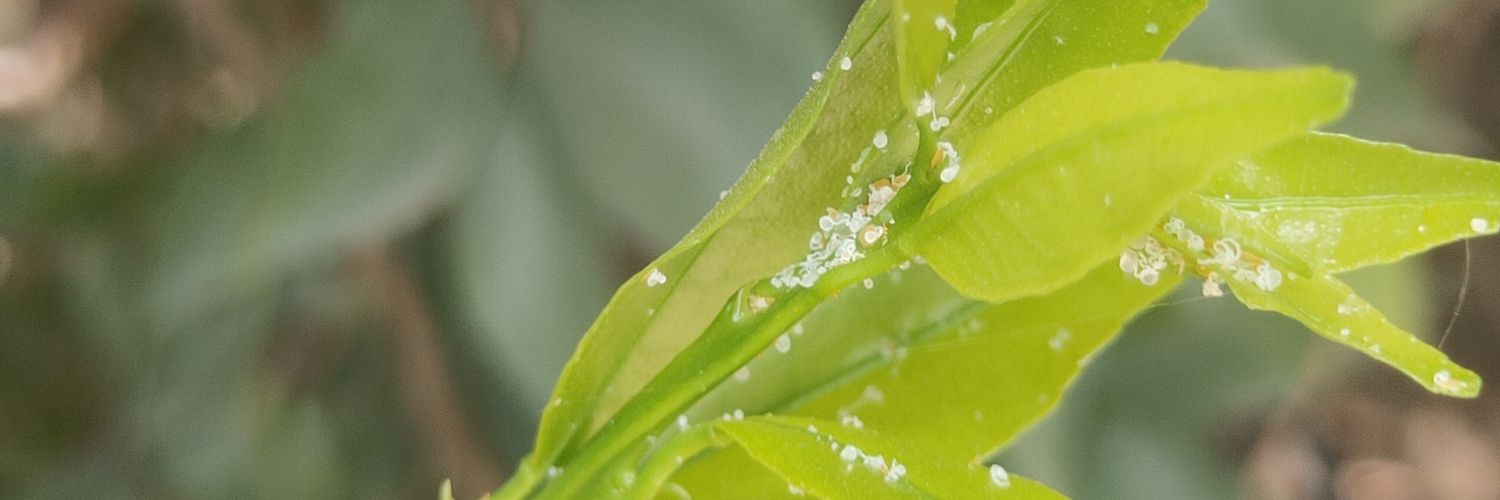
"Scent of mechanically induced citrus volatiles influence the behavior of hibiscus mealybugs, Nipaecoccus viridis.
They are repelled by a-Humulene, b-Elemene & b-Carryophyllene, can potentially be used as repellent in managing hibiscus mealybug infestation."