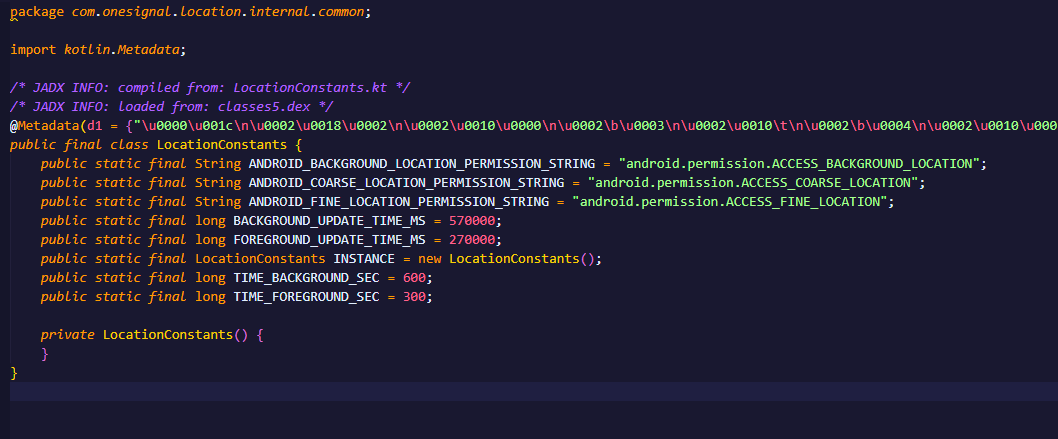
The White House App has OneSignal's full GPS pipeline compiled in, polling your location every 4.5 minutes, syncing your exact coordinates to a third party server.
“Reporting that traces the post says it was originally shared by a verified X user, Mike Netter, and then amplified by the PressSec repost.
Key point: I haven’t found an independent confirmation that the guard is real, that he was present, or that the details are accurate—so treat it like a lead, not evidence.”
Liquidity Mirage: The Bull Market Built on Central Bank Smoke
The market is celebrating again.
Yields ease, equities levitate, credit spreads compress, and everyone clings to the comforting narrative: “Liquidity is back. The worst is behind us.”
But liquidity today is not liquidity in the Austrian sense.
It’s not accumulated capital from real savings.
It’s not the surplus of deferred consumption that builds genuine economic strength.
It’s manufactured liquidity—a mirage created by central banks, conjured as easily as a magician’s smoke and like all illusions, it works until it doesn’t.
What follows is an uncomfortable conclusion:
This bull market is built not on productivity, not on earnings, not on savings—but on policy vapor.
I. The Mirage: “Liquidity” Without Savings
From the Austrian lens, liquidity is a function of real savings, not credit expansion.
But modern macro has replaced capital with keystrokes.
When policymakers “add liquidity,” they’re not injecting savings—they’re distorting the price of money, weakening the very signal that guides rational investment.
In the last cycle, this distortion reached its terminal phase:
- Repo facilities ballooned.
- Reverse repos drained.
- T-bill issuance exploded.
- Discount windows opened quietly at record scale.
- Global central banks rolled out balance-sheet gymnastics no textbook ever imagined.
The market saw “liquidity returning.”
Austrians saw malinvestment being extended—yet again.
II. The Market’s High Is Synthetic
Look closely at what has been driving this bull market rebound:
1. Reserves shifting between accounts
Not new capital.
Just a shell game between the Fed, money markets, and Treasury’s cash account.
2. Massive Treasury issuance absorbed by leveraged buyers
Broker-dealers, hedge funds, and CTAs are front-running rate pivots with leverage the Fed pretends not to see.
3. Renewed speculation in AI and long-duration tech
Not because these companies suddenly became more profitable— but because the discount rate fantasy returned.
4. Credit is expanding again, but not from genuine savings
It’s expanding from the belief that policymakers will always provide a backstop.
This is artificial liquidity—cheap credit conjured by policy, not the product of thrift or productivity.
Austrians call this “forced saving”—saving imposed via monetary inflation rather than created voluntarily.
You’re not wealthier; the unit is weaker.
III. Malinvestment: The Cycle Is Repeating
Every time policymakers create easy money, the same pattern repeats:
- Interest rates fall below their natural level.
- Businesses misread this as an abundance of real savings.
- Investment surges into ventures that would never be viable under honest rates.
- Asset prices inflate.
Eventually, reality reasserts itself.
Today’s malinvestments are obvious to anyone who has read Mises or Rothbard:
AI companies trading at valuations not seen since Dot-Com. Zombie firms refinancing via private credit instead of bankruptcy courts.
Sovereigns issuing debt at a pace that implies rates will never rise again.Consumers borrowing at double-digit interest rates to maintain lifestyle inflation.
This is not a boom.
It’s a policy-engineered mispricing of risk.
IV. The Austrian Warning: Liquidity Illusions End Violently
Mises warned that artificial credit expansions end in one of two ways:
1. The Crack-Up Boom - The currency falls, asset prices explode, and people flee money itself.
2. The Voluntary Crisis - Policymakers stop the expansion, rates normalize, and zombie assets die.
Today, no central bank has the political will to choose Door #2.
The debt loads are too large.
The interest expense is too high.
The voter base is addicted to stimulus.
So the liquidity mirage gets extended—and the bubble gets bigger but make no mistake: this is the last mile of the credit cycle.
V. The Fog Clears: What Happens When Real Liquidity Matters Again
Eventually, markets remember that:
~ Savings can’t be printed.
~ Capital can’t be faked.
~ Scarcity can’t be suspended.
~ Time preference always wins.
When the illusion breaks, three things reprice violently:
1. Long-duration equities - When real rates rise, fair value collapses.
2. Sovereign bonds - You can suppress term premiums… until you can’t.
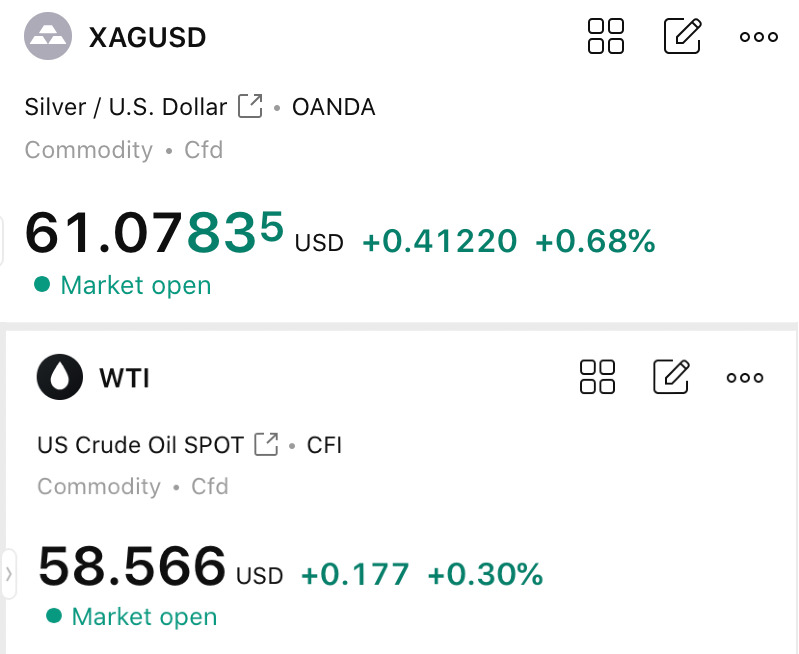
3. Real assets - Gold, silver, energy, and commodities rise because they cannot be diluted.
And here’s the quiet truth the market avoids:
The only assets that survive the end of a monetary mirage are the ones that don’t depend on the mirage.
VI. The Bull Market Built on Smoke
You’re watching a market that believes liquidity is a policy lever but markets built on central-bank engineering are fragile by design.
Here’s the Austrian conclusion:
- True liquidity is savings.
- True capital is production.
- True growth is deferred consumption.
Everything else is smoke.
This bull market is real only in the sense that all bubbles are real—right up until they aren’t.
Final Thoughts.
When liquidity is honest, markets allocate capital efficiently. When liquidity is fabricated, markets misallocate, inflate, and eventually unwind in disorder.
We are closer to that unwind than anyone wants to admit.
Watch the long end.
Watch real yields.
Watch gold.
They’re already signaling that the mirage is fading.
Ben.
For more Austrian related market insights please subscribe to my Substack:
https://t.co/M2dQTKifIc
The White House has put itself and the country in a bad situation but doesn’t realize it yet.
Around April 10th China to USA trade shut down.
It takes ~30 days for containers to go from China to LA.
45 to Houston by sea, 45 to Chicago by train.
55 to New York by sea.
That means that there are no economic effects of what was done on April 10th until about May 10th.
Around that time (it’s already started to happen) trucking work is going to dry up. Warehouses will start doing layoffs because no labor is needed to unload containers and some products will be out of stock, reducing the need for shipping labor.
All this will start in the Los Angeles area.
After about 2 weeks, it’ll start hitting Chicago and Houston.
Let’s say the White House, after 3 weeks, changes its mind, on May 31st.
“This isn’t working out like we thought it would. Tariffs back to 0.”
Let’s say China says “bygones be bygones, we’ll go back to how things were”.
Let’s say every factory in China that got screwed by their orders being cancelled says the same thing “no problem, we’ll make and ship”.
The problem is, even under the most favorable conditions of China and the factories restarting economic ties as though nothing happened, it will be at least another 30 days before economic activity is revived.
And that’s just in LA.
In Chicago/Houston, you’ll need to wait another 45 days.
New York, at that point, will still be getting containers from before April 10th, they will then have 50 days (May 31 minus April 10) of zero economic activity at the ports, in trucking of Chinese goods, in warehousing.
The whole situation is a bit like lockdowns. Once you shut down, it takes a long time to get economic activity back to where it was, if you ever can.
And again, this assumes, that China and its factories, which make things you can’t buy elsewhere, will start right back up again as though nothing happened, which is unlikely.
It’s almost like we’re speeding towards a brick wall but the driver of the car doesn’t see it yet.
By the time he does, it’ll be too late to hit the brakes.