This interview had many great soundbites but this is by far the best one, recommend checking out all of Nolan's answer but bottom line:
- Her: do we need to apologize for greatness?
- Him: yes we do, or else the audience rejects it
@TonySchumaker@MattLoszak Yes, there are new regulatory processes for advanced reactors and microreactors (NRC part 53 and 57) which enable that once-certification, multiple deployment approach, and going that route is the plan.
@gbrumfiel@jennycohn1 Yes & No. HALEU is short supplied. But TRISO production at reasonable cost & quality is not a supply problem but an unsolved manufacturing challenge that could hamper longterm growth plans for any TRISO reactor.
Look into Kurt Terrani & USNC debacle
@gbrumfiel Haven’t listened yet, but an important caveat is that TEG will not be a feasible electricity generator for a commercial scale HTGR. Therefore TEG is a fun marketing stunt, but not much of a demonstration of technical progress. Nevertheless, the Valar team is crushing it!
One of the great experiences of my life…
If you haven’t had the great joy of building something extremely hard under urgent deadlines with a group of hard-working, brilliant teammates…. Go find yourself a challenge!!
We went critical. Next we make power.
Very excited to announce that at 12:20am on the 4th of July, Aalo achieved criticality on our first full-scale reactor.
We cut it close, but we pulled it off!!
Working towards this goal with such an incredible group of humans has been the most fulfilling period of my life. This moment has been three years in the making.
Last year, Executive Order 14301 called for at least three new reactors to go critical before July 4th, 2026.
As of late last Friday night, that goal has been surpassed!
When the EO was announced, we immediately sat down to figure out what the most ambitious scope would be, while still being potentially achievable by July 4th.
Some of the team proposed doing simplified designs with smaller fuel loads, or building in existing facilities.
One thing was clear: We wouldn't have time to integrate a full-scale sodium heat-removal loop to bring the reactor to its full 30 MWt.
So here’s where we landed:
➡️ We purchased the entire commercial-scale fuel load. This is enough fuel to operate at 30 MWt / 10 MWe for 3 years before refueling. To my knowledge, it’s the largest fuel load that’s been taken critical in the DOE pilot program, by far.
➡️ We built a full-scale reactor vessel in our factory, and loaded in our commercial graphite layout. All the dimensions, vessel thickness, and manufacturing techniques are essentially the same as we will use for the imminent commercial version. There will be a few minor tweaks for sodium flow and full-power, but nothing major.
➡️ We built an entirely new reactor facility at the Idaho National Lab. Building a building is easy. Building a new reactor facility comes with a mountain of paperwork, policies, operation and training procedures, security, instrumentation and control, and more.
Zero-power criticality might seem like a small step, but I can tell you, going through the exercise of building a reactor and taking it to criticality has been extremely valuable.
The learnings on regulatory, ops, manufacturing, supply chain, QA, economics, engineering, and design will accelerate our path through to the final iteration at full-power.
America is blessed to have a recent Cambrian explosion of startups in nuclear, all going after different markets, technologies, and strategies.
I’m excited that sodium, gas, salt, and new PWRs are all getting pushed forward once again. The best outcome for humanity is to have all these advance in parallel, as quickly as possible, while maintaining safety.
Thanks again to our amazing team, DOE, INL, BEA, and everyone else who helped us get to where we are today.
This could not have happened anywhere else. Happy birthday, America!! 🇺🇸🇺🇸🇺🇸
There has never been a better time for nuclear energy. The Second Atomic Age has begun, and this one will be here to stay.
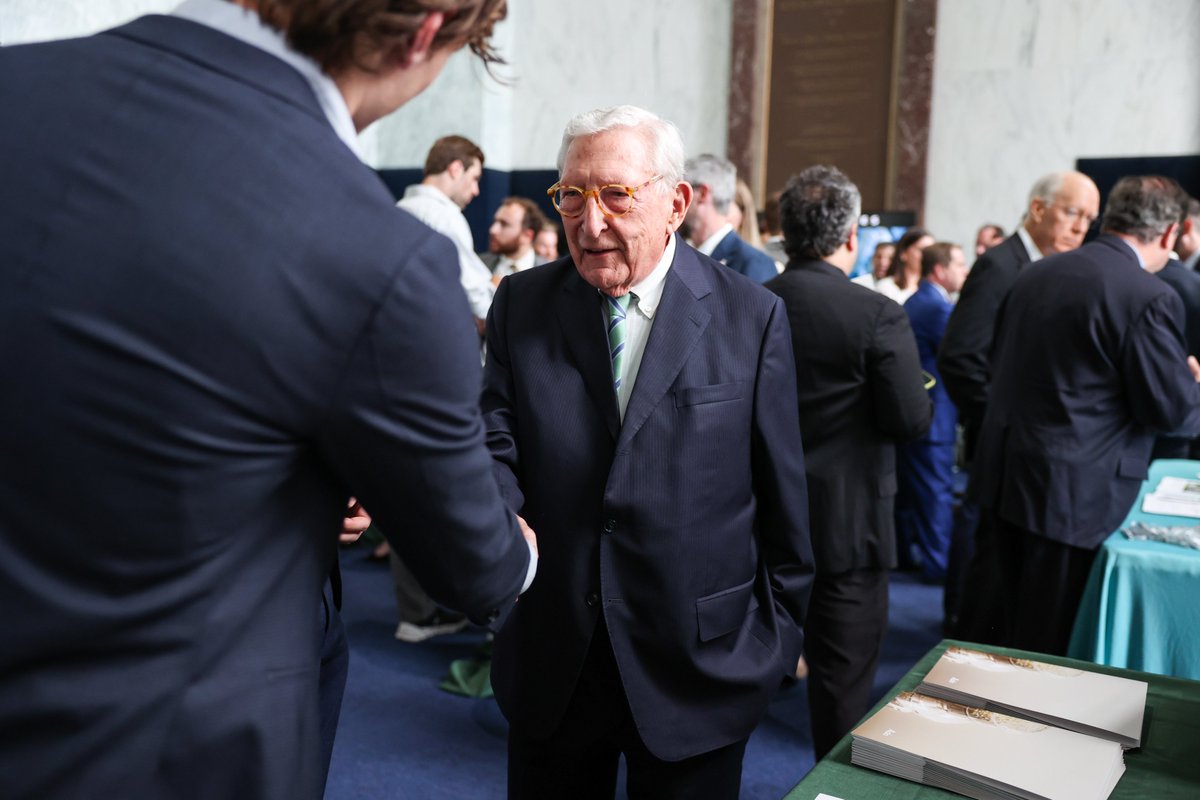
Honored to represent Aalo in Congress this week; and meet so many who see the immense potential to grow the microreactor market. The opportunity to serve Americans a new generation of clean, factory-built nuclear power is here!
We were honored to present at the Reactor Pilot Program (RPP) Reception and Showcase on Capitol Hill, hosted by the Advanced Nuclear Caucus and Foundation for Nuclear Studies (@NuclearStudies).
This was the first time all 10 companies in the Reactor Pilot Program have been together in one room.
Featured were remarks from Congressman Chuck Fleischmann, Congressman Bill Foster, and President and Chief Executive Officer at @NEI Maria Korsnick.
Ted Garrish, Assistant Secretary for Nuclear Energy, was recognized for his leadership in advancing the RPP and the July 4th criticality deadline.