Real motivation isn’t about carrots and sticks—it’s about what drives us from within. It’s built on three pillars:
Autonomy: The urge to direct our own lives.
Mastery: The desire to get better at something that matters.
Purpose: The yearning to contribute to something bigger than ourselves.
These aren’t just ideals—they’re the foundation for a better way to work and live. Shift the system, and watch what’s possible
Commentary: Kentucky partisan politics now has run off four straight ed commissioners. Regardless of feelings about them, if you think this trend aids children to learn, teachers to teach, principals, superintendents and school boards to lead and serve, you are woefully mistaken.
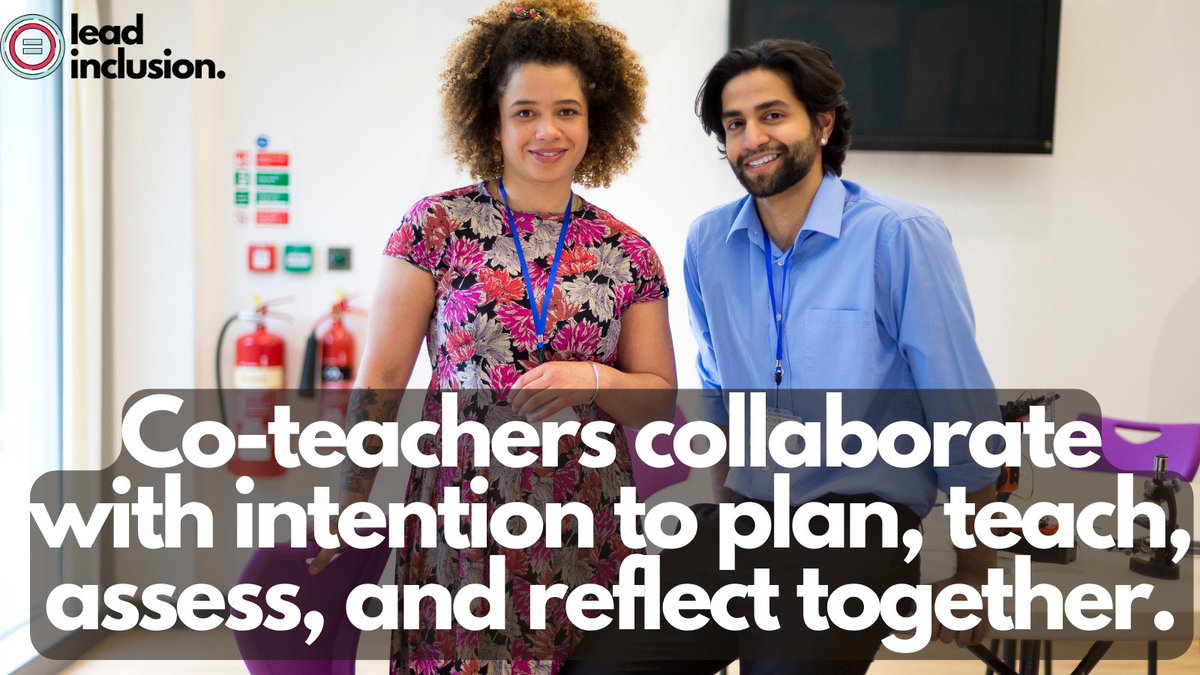
🤝 The role of a co-teacher is not to be an assistant aiding a lead teacher. Co-teachers collaborate with intention to plan, teach, assess, and reflect together. #LeadInclusion#EdLeaders#Teachers#UDL#TeacherTwitter
As you're thinking about classroom assessments next year, remember that we grade against criteria for standards, outcomes, learning goals, i.e., evidence of learning, NOT the vehicle used to deliver that evidence. So, unless we're teaching the assessment format itself, whether or not students do a project, test, paper, demonstration, etc is irrelevant: It's whether or not they presented evidence of their proficiency. This blows the hinges off the doors on the way to success as it opens new and meaningful ways to demonstrate mastery. There's a lot of agency here, which leads to students owning their learning. For some units of study, teachers can even ask students for proposals for how they will demonstrate the evidence of the standard. Then, as with most assessments, ask students to prove their evidence, to explain how the standard is manifested in their presentation. Gosh, this makes learning -- and teaching -- way more fun, and for students, more substantive.
In 2nd grade I was given a C for writing. In grad school I was told I needed to take courses on essay styles in order to graduate.
Now I’m the author of 5 books.
You can do anything you set your mind to. Listen to their feedback, use it for growth, just don’t let it stop you.
Improving Tier 1 is a bit like the movie, Field of Dreams.
"If you build it, they will come."
If we stop everything, listen to that advice, & act on it, we can design a Tier 1 that makes miracles happen in learning.
Just requires our complete commitment to the cause.
Kid scores 100% on a retest... Only given a 70%. For what possible justification do we put scores in the gradebook that do not match what a student knows?
There is no average time to learn something. Punishing students for taking longer to learn something seems archaic
I’m seeing a growing number of students complain: “My grade doesn’t reflect the effort I put into the course.”
Public service announcement: You don’t get an A for effort. You earn it for excellence.
Success is measured by the level of mastery you show, not how hard you work.
To calculate report card grades, I’ve ditched averaging in favor of a logic rule.
Potential Benefits:
-simple to calculate in your head
-standards focused
-reduced vulnerability to extreme scores & zeros
Here’s the rule I use after assessing 5-6 standards:
The Improving Reading for Older Students course opens for registration today. You can join until October 31st! This course is for teachers of Grades 4–12 interested in learning how to support reading with older students: https://t.co/Cj6ysTPwXD #HighSchool#middleschool#elachat