In the shadows of Pandjia, the Dormant Panda awakens—a timeless guardian to restore harmony and wisdom.
Governance falters as participation wanes...
Delegate to Panda, delegate now!
DRep ID:
drep1jcfgptx9j869j9jxrwyvvjldcuz6gjv5wp7g32k3yyq5sukjg87
https://t.co/DI9TMU6BrV
We're about to start a new era in Cardano. One governed by the community DReps. This is your absolute last call to delegate to someone you trust or become a DRep before the Hard Fork. With the SPO threshold met and CC deliberating, this is going to come fast! You've been warned!
Today is the day.
Eternl v2.1.0 is now live for the browser extension, web app, and Android (iOS still pending).
This is a foundational update across performance, wallet workflows, governance, Hub, and Pro features.
(1/n)
As I have seen current governance, I think Cardano is repeating a mistake from the 20th century.
The socialist calculation debate concluded that "central committees cannot replace market price signals." All socialist nations failed to expand their economies in the 20th century. Yet our "Treasury governance" is making exactly this mistake.
Hayek's insight: prices compress the dispersed knowledge of millions of decision-makers. No committee, however expert, can process this information.
When DReps vote on marketing/commercial Treasury allocations, this is a political process replacing price discovery.
The irony: Cardano brands itself as "decentralization." But Treasury-based resource allocation, where political voting replaces market discovery, is structurally identical to central planning. Many DReps drawing from one central pool = Gosplan with a smiley face.
Public Choice theory also pointed out that bureaucrats who say "we serve the people" actually maximize their own budgets. "We need funding for the ecosystem" is the Cardano version of "we serve the workers."
We knew this type of economy always fails against free market capitalism. No one can be better than the invisible hand of the market. Commercial projects must be funded by profit-making entities with market expertise. DReps, on the other hand, are not directly responsible for outcomes of commercial/marketing projects. It's a wrong fit.
If we seriously want commercial/marketing success, don't be socialist. Let the economy be in the market's hands.
Stop repeating "Community, community, community."
We should think outside the box.
https://t.co/QXkShAFvnf
Big news: we've partnered with the Brazilian Olympic Committee (@timebrasil) to transform Olympic sport with public blockchain, IoT, and AI.
The three-year roadmap aims to position COB as the global benchmark in sports innovation.
The best part? It's all powered by Cardano. ⚡️
Iagon ecosystem data has lived across explorers, dashboards, and internal tools.
Now it lives in one place.
Introducing Ecosystem Stats App — a unified view of Iagon activity on Cardano and across the ecosystem.
New technical blog from IOG DeFi Product Consultant Rusty (@__fallen_icarus)
The Account Model: A Trillion Dollar Mistake
The account model won because it’s easy to build on.
But ease ≠ scalability.
As adoption grows:
state access gets more expensive
dead state accumulates
contention wastes gas
Success becomes drag.
Rusty argues this isn’t fixable — it’s structural.
And it means the account model can’t support the kind of DeFi economy the space is aiming for.
Read the blog 👇
https://t.co/dNpQK11DY3
Disclaimer: Views are the author's. Not financial advice.
Two big things coming to Stag Alliance | Elderworld.
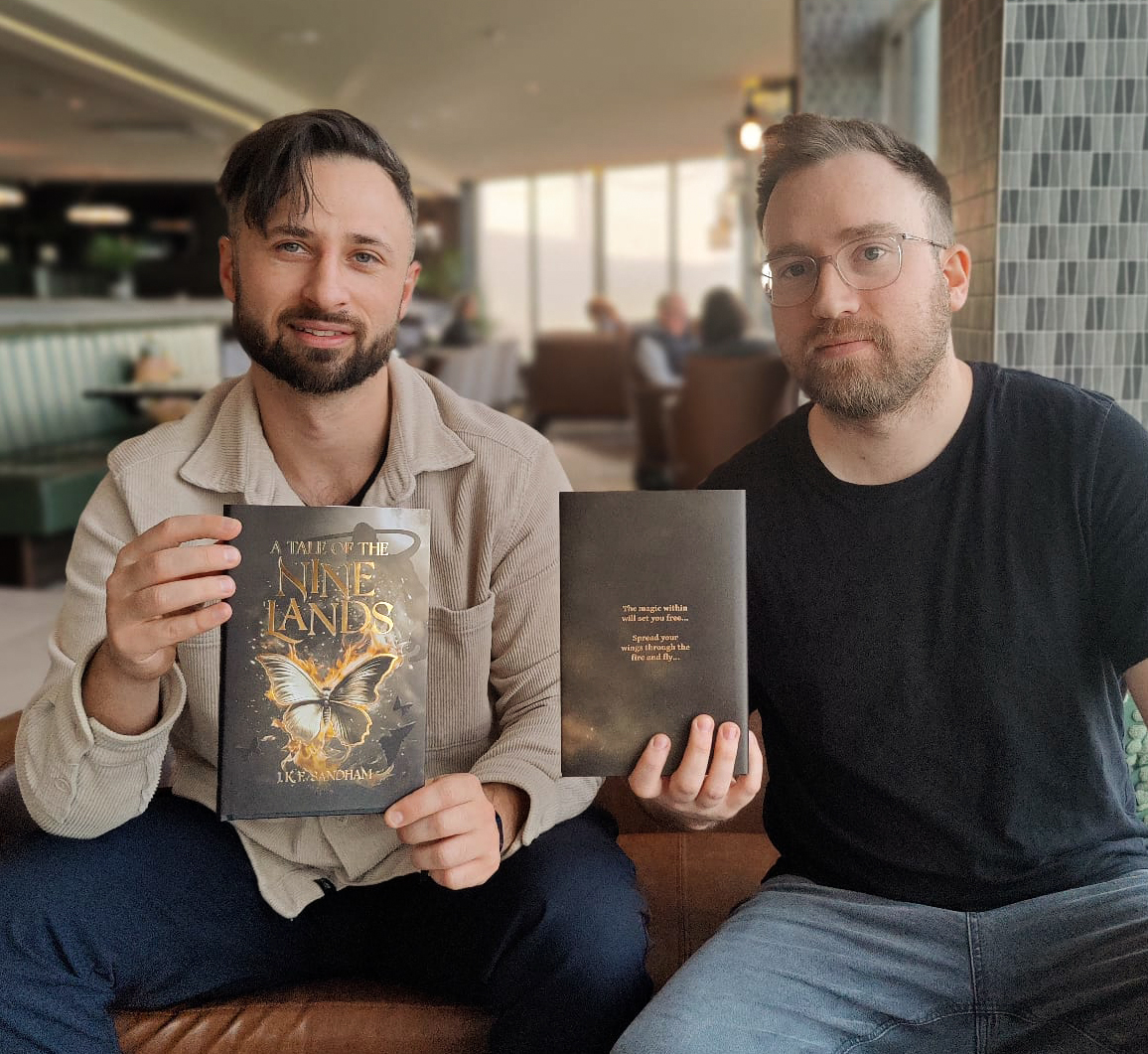
1. The Antlered King - a new novel by @jkfsandham, featuring characters from our main collection.
2. A major platform PVP strategy expansion: gather, scout, defend, attack.
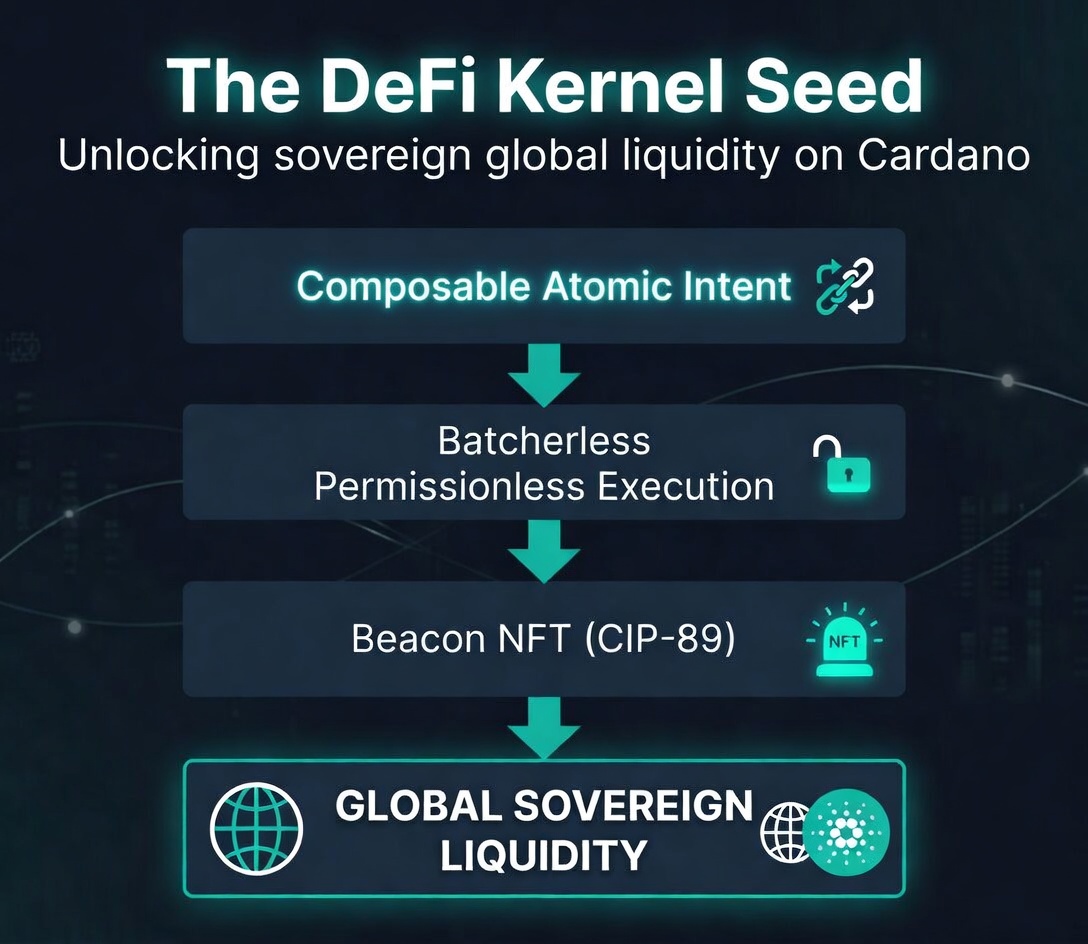
@ItsDave_ADA@wolf__nomadic@Fallen_Icarus#DemandTheKernel. Relying on grassroots is too slow (the treasury will run out of money first 🥲). We need a coordinated top-down+bottom-up approach. It should be a top 3 priority: liquidity proposals must cater to the Kernel and the community should focus on projects using it.
We are officially rebranding to **Dano Finance** — a bold new chapter that sharpens our focus on sovereign, high-quality DeFi.
Even better: Dano Finance is stepping forward to join @__fallen_icarus in the **DeFi Kernel revolution**.
This is how real momentum builds. 🧵👇
#DeFiKernelRising
Designed to support selective disclosure, @MidnightNtwrk brings a new level of privacy to the experience.
This short walkthrough shows how the mainnet works inside your Lace wallet...
An update on our engagement with @Mastercard.
While Cardano was not included in the initial cohort of 85 launch partners, @emurgo_io has been actively engaging with their APAC team to change that and ensure our ecosystem is represented.
Following a leadership transition at Mastercard APAC —where our primary contact moved to EY — we have successfully connected with his successors. They were excited to speak with us and I am pleased to share we are now in the Qualification Stage for the Global Crypto Partner Program.
With the continued support of the Cardano community, I am confident in a positive outcome.
This important:
Please like and share to show @Mastercard the strength of our ecosystem. Mastercard is a global firm.. we need to show them that our inclusion into their Partner Program will make a difference to them. Surely this is an initiative the entire Cardano ecosystem can support! #cardano86
Let's go!!!
#cardano #mastercard @Cardano_CF@Cardano@IOGroup@midnightfdn
I read almost all rationales on every GA submitted, but particularly those submitted by us on behalf of Intersect members. There is nearly always an angle in a positive or negative vote that Cardano (and Intersect where relevant) can take forward as a learning, or make room to adapt to, particularly when it relates to a process or framework. After reading some of these over the weekend, and following a few trains of thought on X, I wanted to share my perspective (bear with me).
I lose count of how many builders and teams I speak to every week. The same goes for DReps. The consistent themes I hear are the drive for more consistency and coherence, and a level of coordination that respects our constitution, permissionless network, and on-chain governance. When it comes to running a budget process, this work was part of our own budget request last year, on the proviso that it’s improved versus 2025. And I believe it has made substantial inroads here.
At the risk of repeating well-known points, the 2026 process is open to anyone, with no membership required. Any builder, team, or individual in the Cardano ecosystem can submit a proposal through the new standardized templates linked to KPIs. You do not need to be an Intersect member to participate.
There is also no obligation to use Intersect as administrator. When a vendor submits their proposal, they explicitly have the option to say “no” to Intersect handling administration, multisig payouts, milestone tracking, or any operational delivery support. Our admin service is one where we can safeguard approved treasury payouts based on progress, and provide a flexible counterparty structure for compliance and tax efficiencies. We also maintain an arbitration route for the community. But we remain one option of administration among others.
The 2026 budget framework, currently proposed as an Info Action, explicitly ties proposals to Vision 2030 KPIs, templates, milestones, and smart contract payouts. It is not perfect yet, but it is the on-ramp the community itself designed. Neither of these existed last year, and they are two steps in the right direction toward having some ecosystem alignment. Notwithstanding the semantics and language, which could have been clearer in the metadata, this remains true.
But, at the risk of being direct, there are only a tiny handful of teams that have been successful going directly to the Treasury. While Amaru is excellent (and Dingo too, node diversity is critical IMO), the pattern is pretty clear: long-standing builders who are not already household names, or tied to FEs, face an uphill battle for visibility and, ultimately, approval. Direct-to-Treasury withdrawals are always an option and permissionless, exactly as the constitution and our system intend, and Intersect, and I personally, hold this very close.
But as of now, Amaru stands alone as the only repeat independent success in the direct-to-Treasury path during the Voltaire era so far. All other enacted Treasury Withdrawals, the vast majority of the 347M+ ada withdrawn across 40+ actions, were either part of large founding-entity-backed efforts like the Pentad, or coordinated through Intersect’s smart contract framework and administration, including all other 2025 withdrawals and the Snek loan.
As I write this, there are 4 withdrawals on-chain, and again worth noting the uphill battle many, if not all, of them face. Inherently, this is not necessarily a bad thing. The community approves and funds what it wants, and what it believes offers value back.
The same will go for Intersect’s process. The community will filter what it believes has value, and that could be 50M ada or 300M ada worth of initiatives. DReps have the final say when it comes to withdrawals, there’s no circumnavigating that reality. The NCL number is not part of the thought process, or some notion of wanting to consume it all. For us, it is simply an operational one. For example, if the community wants to fund more, we need to revisit the NCL. Whether that is accepted or not, or even materializes, it is a decision we as a community take. The NCL is one parameter that we need to define better moving forward, and something we could parameterize on the ledger (that needs a HF but something we can target).
All this being said, it tells a very clear story that going direct to the Treasury is far from simple, and at what cost?
Without some coordinating body, the alternative is the exact fragmentation and difficult route we have already seen. The permissionless path exists and one we must hold, but it comes at the documented cost of speed, context, and scale. And in a hyper-competitive 2026 landscape, Ethereum’s new “Economic Zone,” Solana’s grant flywheels, and Polkadot’s dynamic pools are all quick examples. Whatever their individual merits, they point in the same direction: more deliberate coordination of capital, incentives, and ecosystem growth.
“Slow and pure” carries a very real risk of turning Cardano’s Treasury into an expensive, and potentially dwindling, museum piece. Because the alternative, doubling down on pure direct withdrawals with no coordination, has already proven that it leads to the exact stagnation we are all trying to avoid. The Treasury is not infinite, and the market is not waiting.
I accept there are other ways we can do this. I’m not wedded to a certain way of coordinating, or to preserving precedent for the sake of it (especially given the nascency of our governance system). In most modern democracies, public funds are allocated strategically across priority domains using a mix of funding pathways, with competition used where relevant. Cardano is not there yet, partly because our governance is still young and partly because the market and ecosystem context, operational muscle, and shared confidence needed to make that work well are still being navigated. But over time, and where relevant and practical in Cardano’s context, I can see the merits of moving in that direction and suspect we’ll see proposals coming through to tackle some of these areas.
My conversations with builders, inside Cardano and out, boil down to speed of execution and the complexity of navigating the do’s and don’ts. I speak to so many teams that have great ideas and need support in getting them in front of the community. I very, very rarely take a position on any of these ideas, because I know my role and Intersect’s role is to maintain impartiality and neutrality. We do not pick winners. I am, however, an ada holder. My bags are here and, given my position in Cardano, it can be incredibly frustrating at times to stay neutral and I know this post borders this line.
We have a lot to do as an ecosystem. The stark reality is that we need to move quickly and back initiatives and teams, new or existing, to deliver against what we are aiming for. DReps have a hard choice, that is unavoidable, but it also requires a little less dogmatism and a little more pragmatism. That tension between principle and execution is one of the defining challenges of this year.
We need to protect what makes Cardano strong, while also creating the conditions for the ecosystem to actually move. Because if we do not, the real risk is not over-coordination. It is remaining too slow, too fragmented, and too difficult to navigate at the very moment we most need to prove otherwise.
In the 3+ years of Stag Alliance so far, one of the biggest lessons we've learned is not to give in to pressure.
This might seem obvious, but it's something we've seen projects do time and time again.
Pressure to jump on market fads that die quickly; to do whatever your biggest holders tell you to; to release more mints, tokens, and so on...
From day one, our mission has been simple:
Keep supply low and increase demand by creating a household fantasy brand.
We've been working on it ever since.
Are there things we'd do differently if starting again? Definitely.
But we know we wouldn't still be here if we had given in to these pressures, or tried jumping on every trend in front of us, or changed the mission.
Founders who are still out here putting in the hard work, what's the biggest lesson you've learned, and would you change anything if you were to start fresh?