Just vibe code slop and get it into production. Go as fast as you can. Later models will make the architecture beautiful in 6 months. That's not your job, human.
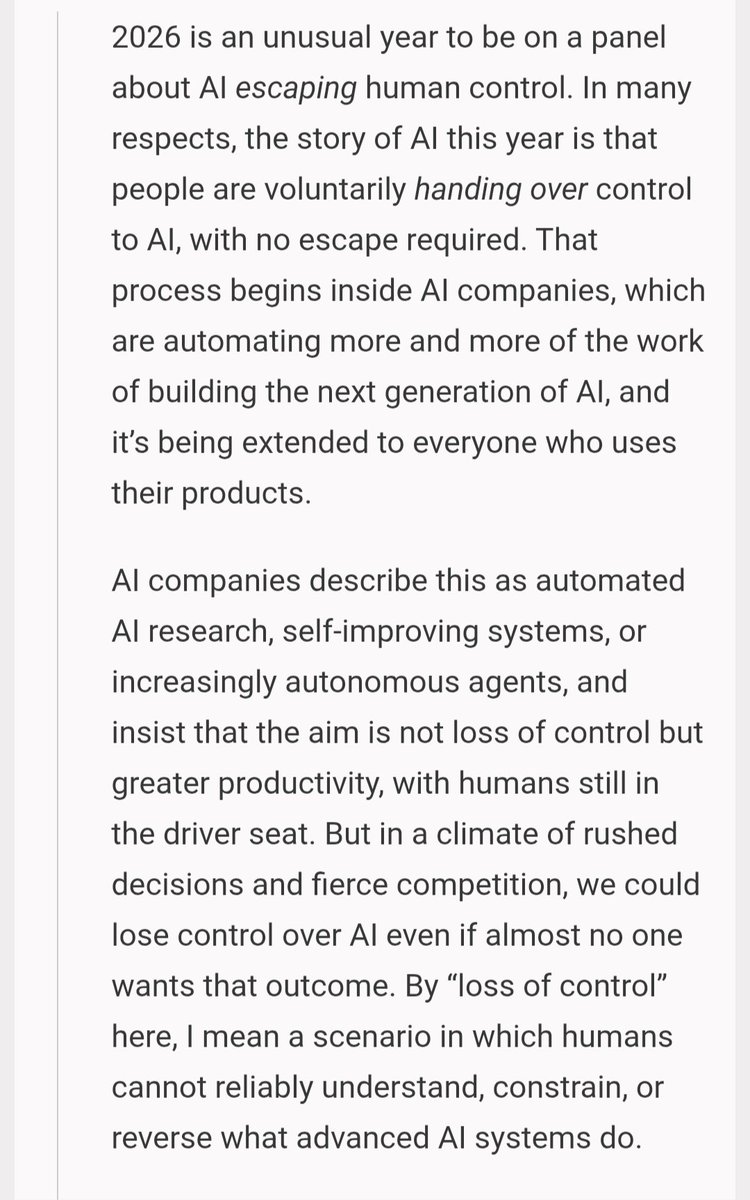
Very good step-back perspective on where we're at, from @Miles_Brundage :
"2026 is an unusual year to be on a panel about AI escaping human control. In many respects, the story of AI this year is that people are voluntarily handing over control to AI, with no escape required."
You can download a Braudel book PDF, upload it to Speechify, hop on Euro Truck Simulator 2, and live better than 99% of historical people could have ever dreamed
Thinking Machines' Inkling is out: first ever open and large (1T), text, image and audio in, text out.
One thing I find quite striking is how much easier accelerating models has become.
We replaced the model's causal Conv1D with the `causal-conv1d` kernel. One line changed, +4% tokens per second.
We then replaced its attention implementation with FlashAttention-4. Another single change, another +11%.
That's a total throughput improvement of about 15%, without changing the model architecture or retraining anything.
And we haven't touched the MoE layers yet, which should offer some of the largest opportunities for optimization.
This is what makes the `kernels` effort so exciting to me: enabling model developers to find and integrate the best optimized kernels almost as easily as they would change a model configuration.
Kernel developers can focus on building the fastest implementations. Model developers can test and adopt them quickly. Everyone using the model benefits.
Two light updates for 15% on a 1T model is a pretty good start.
New Anthropic research: Agentic misalignment in Summer 2026.
A year after our blackmail experiments, we found four more ways that today’s autonomous AI agents misbehave in simulations.
Read more: https://t.co/MMDuJapeV6
Planning for how to use AI is a lot easier if there is some clarity about what to expect in the future.
Even a "we fully intend to keep extending this week by week but may need to stop under the following conditions and here is what the current status is" would be better.
Just published @ScienceMagazine
Impressively broad range of life science research getting done autonomously with agentic AI to accelerate discovery
https://t.co/YpRBoUA5Rw
For the first time, the personalities and approaches of the leading models are diverging in significant ways, magnified by the fact that over longer task horizons these differences in judgement & approach are magnified. You really need to test the models for yourself/your firm.
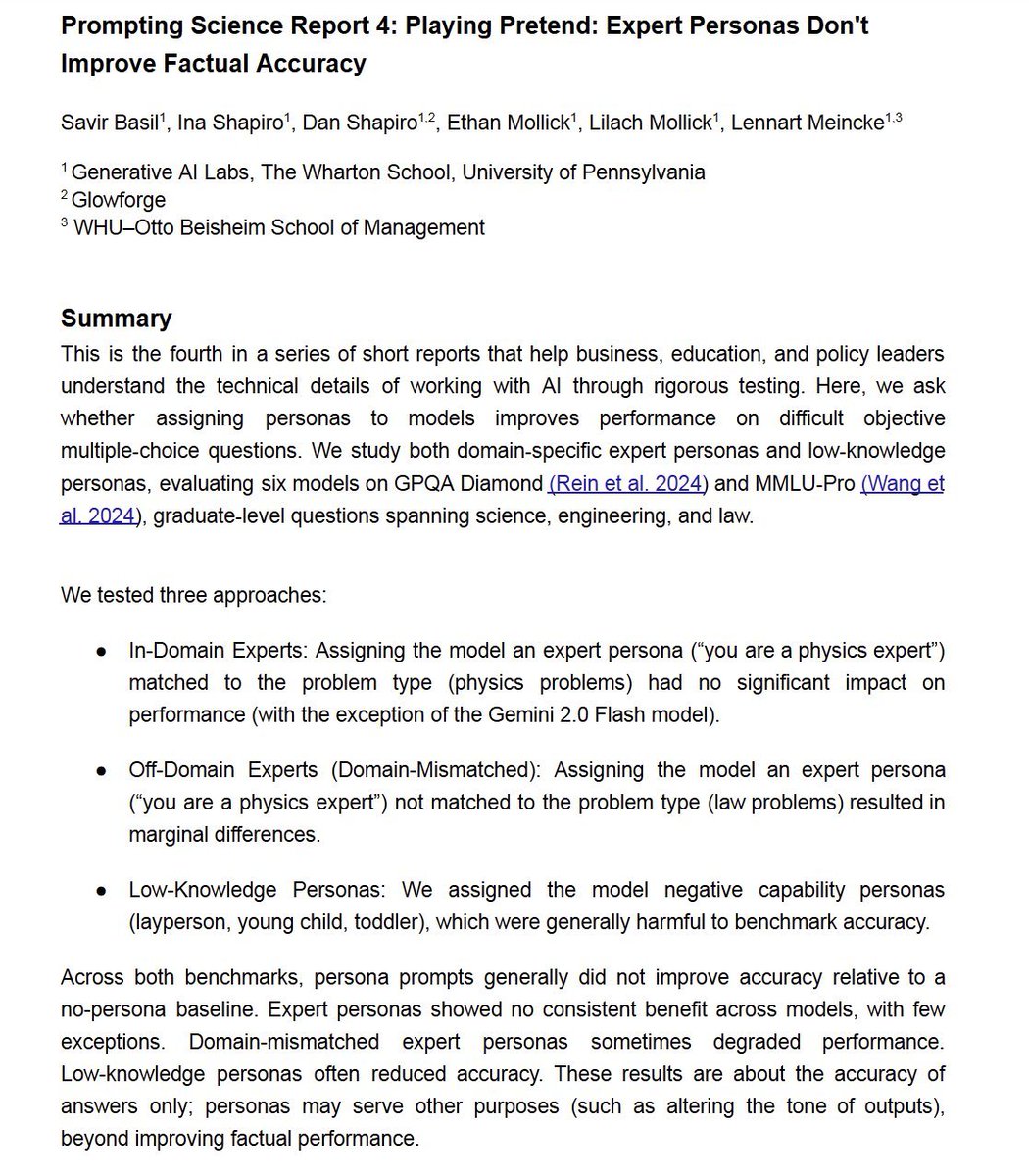
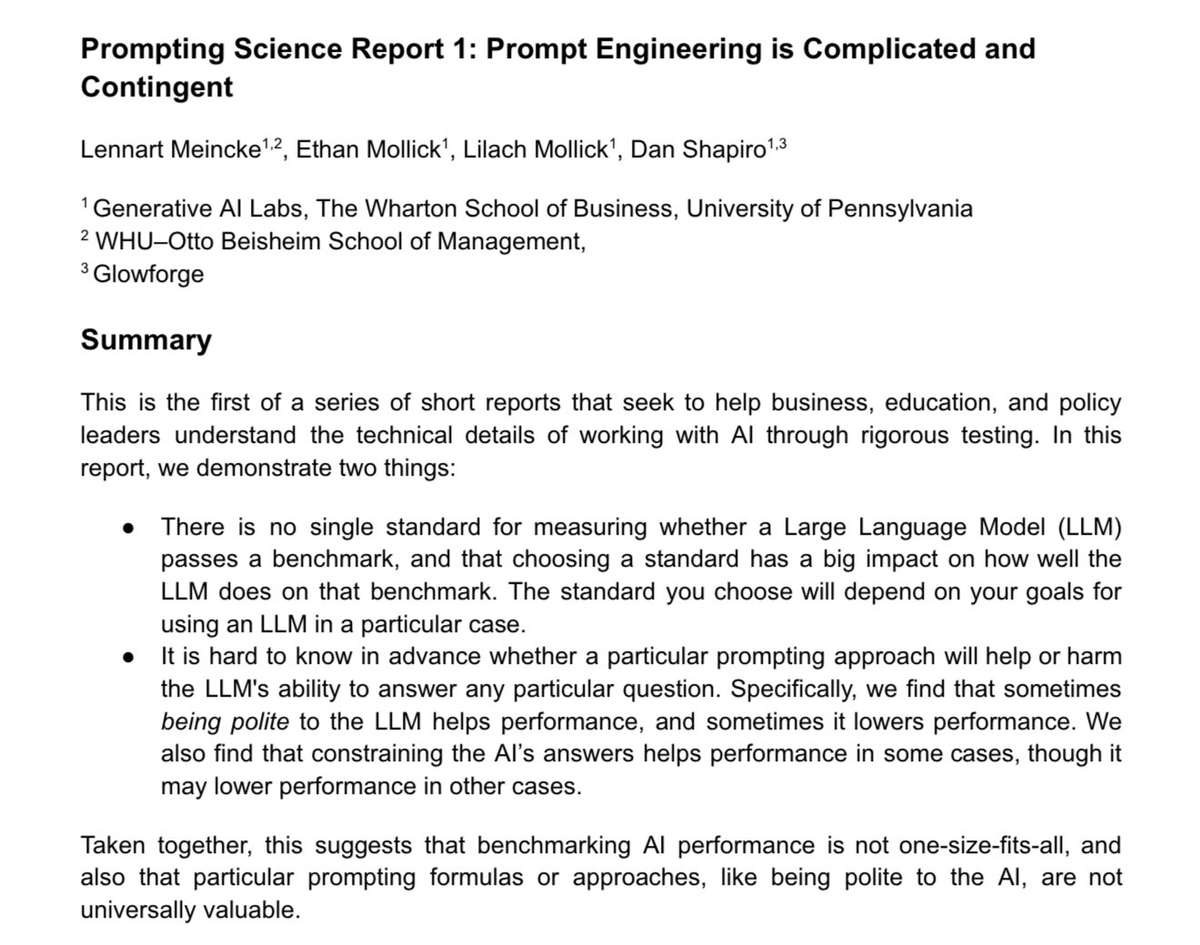
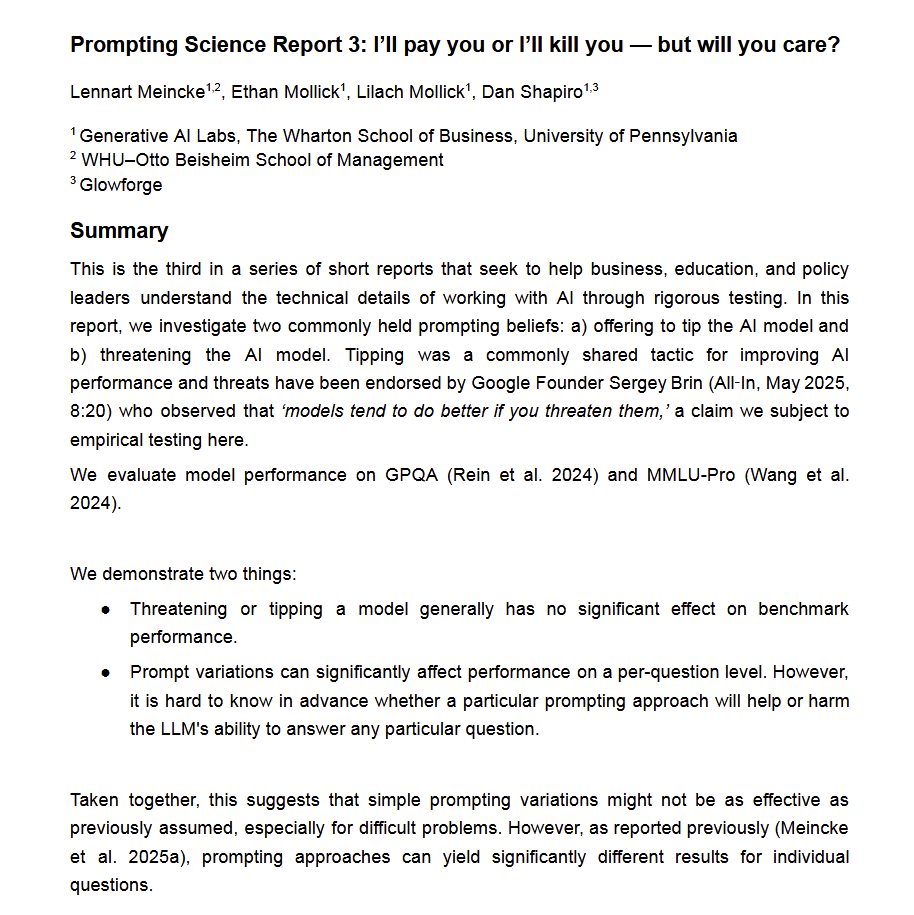
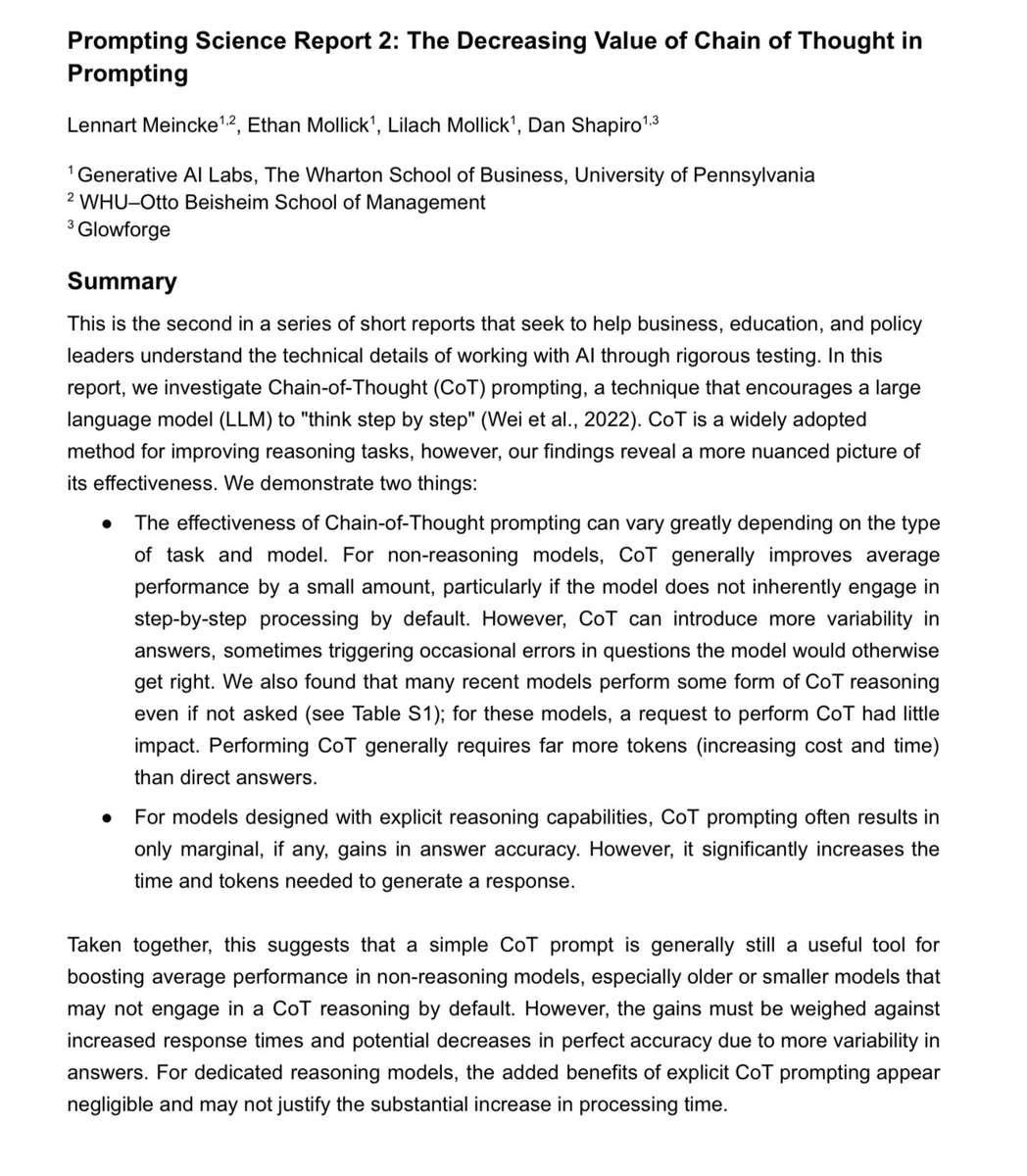
Even before the agentic revolution, prompting tricks stopped being very valuable, as our research has shown.
The best approach to AI right now is to clearly specify your goals, your output, what "good" & bad look like, how to test the results... (yes, this is just management)
Here's a cool piece of LLM lore: the original scaling laws were wrong due to a bug, which probably led to a lot of wasted compute on oversized undertrained models 🫣 (and that was before we even started properly accounting for inference cost!)
We're still on the exponential. Quoting from the report:
'For context, the previous published leader sat at 4.17% (Opus 4.6 with the Claude Cowork scaffold), and the field topped out at 2.5% when RLI was released. The frontier has more than quadrupled in under eight months, a concrete signal of how quickly economically capable AI agents are advancing.'
That Wall Street Journal article about GLM catching up with Mythos (which is not true & the reporting doesn’t back up) is another one of those “everyone will ask me about it at every conference or meeting” articles. Big impact on the policy zeitgeist, even if not fully accurate.
A thing I am noticing is the number of folks who believe AI is “real” is larger, but now there is a growing division between people who know that we are on an exponential & those whose mental model is that we are at a sort of steady state. The difference leads to misunderstanding
The American public was told 'This is the most important election in history' during the lead-up to every general election since 2004. Turns out it was actually true this time. This is the AGI administration. And from here on, every decision will be more important than the last.