A French boy was abandoned in the Australian wilderness at just 14.
Seventeen years later, when a British ship found him living with an Aboriginal community, he didn’t want to leave.
What happened to him in those 17 years is an extraordinary story of survival, belonging and an unexpected family.
His name was Narcisse Pelletier.
In 1858, Pelletier was working as a cabin boy aboard a French ship called the Saint-Paul, which was sailing towards Australia.
The ship struck a reef near the Louisiade Archipelago, off New Guinea. After the wreck, Pelletier escaped with a small group of sailors in a longboat.
They eventually reached the coast of Cape York, in northern Australia.
But Pelletier was sick and exhausted. When he stopped to rest beneath a tree, the sailors abandoned him and sailed away.
He was just 14, alone in an unfamiliar land, with almost no chance of finding his way home.
Three days later, a group of Uutaalnganu women found him. They gave him food, took him to their community and nursed him back to health.
They gave him a new name, Amglo, and welcomed him into their way of life.
Over the years, Pelletier learned their language, adopted their customs and became part of the community. He spent around 17 years with them, living a life completely different from the one he had known in France.
Then, in April 1875, a British pearling vessel called the John Bell came across him.
The crew took him aboard and eventually brought him to a European settlement.
But there was something remarkable about his account of the encounter.
Pelletier maintained that he had not wanted to leave. He said the Aboriginal people had not held him against his will either.
He had found a home among the people who had rescued him when he was abandoned.
Eventually, he returned to France, nearly 18 years after leaving as a young cabin boy.
He became a lighthouse keeper, married and lived until 1894.
But his story leaves us with an extraordinary question.
After 17 years, where did Narcisse Pelletier truly belong?
The country where he was born, or the community that had taken him in when he had nowhere else to go?
A nine-year-old girl boarded a plane for what she thought was a holiday. Seven months later, police found her deep in the Bolivian rainforest. 🌳
She had been promised a week-long trip to Bolivia as a reward for doing well at school. She even carried a little notebook and a camera, excited to record her adventure.
But the man accompanying her had a very different plan. Within days, she realised she had been deceived, and there was no easy way home.
Her name was Nada Itrab. In August 2013, she travelled from Barcelona to Bolivia with a neighbour named Grover Morales, who had gained her family’s trust.
Her parents had signed a travel authorisation, believing she would return after a week.
But once they arrived, Morales told her that her passport was lost. He then destroyed her documents, gave her a new name, Evelyn, and began moving her between different locations.
Eventually, he took her deep into the Chapare rainforest region, where she was forced to work on coca plantations and endured months of abuse and exploitation.
Back in Spain, her family reported her missing. An investigation involving Spanish and Bolivian authorities followed. The search eventually led investigators into the remote rainforest.
On March 17, 2014, after seven months away, ten-year-old Nada finally returned to Barcelona.
Her captor was later sentenced to 17 years in prison.
But her ordeal did not end with her rescue. She was placed in children’s homes, later returned to her family, and faced years of hardship and institutional neglect.
Education became her way forward. She worked hard, pursued university studies and eventually chose to study law and international relations.
Today, Nada speaks publicly about her experience and hopes to use her story to help protect other children from trafficking.
A little girl was rescued from the Holocaust and raised under a false identity after her biological parents were murdered. 🩸
It took 57 years for her to discover who she really was.
Her name was Inka Kagan. Born in August 1941 in Radziwillow, then in eastern Poland, she was still an infant when Nazi persecution threatened her Jewish family.
Desperate to save their daughter, her parents entrusted her to a Polish family. But as the danger grew, the family could no longer keep her. Inka was left in a dark basement with very little food or clothing. Her parents were eventually murdered.
Then, in the spring of 1943, a 16-year-old Polish girl named Zofia Stramska discovered the abandoned baby.
She took Inka to Jozef and Natalia Roztropowicz, a couple who already had children of their own. Despite the enormous danger, they welcomed the little girl into their home, nursed her back to health and raised her as part of their family.
They gave her the name Irena, affectionately calling her Inka. They even told their neighbours she was the child of a relative who had died.
For five years, Inka grew up with the Roztropowicz family, knowing them as her parents and siblings.
In November 1948, representatives of a Jewish organisation arranged for her to be taken to a Jewish orphanage in Lodz. She was just seven years old and had no idea why she was being separated from the only family she remembered.
There, a doctor named Zofia Goszczewski and her husband adopted her. They gave her the name Ina and told her they were her biological parents, separated from her during the war. A year later, they moved with her to Israel.
Ina grew up, built a life and eventually married. She had no idea that she had been adopted or that her biological parents had been murdered during the Holocaust.
Then, in 1999, at the age of 57, she finally learned the truth.
After her adoptive mother’s death, a cousin contacted her with information about her past. She discovered her birth identity, the fate of her parents and the Polish family who had saved her life.
She eventually contacted the Roztropowicz family’s children. In 2000, she travelled to Warsaw and met them for the first time as an adult, at a ceremony where her rescuers were honoured by Yad Vashem as Righteous Among the Nations.
The little girl they had once rescued had finally found her way back to the family that had given her a second chance at life. ✨
In April 1975, a newborn was evacuated from Saigon during the Vietnam War as part of Operation Babylift and adopted by an Australian family.
She grew up in Adelaide, never knowing she had a twin brother. 😲
Eventually, she began searching for her biological family, hoping to uncover even a small piece of her past.
Her name was Chantal Doecke. She took a DNA test, anticipating it might lead her to some answers. But what happened next was beyond anything she could have imagined.
In July 2024, her daughter revisited an old DNA testing account and noticed an unexpected match.
A man named Glenn appeared as a close family match. Further investigation revealed something extraordinary.
Glenn was Chantal’s twin brother.
He too had been adopted and raised in Australia. For almost 50 years, the two had lived separate lives, completely unaware that the other existed.
In November 2024, they finally spoke over the phone. Two months later, they met face to face for the first time.
After nearly half a century, a simple DNA match had brought a brother and sister together, revealing a family connection that neither had known existed.
The girl who was declared dead in a house fire, was found alive six years later accidentally. 😳
Her name was Delimar Vera. She was just 10 days old when a fire broke out at her family’s home in Philadelphia on December 15, 1997.
Her mother, Luz Cuevas, desperately searched for her baby, but the little girl was nowhere to be found.
Firefighters initially believed they had recovered the baby’s remains. However, what they had mistaken for human remains turned out to be building materials.
Authorities nevertheless presumed Delimar had died in the fire.
But Luz never truly accepted that her daughter was gone.
Six years passed. Then, in January 2004, Luz attended a birthday party and noticed a little girl with familiar features. Something about her smile and dimples made Luz believe she was looking at her own daughter.
She needed proof.
Pretending the child had gum in her hair, Luz secretly collected a few strands and arranged for DNA testing.
The results confirmed what her instincts had been telling her.
The little girl was Delimar Vera. She had allegedly been kidnapped from her crib by a family acquaintance, Carolyn Correa, who had raised her under another name, Aaliyah Hernandez.
The fire, investigators believed, had been deliberately set to conceal the kidnapping.
In March 2004, after six years apart, Delimar was finally reunited with her mother.
The girl who was kidnapped into the Amazon rainforest, found her family 24 years later, and eventually chose to return to the people who had taken her.
Her name was Helena Valero. She was just 12 years old in November 1932 when her family came under attack while travelling along a river in the Brazilian Amazon.
In the chaos, Helena became separated from her family. A group of Yanomami people took her into the rainforest.
She was moved between different communities, learned their language and customs, and gradually adapted to a completely unfamiliar way of life.
Over the years, she married twice and had four children. She spent more than two decades among the Yanomami, witnessing their conflicts, traditions and everyday life.
Then, in 1956, she finally managed to leave the forest with her children and her second husband.
After travelling to a settlement, she began searching for her family. And against extraordinary odds, she found them. First, she was reunited with her younger brother, and later with her father.
But Helena struggled to adjust to life outside the rainforest. The world she had imagined returning to was very different from the one she encountered.
She eventually chose to return to the Yanomami, the community among whom she had spent most of her adult life.
Her extraordinary experiences were later recorded in interviews with Italian anthropologist Ettore Biocca, and became the basis of the book Yanoama.
Helena’s life crossed two very different worlds. And after spending years trying to find her way back to one, she ultimately chose the other.
The English convict who disappeared into an Aboriginal community for 32 years.
He even had a wife and daughter there.
His name was William Buckley. In 1803, he was transported from England to Australia after being sentenced to life in prison for receiving stolen cloth.
He was sent to a new British settlement at Port Phillip. But before long, Buckley and two other convicts escaped. His companions eventually turned back. Buckley kept going, alone, with little food and no idea what lay ahead.
After weeks of wandering, he encountered the Wathaurung people. They took him in, and an extraordinary new chapter of his life began.
He learned their language, customs and way of life. He was given a wife and, according to his own account, had a daughter.
He became so deeply integrated into the community that he spent the next 32 years living among them.
Then, in July 1835, everything changed.
Buckley walked into a European settlement near the coast. The settlers could barely understand who he was. He had been away from European society for more than three decades.
His identity was eventually established through a tattoo on his arm bearing the initials “W.B.”
He was pardoned and later worked as an interpreter between the settlers and Aboriginal communities.
After 32 years away, William Buckley had returned to the world he once knew. But he would never quite belong to either one again.
A woman returned a stranger’s lost wallet on Christmas Day.
Four years later, they had become so close that they were spending holidays together. 🎉
It all began in 2021, when Neena Roe was travelling on the New York City subway and spotted a leather wallet left behind on a seat.
Inside, she found the identification details of an older woman named Carol.
Rather than simply hand it over to the authorities, Neena decided to find Carol herself.
After tracking her down on Facebook, she contacted her and arranged to return the wallet.
Carol was so touched by the gesture that she invited Neena to stay in touch.
And Neena did.
What followed was an unexpected friendship. The two women started meeting, sharing meals and spending time together.
Their bond grew so strong that Carol eventually invited Neena and her friend to spend time at her summer lake house.
There were home-cooked meals, movies, ice cream and plenty of laughter.
Four years after a chance encounter on a subway, the two women had become an important part of each other’s lives.
All because someone decided that a lost wallet deserved a little more effort than simply handing it in.
Often, the best friendships begin with people who were complete strangers just a moment earlier. ✨
The African man who became a trusted warrior in 16th-century Japan. 🇯🇵 🗡️
His name was Yasuke, and his journey took him from Africa to the heart of one of Japan’s most powerful military households.
Around 1579, Yasuke arrived in Japan accompanying an Italian Jesuit missionary named Alessandro Valignano.
His appearance attracted enormous attention. Crowds reportedly gathered just to catch a glimpse of him.
But one encounter would change his life.
In 1581, Yasuke was presented to Oda Nobunaga, one of Japan’s most powerful warlords.
Nobunaga was fascinated by him. According to a Jesuit account, he initially suspected Yasuke’s dark skin was covered in ink and ordered him to wash himself.
When he realised it was his natural skin colour, his curiosity turned into admiration.
Nobunaga took Yasuke into his personal service, gave him a residence, a stipend and a sword.
Yasuke became part of his inner circle and served as his weapon-bearer, accompanying him during military campaigns.
For a man who had travelled thousands of miles from Africa, this was an extraordinary position to occupy in 16th-century Japan.
Then, in June 1582, everything changed.
Nobunaga was betrayed by one of his own generals, Akechi Mitsuhide, whose forces surrounded the temple where the warlord was staying.
Realising he could not escape, Nobunaga took his own life.
Yasuke fought alongside Nobunaga’s son, Oda Nobutada, but was eventually captured by Mitsuhide’s forces.
Yet, instead of executing him, Mitsuhide sent him to a Jesuit church in Kyoto.
And then Yasuke disappeared from the historical record.
Nobody knows what happened to him after that.
His story survives through a handful of Japanese and European historical accounts.
An African man had travelled to a distant country, entered the household of one of its most powerful warlords and earned a place close to him.
More than four centuries later, Yasuke remains one of the most extraordinary figures in Japanese history. ✨
The enslaved man who mailed himself to freedom in a wooden box.
His story might move you to tears! ❤️🩹
Henry Brown was an enslaved man working in a tobacco factory in Richmond, Virginia. He lived with his wife, Nancy, and their three children.
He had worked hard to build a life for his family, even paying money to Nancy’s enslaver in the hope of keeping them together.
But none of that could protect them.
In August 1848, Nancy and their three children were sold to another enslaver and sent to North Carolina. Nancy was pregnant with their fourth child.
Henry was devastated.
He managed to visit his family one last time before they were taken away. He knew he had no power to stop the sale, and he had no way of knowing if he would ever see them again.
Then he came up with an extraordinary plan.
If he couldn’t escape through ordinary means, he would find another way.
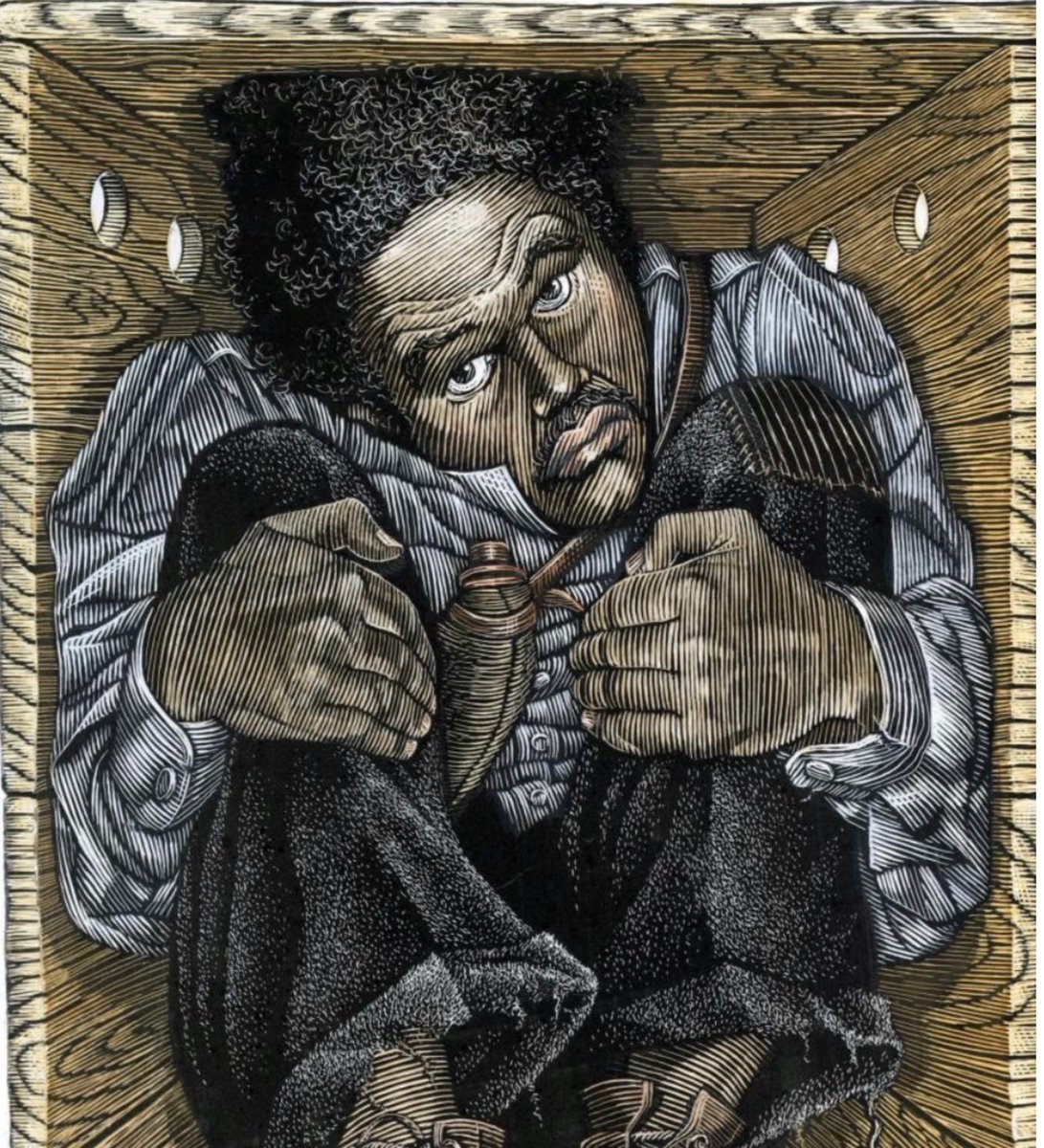
With the help of a free Black man named James C. A. Smith and a white shoemaker named Samuel Smith, Henry arranged to have himself shipped to Philadelphia, a free state, inside a wooden box.
A carpenter built a crate measuring just over three feet long, two feet wide and two and a half feet high.
It had only three small holes for air.
On March 23, 1849, Henry climbed inside with some water and a tool to make additional air holes if necessary.
His friends nailed the box shut and arranged for it to be transported through a private express company.
The journey covered approximately 350 miles and involved wagons, trains and steamboats.
The box was marked:
“THIS SIDE UP WITH CARE.”
But the warning was repeatedly ignored. 💔
At one point, the box was turned upside down and remained that way for an extended period. Henry later described feeling as though the blood was rushing to his head and his eyes might burst.
He knew that making a sound could expose the entire escape plan.
So he remained silent.
For 27 hours, he endured the darkness, heat, cramped space and terrifying uncertainty.
Finally, the box arrived in Philadelphia at the office of the Pennsylvania Anti-Slavery Society.
The people waiting for him knocked on the box to check whether he was alive.
Henry answered.
They immediately opened it.
He tried to stand, but the long confinement had left him so weak that he collapsed.
He had made it.
After spending his entire life as an enslaved man, Henry Brown had finally become free.
His extraordinary escape made headlines, and he became a prominent speaker in the abolitionist movement. He later travelled to England, where he performed and shared his story with audiences.
But there was a heartbreaking part to his freedom.
He never saw his first wife, Nancy, or their children again.
Henry eventually remarried and continued his life as a performer and abolitionist.
He died in Toronto in 1897.
An 11-year-old German boy was kidnapped by Apache raiders. Eight years later, when soldiers finally found him living among Native American tribes, he had become a warrior. And he didn’t want to return home. 😭
His name was Herman Lehmann, and his extraordinary story began in May 1870 in Texas.
Herman was almost 11 when Apache raiders captured him and his younger brother, Willie, while the boys were out in a field near their home.
The two brothers were taken away, but their fate soon took a different turn.
Willie managed to escape and return to his family within days.
Herman wasn’t so fortunate.
His captors took him into their community, where he was eventually adopted by an Apache warrior named Carnoviste and his wife.
At first, everything was frightening and unfamiliar. Herman knew only German and had never even attended school.
But gradually, he learned the language, customs and ways of life of the people around him.
He was no longer simply a captive. He was being raised as one of their own.
He learned to ride horses, use weapons and survive in the wilderness. Eventually, he became an Apache warrior and participated in raids and battles.
Then another tragedy changed his life.
Carnoviste was killed, and Herman killed the man responsible. Fearing retaliation, he fled and spent about a year living alone in the wilderness.
Eventually, he joined the Comanches.
There, he found another community and became part of their way of life. He was given the name Montechena and was eventually adopted by the famous Comanche leader Quanah Parker.
By then, eight years had passed since his capture.
His family back in Texas had long believed he was dead.
But in 1878, American soldiers discovered Herman among the Comanches at Fort Sill, Oklahoma.
When they realised he was a white captive, arrangements were made to return him to his family.
But now the problem was…
Herman didn’t want to go.
He had grown up among these communities. He had learned their ways, fought alongside their warriors and formed relationships that had become central to his life.
He was eventually returned to his family in Texas.
Imagine the moment…a mother who had spent eight years believing her son was dead suddenly had him back.
But the reunion was not a simple return to his childhood.
Herman struggled to adjust to his former life. He refused to sleep in a bed, disliked certain foods and continued wearing Native American clothing. At times, he even disappeared into the woods.
He never completely abandoned the culture and relationships he had formed during his years away.
He later wrote about his experiences in a book titled Nine Years Among the Indians, published in 1927.
Herman died in 1932, but his story remains one of the most extraordinary accounts of a child who grew up between two very different worlds.
He had been taken from his family at 11. When he returned at 19, he was no longer the boy they remembered.✨
The woman who convinced Britain’s top doctors that she was giving birth to rabbits. 🐰
Her doctor believed her. Then the story reached the royal court, and some of Britain’s most respected medical experts travelled to investigate. What they eventually discovered was even more unbelievable.
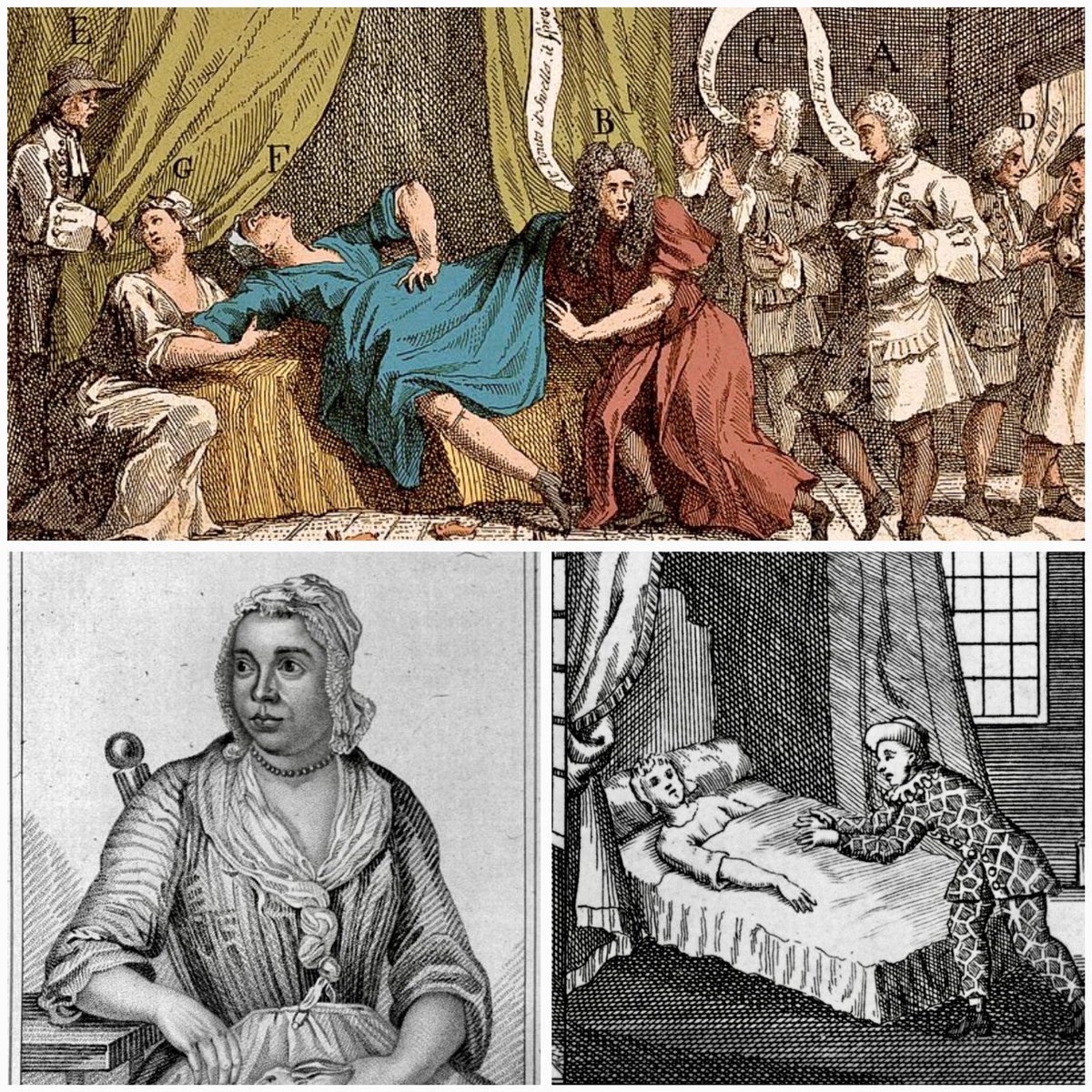
Her name was Mary Toft, and the bizarre episode unfolded in 1726 in Godalming, Surrey, England.
Mary, a poor 25-year-old woman, claimed that she had started giving birth to animal parts, including rabbits.
Her explanation was even stranger.
She said that a few months earlier, while working in a field, she had chased a rabbit that escaped. The incident supposedly left her with such an overwhelming longing for rabbits that it affected her pregnancy.
A local surgeon named John Howard was called to attend her.
And he believed her.
Howard claimed to have witnessed the extraordinary deliveries himself. He even preserved some of the animal remains and began informing other medical professionals about the case.
Soon, the story reached London.
One of the men who travelled to investigate was Nathaniel St André, a surgeon attached to the royal court of King George I.
He examined Mary, witnessed what he believed to be further rabbit deliveries and became convinced that the case was genuine.
Other prominent doctors also became involved.
The story caused a sensation across Britain. Newspapers reported it, pamphlets were published, and people debated whether such an extraordinary medical phenomenon could actually happen.
Even the royal court was following the affair.
But as more doctors examined Mary, doubts began to emerge.
She was eventually brought to London, where she came under much closer observation.
Then investigators discovered that rabbits had apparently been smuggled into the place where she was staying.
The entire story began to unravel.
On December 7, 1726, Mary confessed that she had fabricated the bizarre births.
She admitted that she had secretly obtained rabbits, cut them into pieces and inserted parts of their bodies into herself to deceive the doctors.
The woman who had managed to fool several respected medical professionals had been exposed.
The scandal became so famous that celebrated artist William Hogarth produced a satirical engraving mocking the doctors who had believed her.
The affair became one of the most notorious medical scandals of 18th-century Britain.
A dead man was discovered on a beach with no identification, no labels on his clothes and no obvious clues to his identity.
Then investigators found two mysterious words hidden in his pocket. What they uncovered next turned the case into one of Australia’s strangest mysteries.
It was December 1, 1948, when two people exercising horses discovered a man lying against a seawall at Somerton Beach in Adelaide, Australia.
He was wearing a brown suit, polished shoes and a tie. His appearance suggested he was around 40 years old.
But something about him was unusual.
There was no wallet. No identification. Even the labels had been removed from his clothes.
Police circulated his photographs and fingerprints, contacted authorities overseas and investigated missing-person reports.
Nobody could identify him.
Then, in January 1949, investigators discovered a suitcase in the luggage room of Adelaide Railway Station.
It had been checked in the day before the man’s body was found.
Inside were clothes, a shaving brush, scissors, a knife and other personal belongings.
Several items had their labels removed. Some carried the name “Keane”.
Police believed the suitcase might have belonged to the dead man, but it offered no definitive identification.
Then came an even stranger discovery.
During a later examination of his body, investigators found a tiny rolled-up piece of paper hidden inside a concealed pocket in his trousers.
It contained just two words:
“Tamam Shud.”
The words were Persian and meant roughly “finished” or “ended”.
They had been torn from the final page of a collection of poetry called The Rubaiyat of Omar Khayyam.
Police appealed to the public to find the missing book.
Eventually, a man came forward with a copy that had been found in his car. The torn edge matched the tiny piece of paper.
But the book contained another mystery.
On its back cover were a telephone number and a sequence of letters that appeared to form some kind of code.
Investigators tried to understand the letters, but nobody ever established what they meant.
Theories began spreading.
Some believed the man was a spy. Others suspected a secret relationship or an elaborate suicide.
But no explanation was ever proved.
For decades, the case became known as the Somerton Man mystery, one of Australia’s most famous unidentified-death investigations.
Then, in 2022, a university researcher named Derek Abbott announced a remarkable breakthrough.
Using DNA extracted from hairs preserved in a plaster cast of the man’s head, he and forensic genealogist Colleen Fitzpatrick identified a strong family connection to a Melbourne electrical engineer named Carl “Charles” Webb.
Webb was born in 1905 and had disappeared from his family’s records after 1947.
The DNA findings strongly pointed towards him as the man found on Somerton Beach.
However, as of November 2026, South Australian Police have not formally confirmed the identification. Their coronial investigation was still ongoing in July 2026.
And even if the identity is officially established, one enormous question remains:
What happened to Carl Webb, and how did he end up dead on that beach?
The man may finally have a name. But the circumstances of his death remain a mystery.
An 82-year-old man had almost forgotten what it felt like to be happy.
Then a 4-year-old girl walked up to him in a grocery store and did something that changed both their lives.
It happened in Georgia in 2016.
Little Norah Wood was shopping with her mother when she noticed an elderly stranger named Dan Peterson.
She walked up to him, started a conversation and asked him for a hug.
Her mother was touched by the interaction, but she had no idea how much that small moment meant to Dan.
She later learned that he had recently lost his wife and was battling depression. According to people close to him, he hadn’t smiled like that in a long time.
Norah’s family decided to stay in touch with him.
Soon, the little girl began visiting Dan regularly, bringing him drawings, sharing hugs and spending time with him.
Their bond grew so strong that Dan became part of the family’s celebrations, including Thanksgiving.
For a man who had been struggling with loneliness, a little girl he had met by chance had become one of the brightest parts of his life.
Dan passed away in 2020, but his friendship with Norah left a lasting mark on everyone who knew them.
A hug may last only a few seconds. But what it gives someone can stay with them for years. ❣️🫂