another 5 days later, zml/llmd runs fully on Metal, serving 8 simultaneous requests at full bf16
zml/llmd is our LLM serving software that all the modern niceties (continuous batching etc..)
ps: "full bf16", what a time to be alive
Hermetic LLVM now supports cross compiling libstdc++ from source.
Community asked for it and it was a prerequisite for supporting hermetic remote CUDA compilation since CUDA prefers libstdc++ headers over libc++.
Another step towards 100% hermetic builds.
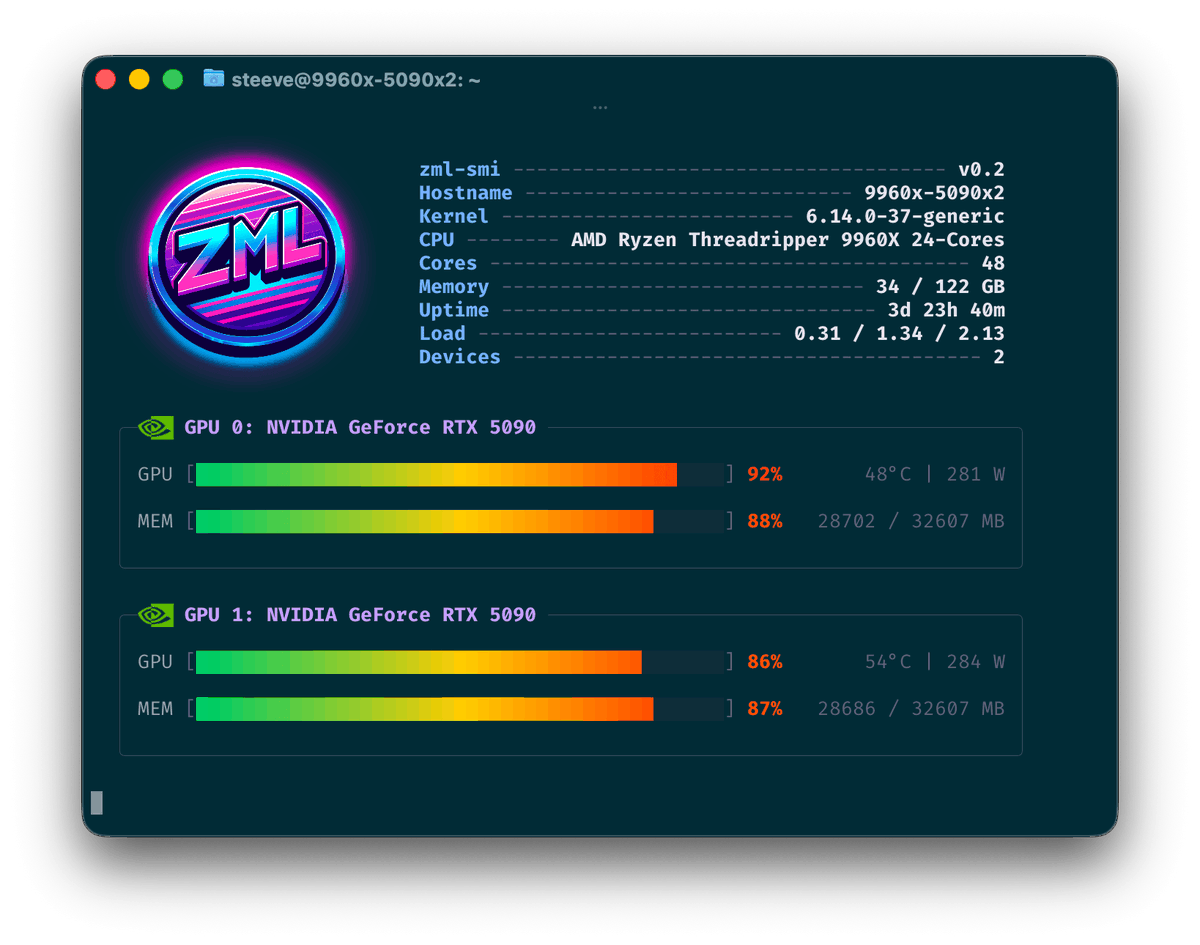
Introducing zml-smi, a universal diagnostic and monitoring tool for GPUs, TPUs and NPUs.
Real-time insights into the performance and health of your hardware.
Read & Download: https://t.co/zFUPLj2Sh5
We managed the holy grail of CUDA compilation: joining CUDA host code and device code at *link time*.
This means both build graphs (device and host) are now completely separated and built by SM.
True scalable CUDA build graphs are now possible. Those who know, know.
This rewrite was intense, but it unlocks a completely different level of control and performance for anyone serious about inference systems.
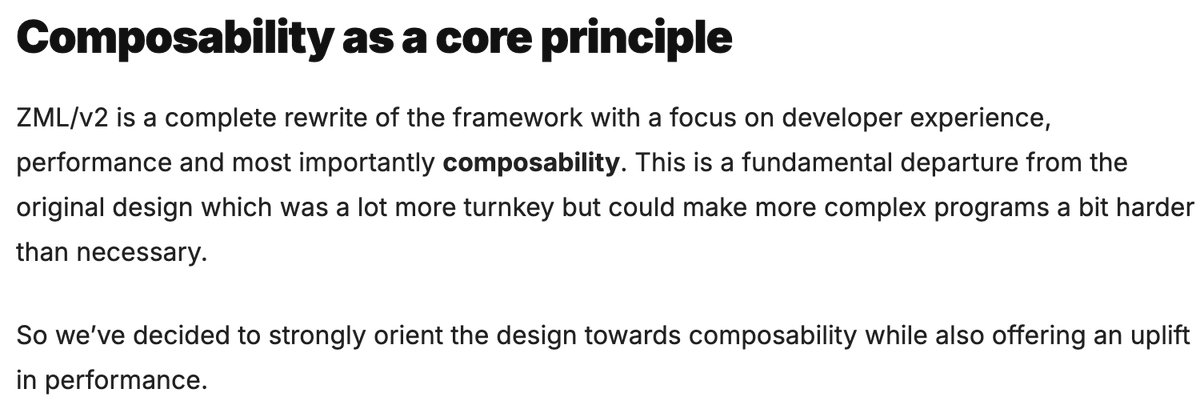
We flipped the model: explicit over implicit. Composability everywhere. Performance as a consequence of design, not patches.
Introducing ZML/v2
ZML/v2 is a complete rewrite of the framework with a focus on developer experience, performance and most importantly composability.
Link in next tweet.
I’m organizing a friendly meetup about performance in Paris on December 4. Whether you’re tuning databases, shaving CPU cycles and packets, optimizing AI inference, building web services, or simply curious about making things go faster, join us!
https://t.co/j3Dk7Lw9XU
In the Bay Area Nov 15–22 with part of the @zml_ai team—@steeve@TheCorendos. Happy to chat inference, production model serving, compilers and chips. Ping me if you’re around!
@StijnSmits@steeve Really interesting! If you want to dive deeper, check this out: https://t.co/PvETNZn69N and https://t.co/vqo6icXpyo.
Logical mesh and physical mesh are distinct so aligning them is key to maximizing TPU utilization (cause of diff. bandwidths). I’ll admit, it’s a bit of an art :)
There’s something deeply satisfying about shaping the full inference path — from low-level kernels to object files, from ABI quirks to the final binary — and knowing every piece is yours to understand, patch, and rebuild.
It’s not just control. It’s joy.
The @zml_ai team and @steeve cooked a new high-performance LLM inference engine.
- lightweight 2.4GB container
- easy on cross-platform
- written in zig
I just tested it and deployed on @huggingface Inference Endpoints. You can try it out in 5min! 👇