British conservationists and forestry researchers have completed Britain’s largest-ever woodland bat survey with the help of artificial intelligence.
Using recording devices placed across hundreds of English woodlands, researchers collected roughly 90,000 hours of audio, which was then reviewed by AI for the presence of bat calls. The researchers estimate that analyzing the recordings manually would have taken over 30 years.
Empirical research shows that economic freedom and globalization are associated with lower levels of nationalism, ethnocentrism, and discrimination.
https://t.co/nI7Bxn3oUG
If your next meal is in doubt, deciding what to do with your life is relatively straightforward.
Prosperity creates a harder question: now that you have some choice, what is worth doing?
Critics of modernity often treat the difficulty of answering that question as evidence that progress has left us worse off. @SteveDavies365 argues that it is a problem of success.
Read more: https://t.co/IEHOAoKPRf
Long before Malthus, the ancient Greeks worried that humanity was overpopulating the Earth.
One epic even portrayed the Trojan War as Zeus’s solution to the problem—at a time when the entire human population may have numbered just 50–100 million.
https://t.co/REfizDt3gK
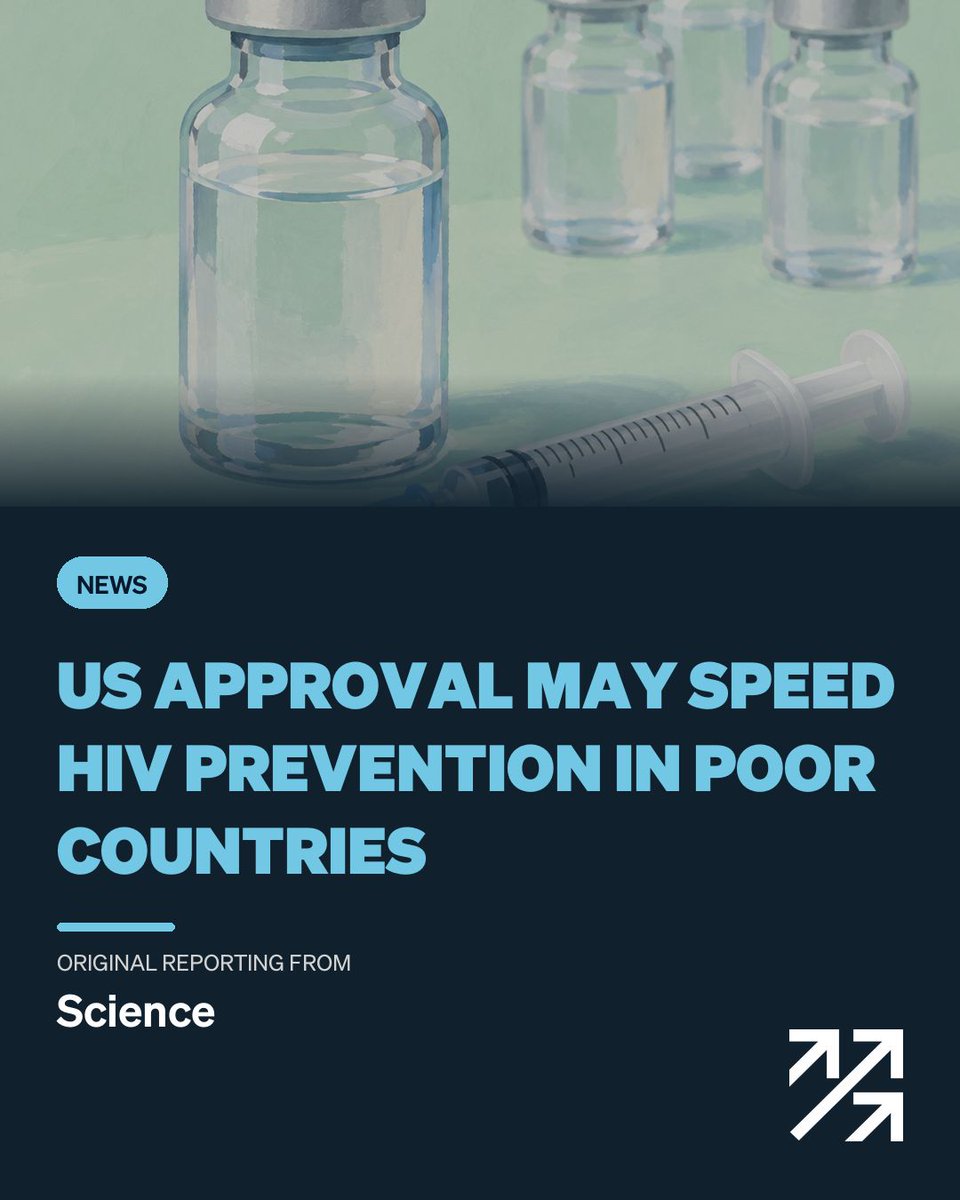
The US Food and Drug Administration has tentatively approved the first generic version of lenacapavir, a groundbreaking HIV drug that prevents infection with just two yearly injections.
Dr. Reddy’s Laboratories, an Indian pharmaceutical company, developed the generic formulation and has pledged to sell it for $40 per person annually. The “tentative” approval means that the drug meets FDA standards but cannot be sold in the United States because of existing patent protections.
However, because many foreign regulators rely on the FDA’s assessments of new drugs, the approval should accelerate the drug’s distribution abroad. Under a 2024 licensing agreement with Gilead Sciences, lenacapavir’s original developer, generic versions can be sold in 120 low- and middle-income countries.
Economic historian Joel Mokyr argues that the Industrial Revolution succeeded because practical knowledge and conceptual understanding advanced together.
AI is transforming the speed at which we acquire the former, but the latter remains essential.
To make the most of artificial intelligence, we will need plenty of human intelligence.
https://t.co/qnBKzk2t2N
Without farming, burning fossil fuels, and other ecologically disruptive activities, humans would not be much closer than chimpanzees to colonizing space—and thus securing the future of life on Earth.
https://t.co/hOWua3TRsC
Recent tariff hikes added at least $10,000 to the price of a typical home. Building regulations add $90,000, and can make up 40% of the cost of multifamily housing.
The best thing governments can do to address the housing crisis is to get out of the way.
https://t.co/gXj8BhvWnf
In many preindustrial societies, water was so filthy that drinking it became associated with poverty and low status.
Learn more about the everyday hardships of the past in @chellivia’s latest book, The Grim Old Days.
Wealthy societies can afford to screen for and treat conditions that our ancestors endured in silence.
That is a form of progress.
However, thanks to the way that our healthcare system is structured, that ever-expanding pool of diagnoses diverts resources away from the truly needy.
From @AdamOmaryPhD: https://t.co/ahK1CpxGKz
One of the great triumphs of entrepreneurial capitalism is how quickly air conditioning transformed from a rare luxury into an ordinary necessity.
Since 1952, the number of hours of entry-level work required to buy an air conditioner has fallen by nearly 99 percent.
https://t.co/fUfqoBa39Y
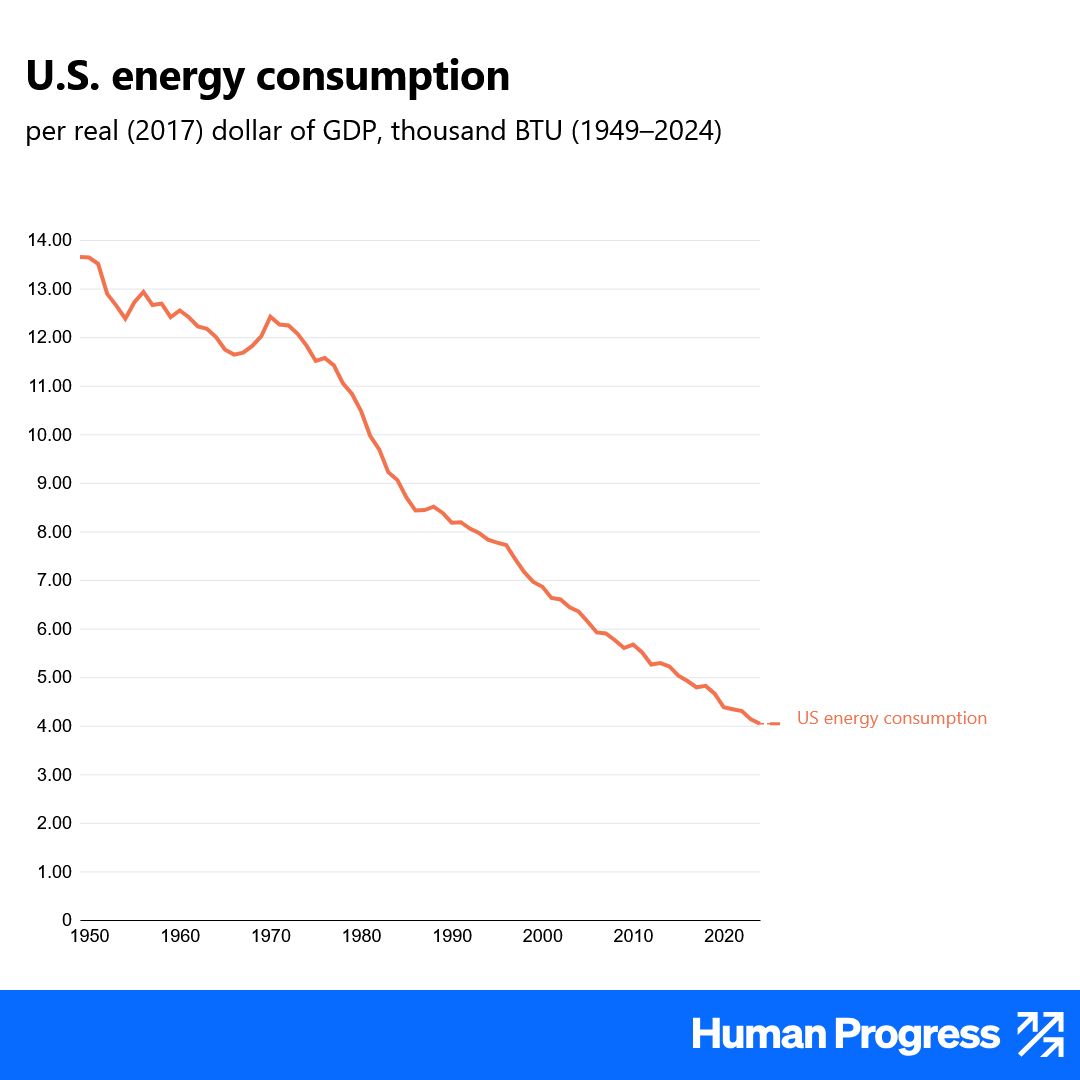
The US economy keeps getting more out of less.
The energy needed to produce a dollar of GDP has fallen by about 70% since 1949, and by half since 1990.
In 2024, it hit 4,040 BTUs per dollar, the lowest on record.
Explore the data: https://t.co/3i79ASgmAx
Social media platforms don’t just feed us headlines that align with our politics.
They also bait our ancient instincts and strongest emotions.
https://t.co/mdZNCTpe93
In the 1930s, US corn yields averaged 26 bushels per acre.
In 2025, that number reached 179.3 bushels per acre—with top-performing farms reaching an astonishing 624 bushels.
https://t.co/EPhZEcSYbi
When electricity was first developed, nobody could have predicted all the ways it would eventually transform human civilization.
@kristianstout of @LawEconCenter argues that AI is a similarly transformative technology: its greatest benefits may come from applications we haven't even imagined yet.