Remote Sensing Specialist/Data Scientist. Interested in forest, agriculture and biodiversity mapping/monitoring with remote sensing tech and machine learning.
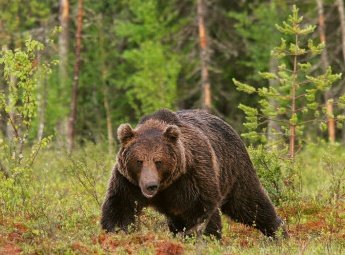
Norway's government is authorising the killing of bears, lynx, wolverines, and wolves. All are Endangered or Critically Endangered. The UK imported £15.8 billion of Norwegian goods (mainly oil but also seafood) in 2021, and we only exported £7.1B. #1/2
New data covering 30,000 km2 of southern Kenya's rangelands are now available: https://t.co/gfWEyGHMc2
Working with 17 organisations and 32 authors, we collated spatial data including 31,000 livestock enclosures, nearly 40,000 km of fencing, and 1,500 km2 of agriculture 🧵
Happy day 8 Choco Fans! Noticed something different in your calendar today? Yep, it's empty.. And why? 'Cos at Tony’s we use our products to tell the story of the choco industry – an industry unequally divided and choc-full of inequality. Read on..🧵#chocolate#impact
Is climate change causing fruit famine in the rainforests of Central Africa?
..
Follow this thread to find out more about our new paper @ScienceMagazine - led by myself and @RWhytock with an incredible team of Gabonese, UK and int'l researchers 👇
..
https://t.co/iLFHuExRx3 1/
Please share with anyone who might be interested: Our British Ecological Society blog article providing evidence for, and explaining why in rangelands "what's good for livestock can be good for wildlife," based on our knowledge and experience from E Africa https://t.co/HKgYQYkipm
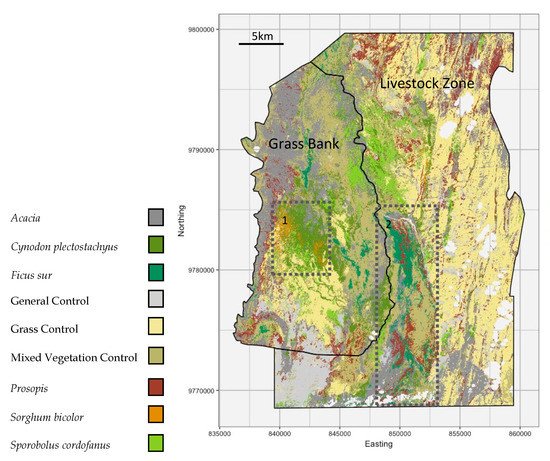
Species level mapping with time series imagery is just as accurate as when using a single hyper-spectral image. See my new paper mapping grazing resources in African savannas with @EdMitchard and @petertyrrell_ke in the journal of remote sensing at https://t.co/9PSmEvSbv4
If you are interested in species-level mapping of savanna ecosystems. Take a look at @HunterF69747443's new paper https://t.co/kXubTs4qOy, which demonstrates how its done using Sentinel Imagery! Useful for monitoring, research, and management decisions. In @remotesens_mdpi
@GeorgeMonbiot Are there any papers quantifying the effect of burning in moors (grouse moors or other) on diversity? Burning in grasslands can result in increased heterogeneity and therefor habit/grazing heterogeneity which consequently increases diversity - a concept known as pyrodiversity.
Reading articles like this on permafrost melting, I can't help feel we declared a climate emergency 40 years too late.
Even if we stop CO2 emissions now, the world will stay warm, & permafrost will keep collapsing, releasing more CO2. https://t.co/eb06NKAyOI
(ht @SimonLLewis)
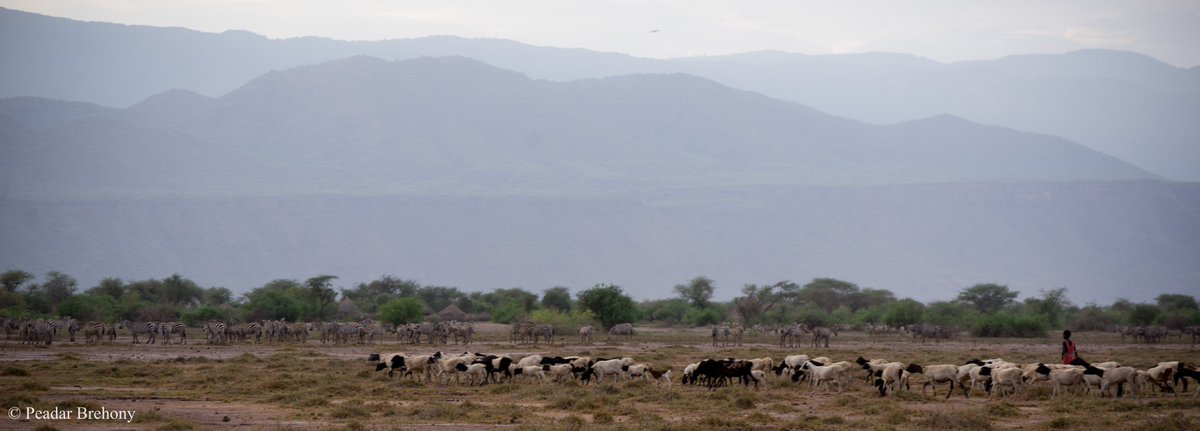
An excellent piece by Mongabay on the co-existence of pastoralists and wildlife in the area I spent much of last year in. While in this landscape I studied the effects of livestock and wildlife grazing on rangeland vegetation, I hope to publish the work this summer.