Hinduism is the bitcoin of religions. Decentralized. Incorruptible by humans or authorities. Established Philosophical Foundation for all other projects/religions.
can confirm. i once lived in Paraguay. many speak german. when traveling in the bush, running upon a colony is a blessing b/c their baked goods are heavenly.
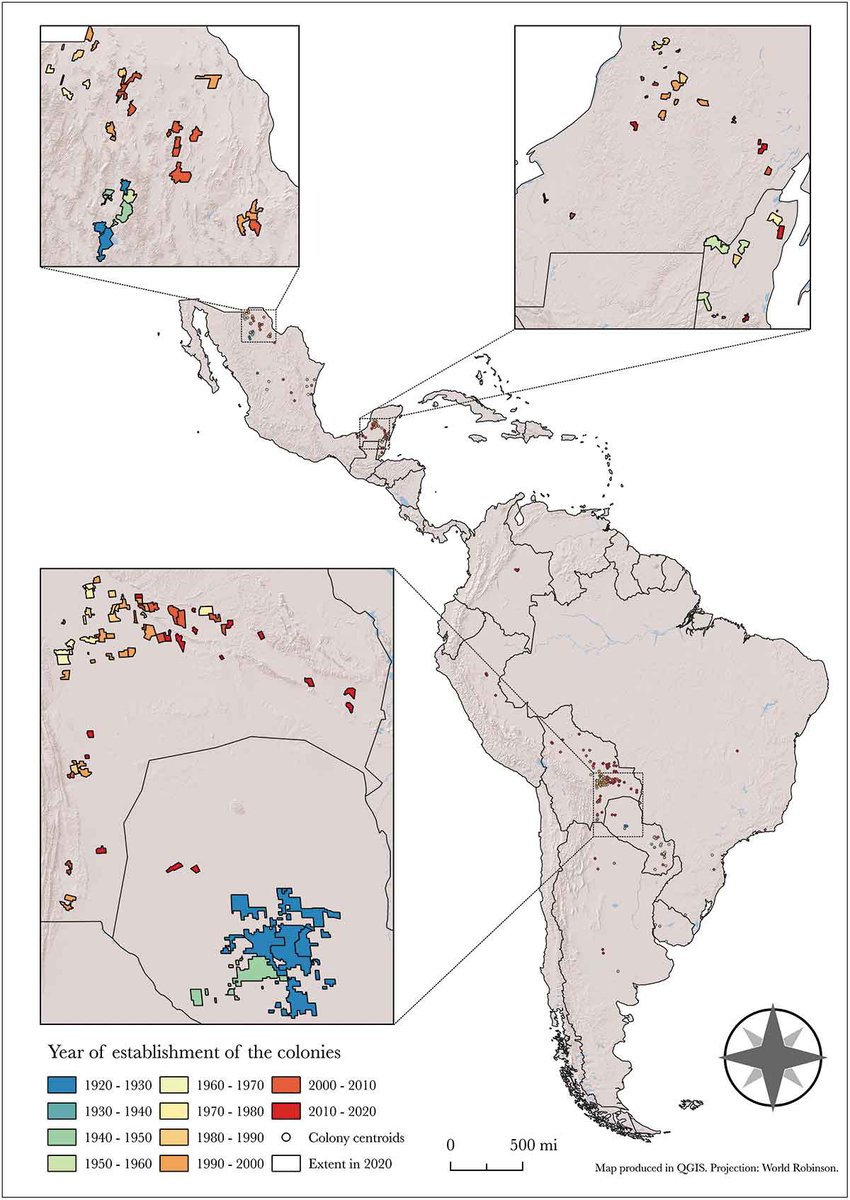
Latin America is the new frontier for Old Colony Mennonites. They are spread across 200 colonies with 200,000 people in a combined area almost equal to that of the Netherlands and twice that of Israel. Link to article below.
Can we create a central online platform where you have to approve anyone that wants to send you mail? And log in to simply change address when moving? Physical mail should go through a digital layer first.
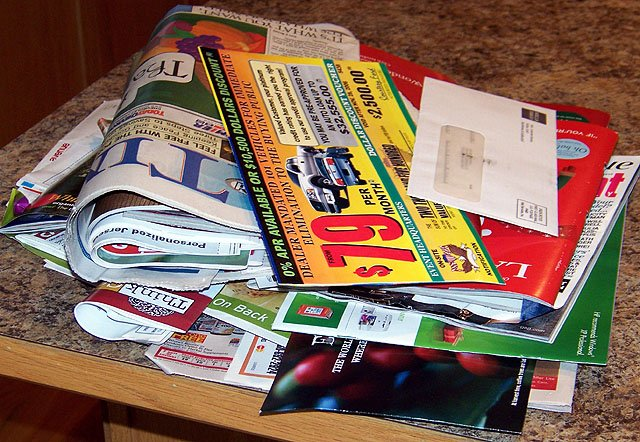
It is time for the United States Postal Service to ban junk mail.
Unsolicited spam calls are already prohibited by the FCC. Emails are heavily regulated by the CAN-SPAM Act of 2003. Junk mail is the majority of mail, 100 million trees per year. Enough!
The joy of owning beautiful things, a good knife, a proper linen towel, a jar of excellent honey, one soul encapsulating perfume, over many mediocre things. Doing this slowly across every domain.
the pollution just moves from one place to another with no net impact on planet earth. It is inhumane for rich countries to restrict developing nations from growing (see the great book, Green Power, Black Death)
Thank you Germany 🇩🇪and Britain 🇬🇧 for sacrificing your economies to save the planet.
China appreciates you exporting your manufacturing to provide jobs for their citizens.
A kid drew himself sleeping in bed between mom and dad and labeled it 'safe.'
In Japan, this exact sleeping arrangement has a name. They call it 'the river.' Mother is one bank. Father is the other. The child between them is the water. Roughly 70% of Japanese mothers sleep this way with their kids, sometimes through the teenage years. The Western model of putting a kid alone in their own bedroom is barely 200 years old. For most of human history, in most cultures still alive today, kids slept beside their parents.
James McKenna runs the Mother-Baby Behavioral Sleep Lab at Notre Dame. He spent decades watching what happens when parents and kids share a bed. The bodies sync up. Heart rates align with the parent's, breathing falls into the same rhythm, and by morning even sleep stages have started matching. The parent's body, in McKenna's words, acts as a kind of biological jumper cable for the child's.
In 2013, researchers in the Netherlands tracked 193 babies through the first year of life. They measured cortisol, the brain's main stress hormone. Babies who had spent more weeks co-sleeping in the first six months produced less cortisol under stress at 12 months. Sleeping near a parent had rewired the kid's stress system to be calmer under pressure.
Inside the kid's brain at night, the amygdala, the fear alarm, gets more sensitive as the body gets tired. Darkness makes it worse. A 2021 paper in PLoS One from Australian researchers showed that light directly suppresses amygdala activity. Lights off, alarm louder. The whole brain is wired to read 'alone in a dark room' as a threat.
Now add a parent's body to that bed. The kid's nervous system reads warm body, breathing nearby, familiar smell. The threat alarm dials down. Two parents on either side dial it down twice. The drawing is the kid's brain calculating maximum safety: I am surrounded by the people who keep me alive, and nothing can reach me without going through them first.
The arrangement in this drawing is what most of human history called 'sleeping.' Sleeping the kid alone in another room is a 200-year-old Western invention that we forgot was an invention. Every kid who has ever padded into your room at 3am and crawled into the middle of the bed is just trying to redraw the picture.
Like I’ve always said, Spanish colonial homes are the most people-centered homes ever built.
Plants flourish and coexist in harmony with people. The courtyard designs and verandas hold conversations and family celebrations. Colombia, Mexico, and Peru built entire cities this way.
Thick lime walls kept the heat out without a single electricity bill. The building understood where it was.
I don’t believe we chose square boxes over these timeless beauties. The earth needs more of these
I was in a sauna where this man and his friend were discussing what sort of adventure they wanted to go on for his 30th birthday. Something "extreme, unexpected, never before seen" were the approximate requirements.
Cambodian river hunting, Afghani mountain climbing, Patagonian glacier trekking was floated. Yacht rentals with billionaire friends were mentioned. Bharatpur, Ulaanbaatar, Nairobi. Ice, volcano, jungle. The entire world traversed in a single conversation.
And I pondered, the ridiculousness of a man constructing adventure, rather than suffering it as it arrives. True adventure is not purchased on your phone, it is inflicted. It is illness, it is heartbreak, it is grief. The man scheduling an adventure is fleeing the one waiting for him at home. Attendre et espérer.
the annual social cost of cancer and auto accidents are very roughly equivalent
imagine a new cancer drug came out that reduced mortality by 90% across *every* cancer
And the AMA aggressively lobbied against it because of its potential suppressive impact on hospital visits and surgeries...
That is the unions wrt to autonomous robotaxis right now.
There is a hypothesis that birth order effects (on things like income and educational attainment) are in part respiratory pathogen effects: younger kids get more of them from their older siblings. This cool recent paper uses Danish administrative data to argue that this is true and a pretty large part of the story. (They claim 70% of the birth order effect on long-run wages.)
Other work has previously shown that severe infections matter for long-run outcomes, and it's well-established that birth order matters, but I haven't until now seen anyone convincingly show that standard respiratory pathogens impose long-term costs on infant siblings.
https://t.co/jpVYsAczQ7
Taleb has a thought experiment in The Black Swan. Imagine a legislator who, before 9/11, mandated reinforced cockpit doors. The attacks never happen. Nobody knows. He gets no credit. Probably even criticized for the cost.
This seems to be what Musk is describing here. The 90% whose lives are saved by self-driving cars will never know. But the 10% who still die? Those become lawsuits, headlines, and outrage.
We used to have these. They were called Apartment Hotels. They’d consist of a single room with a bathroom, housecleaning, a cafeteria and lounges. Imagine being able to rent month to month and not need to furnish an apartment. It was ideal. Nuts we got rid of these.
Since its opening in 2011 Ciudad Cayalá, Guatemala, population 12,000, has not had a single security or safety incident more serious than a pickpocketing. No traffic accidents either, as far as I know. This has got to be some sort of record.
Colleges finally concede: you don't need to come here anymore. It's just as good (even better) to take classes online. Most online schools are free. We've been raising tuitions 10% a year for 50 years only because you've been stupid enough to borrow it and pay us.
It turns out major social problems can be solved simply by dropping the hammer on the small percentage of people who refuse to conform to social norms.
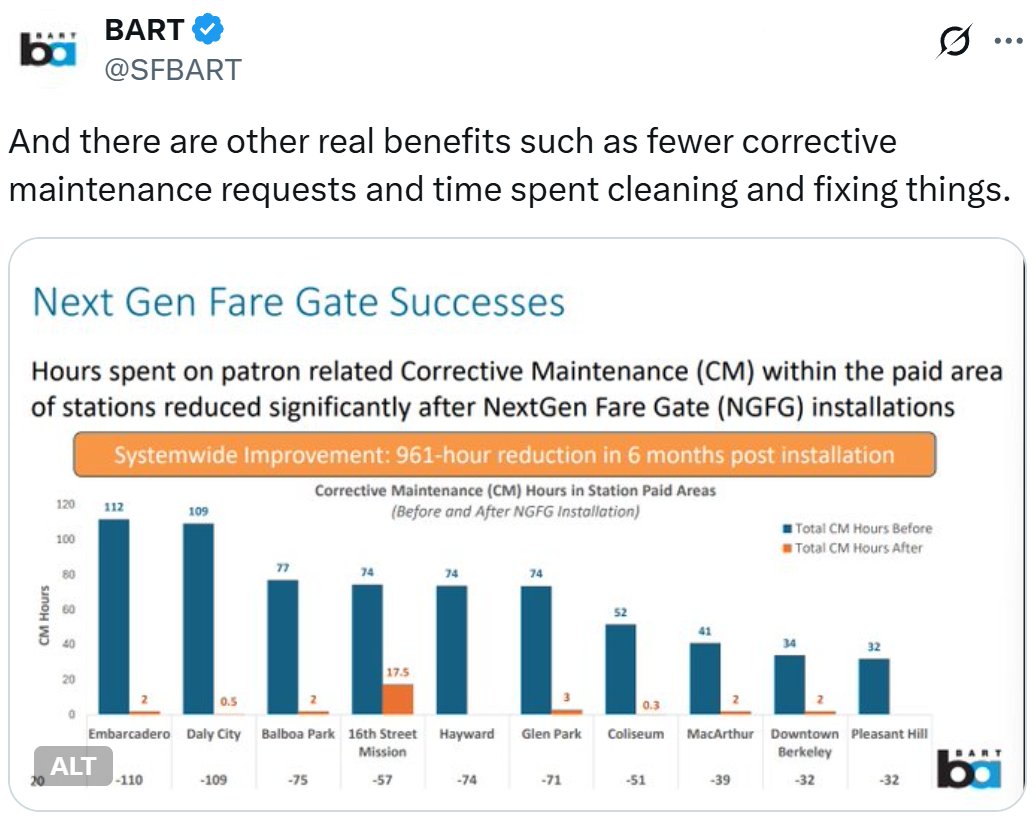
I think it bears repeating that BART installed tall gates to enter the subway and they're gaining $10m in revenue a year plus the need for maintenance is down by
*95.7%*
Passengers who were unwilling to pay a few bucks were causing 96% of the public cleanliness problems!