PRU16 belum sampai lagi. Tapi apa yang @rafiziramli cakap masa pemilihan tahun lepas, sudah pun berlaku dalam 3 PRN Sabah, Johor dan N9.
Kepimpinan mana yang kita mahu? Kepimpinan yang datang ketika parti sedang berkuasa (katak2, opportunist2 dan penjilat2)? Kepimpinan inilah yang melingkupkan Parti Mata Lebam di 3 negeri itu. Next Melaka dan Sarawak juga bakal ghuyub! 🫵🏼
They brought Zahid back. They sat silent as his 47 charges melted away. Now they warn us he could be PM. The party that enabled his return has no standing to sound the alarm.
https://t.co/6n0sgWJRsy
TIADA REFORMASI DI KUALA LUMPUR JUGA SATU KEPUTUSAN POLITIK
Rumusan kajian yang dijalankan oleh UIAM mengenai kebolehlaksanaan mengadakan pilihan raya Datuk Bandar di KL pada asasnya dilihat menyokong status quo, iaitu amalan melantik Datuk Bandar oleh Kerajaan Persekutuan.
Berdasarkan laporan media, rumusan tersebut dilihat tidak menyokong bukan sahaja pelaksanaan pilihan raya Datuk Bandar atau pelantikan ahli majlis (seperti yang dicadangkan dalam RUU Persendirian yang pernah saya bentangkan bersama beberapa Ahli Parlimen KL ketika saya masih berada di Dewan Rakyat), malah turut menasihatkan supaya tiada pindaan dibuat terhadap Akta Ibu Kota Persekutuan.
Sejujurnya, saya tidak terkejut dengan dapatan yang dilaporkan ini. Saya telah memberikan kerjasama sepenuhnya kepada pasukan yang menjalankan kajian tersebut dan cuba mengekalkan sikap terbuka sepanjang kajian tersebut dijalankan.
Namun begitu, tanggapan saya selepas pertemuan dengan mereka ialah pasukan yang mengetuai kajian ini sememangnya sejak awal lagi tidak cenderung kepada sebarang pindaan. Sukar untuk tidak tertanya-tanya sama ada kesimpulan terhadap isu ini telah pun dibuat lebih awal.
Walau bagaimanapun, terdapat beberapa hujah dalam rumusan tersebut yang wajar diberi perhatian. Kajian itu berhujah bahawa sebarang perubahan terhadap kaedah pelantikan atau fungsi Datuk Bandar akan bercanggah dengan tujuan asal Akta Ibu Kota Persekutuan, iaitu pemisahan pentadbiran bandar daripada politik kepartian. Perkara ini juga dikatakan boleh memberi kesan kepada Perjanjian Penyerahan KL oleh Selangor pada tahun 1974.
Namun, hujah pertama itu tidak mengambil kira hakikat bahawa dalam sistem sedia ada, Datuk Bandar sendiri merupakan lantikan politik kerana pelantikannya dibuat oleh Kerajaan Persekutuan. Maka, boleh diperkatakan bahawa apa jua bentuk tadbir urus KL pada masa hadapan, sama ada mengekalkan sistem sedia ada atau memperkenalkan reformasi yang masih belum diperincikan, tetap merupakan satu keputusan yang bersifat politik.
Ironinya, rumusan tersebut turut mencadangkan pengukuhan peranan Ahli Parlimen KL. Sebagai wakil rakyat yang dipilih melalui pilihan raya, bukankah mereka juga merupakan ahli politik? Bagaimanakah pengukuhan peranan ini boleh mengurangkan sifat “politik” jika dibandingkan dengan pemilihan seorang Datuk Bandar secara demokratik atau pelantikan ahli majlis?
Perkara yang sama boleh dikatakan mengenai cadangan supaya ahli Lembaga Penasihat KL dilantik berdasarkan kuota bagi golongan pakar dan wakil masyarakat sivil. Walaupun pendekatan ini boleh membantu memastikan keterwakilan yang lebih baik, perlu diakui bahawa penetapan kuota juga merupakan satu keputusan yang bersifat politik. Hakikat itu sendiri tidak semestinya sesuatu yang negatif.
Rumusan tersebut juga tidak menjawab persoalan pokok ; penduduk Kuala Lumpur tidak mempunyai hak demokrasi yang dimiliki oleh rakyat di negeri-negeri lain, iaitu mempunyai dua saluran perwakilan melalui undi, satu untuk memilih Ahli Parlimen dan satu lagi untuk memilih ADUN.
Menyedari cabaran untuk melaksanakan pilihan raya kerajaan tempatan dalam masa terdekat, RUU Persendirian yang saya cadangkan sebelum ini mengemukakan pelantikan ahli majlis sebagai langkah peralihan. Tujuannya ialah sekurang-kurangnya untuk menyediakan satu lagi saluran akauntabiliti dan perwakilan yang sekian lama tidak dinikmati oleh warga KL.
Amatlah mendukacitakan sekiranya Kerajaan Persekutuan melepaskan peluang yang begitu bermakna ketika negara dipimpin oleh seorang Perdana Menteri daripada Pakatan Harapan, Menteri yang bertanggungjawab terhadap Wilayah Persekutuan juga daripada Pakatan Harapan, dan selepas Pilihan Raya Umum 2022, 10 daripada 11 kerusi Parlimen KL dimenangi oleh Pakatan Harapan yang telah berjanji untuk memperkukuh pendemokrasian dan meningkatkan akauntabiliti dalam pentadbiran DBKL.
@partibersamamy
Johor is not the first time we saw what a consolidated Malay vote can do.
To a certain extent, it occured in GE15 in 2022, when the majority of Malay voters threw their support behind PN.
As a result, PN not only walloped BN, it also crushed PH’s hopes of forming a government on its own.
REF:
Bridget Welsh | GE15 voting analysis – Part 7: Battle for Malays
https://t.co/4Dqw6hW6Bv
Soalan 17: Sdr Raf nak sambung belajar? Jawapan: Ada plan, maybe law or history & religious studies
Soalan 18: Apa masalah laksana reform? Jawapan: PKR & PH dilihat oleh PM tiada kekuatan, PM nak kena jaga hati penjawat awam, PM tiada certainty & clarity budaya yg perlu tukar
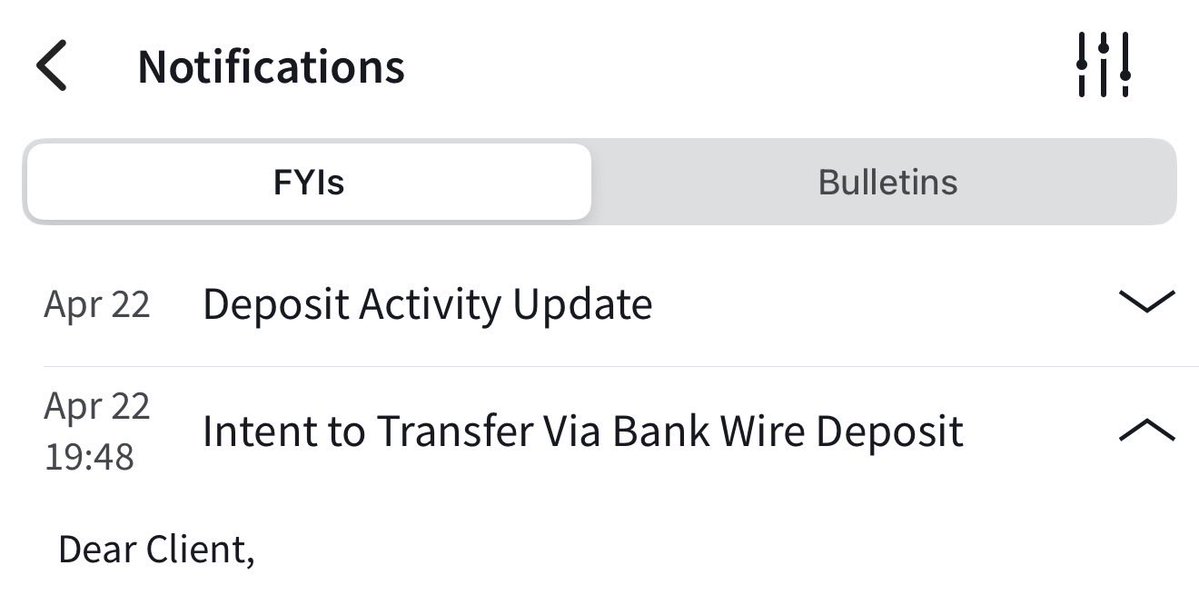
Initiated the transfer from https://t.co/Q1rmaSYS2c 19:48 and received it in my @IBKR USD account at 20:37.
Zero fees.
Less than 60mins to clear. (probably faster for banking hours)
With named payouts allowing you to receive transfers in your name, this makes @nativemarkets one of the best on/off ramp in crypto.
Prior to this, I had to route stables to off-ramp entities wait for T+1 to receive it in a bank then wait for another T+1/2 to get stables over to IBKR with fees.
Now you can do it at 0 fee from HL<> IBKR with USDH<>USD
Colossus Magazine just published a deep profile on Jeffrey Yan, the 31-year-old behind Hyperliquid, a crypto trading exchange that generated over $900 million in profit last year with 11 employees. He turned down $100 million in VC funding, airdropped billions in tokens to strangers, and now needs a bodyguard to leave his office. Here's the breakdown:
> Hyperliquid is a blockchain with a trading exchange built on top. Users keep custody of their own money and all accounting is on-chain. It has a $10 billion market cap and has never taken a dollar of venture capital.
> Yan started with $10,000 in personal savings running an anonymous trading operation called Chameleon Trading from a one-bedroom apartment in Puerto Rico, working 100+ hour weeks off a TV screen while his partner got roughly 30 minutes of his attention per day.
> The 11-person team generated $900 million in profit last year. Their office has 34 stuffed animal toys and their cleaner thinks they're a merchandising company that makes stuffed cats.
> Yan won gold at the International Physics Olympiad at 18, finished first out of 150 students in Harvard's notoriously difficult CS 124 course as a freshman, and left Hudson River Trading after eight months because he couldn't answer the question "What value are you adding to the world?"
> When VCs offered around $100 million at a billion-dollar valuation, Yan took a weekend to think, then told his co-founder iliensinc "We're not going to take it." Her response was "What the fuck?"
> On November 29, 2024, Hyperliquid airdropped 31% of its total token supply to roughly 94,000 early users with no conditions or vesting. At all-time highs, the airdrop was worth $16 billion. The team received nothing that day.
> Independent builders are now launching products on the platform that Yan's team never built. Trade[XYZ] listed a perpetual on the S&P 500, officially licensed by S&P Dow Jones Indices, that trades around the clock including weekends. When the U.S. and Israel bombed Iran on a Saturday, Hyperliquid's crude oil volume went from $21 million to $3.7 billion while the CME was closed.
> In March 2025, a trader exploited HLP (the community vault) through a coordinated attack on an obscure token called Jelly Jelly, causing $12 million in losses before Yan's team intervened by delisting the token and settling at a fair price. The vault recovered its losses within 24 hours.
> Yan's college friends include Scott Wu (co-founder of Cognition AI), Alexandr Wang (Scale AI), and Jesse Zhang (Decagon). At an HRT internship, Wu and Yan finished first and second in every round of a three-week competition.
> The team eats lunch together daily. On Thursdays they eat Chipotle, but there's no Chipotle in Singapore, so they gave the recipes to their chef. Yan owns 15 pairs of the same Lululemon shorts and 10 of the same T-shirts, and cuts his own hair because going to a barber takes time.
BCA Research Hormuz Dashboard... open to the general public (not behind paywall). Use it to track data on the crisis and its market impact. Bookmark this page!
https://t.co/2w3YrSskk8
If you want to know when it’s time to get bearish oil, just watch refining margins.
In COVID, some of the signals were:
First, these signals peaked.
Floating storage
Tanker rates
Contango
After, refining margins, which were negative in early May started to rebound.
Refining margins only rebounded because product storage started to drain.
Refineries at the time were in a precarious place. OPEC+ had just reduced production by 10 million b/d. Mandatory lockdowns destroyed oil demand, so refining margins had to go up in order for crude oil to rally.
When it finally did, that was when crude started to rally with a bit more leg.
This time around, a similar playbook will happen but in reverse.
Refining margins will be a key indicator for when the global economy cannot handle higher prices any longer. We are already seeing some of that in Southeast Asia, but it’s not widespread yet.
Once you hear about how refineries are forced to cut throughput and can no longer afford crude, that will be the signal to sell your crude oil longs.
On Friday, I presented a risk assessment briefing re the Iran war to my team on an internal call. We thought it was worth sharing the notes (which were AI-transcribed & summarized), so here goes. Posting without much editing to save time.





![ohryansbelt's tweet photo. Colossus Magazine just published a deep profile on Jeffrey Yan, the 31-year-old behind Hyperliquid, a crypto trading exchange that generated over $900 million in profit last year with 11 employees. He turned down $100 million in VC funding, airdropped billions in tokens to strangers, and now needs a bodyguard to leave his office. Here's the breakdown:
> Hyperliquid is a blockchain with a trading exchange built on top. Users keep custody of their own money and all accounting is on-chain. It has a $10 billion market cap and has never taken a dollar of venture capital.
> Yan started with $10,000 in personal savings running an anonymous trading operation called Chameleon Trading from a one-bedroom apartment in Puerto Rico, working 100+ hour weeks off a TV screen while his partner got roughly 30 minutes of his attention per day.
> The 11-person team generated $900 million in profit last year. Their office has 34 stuffed animal toys and their cleaner thinks they're a merchandising company that makes stuffed cats.
> Yan won gold at the International Physics Olympiad at 18, finished first out of 150 students in Harvard's notoriously difficult CS 124 course as a freshman, and left Hudson River Trading after eight months because he couldn't answer the question "What value are you adding to the world?"
> When VCs offered around $100 million at a billion-dollar valuation, Yan took a weekend to think, then told his co-founder iliensinc "We're not going to take it." Her response was "What the fuck?"
> On November 29, 2024, Hyperliquid airdropped 31% of its total token supply to roughly 94,000 early users with no conditions or vesting. At all-time highs, the airdrop was worth $16 billion. The team received nothing that day.
> Independent builders are now launching products on the platform that Yan's team never built. Trade[XYZ] listed a perpetual on the S&P 500, officially licensed by S&P Dow Jones Indices, that trades around the clock including weekends. When the U.S. and Israel bombed Iran on a Saturday, Hyperliquid's crude oil volume went from $21 million to $3.7 billion while the CME was closed.
> In March 2025, a trader exploited HLP (the community vault) through a coordinated attack on an obscure token called Jelly Jelly, causing $12 million in losses before Yan's team intervened by delisting the token and settling at a fair price. The vault recovered its losses within 24 hours.
> Yan's college friends include Scott Wu (co-founder of Cognition AI), Alexandr Wang (Scale AI), and Jesse Zhang (Decagon). At an HRT internship, Wu and Yan finished first and second in every round of a three-week competition.
> The team eats lunch together daily. On Thursdays they eat Chipotle, but there's no Chipotle in Singapore, so they gave the recipes to their chef. Yan owns 15 pairs of the same Lululemon shorts and 10 of the same T-shirts, and cuts his own hair because going to a barber takes time.](https://pbs.twimg.com/media/HFycyoAWwAACyYc.jpg)







![ohryansbelt's tweet photo. Colossus Magazine just published a deep profile on Jeffrey Yan, the 31-year-old behind Hyperliquid, a crypto trading exchange that generated over $900 million in profit last year with 11 employees. He turned down $100 million in VC funding, airdropped billions in tokens to strangers, and now needs a bodyguard to leave his office. Here's the breakdown:
> Hyperliquid is a blockchain with a trading exchange built on top. Users keep custody of their own money and all accounting is on-chain. It has a $10 billion market cap and has never taken a dollar of venture capital.
> Yan started with $10,000 in personal savings running an anonymous trading operation called Chameleon Trading from a one-bedroom apartment in Puerto Rico, working 100+ hour weeks off a TV screen while his partner got roughly 30 minutes of his attention per day.
> The 11-person team generated $900 million in profit last year. Their office has 34 stuffed animal toys and their cleaner thinks they're a merchandising company that makes stuffed cats.
> Yan won gold at the International Physics Olympiad at 18, finished first out of 150 students in Harvard's notoriously difficult CS 124 course as a freshman, and left Hudson River Trading after eight months because he couldn't answer the question "What value are you adding to the world?"
> When VCs offered around $100 million at a billion-dollar valuation, Yan took a weekend to think, then told his co-founder iliensinc "We're not going to take it." Her response was "What the fuck?"
> On November 29, 2024, Hyperliquid airdropped 31% of its total token supply to roughly 94,000 early users with no conditions or vesting. At all-time highs, the airdrop was worth $16 billion. The team received nothing that day.
> Independent builders are now launching products on the platform that Yan's team never built. Trade[XYZ] listed a perpetual on the S&P 500, officially licensed by S&P Dow Jones Indices, that trades around the clock including weekends. When the U.S. and Israel bombed Iran on a Saturday, Hyperliquid's crude oil volume went from $21 million to $3.7 billion while the CME was closed.
> In March 2025, a trader exploited HLP (the community vault) through a coordinated attack on an obscure token called Jelly Jelly, causing $12 million in losses before Yan's team intervened by delisting the token and settling at a fair price. The vault recovered its losses within 24 hours.
> Yan's college friends include Scott Wu (co-founder of Cognition AI), Alexandr Wang (Scale AI), and Jesse Zhang (Decagon). At an HRT internship, Wu and Yan finished first and second in every round of a three-week competition.
> The team eats lunch together daily. On Thursdays they eat Chipotle, but there's no Chipotle in Singapore, so they gave the recipes to their chef. Yan owns 15 pairs of the same Lululemon shorts and 10 of the same T-shirts, and cuts his own hair because going to a barber takes time.](https://pbs.twimg.com/media/HFydAe6WAAARbrk.jpg)