I told the Cinema 4D MCP to “give me some traffic” (via Claude Opus 5.5) using a scene a team member assembled using our Paris kit and some of our vehicle models.
It rigged the wheels and placed/animated the cars on the road in less than 15 minutes. “Add more traffic” - no problem, 10 more cars rolling down the road. 🤯
(originally thought it had the wheels rotating the wrong way but it’s just an optical illusion 😆)
text-to-cad plugin extension is now live on codex!
- generate 3D models as STEP, STL, 3MF, or GLB
- DFM for printing, sheet metal, CNC, injection moulding
- connect to fab services like bambu and sendcutsend
100% open source and free, runs locally inside the codex desktop app
I asked Opus 5.5 to design a LEGO replica of the Ford Model T with instructions & pieces to buy.
It ran for 1 hour 25 minutes and used 550,000 tokens.
Has moving steering wheel, wheels, winshield, doors, folding top, engine cover, etc.
I am in love.
P.S. yes this was one-shot from a 68-word prompt
A lot of people asked for the prompt, so I made it a skill. It works best with reference photos or a video. I recently built a sauna, and the skill turned the YouTube tutorial I followed into this full 3D demo.
Opus 5.5 designing LEGO ���
I asked it to design a Microduck I can build with real LEGO pieces. It:
> designed it life-size using 1113 real LEGO parts
> verified: 3,204 connections, 0 collisions, every step buildable, centre of mass inside the feet 🤯
> made a 141-page LEGO-style booklet (237 steps)
> priced every piece in the browser and prepared the orders on BrickLink
We can measure what part of the shelf gets customer attention without any additional hardware. Just your normal CCTV cameras and a digital twin made with the phone in your pocket.
@CactusXR will absolutely revolutionize how well stores can do their merchandising.
Holy smokes...
Google DeepMind just gave humanoid robots full-body intelligence.
Walk. Crouch. Grab. Tie knots. Work together.
This is getting very real.
Introducing FLUX-mimic, a next-generation Video-Action Model for general purpose dexterity, developed in partnership with @bfl_ai.
Late last year we published mimic-video and introduced Video-Action Models (VAM): a new family of robotics foundation models built on top of video generation models. We showed that robot control reduces to visual prediction, and that robot capability is downstream of improvements in video modeling accuracy. The obvious implication was that advances in the video modeling frontier would directly translate to increased capabilities in end-to-end robot learning.
FLUX-mimic is that thesis at frontier scale: We've applied our VAM architecture to the strongest video backbone available today, FLUX 3 from Black Forest Labs, and trained it on data from our own robots and wearables. General-purpose dexterity, running on a single GPU on premises.
Because the model already understands world dynamics, it needs far fewer demonstrations to learn a new task. This is game-changing for our mission to deploy robots to factory floors, where industrial robot data is scarce and expensive to collect.
We're now testing and deploying FLUX-mimic with manufacturing leaders like @Audi, on complex, multi-step manipulation long considered impossible for conventional automation.
Holy Shxt... Humans have officially become the bottleneck.
I built a system around Andrej Karpathy's LLM Wiki.
Every employee's responsibilities, workflows, and operational context are captured in the LLM Wiki, allowing the system to understand how work is organized before execution begins.
From a digital twin workspace, I can issue a single command, and the system decomposes it into specialized skills for each business function. Each skill handles its domain, then hands off its output to the next agent until the workflow is complete.
Codex is the default execution engine, while OpenClaw and Hermes are accessed through a bridge whenever they're better suited for a task.
For operations requiring security permissions, a human simply approves the request, and the agents take over from there.
It feels like the human role is shifting from doing the work to managing, approving, and supervising the system.
Now I can operate the company's infrastructure from anywhere.
Seedance 2.0 on OpenArt AI
Prompt:
Main subject: young Korean woman, early 20s, natural everyday appearance, faded charcoal-grey sleeveless crop top, loose high-waisted light-wash jeans, black canvas sneakers, black cord necklace, black wavy hair in a messy side ponytail with wispy bangs. Realistic skin texture, minimal makeup, warm and approachable personality. Maintain consistent identity, clothing, hairstyle, and appearance throughout the entire video.
Location: Authentic Korean residential neighborhood during a calm late morning. Narrow concrete alleys, low-rise homes, small terraces, potted plants, laundry lines, bicycles, utility poles, overhead wires, mature trees casting moving shadows, quiet residential atmosphere. No stores, advertisements, cafés, crowds, or commercial activity.
Visual Style: Ultra-realistic documentary realism. Genuine candid behavior. Natural body language. Unscripted slice-of-life feeling. Strong environmental authenticity. Rich real-world details and believable human motion.
Camera Style: Early-2000s consumer DV camcorder aesthetic. Friend casually recording everyday moments. Heavy handheld shake, imperfect framing, frequent autofocus hunting, lens breathing, exposure pumping when moving between sun and shade, occasional motion blur, subtle rolling shutter, mild digital compression artifacts, faded colors, soft contrast, slight sensor noise. No stabilization. No cinematic camera moves. No modern color grading.
00:00–00:02
Outside a small house entrance. She sits on a low concrete wall adjusting her ponytail with both hands raised. A light breeze moves loose strands of hair. She smiles naturally while the camera struggles to hold focus.
00:02–00:04
The camera follows her into a narrow alley lined with potted plants and concrete walls. She notices a stray cat approaching and crouches down. Framing drifts off-center as the operator tries to keep up.
00:04–00:06
She gently pets and feeds the cat. Autofocus repeatedly shifts between her face and the animal. Morning sunlight flickers through leaves overhead.
00:06–00:08
Small front yard beside her house. She hangs laundry on a clothesline while fabrics sway in the breeze. Exposure changes as clouds briefly pass overhead.
00:08–00:10
On a quiet terrace with a ceramic coffee cup. She sits comfortably watching the neighborhood, occasionally brushing hair behind her ear. Loose handheld side angle with natural camera drift.
00:10–00:12
Close side profile. Someone off-camera greets her. She turns, raises her hand, smiles warmly, and casually says, “Annyeong.” The camera catches the moment slightly late.
00:12–00:15
Walking slowly down a tree-lined residential lane holding her coffee cup. She notices the camera, gives a small genuine smile, then looks away and continues walking. Recording cuts abruptly to black mid-motion as if the camcorder was switched off.
Audio: Natural ambient sound only — morning birds, distant motorcycles, light wind, leaves rustling, faint neighborhood chatter, cat sounds, footsteps on concrete, fabric moving on clotheslines, subtle residential ambience. No music. No sound design. No narration.
Goal: Authentic Korean neighborhood life captured like a forgotten home video from the early 2000s — candid, imperfect, realistic, warm, and deeply believable.
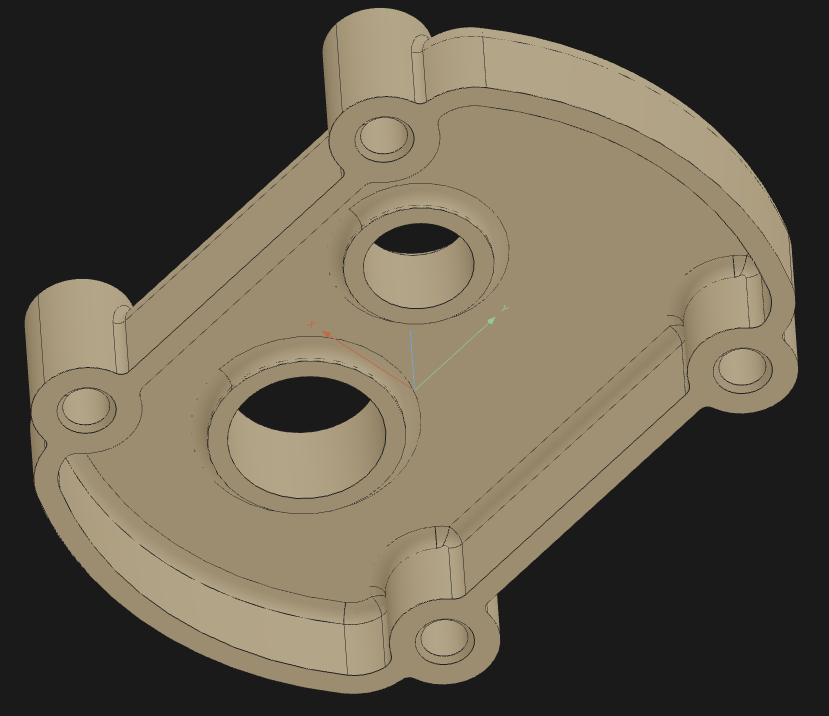
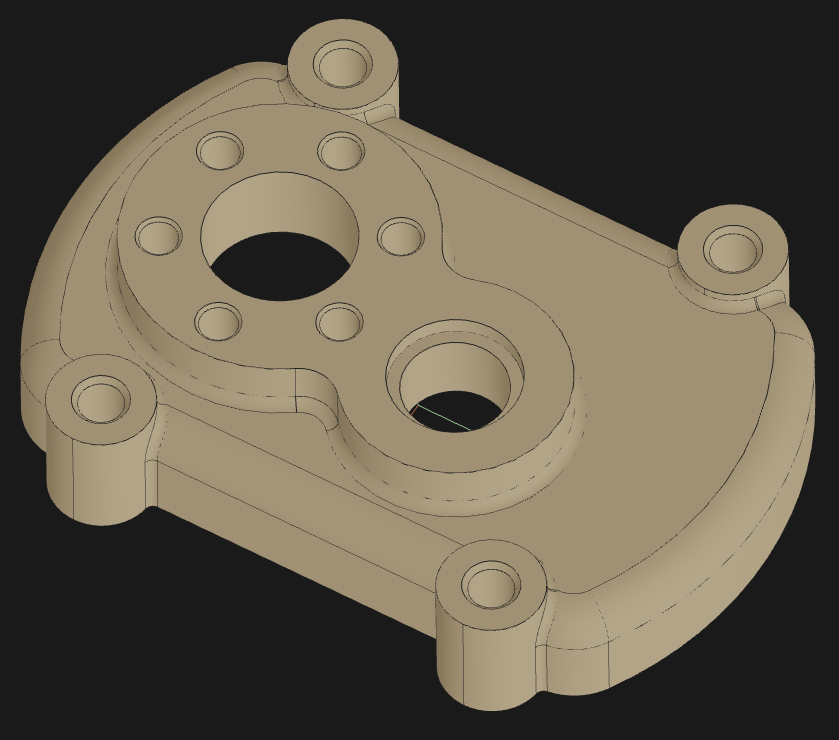
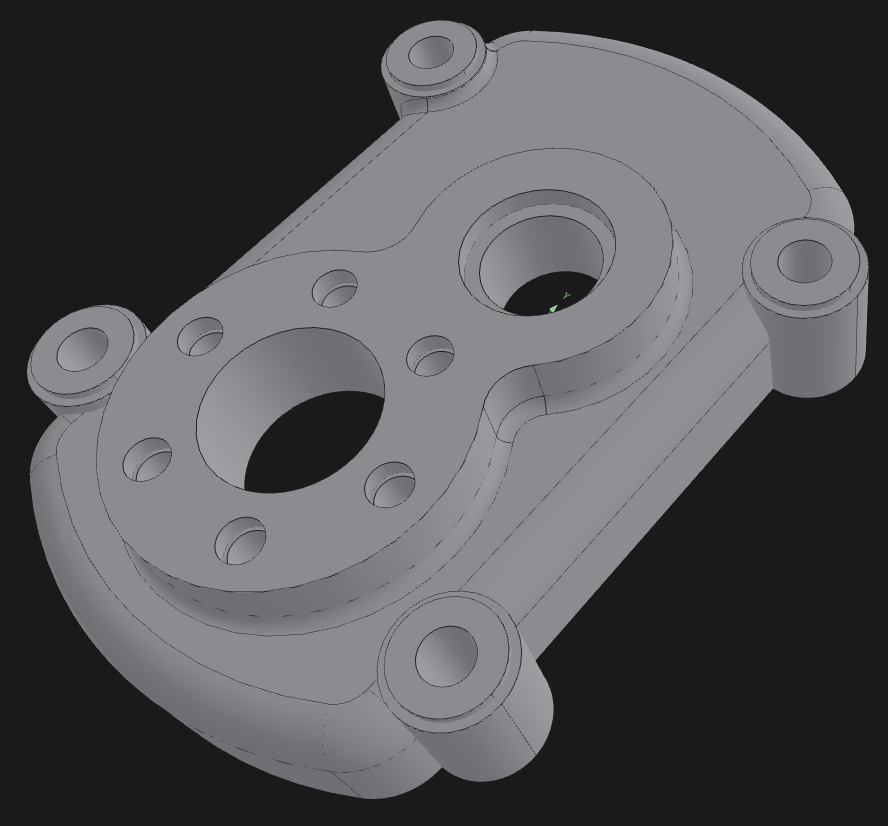
Claude CAD experiments!
What if I gave Claude both a drawing and a STEP to recreate parametrically?
Claude leaned mostly on the STEP for dimensional data and the drawing for callouts. Got 90% there first pass (last pic)
Trying to bolster drawing interpretation via labeling.
Credit to Mecado for the drawing.
LTX-2 trainer is a huge deal. I tried it to add water to the podracers scene using their demo water-sim fine-tune (it's a fine-tune whose only goal is to add water :D)
I think we're going to see film productions that don't use general models. They'll train their own fine-tunes, built for exactly what they need and consistent between shots for long content.