Media Landscapes, authored by @brianwieser and @robnorman, examines the increasingly complex #media industry through the expenditures of the world’s largest #brands, the impact of key companies and their predictions for the future of media and agencies. https://t.co/VCLAnoVpsH
Let’s keep fighting for our opportunities to have the same level of access to capital. Everyone else has it already 🤷🏾♂️ Everyone benefits from the results of our businesses doing well. #blackOwnedBusiness#diversitymatters#datalou
https://t.co/GqPfxPM4Jg
Why should ANY Black athlete play for universities in Alabama willing to use their bodies, but not teach their history or hire their people❓
https://t.co/chqin9YMaq
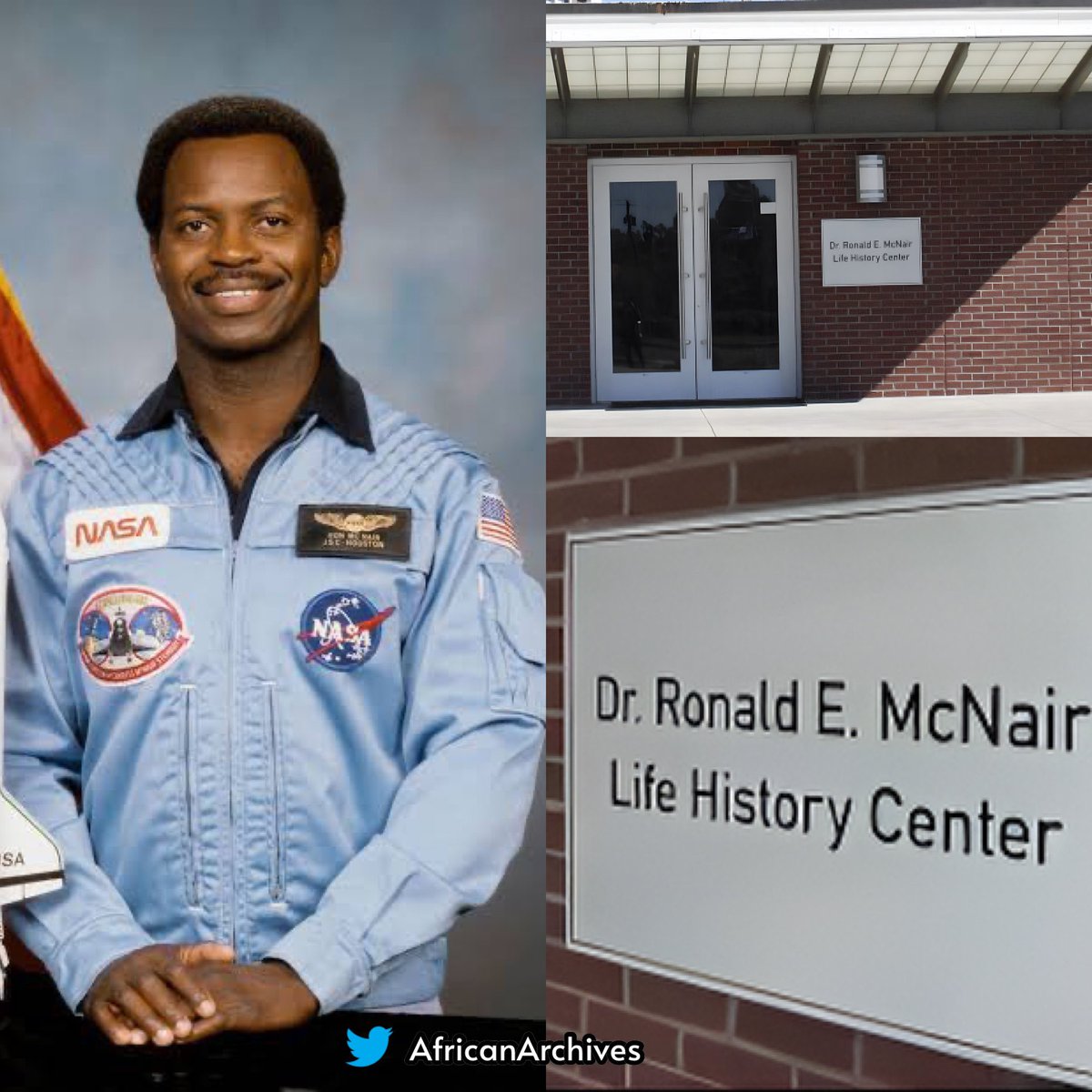
In 1959, police were called to a segregated library when a Black 9-year-old boy trying to check out books refused to leave, after being told the library was not for Black people.
The boy, Ronald McNair, went on to became an astronaut. The library is also now named after him.
Happy Birthay to Ronald! He would’ve been 73 today!
Ronald McNair was 9 when a South Carolina librarian told him he could not check out books from a segregated library in 1959. Refusing to leave, a determined McNair sat on the counter while the librarian called the police, as well McNair's mother. The police arrived, told the librarian to let the young boy have his books, and McNair walked out alongside his mother and brother.
McNair went on to earn his Ph.D. in physics at MIT and became one of the first African Americans selected as astronauts by NASA, alongside Guion S. Bluford, Jr. and Frederick Gregory.
McNair's first spaceflight was the STS-41B mission, aboard the "Challenger" shuttle. He successfully maneuvered the robotic arm, which allowed astronaut Bruce McCandless to perform the first space walk without being tethered to the spacecraft.
The second space flight for McNair would be his last. He, along with six other NASA astronauts, were aboard the Space Shuttle Challenger when it exploded 73 seconds after takeoff in 1986. Everyone on board the shuttle was killed.
Today, the library in South Carolina where McNair was refused books is named after the heroic boy determined to make a difference.
🖋️if you love our content, please consider supporting our page on https://t.co/MkzBtV9AwG (follow the ko-fi page too for weekly posts roundup)
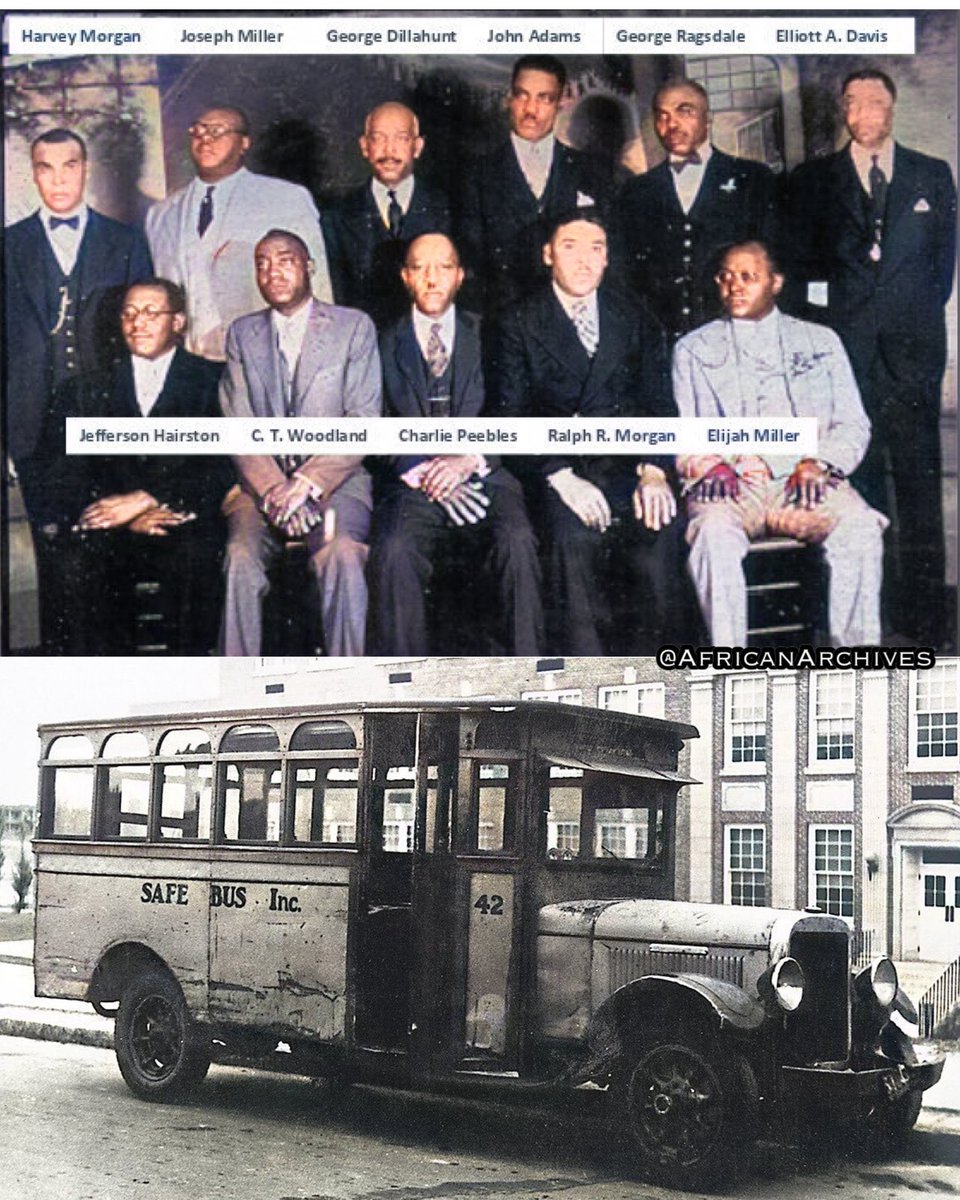
In 1926, thirteen black men put together their savings and founded Safe Bus Company, making it the largest black owned bus company at that time.
It was formed in Winston-Salem to serve the black neighborhoods due to segregation and operated till 1972.
Thirteen Black men put together their life-savings and purchasing shares of stock for $100,000; forming Safe Bus Co, Inc. on May 26, 1926, Safe Bus Co became the largest African-American owned bus company in the nation.
The company grew large and fast and was at one point named the largest black-owned transportation company in the world. In 1955, Safe Bus grossed $825,000. At it’s prime, the company carried 15,000 fares a day, grossed $18,000 a week and had 75 employees.
Fares started at five cents in the early operating days and grew as the company expanded. The number of buses expanded as well, from 35 to 42. Safe Bus operated in 20 percent of the city.
Black bus drivers made, around $1.60 to $2.50 an hour. “That was more than school teachers were making then.”
By 1968, Safe Bus provided transportation to all city residents. The company took on more routes, but finding drivers proved difficult.
Despite more routes, after integration, Safe Bus started to lose money. Old attitudes about segregation made it difficult to make a profit, and the company lost 60 percent of riders, according to the Winston-Salem Transit Authority.
“When the whites started riding Safe Bus, they thought they had to go to the back,”.
After integration Black people Started riding on white-owned buses so they could sit up front with white people. Stockholders voted to sell the company to the city in 1972. The Winston-Salem Transit Authority became responsible for all public.
🖋️if you love our content, please consider supporting our page on https://t.co/16fHyPFENu (follow the ko-fi page too for weekly posts roundup)
This is how I feel about @DatalouTech the only true supplier diversity management & reporting tool tailored for advertising, media, and entertainment built from within #agencies and #brands!#BlackOwned
"Today, Black men and women own 2.6 million businesses across the United States, roughly 9.5 percent of businesses in the country!" #MBE#BlackOwnedBusiness
https://t.co/W377dhFLCm
CoworkingCafe has named Raleigh the #4 best city in the U.S. for work/life balance and mental health! Analysts focused on economic, cultural, and infrastructural factors that had an intricate impact on psychological influences across 100 cities. Read more: https://t.co/yY1WoxK9aD
On average, white entrepreneurs receive $65K more in capital to start a business than #BlackEntrepreneurs. To address these barriers, @CommerceGov appointed the first-ever Under Secretary of Commerce for the Minority Business Development Agency (MBDA). https://t.co/4XNuGBJZQ6
A top U.S. economic official in the Biden administration visited the Triangle to study what’s behind North Carolina's economic success story and how the rest of the country can follow suit. https://t.co/YgKezX6L79
It’s particularly true among millennials, who are now in their mid-20s to early 40s: More than half of top earners in that generation report having little left at the end of the month https://t.co/kg73uEvGVE
During #SmallBusinessWeek 🥳, we honor America’s 32.5 million small businesses that grow the economy and create jobs. Show some love 💙 for small businesses in your community by shopping at local, independent businesses this weekend and all year long!
#SupportSmallBiz
I always tell aspiring entrepreneurs that they need to make sure they're financially prepared when they plan to start a business. This article has great tips to organize and self-finance while you have access to funding--> https://t.co/k8ubYCxKAV #entrepreneurs#startuptips