Pleased to have written an article for Treasury Management International (TMI), one of the world's leading publications for corporate treasury professionals.
For those unfamiliar with TMI, it is a well-established publication read by corporate treasurers, CFOs and finance leaders at some of the world's largest companies and financial institutions. Its platform features organisations including HSBC, Barclays, BNP Paribas and Bank of America.
I think it is particularly encouraging to see Bitcoin treasury strategies being discussed in publications like this, reaching an audience responsible for managing significant corporate balance sheets.
My article, "Bitcoin in Treasury: Govern it Before You Hold it", looks at how companies should approach Bitcoin as a long-term reserve asset, including liquidity management, institutional custody, accounting and governance.
At Smarter Web, we have developed our Bitcoin treasury strategy around the principle that Bitcoin is Digital Capital. However, conviction in Bitcoin must be accompanied by disciplined financial management, appropriate controls and a long-term perspective.
I believe we are still at a relatively early stage in the adoption of Bitcoin by corporate treasuries. As more companies begin to consider its role on their balance sheets, these conversations will become increasingly important.
It is good to have the opportunity to contribute to that discussion and share some of our experience at Smarter Web with the wider corporate treasury community.
You can read the full article here: https://t.co/dQqoVX3XOM
LSE: #SWC #MORE | OTC: $TSWCF $MORPF | FRA: $3M8
This week we announced the purchase of a further 55 Bitcoin, taking our total holdings to 2,905 Bitcoin. This is the largest number of Bitcoin we have ever held in the Smarter Web treasury and another milestone in the development of our 10-Year Plan.
During 2026, we have taken the amplification within Smarter Web from effectively zero to approximately 21% today. We have used additional capital to buy back warrants from some of our pre-IPO investors, buy back some MORE and increase our Bitcoin holdings. Alongside launching MORE, we have continued to use our Coinbase credit facility, which we intend to reduce over the medium to long term, but which provides us with flexibility and access to relatively low-cost capital when appropriate.
These decisions have been deliberate, and each has been considered in the context of our wider capital structure, the opportunities available to us and the interests of all shareholders.
At a simple level, using borrowing to purchase Bitcoin increases our gross Bitcoin holdings without issuing additional Ordinary Shares. However, because we have also introduced an equivalent financial liability, the transaction is broadly neutral to net Bitcoin per share at the point of purchase, before financing costs and other adjustments. What happens next depends on how the value of Bitcoin changes relative to those obligations. If Bitcoin appreciates, the additional Bitcoin can increase the net value attributable to Ordinary Shareholders. If Bitcoin falls, the opposite is true. This is amplification, and it works in both directions.
It is also one of the reasons many of us are attracted to Bitcoin in the first place. The debasement trade, sometimes described as being long Bitcoin and short fiat, is based on the belief that a scarce digital asset will appreciate over time relative to currencies whose supply can continue expanding.
I am extremely bullish on Bitcoin over the long term. However, that does not mean I believe its price will increase every week, month or even year. Bitcoin has always experienced significant volatility, and I expect that to continue.
We initially began introducing leverage when the Board believed Bitcoin was trading at an attractive level. More recently, Bitcoin has presented another opportunity, and we decided that increasing our holdings through a relatively modest additional borrowing was a sensible allocation of capital. We considered the price of Bitcoin, our existing financial obligations, the cost of borrowing, the strength of our balance sheet and the other sources of capital available to us.
Our Coinbase facility currently costs 6.25% per annum and can be repaid at our discretion without additional charges. That gives us access to capital at a known cost whilst retaining flexibility over how we manage the outstanding balance.
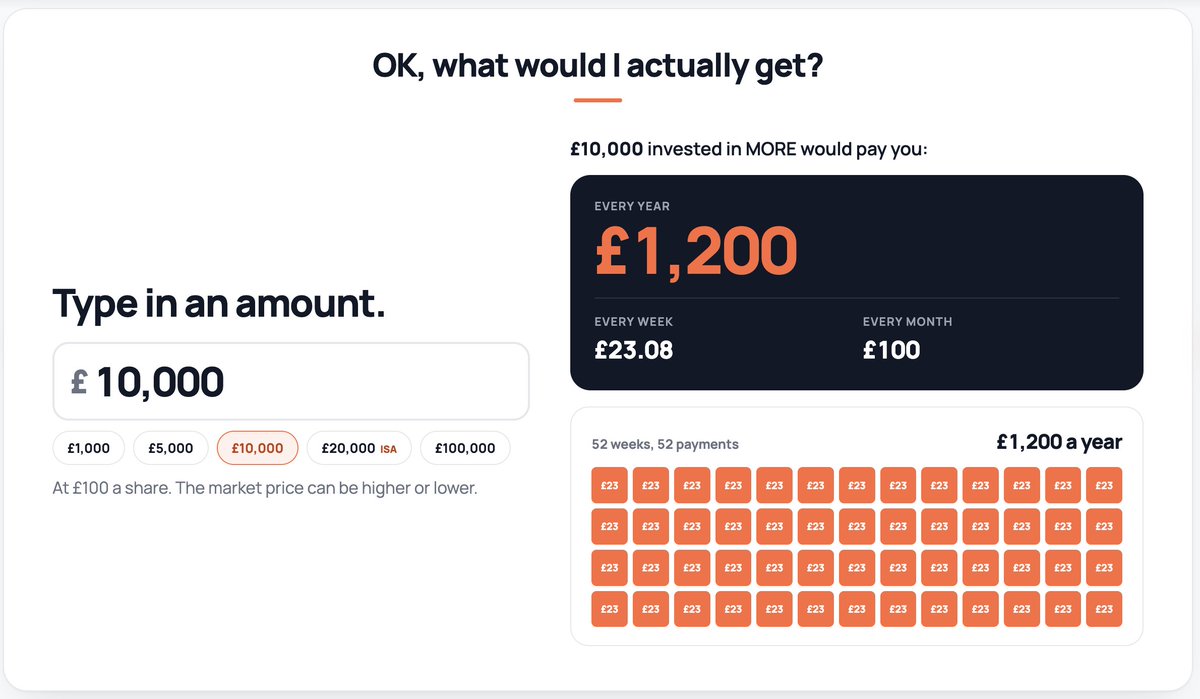
Over time, my preference remains to develop MORE, our Preferred Shares, as the principal way in which we introduce additional amplification into our capital structure. MORE is perpetual, non-convertible and designed around a cumulative variable-rate preferential dividend, currently set at 12% per annum based on its £100 reference amount, payable weekly. It gives us access to a different pool of capital without issuing additional Ordinary Shares.
I believe that a capital structure increasingly built around SWC and MORE, rather than traditional borrowing, has the potential to be extremely powerful. However, we must make the decisions that are right for the Company and all our shareholders, including MORE shareholders. Having a preferred source of capital does not mean we should use it at any price or in every circumstance.
We have several ways of financing Smarter Web, including Ordinary Shares, MORE, borrowing and cash generated by our operating businesses. The real opportunity comes from being able to choose between them intelligently, rather than becoming dependent on any single source. For this particular Bitcoin purchase, drawing from the Coinbase facility was, in the Board's judgement, the right decision.
If Bitcoin constantly appreciates, greater leverage can produce extraordinary returns for Ordinary Shareholders. The problem is that Bitcoin does not constantly appreciate. There will be periods when its price falls substantially, often with little warning, and those periods can last much longer than investors might expect. A capital structure designed primarily around Bitcoin increasing in price can become challenging when the opposite happens.
I believe a successful Bitcoin treasury company should have responsible amplification. In fact, I believe Smarter Web can operate with a higher level of amplification than we have today, provided it is introduced intelligently and supported by a resilient balance sheet.
Our current maximum amplification target remains 35%, although the Board can review that as circumstances evolve. We are not trying to reach that level as quickly as possible. We are trying to build a company that can benefit from Bitcoin's long-term appreciation whilst retaining the ability to navigate difficult market conditions.
For me, there are three priorities that are especially important.
1. Net Bitcoin per share
I have written about Bitcoin per share many times, and I will continue doing so because I believe it is one of the most important measures of how successfully we are managing Smarter Web. Our primary objective is not simply to accumulate the largest possible number of Bitcoin, but to increase the net Bitcoin value attributable to each fully diluted Ordinary Share over time.
There is an important distinction between gross and net Bitcoin per share, particularly as we introduce additional amplification into our capital structure. Gross Bitcoin per share measures the total Bitcoin we hold relative to our Ordinary Shares, whilst net Bitcoin per share also takes account of our financial obligations and relevant cash balances. A company can borrow money to purchase Bitcoin and immediately increase its gross Bitcoin per share, but that does not necessarily mean it has created additional net value for shareholders. This is why we break down the distinction between gross and net Bitcoin per share so clearly on our Bitcoin treasury dashboard. I believe investors should focus on both measures, understand the difference and ultimately judge our progress by our ability to grow net Bitcoin per share over time.
Put another way, when evaluating a Bitcoin treasury company, investors should understand the difference between gross and net Bitcoin per share, the financial obligations that create that difference and the ongoing cost of those obligations. Ultimately, the additional Bitcoin needs to generate sufficient returns to justify the cost and risk of the financing used to acquire it.
2. Total shareholder returns
Ultimately, shareholders invest because they want to generate attractive returns on their capital, and that is something I never lose sight of, particularly as a significant shareholder myself. Whilst Bitcoin per share is something we can seek to influence through disciplined capital allocation, total shareholder returns are considerably harder to control. We cannot control the price of Bitcoin, the valuation the market places on SWC or wider investor sentiment. There will be periods when we increase Bitcoin per share and strengthen the Company without seeing that progress reflected in our share price, just as there will be periods when market enthusiasm drives valuations higher.
I believe that consistently growing net Bitcoin per share, alongside developing our operating businesses, should ultimately be an important driver of total shareholder returns over the medium to long term. There are no guarantees, but our responsibility is to focus on the things we can control and make decisions that give shareholders the best possible opportunity to benefit from the value we create.
3. Optionality
The third priority is optionality, something I believe is often underestimated when considering the capital structure of a Bitcoin treasury company. I want Smarter Web to be in a position where we can make progress every quarter, regardless of what Bitcoin or the wider market happens to be doing. That means having the flexibility to make the decisions that are sensible or opportunistic at the time, whether that involves issuing Ordinary Shares, raising capital through MORE, purchasing additional Bitcoin, repaying borrowing, buying back shares or pursuing acquisitions that strengthen our operating businesses.
Excessive leverage can significantly reduce that flexibility, potentially forcing a company to raise capital or sell Bitcoin during difficult market conditions rather than taking advantage of the opportunities those conditions might present.
We have deliberately built Smarter Web with several sources of capital, two distinct listed equities, growing operating businesses and cash reserves to support our financial commitments. I believe retaining that optionality gives us a much greater opportunity to consistently grow the Company and create long-term value for shareholders.
When I bring these three priorities together, I think they explain how we approach capital allocation at Smarter Web. We want to grow Bitcoin per share, deliver attractive total shareholder returns over the long term and retain the flexibility to continue making good decisions in different market conditions. Amplification can help us achieve those objectives, but it is a tool rather than the objective itself.
I have no doubt that Bitcoin has an extraordinary future. Our challenge is to build a company that can benefit from that future whilst remaining financially resilient enough to navigate the journey along the way.
Turning to the week itself, Tuesday was our first regulatory announcement.
We confirmed the purchase of 55 Bitcoin, taking our total treasury to 2,905 Bitcoin. The announcement also confirmed that our gross Quarter-to-Date BTC Yield had reached 4.38%, reflecting progress in our Bitcoin treasury strategy.
We also confirmed the latest weekly dividend for MORE. I believe MORE represents a significant opportunity for Smarter Web, although developing a successful market for a new type of investment takes time. Education, communication and consistent execution will remain important as we work to broaden the audience for MORE and demonstrate how it can contribute to the long-term development of the Company.
On Thursday morning, we announced that Smarter Web had purchased a further 3,265 MORE Preferred Shares at a price of £77.50 per share, for total consideration of £253,925. This represented a discount of approximately 13.89% to the original £90 IPO price. The purchase was funded through a combination of our Coinbase Strategic Credit Facility and existing cash resources, and the shares will be held in treasury, meaning they will not receive dividends whilst held. We now hold a total of 5,040 MORE Preferred Shares in treasury and will continue monitoring trading and considering further purchases where we believe doing so makes sense for the Company and its shareholders.
Also on Thursday, Miller and I hosted another Smarter Web Livestream. I always enjoy these conversations, particularly because they give us the opportunity to discuss the business, Bitcoin and the wider industry in a more informal setting. Later in the day, I also joined Jody and Halston at the Daily Stack.
On Friday, I announced that, together with my family, I had purchased a further 148,597 Ordinary Shares in Smarter Web, investing approximately £51,500. Our holding now stands at approximately 7.33% of the Company, plus 25,778,732 warrants, which I plan to exercise in due course, which would take it to a little over 14%.
On Friday, I also had the pleasure of welcoming Tim Kotzman, who has travelled over from the United States ahead of our shareholder meal. Tim has supported Smarter Web since the very beginning and is genuinely one of the nicest people I have met in the Bitcoin treasury industry. He has been incredibly supportive of what we are trying to achieve, and I am really pleased that he has made the journey to join us.
I decided to take him out for a curry on Friday evening, as he had never had an Indian meal before. Hopefully he enjoyed it!
One of the things I particularly enjoy about building Smarter Web is the people we have met along the way. There are some fantastic individuals across the Bitcoin community, and the relationships that have developed have been an unexpected but very welcome part of the journey.
Today, I am really looking forward to our Smarter Web shareholder meal. We have achieved an enormous amount since becoming a public company, but there have also been challenging moments, and I never underestimate the commitment shareholders make when investing in what we are building.
During the week, it was also good to have the opportunity to contribute an article to Treasury Management International (TMI), one of the leading global publications for corporate treasury professionals, read by treasurers, CFOs and finance leaders at some of the world's largest companies and financial institutions. My article, Bitcoin in Treasury: Govern it Before You Hold it, discusses the importance of governance, liquidity management and financial discipline when considering Bitcoin as a corporate treasury asset. I believe increasing awareness and understanding of Bitcoin amongst institutional finance professionals is incredibly important for its long-term adoption. It is encouraging to see these conversations reaching a wider corporate audience, and I am pleased to be able to share some of our experience at Smarter Web and contribute to that discussion. You can find this article on my timeline.
Beyond the announcements and conversations this week, there continues to be a considerable amount of work taking place across Smarter Web. As always, some of that work cannot yet be discussed publicly, but I look forward to sharing further developments when the time is right.
Thank you, as always, to our shareholders, our team and everyone who continues to support Smarter Web.
We keep building.
LSE: #SWC #MORE | OTC: $TSWCF $MORPF | FRA: $3M8
One of the most under-appreciated parts of the $MSTR thesis is what happens if Strategy’s credit risk continues to fall.
As investors become more comfortable with Bitcoin-backed Digital Credit, the yield premium they demand will compress.
Lower credit spreads reduce Strategy’s cost of capital.
If the return generated by the Bitcoin-backed capital engine remains above that cost, the residual economics accrue to common equity holders.
This creates a powerful long-term flywheel.
The stronger Strategy’s credit products become, the cheaper Strategy can raise capital and the more efficiently it can compound Bitcoin Per Share.
Genocide ਘੱਲੂਘਾਰਾ
- Killing members of the group;
- Causing serious bodily or mental harm to members of the group;
- Deliberately inflicting conditions of life to bring about its physical destruction in whole or in part;
- Imposing measures to prevent births.
#NeverForget1984
MORE is an amazing investment. It wasn't until I dug into the details did I realise how good it was. It is so much more than the headline 12% dividend.
I've spent some time building out an educational piece which is aimed at the lay person to explain both the pros and cons of investing in MORE.
https://t.co/7gQJ7ZNxHb
This is what I used to educate my parents on MORE and based on this they will be investing their whole pension into MORE. Please share this if you think it might be useful for your friends or family.
This isn't financial advice. Your capital is at risk and as we have seen your investment can go down as well as up.
As for me, I like the stock.
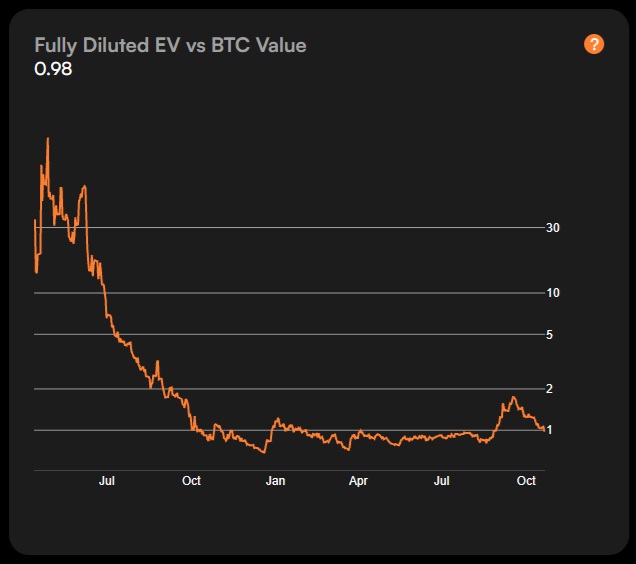
mNAV back below 1.0x.
Clear value, from where I am sitting, but more work to do to get the market to recognise what we are building.
LSE: #SWC#MORE | OTC: $TSWCF $MORPF | FRA: $3M8
Casa Butantã (1964–1966) in São Paulo, designed and built by Paulo Mendes da Rocha. Bold concrete forms, elevated structure, and a quiet confidence that defines Brazilian modernism
New York once put brass chandeliers in a subway station.
What would we call that today? A waste of money?
On October 27, 1904, the city opened its first subway: 28 stations across 9.1 miles.
At City Hall, passengers waited beneath Rafael Guastavino’s tiled vaults, with daylight entering through three amethyst-glass skylights.
The station was designed to persuade people to try a new way of travelling. Beauty had a practical job.
It closed in 1945. Its tight curve struggled to accommodate longer trains, and nearby Brooklyn Bridge station drew more passengers.
Even this architectural showpiece had to answer to everyday use.
But look at the ambition: a transit company believed beautiful surroundings could help sell an ordinary journey.
Why are we so willing to call beauty an investment in a luxury hotel and an extravagance in a public station?
Credits in ALT.
In 1851, Britain built one of the most extraordinary buildings in history in roughly 190 days.
In 1936, it disappeared in a single night.
The Crystal Palace was Joseph Paxton’s astonishing creation for London’s Great Exhibition.
Built from iron and glass, it demonstrated what industrial engineering could achieve on a scale few had imagined.
Millions visited the exhibition.
Afterward, the palace was dismantled, enlarged, and rebuilt at Sydenham, where it reopened in 1854.
For decades, it stood as a monument to Britain’s industrial confidence and its belief in technological progress.
Then, on November 30, 1936, fire destroyed it.
The building that had celebrated the possibilities of modern engineering was gone.
And here is what makes its loss particularly troubling.
Britain possessed the engineering knowledge to create the Crystal Palace in just months. Yet generations later, the building remains absent from London’s architectural landscape.
If our ancestors could build something so extraordinary in 190 days, why have we accepted its absence for 90 years?
Should Britain rebuild the Crystal Palace?
"Our objective is not simply to own more Bitcoin or raise more capital. It is to grow intelligently, increase net Bitcoin per share and ultimately deliver attractive total returns for our shareholders"
Strategy has now spent ~$2B buying back $STRC.
For those concerned about the scale of these buybacks, here’s some perspective:
In April of this year, $STRC raised ~$2.2B in just FIVE trading days.
And there will come a time when $STRC raises that amount in SINGLE day.
Most of what you’re seeing about buybacks is noise.
Happy Sunday folks!
Slow down your scrolling to enjoy the elegance of the Neo-Mayan Art Deco lobby of the 450 Sutter Building in San Francisco, California.