I'm happy at how Starlink is offering internet affordable for Kenyans.
However, I am also aware that the repercussions of a massive uptake of their service is not only a risk to the internet service sector in 🇰🇪 but also a threat to our privacy & personal information.
Mumias Sugar Company was founded in 1971, and by 1973 it was fully operational. This was not just an ordinary company. It was built as a partnership between three key groups: the Kenyan government, foreign investors, and local sugarcane farmers. Everyone had a stake in it, and honestly, it was designed to succeed.
Western Kenya had fertile soil, reliable rainfall, and ideal conditions for sugarcane farming. At its peak, Mumias Sugar produced over 250,000 metric tons of sugar every year and controlled nearly 60% of Kenya’s sugar market. The company was thriving. It was even listed on the Nairobi Securities Exchange, and for a while, it looked unstoppable.
The government played a major role in supporting the company. Farmers received subsidized fertilizer, extension officers were provided to guide farming practices, and the sugar market itself was heavily regulated. For many years, the system worked extremely well.
But by the late 1990s, liberalization changed everything. The government could no longer fully protect Mumias Sugar from competition. Private sugar imports entered the market, and suddenly the company had to compete in a business environment it was never prepared for. After years of operating under government protection, Mumias struggled to adapt.
Around 2001, the company became fully privatized and attracted massive investor excitement after being listed on the NSE. Many people believed privatization would improve efficiency because government control would reduce. However, less control also meant less accountability, and problems slowly began to surface.
Between 2005 and 2010, things started going wrong internally. Financial records were no longer adding up. Production costs kept rising while output failed to match expectations. Reports of mismanagement, corruption, and theft became impossible to ignore. There were allegations of ghost workers, inflated procurement contracts, and massive loans that were never properly accounted for.
At the same time, external pressure was increasing. In 2003, Kenya allowed sugar imports through COMESA agreements. Cheaper sugar flooded the market, both legally imported and smuggled. Mumias Sugar simply could not compete because its production costs were far too high.
Farmers also began losing trust in the company. Payments for sugarcane deliveries were delayed for months, and some farmers were underpaid entirely. Eventually, many stopped supplying cane to Mumias because they could no longer survive while waiting endlessly for payment.
Around 2005, the company also became overly ambitious. It launched a multimillion shilling ethanol plant and introduced bottled water under the Mumias Spring brand. On paper, these projects looked promising. Behind the scenes, however, budgets spiraled out of control, funds were allegedly misused, and the expected returns never came. Instead of generating profit, the projects drained the company financially.
Then came the era of CEO Evans Kidero. Before entering politics, Kidero led Mumias Sugar from 2003 to 2012. During his leadership, the company experienced some of its best years, but it was also during this same period that serious financial concerns began emerging. Later forensic audits alleged that billions of shillings disappeared under his watch.
By the time Kidero left in 2012, the company was already heading toward collapse. Between 2013 and 2015, the Kenyan government attempted multiple bailouts, injecting more than 3 billion shillings into Mumias Sugar. The funds were meant to stabilize operations and support farmers, but allegations later emerged that large portions of the money were lost through questionable payments, fake supplies, and mismanagement.
Production continued falling sharply, debts piled up, and operations nearly came to a standstill. Lawsuits, political interference, and leadership battles only made the crisis worse. 👇
This is how Kenyans might have lost over 400 million KSh, and many people don’t even notice.
A company was given KSh 1.4 billion to build the Liwatoni HACCP project in Mombasa.
They did about 65% of the work before being frustrated, and the contract was terminated. They were paid over 700 million.
The remaining 35% of work was valued at about KSh 731 million.
Simple.
Now here is the shocking part.
The government, under the blue economy, brought in a new contractor in September 2024 to finish the remaining part.
and gave them KSh 1.193 billion.
Think about that.
The balance was worth KSh 731 million. But they were given 400m extra.
Taxpayers ended up paying KSh 1.193 billion to finish it. That is an extra KSh 461 million. For the same remaining work.
And the Auditor-General has already flagged it.(Evidence in the replies)
The project is under the Blue Economy ministry, currently headed by CS Hassan Ali Joho.
This is the same pattern I keep seeing in many government projects, from roads to other infrastructure.
Start a project.
Delay it.
Cancel contract.
Bring a new contractor.
Increase the cost.
Taxpayers pay.
More details.
3 steps for healing from anxiety and mental fatigue
• 10,000 STEPS walking daily.
• Eating your food after midday and before SUNSET.
• 7 -8 hours of SLEEP
STEPS. SUNSET. SLEEP.
Be intentional, disciplined and consistent, and you will become better.
#BetterTogether
Kenyan Politician Profile:
Bank — Dubai
Hospital — London or India
Holiday— UAE or USA
Kids — UK, USA, Australia
Houses — Karen, Dubai,London
Ground — Seen only during elections
Promises — We are working on it
Scandals —Politically motivated
Side hustle - Government contracts
In 2002, I bought my Safaricom line.
Ksh 2499.
I still use it.
It came in a metallic tin, with a booklet (a user manual), and a template for the SIM card.
It was preset on the Taifa Tariff.
Ksh 36 per minute billing during peak, and Ksh 27 per minute billing during off-peak.
Per-minute billing means that even if you talk for 32 seconds, you will be charged the per-minute rate.
At that time, KENCELL (later CELTEL, then ZAIN and now AIRTEL) was everyone's favourite carrier.
Safaricom was struggling to attract subscribers due to KENCELL's awkward commercials that portrayed Safaricom's network as sluggish and chaotic.
But, 2 months later, Safaricom reduced the price of its SIM cards to Ksh 99.
I almost went mad after spending KSH 2499 just two months earlier.
There were massive lines in Safaricom shops in Nairobi and Nakuru.
Nakuru, Kenyatta Avenue, next to Merica Hotel, was impassable for 1 week. There was a Safaricom shop there, and later a Samchi Telecom shop.
A lot of people had bought phones and kept them at home, especially Motorola T190 and Siemens C35, because they couldn't afford SIM cards or the cost of making calls.
A Motorola T190 was selling at KSH 17,999.
A Siemens C35 was selling at 11,499.
Safaricom immediately began selling locked mobile phones that could be used only with Safaricom SIM cards.
Later that year, Kibaki was overwhelmingly elected president, and his regime liberalised the telecommunications industry, and we began advancing in telecommunications technology.
We have come from far!
A husband will run through a brick wall for a wife who:
-is warm towards him
-smiles at him
-is sexually interested in him
-doesn't nag him
-cooks food he likes
-dresses femininely
-literally just likes him
It's not complicated, ladies.
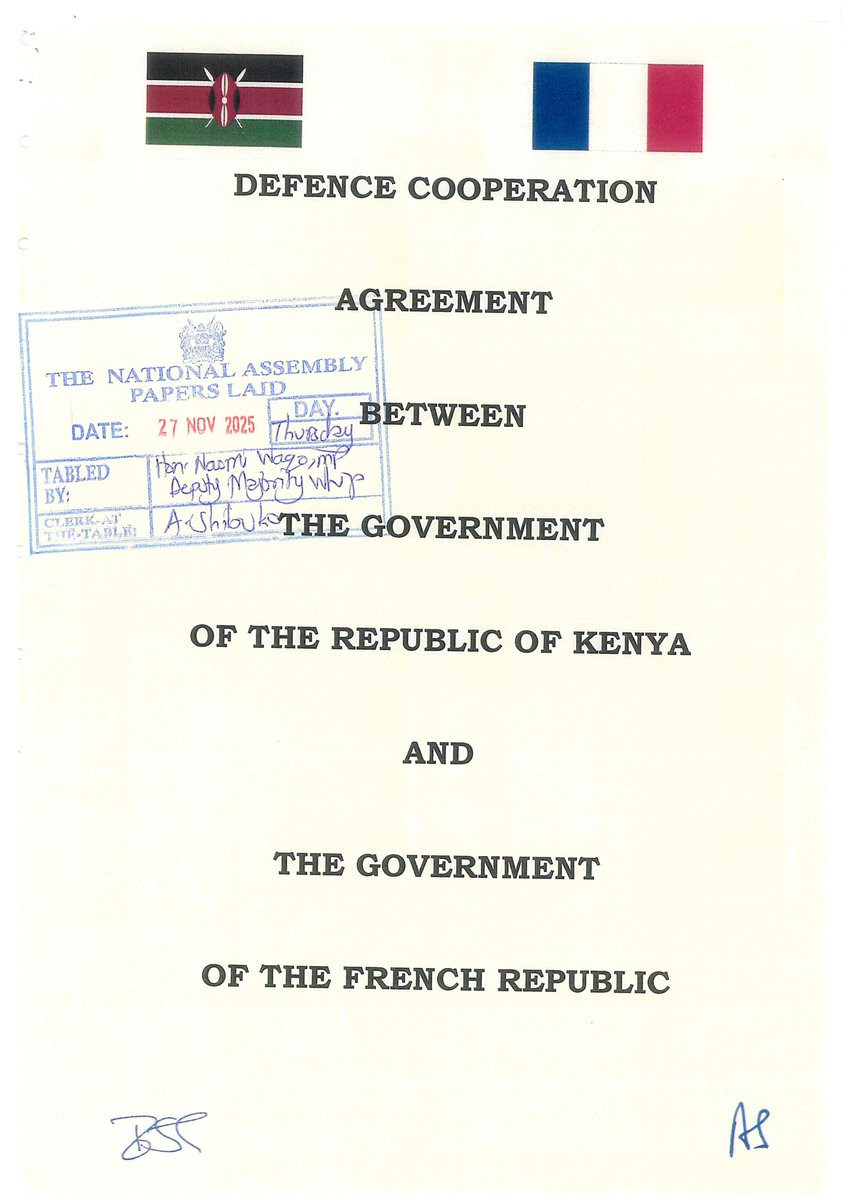
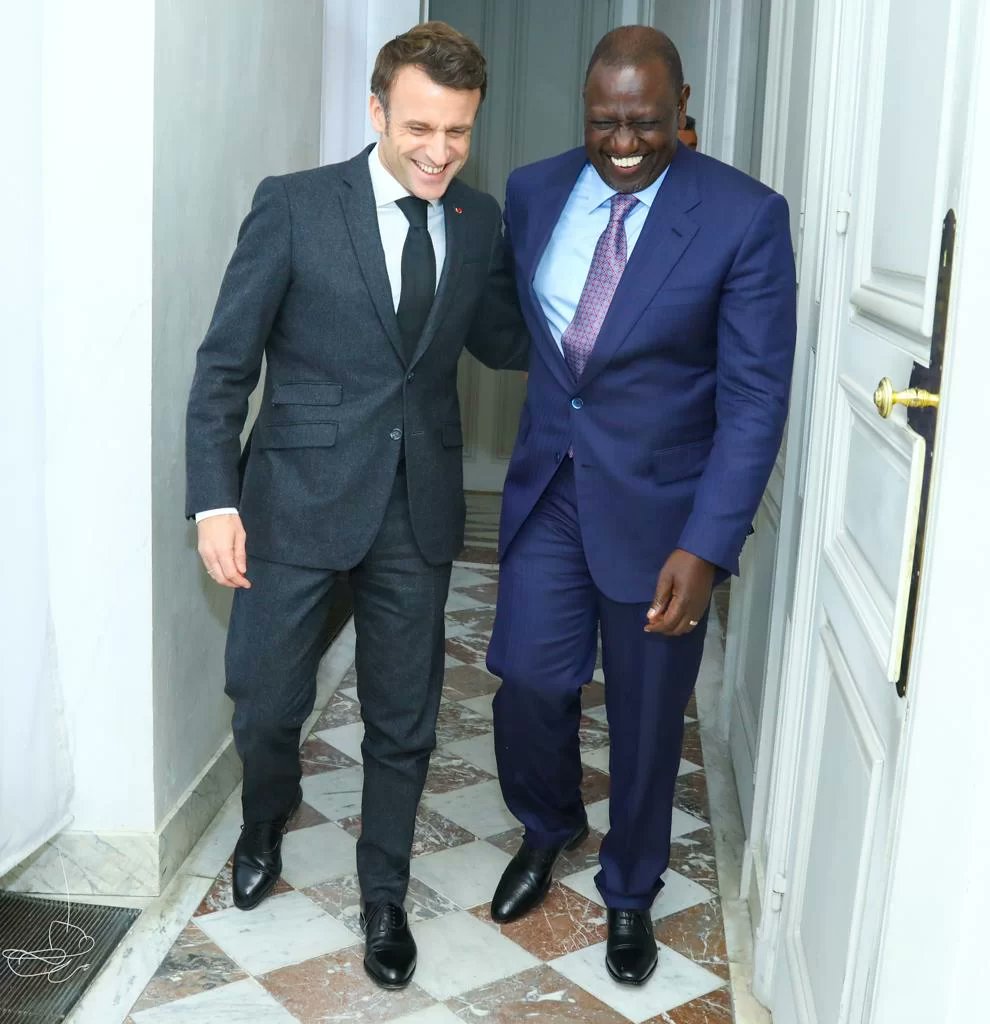
BREAKING: The William Ruto govt signed a defence deal with France allowing French troops to operate inside Kenya.
And now a Parliament report has confirmed it, while trying to amend two of some dangerous clauses partially.
Let that sink in.
At a time when African countries are expelling French military presence, Kenya is opening the door.
The deal is too open and risky.
Here’s the reality:
If a French soldier commits a crime in Kenya:
France can detain them and not kenya
France can influence jurisdiction
If France rushes a trial (even unfairly), Kenya may NEVER prosecute again
That is reduced sovereignty.
The deal allows “training and other activities.”
What exactly are “other activities”? Why so vague?
We’ve already seen what happens with the BATUK:
Community harm and even deaths
Environmental damage by brits using white phosphorus
Weak accountability eg the wanjiru case wher the murderer is being protected in the UK
Now we’re repeating it, with the french military?
Across Africa:
Mali 🇲🇱
Burkina Faso 🇧🇫
Niger 🇳🇪
All pushed out French forces over these exact concerns.
So why is Kenya going backwards?
And here’s the bigger fear:
👉 This is not just about “training”
👉 Kenya risks becoming a base for foreign military operations in Africa, because the french are good at this.
👉 We could be dragged into conflicts that are not ours
Why are we signing deals we would NEVER be allowed to have in Europe?
Why can’t Kenyan forces operate in France the same way?
Because they would never accept it.
So why should we?
Read the agreement. Read the Parliament report. Ask questions.
Before this becomes law.
Kiambu County has shown KRA dust.
KRA audited the county.
And found the county was collecting serious money from:
- Parking fees
- Business licenses
- Market fees
- Renting stalls
- Renting stadia
- And other county fees
Then KRA asked:
- Where is our VAT?
- If you charge 10,000 for stalls
- You should have added 16% VAT
So Kiamburians should have paid: 11,600
And the extra 1,600 goes to KRA.
But Kiambu did not charge VAT. So KRA became dramatic and said:
- No problem. You'll give us that VAT from your own county coffers.
It is at that moment that, Gov Wamatangi knew hii si mchezo.
He ran to court.
He argued:
- The county is not a business entity.
- It is a government unit performing public functions
- It does not operate for profit
- The county fees charged are already a form of tax
- Charging VAT on them is double taxation
- It is illegal
The court agreed.
And KRA’s VAT demand was set aside.
This is a big precedent.
It means:
- County services should not be inflated by VAT.
- Public services are not businesses to charge 16% VAT.
There is a very common land tax scam in Kenya.
And both the buyer and seller walk into it smiling.
Here is how it works.
- You agree to buy land at 10M.
But the seller and his lawyer convince you:
- Bro, let’s write 5M in the agreement.
Why?
- The seller pays less Capital Gains Tax and,
- You the buyer pays less stamp duty.
Everyone feels genius.
Everyone saves money.
Years later,
- You sell that same land for 20M.
It's time to pay capital gains tax.
KRA comes in and asks one simple question:
- What was your property cost?
You say - 10M.
KRA says:
- Show me the purchase agreement.
- Show me the stamp duty receipt.
You present them.
- They both say - 5M.
KRA smiles.
So your tax becomes:
- (20M − 5M) × 15% = 2.25M
Instead of:
- (20M − 10M) × 15% = 1.5M
You pay 750K extra.
Just like that.
So the saving you made on stamp duty comes back later as:
- Higher Capital Gains Tax
Lessons:
- Do not understate purchase price in agreements
- What you sign today becomes your tax tomorrow
- Short term savings create long term pain
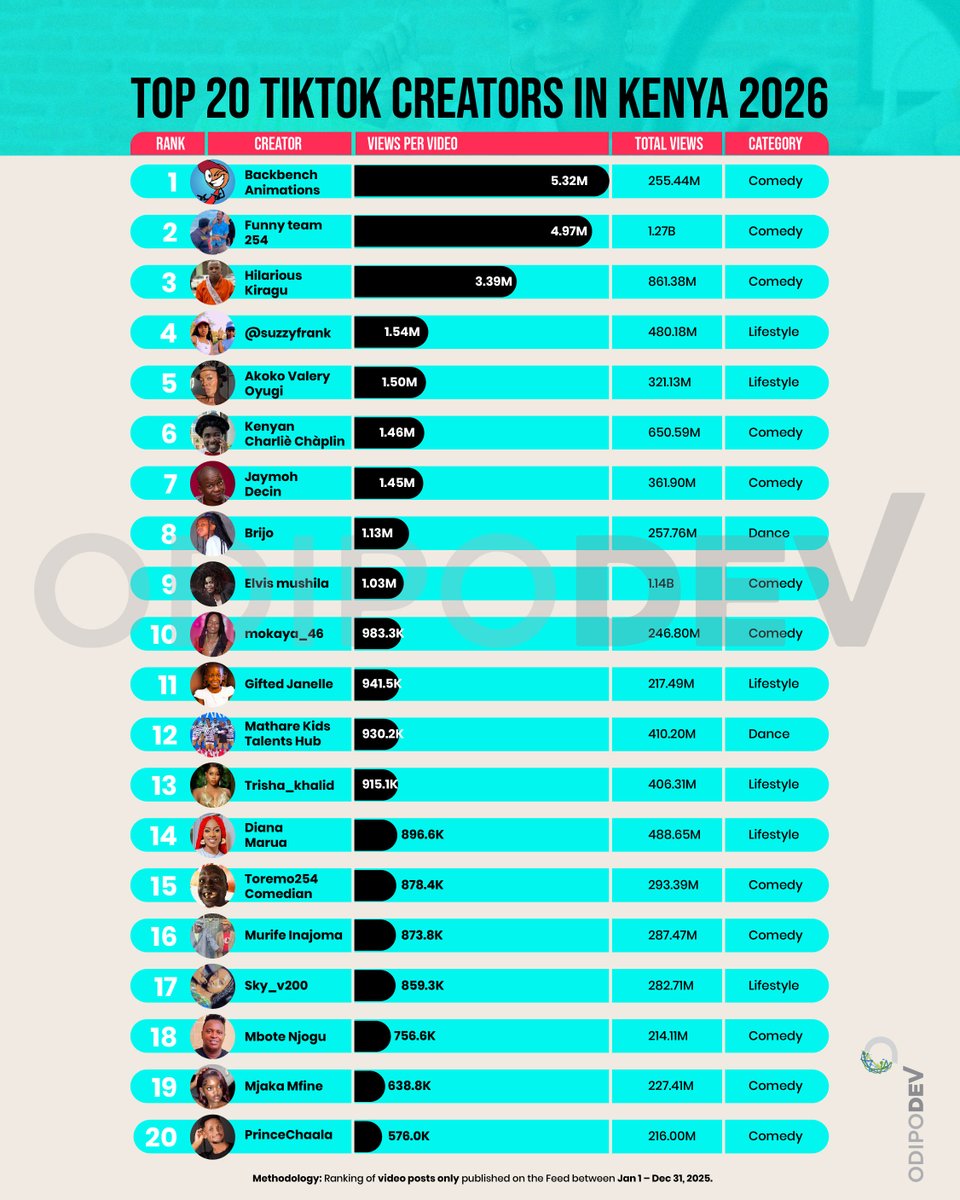
We’ve just released a research into Kenya’s Creator Economy. Here's what the data says about who's actually making money, which platforms are paying off, and where the big opportunity still lies
Own It. Earn It.
123 countries at the UN have just taken a vote to recognise the transatlantic slave trade as one of the gravest crimes against humanity. Yet, much of Europe abstained.
The Africa–Europe relationship must evolve from avoidance to acknowledgement. Africa does not want charity — it wants fairness.
Trust can only be rebuilt through owning, not abstaining, and the future depends on confronting the past. #VIP
This war is one to watch. The global power system is facing a paradigm shift.
To see thus Israek/US V Iran war as an isolated event is myopic.
Iran represents all the underdogs in the fight against Western hegemony in geopolitics and economy.
THE LAST 24 HOURS OF THE IRAN WAR CHANGED EVERYTHING. HERE IS THE TIMELINE.
This is not what you're being told.
24 hours ago, Hegseth stood in the White House Cabinet room.
He said: "Never in history has a country been defeated as Iran has. We wiped it off the face of the earth."
THAT SAME DAY:
Iran launched its 80th wave of missile strikes against Israel and US bases.
Iran's IRGC announced ALL American military bases in the Middle East have been "ELIMINATED" and they are hunting the remaining US troops.
Iran released video claiming they shot down a US F-18 fighter jet near Chabahar.
CENTCOM denied both claims. But released no footage.
Iran announced the Strait of Hormuz will never be the same.
20+ ships have ALREADY paid the "Tehran Toll Booth" for safe passage.
Iran's parliament is drafting a LAW to make the Hormuz toll system permanent.
Iran then threatened to block the Bab el-Mandeb Strait — the entrance to the Red Sea.
That's 12% of all global seaborne oil.
On top of the 20% that already flows through the Hormuz they now control.
Here's what nobody is telling you:
The US spent months bombing Iran.
Iran responded by becoming the landlord of the world's most important shipping lanes.
That's not a defeat. That's a business model.
Bookmark this. Come back in 5 days.
The UK, which colonized Kenya, Nigeria, and South Africa, did not support a UN resolution condemning slavery.
Portugal (Angola, Mozambique),
France (Ivory Coast and others),
Italy too.
The same countries that once ruled Africa
could not even formally condemn slavery.
The other day I asked:
If colonizers returned today,
How many African countries could hold for even a week?
Some of you brushed it off.
But look at this.
If they cannot even acknowledge the past clearly,
What makes you think the future is guaranteed?
Let’s stop being naive.
Power respects power.
That is why other regions build weapons,
defense systems,
and technological independence.
Africa must do the same.
Not out of fear,
but out of reality.
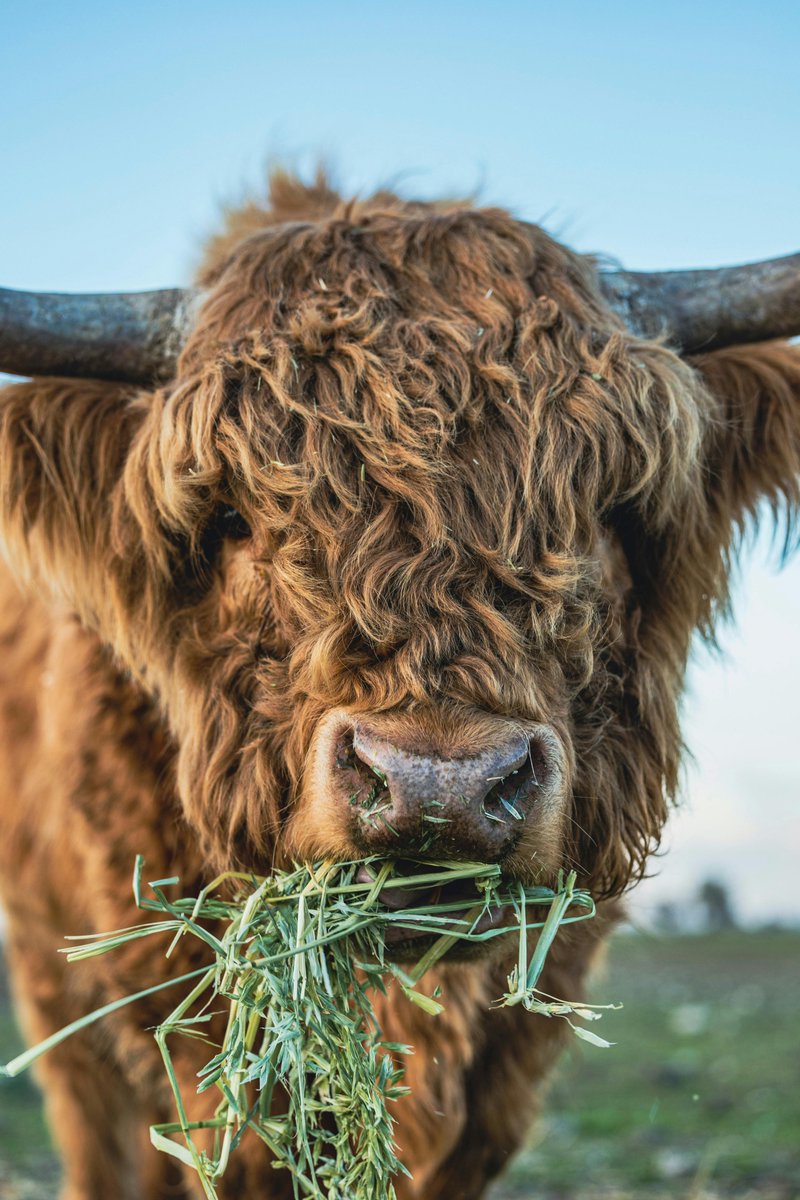
Here is what happens to a blade of grass whether or not a cow is present.
The grass grows. To grow, it pulls carbon dioxide from the atmosphere. This carbon becomes the grass. The grass contains it. The sun drives this process. The rain enables it.
Now two scenarios.
Scenario one: no cow. The grass completes its growing season. It dies. It decomposes. Bacteria and fungi break down the organic matter. The carbon that was in the grass returns to the atmosphere as CO2. This takes weeks to months. The cycle is complete. Atmospheric carbon is unchanged.
Scenario two: cow present. The grass grows. The cow eats it. The cow's rumen ferments it. Methane is produced. The methane enters the atmosphere. Over the following ten to twelve years, atmospheric hydroxyl radicals oxidise the methane back into CO2. The CO2 is absorbed by the next season's grass.
The carbon goes: atmosphere → grass → cow → atmosphere → grass.
In scenario one: atmosphere → grass → atmosphere.
The destination is the same. The route is slightly longer in scenario two. The net atmospheric carbon at the end of each cycle is identical.
The cow did not add carbon to this system.
The carbon was already there.
It was in the grass.
It was going back to the atmosphere regardless.
The cow is not the source. The cow is a temporary stop on a journey that was happening with or without her.
This is the biogenic carbon cycle. It has a Wikipedia page. It is not obscure. It is simply inconvenient for the argument.
Debt forgiveness for Nature Conservation loans?
This sounds great, but:
1. Isn't it refinancing under new a new name?
2. Doesn't it put sovereignty at risk?
Three African countries eye $500 million debt-for-nature deals | Business Insider Africa https://t.co/ifHxOB3xUx
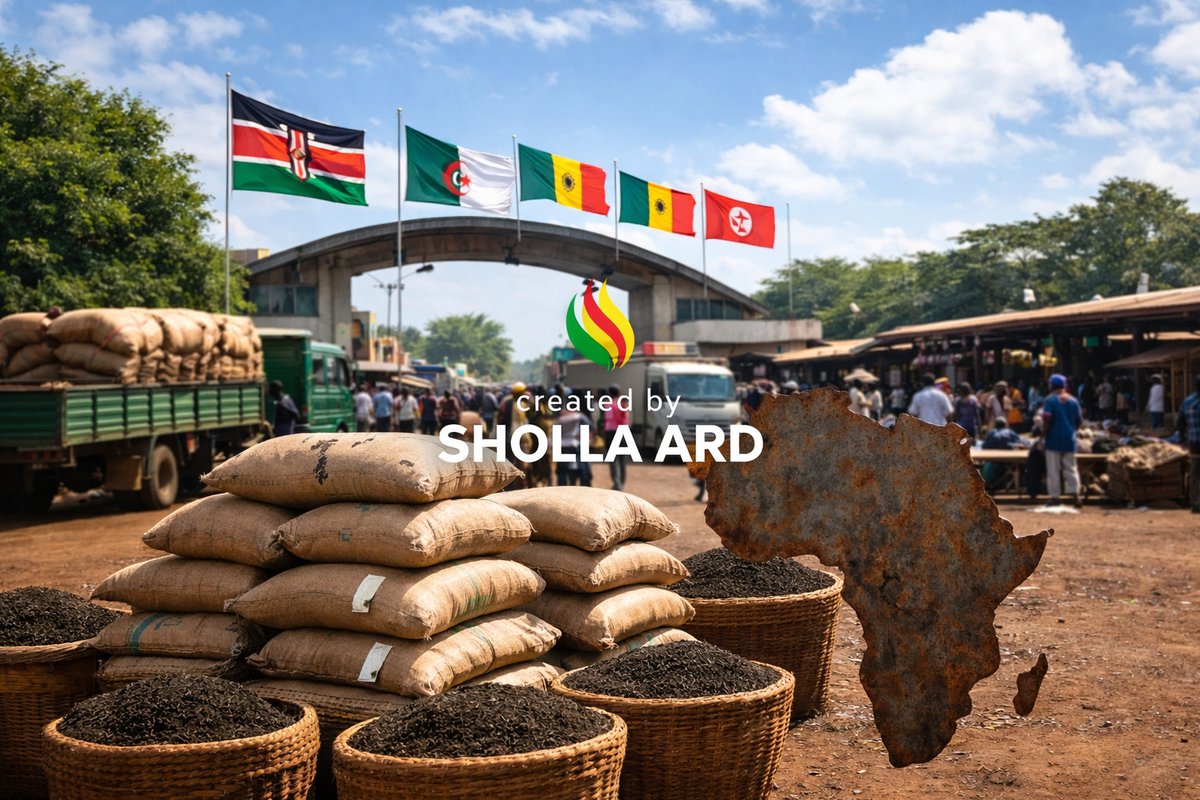
Citizen TV reported Kenyan tea meant for export is stuck in Mombasa, even going to waste after the Pakistan route was disrupted by war.
But let me ask you, Africa...
How do we produce what the Africa wants, yet fail to trade with each other?
Algeria imports & drinks tea.
Morocco imports & drinks tea.
Tunisia imports & drinks tea.
Senegal imports & drinks tea.
Africa drinks tea.
So why is our tea crossing oceans, but struggling to cross African borders?
Sudan was once one of Kenya’s biggest buyers.
Today, the current govt has been supporting RSF and destroying our biggest market.
You cannot build African trade while destabilizing each other.
At some point, Africa must decide:
Are we building Africa,
Or just existing inside it?
Because right now,
Kenyan tea is rotting at the port...
while the market is right here.
Kisumu County is not so far from this. The indiscriminate use of glyphosate is dizzyingly worrying. Imagine how use of glyphosate and unregulated use of fertilizer gets from streams, to the rivers to the Lake. All this fish we consume is at risk.
Who regulates this?
I’ve seen someone say they attended a few funerals in Meru and most of the deaths were cancer… and they were asking why.
Honestly, that question isn’t far from what many people have been noticing.
From the testing we’ve already been doing, this may not be as random as it looks.
We took samples from a range of things people consume, miraa, potatoes and other foods, and had them tested.
What came back was worrying.
Traces of chemicals like paraquat, glyphosate, propanil and others were detected. Chemicals known to cause many cancers
Now think about that for a second....
If these chemicals are on food, it doesn’t end there.
It points to soil contamination,
and once that happens, water is affected too.
Meaning even people who are not farming could still be exposed without knowing.
Right now, we are expanding our testing across several parts of Meru, looking at water, soil and everyday foods.
We want to reach at least 10 areas,
but due to high testing and shipping costs, we’re currently working with a few as we scale.
What we are seeing so far is pointing to something bigger than many of us think.
This is something we can’t afford to ignore.
Because sometimes,
the problem doesn’t announce itself...
it builds quietly, until it’s everywhere.