Join our workshop, attend our panel discussions, play our Black comic book trivia game, explore our comic book marketplace, and get ready to cosplay! Join us for #SchomCom2024 on 4/26 and 4/27. #SchomburgCenter https://t.co/Li0OGPCDUl
Saturday's The Science Behind Science Fiction - Ghost Roast was amazing 👏🏿 !
The tour continues at Distant Worlds Coffee (SEA) Sat 02/10 and Third Eye Bookstore (PDX) Sun 02/11! https://t.co/NqSZTbUAiV
@nelletheelle@shawneegibbs@ADalton_author@versifybooks@thirdeyebag
★ In “cheeky” YA graphic novel debut GHOST ROAST, sisters @shawneegibbs and Shawnelle Gibbs (@nelletheelle), and illustrator Emily Cannon (@EmAIllustrates) “invoke New Orleans mysticism to shed light on the city’s history surrounding enslaved peoples” https://t.co/6pKnL228Zi
Set your notifications! I'm going live on Sunday on my channel with The Gibbs Sisters to talk about their work in animation and their upcoming graphic novel Ghost Roast.
https://t.co/hol5mw9zDE
A collection of Baldwin Lee’s work makes the case that he is one of the great overlooked luminaries of American picture-making. https://t.co/2l9Hu5JQYx
HBD to the late #JackieOrmes! Celebrate w/ a rewatch of our first panel that ever was, feat. #BarbaraBrandonCroft@biancaxunise@oheysteenz & graciously hosted by @WinCNYC. BONUS: A recommend reading list on the life & impact of Ms. Ormes!
Go + RT/QT: https://t.co/rWvzVP9iyO
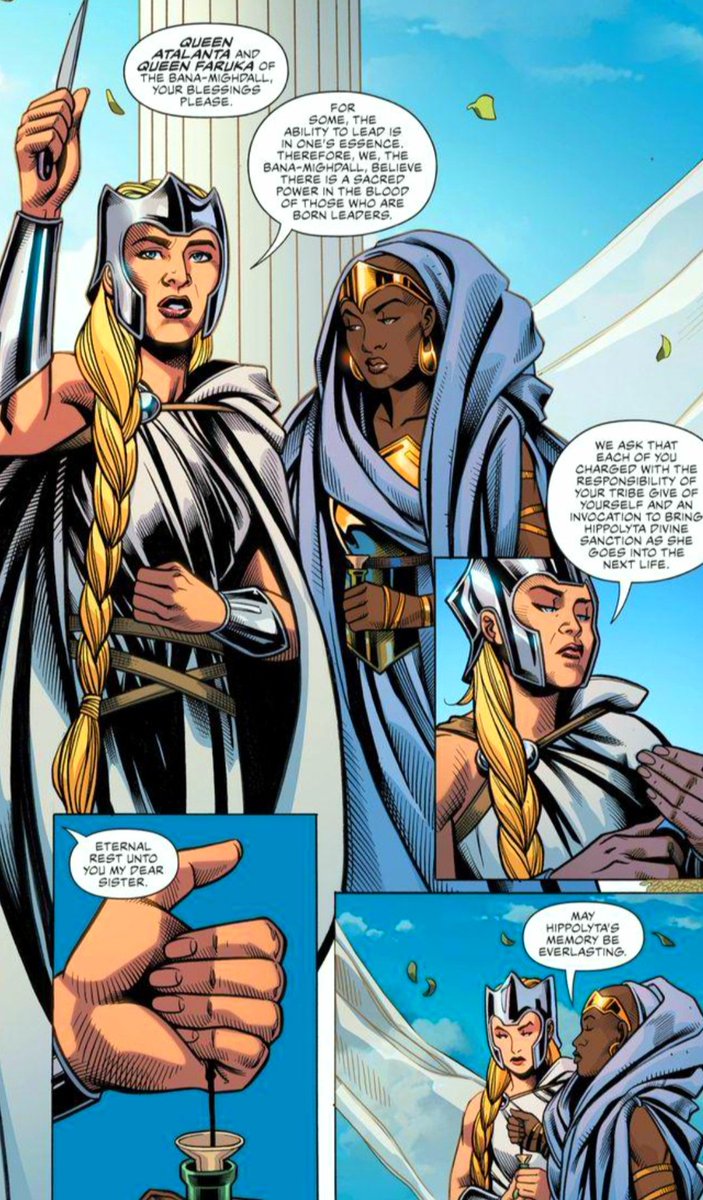
Black Comic Girl of the Day: Faruka II (DC Comics) Queen of the Amazons of Bana-Mighdall and recent ally of Themyscira's Queen Nubia (First Appearance: Wonder Woman vol 5 53) #dccomics#comic#blerd#blackgirl#WonderWoman#DCU
Lonnie Johnson, NASA engineer, invented the Super Soaker. He made your childhood hot summers fun.
African-American engineer and inventor Lonnie G. Johnson was born in Alabama in 1949. He earned his master's degree in nuclear engineering from Tuskegee University, and went on to work for the U.S. Air Force and the NASA space program. After tinkering with the invention of a high-powered water gun, Johnson's Super Soaker became a top-selling item by the early 1990s. He has since been developing the Johnson Thermoelectric Energy Converter (JTEC), an engine that converts heat directly into electricity.
Lonnie George Johnson was born on October 6, 1949, in Mobile, Alabama. His father was a World War II veteran who worked as a civilian driver at nearby Air Force bases, while his mother worked in a laundry and as a nurse's aid. During the summers, both of Johnson's parents also picked cotton on his grandfather's farm.
Out of both interest and economic necessity, Johnson's father was a skilled handyman who taught his children to build their own toys. When Johnson was still a small boy, he and his dad built a pressurized chinaberry shooter out of bamboo shoots. At the age of 13, Johnson attached a lawnmower engine to a go-kart he built from junkyard scraps and raced it along the highway until the police pulled him over.
Johnson dreamed of becoming a famous inventor and, during his teenage years, began to grow more curious about the way things worked and more ambitious in his experimentation—sometimes to the detriment of his family. "Lonnie tore up his sister's baby doll to see what made the eyes close," his mother later recalled. Another time, he nearly burned the house down when he attempted to cook up rocket fuel in one of his mother's saucepans and the concoction exploded.
Growing up in Mobile in the days of legal segregation, Johnson attended Williamson High School, an all-black facility, where, despite his precocious intelligence and creativity, he was told not to aspire beyond a career as a technician. Nevertheless, inspired by the story of famed African-American inventor George Washington Carver, Johnson persevered in his dream of becoming an inventor.
Nicknamed "The Professor" by his high school buddies, Johnson represented his school at a 1968 science fair sponsored by the Junior Engineering Technical Society (JETS). The fair took place at the University of Alabama at Tuscaloosa, where, just five years earlier, Governor George Wallace had tried to prevent two black students from enrolling at the school by standing in the doorway of the auditorium.
The only black student in the competition, Johnson debuted a compressed-air-powered robot, called "the Linex," that he had painstakingly built from junkyard scraps over the course of a year. Much to the chagrin of the university officials, Johnson won first prize. "The only thing anybody from the university said to us during the entire competition," Johnson later recalled, "was 'Goodbye' and 'Y'all drive safe, now.'"
After graduating with Williamson's last segregated class, in 1969, Johnson attended Tuskegee University on a scholarship. He earned a bachelor's degree in mechanical engineering in 1973, and two years later he received a master's degree in nuclear engineering from the school.
Lonnie G. Johnson went on to join the U.S. Air Force, becoming an important member of the government scientific establishment. He was assigned to the Strategic Air Command, where he helped develop the stealth bomber program. Johnson moved on to NASA's Jet Propulsion Laboratory in 1979, working as a systems engineer for the Galileo mission to Jupiter and the Cassini mission to Saturn, before returning to the Air Force in 1982...
If you’re at #SDCC2023 this year, @nelletheelle and I will be panelists at this morning’s “The Creative Symposium Panel” in Room 23ABC and will be signing and meeting folks at Booth H-09 this weekend. Come swing by and say hi! 👋🏾
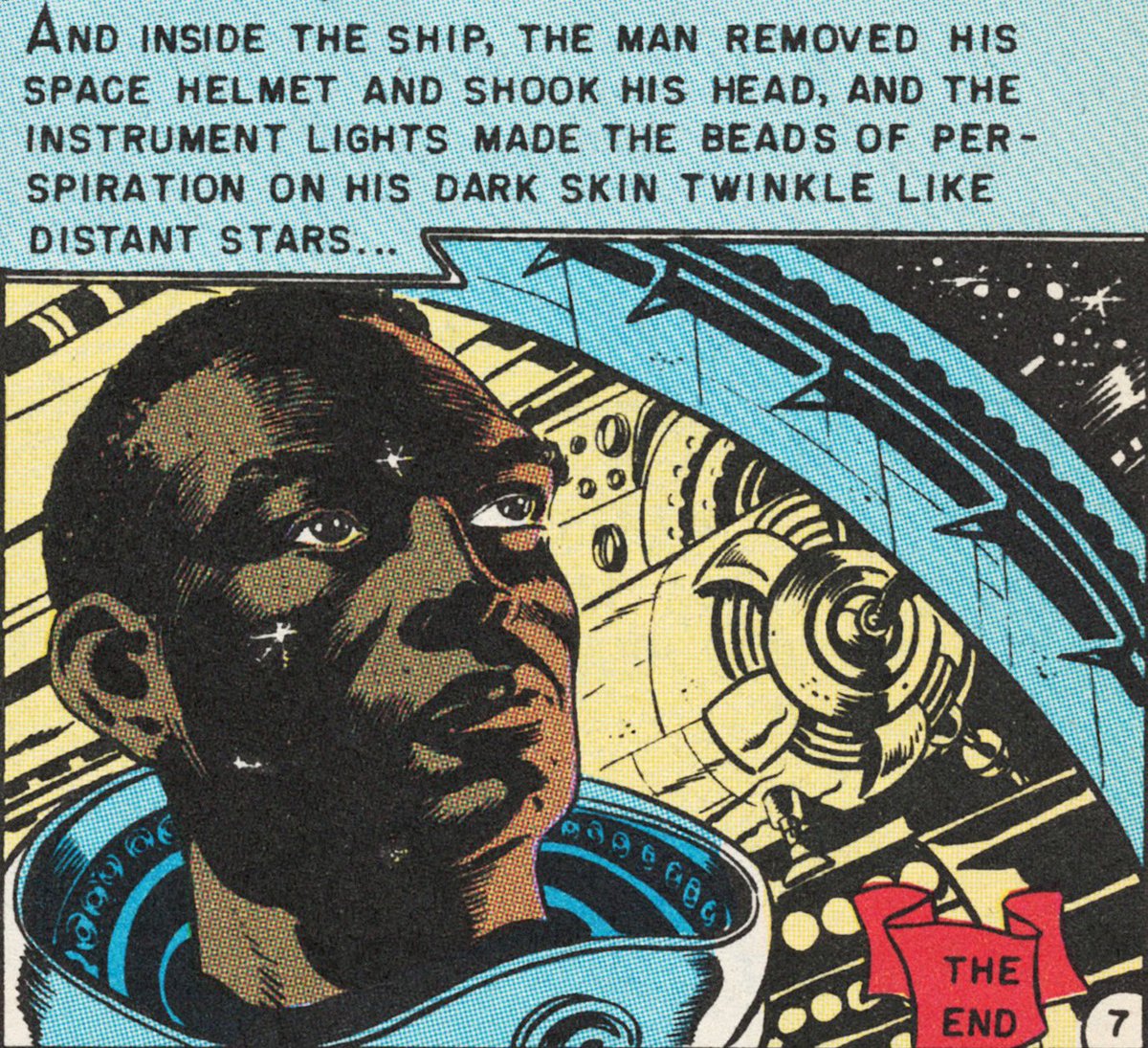
JUDGEMENT DAY, originally published in 1953. Comic Code Administrator Judge Charles Murphy rejected this story because the astronaut was Black. William Gaines, EC’s publisher, ran the story anyway. Art by Joe Orlando.