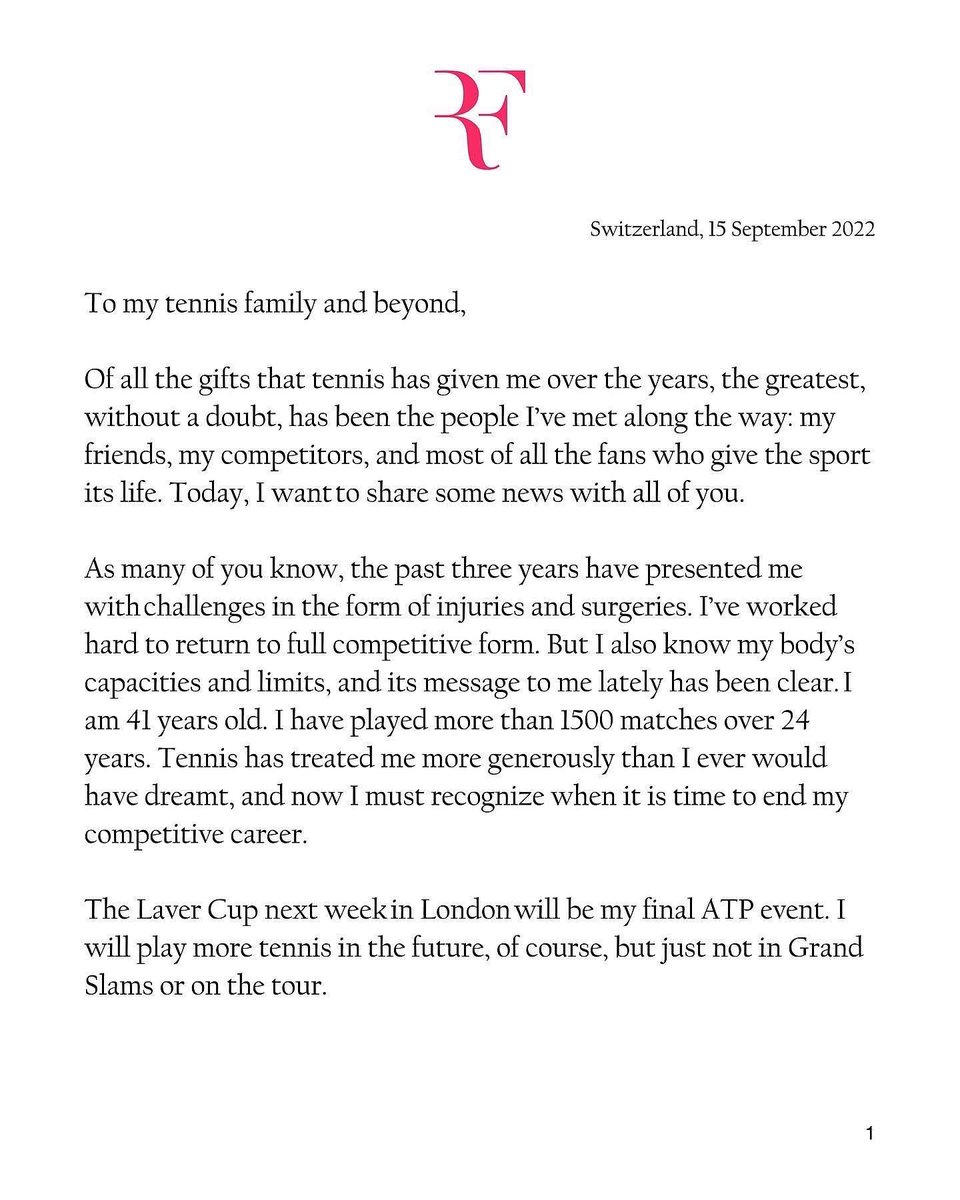
“This is why I value that little phrase “I don’t know” so highly. It’s small, but it flies on mighty wings.”
- Literature laureate Wislawa Szymborska on the importance of telling oneself “I don't know.”
A weird thing about the Internet is how even though we’re just a click away from the greatest writers of all-time, from Plato to Tolstoy, we default to mindlessly consuming things made in the past 24 hours.
In 1985, Nike held a 24-hour shoe design contest.
Nike was struggling. Their stock dropped 50%. They had to lay off people. Adidas, Converse, & Reebok were all selling more shoes.
So in a panicked attempt to find creative talent, Nike held a shoe design contest.
The winner was
A corporate architect named Tinker Hatfield.
"Two days after the competition," he said, "I wasn't even asked—I was told that I was now a footwear designer for Nike."
As he got to work on his first official shoe design, he thought about a building he had studied in architecture school: The Centre Pompidou in Paris.
The Centre Pompidou is an inside-out building, meaning that the structural, mechanical, and circulation systems are all exposed.
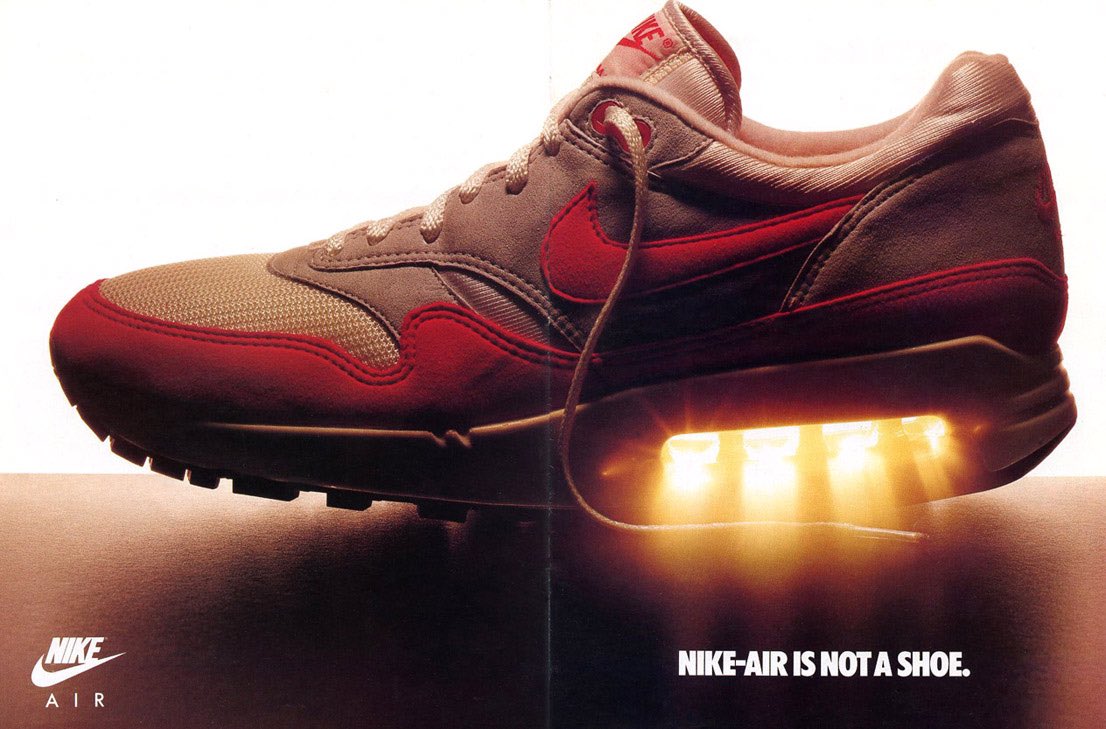
“That building,” Tinker said, “was describing what it was to the people of Paris. And I thought, ‘Well why not do that with a shoe? Let’s cut a hole in the side and show what’s in the shoe.’”
So Tinker designed an inside-out shoe:
The Air Max 1.
The Air Max 1 was a massive success, and it steered Nike's design direction from then on.
"To this day," Tinker says, "Phil Knight says I saved Nike."
Takeaway 1:
Had he not studied that building in Paris, Tinker says, he couldn’t have created the Air Max.
Creativity, he says, is a function of the “library in your head."
“When you sit down to create something...what you create is a culmination of everything you’ve seen and done previous to that point.”
Takeaway 2:
Tinker Hatfield went to architecture school and then he was a corporate architect for 4.5 years. Then, literally overnight, he became one of the best shoe designers in the world.
This makes me think of a counter-intuitive discovery made by psychologist Charles Spearman in 1904.
Before Spearman, the natural assumption was that the more you specialize in one thing, the worse you’ll be at other things.
Instead, Spearman discovered "the positive manifold" phenomenon.
He found that different abilities tend to be positively correlated. That the expertise gained through specialization is transferrable. That the cognitive and creative abilities cultivated as an architect could positively correlate with being a shoe designer.
- - -
"Creativity is a function of the previous work you put in." — Robert Greene
Follow @bpoppenheimer for more content like this!
1/ Very excited to share my first PhD paper out in cell reports!! We show that oxidative stress response heterogeneity in E. coli arises from short range cell-cell interactions.
https://t.co/K8BjldpJ0J
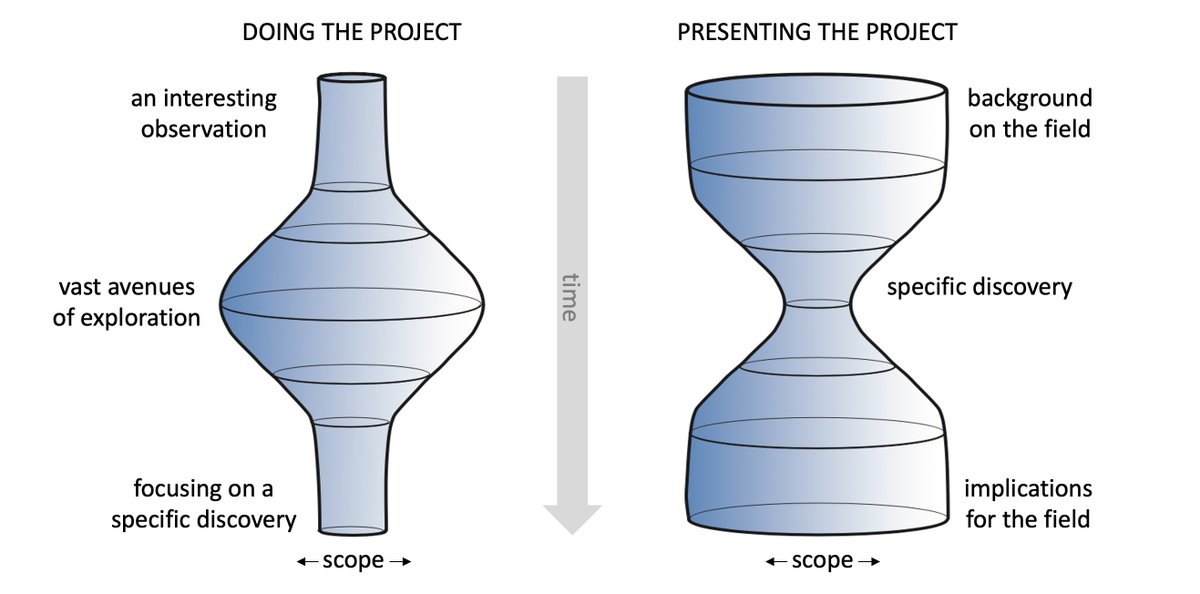
The difference between doing a project and presenting it. An observation can lead to many avenues of explorations before focus turns to a specific discovery. Presenting it, in a talk / paper, follows inversely, with broad perspectives coming before & after the specific discovery.
1/ I am very excited to share my first PhD paper out as a preprint!
E.coli under hydrogen peroxide stress:
What initially looked as an apparently noisy behaviour, was in fact the result of a very precise and rapid feedback between each cell and its immediate environment.
IIT Delhi researchers have published a study revealing the evolution of SARS-CoV-2 in humans, helping get a better insight into Covid-19 immunity https://t.co/FlCnZOVXxl
Researchers at IIT-Delhi have revealed the mechanisms driving the evolution of SARS-CoV-2 in humans, which can help in better understanding of Covid-19's pathogenesis, immune evasion and emergence of variants of concern.
https://t.co/EbKP57tmq9
Researchers at the Indian Institute of Technology (IIT), Delhi have revealed the mechanisms driving the evolution of SARS-CoV-2 in humans which can help in better understanding of #COVID19's pathogenesis, immune evasion and emergence of variants of concern
https://t.co/klDhalobR4
#IITDelhi Study Reveals Mechanisms Driving SARS-CoV-2 Evolution in Humans
IIT Delhi researchers have discovered the existence of temporal variations in selection pressures during SARS-CoV-2 evolution and adaptation to the human host.
Read More- https://t.co/DXC9Jns2r9
#IITDelhi Study Reveals Mechanisms Driving SARS-CoV-2 Evolution in Humans
IIT Delhi researchers have discovered the existence of temporal variations in selection pressures during SARS-CoV-2 evolution and adaptation to the human host.
Read More- https://t.co/DXC9Jns2r9