For decades, Australia refused to sell India a single gram of uranium. On principle.
Today it signed an agreement to fuel India’s nuclear reactors.
And handed back a 900-year-old stolen Nandi.
How we got here is the story of Asia’s new geometry.
Start with what most Indians don’t know: our ties with Australia are older than Australia itself.
In the 1860s, cameleers from undivided India opened up the Australian outback. They built the country’s first mosques. Australia’s famous desert train, The Ghan, is named after them.
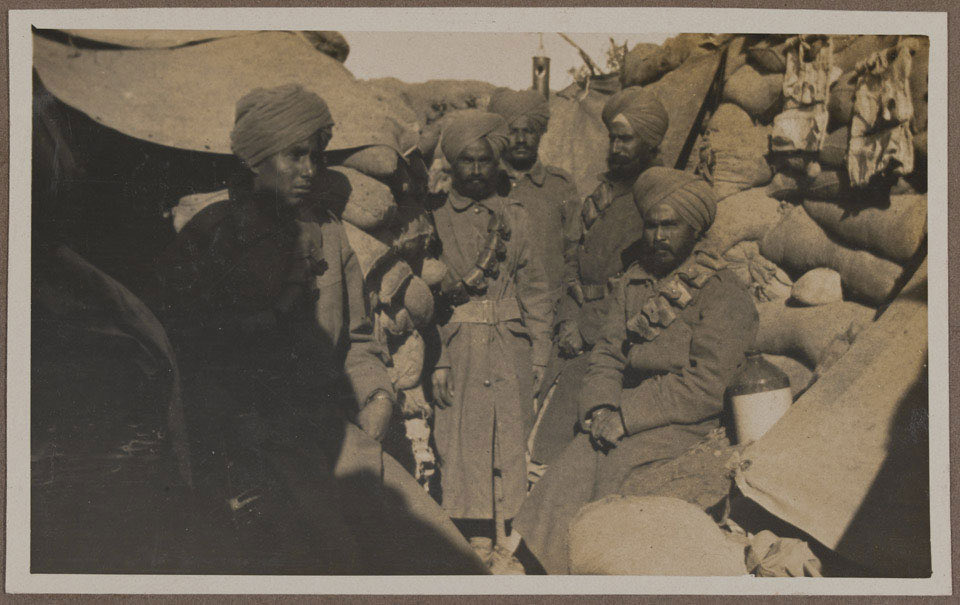
In 1915, thousands of Indian soldiers fought and died at Gallipoli, beside the ANZACs, in the campaign that forged Australia’s national identity.
Same empire. Same trenches. Same cricket obsession.
And then, for 70 years, the same ocean but opposite camps.
The Cold War put Australia under the American umbrella and India in non-alignment. After Pokhran-II in 1998, Canberra downgraded ties overnight. It refused uranium to India for decades because we never signed the NPT.
In 2008, Australia even walked out of the Quad, to avoid upsetting Beijing.
Remember that detail. It’s the hinge of this whole story.
Because then China taught both countries the same lessons.
2020: Chinese troops attack Indian soldiers at Galwan. The same year, Australia asks for an inquiry into COVID’s origins, and Beijing responds with tariffs and bans on Australian barley, wine, coal, lobster.
Two democracies, coerced in the same year, by the same power.
Everything since has moved fast. Uranium ban lifted. Australia back in the Malabar naval exercise after 13 years. A trade deal in 2022. And the country that walked out of the Quad is now one of its pillars.
Today in Melbourne, the third annual summit turned that momentum into hardware. 18 outcomes:
Uranium. A commercial supply agreement, at last. Australia holds roughly a third of the world’s known reserves. India is targeting 100 GW of nuclear power by 2047. The country that once refused us fuel on principle will now help power that build-out.
Minerals. A Critical Minerals Corridor for lithium, cobalt and rare earths, moving beyond buying rocks into co-investing in processing. Remember Indian automakers panicking when China squeezed magnet exports? Australia is the other answer.
Defence. A Joint Declaration on Defence and Security Cooperation, a maritime security roadmap, and shipbuilding, repair and maintenance cooperation. Indian warships serviced in Australian docks, and vice versa. Two navies, one ocean.
The money. AustralianSuper, Australia’s largest pension fund with over AU$410 billion in assets, announced a AU$500 million investment in India.
Pension funds are the most cautious capital on earth. They think in 30-year horizons, not quarters.
When a pension fund moves, it’s not a bet. It’s a verdict.
Minds too. CECA trade talks fast-tracked. Flinders University opens in Bengaluru, Victoria University in Gurugram, a mining skills institute in Bhubaneswar.
And the trust layer. Australia returned three looted antiquities: an 11th-century granite Nandi, a bronze Bhadrakali, a six-headed Skanda.
A country returns your gods when it wants your friendship.
Zoom out and see what Beijing sees.
The two democracies it tried to coerce in 2020 just connected their nuclear fuel, their minerals, their navies and their universities. Not because Washington asked. Because Beijing pushed.
China didn’t lose Australia to America.
It lost Australia to its own behaviour.
In 2008, Canberra wouldn’t risk a meeting that might annoy Beijing. In 2026, it’s fuelling India’s reactors and repairing India’s warships.
That’s what 18 years of patience buys.
India doesn’t flip countries. It waits for them to arrive.
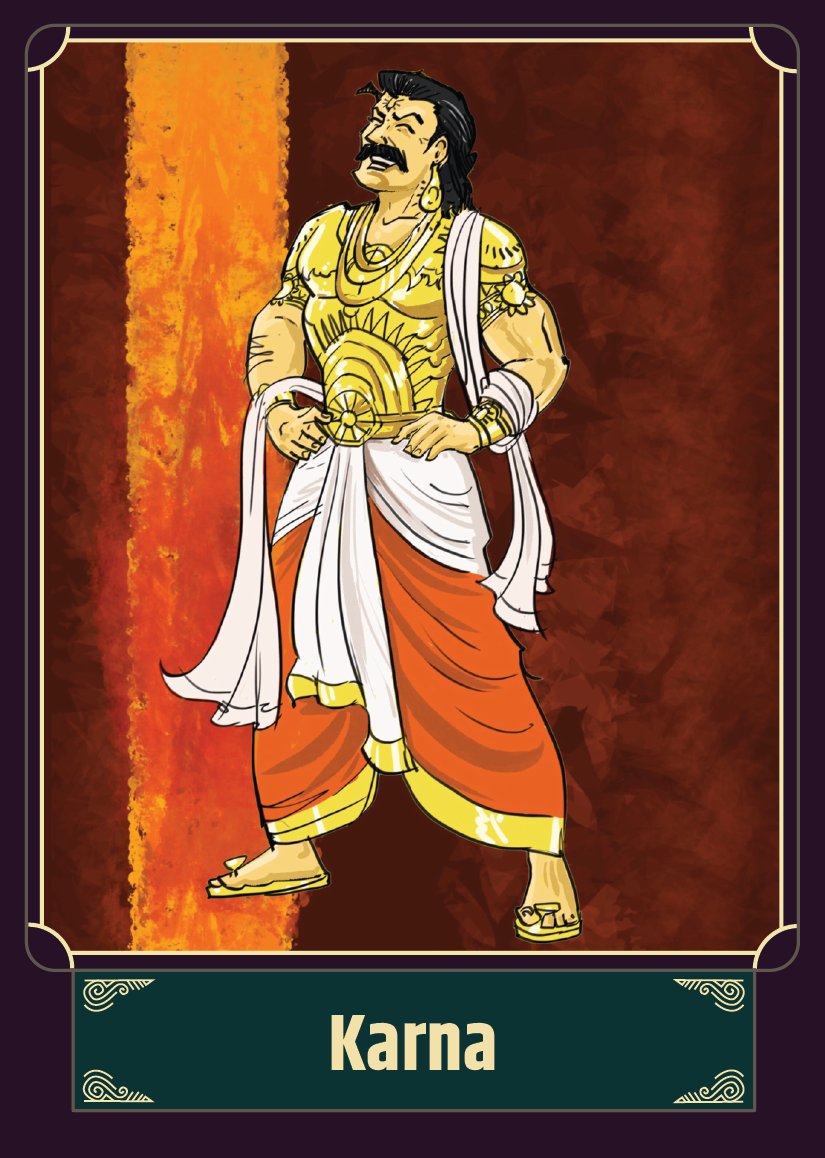
Who was a Suta and were they discriminated against in Mahabharata?
We often come across the narrative that Karna, who was adopted by a Suta family, faced discrimination all his life because of being a Suta. This somehow alludes to the fact that Suta was a low caste and was discriminated against by upper caste people.
Surprisingly this discrimination theory is not put forward in context of other Sutas mentioned in our epics.
In order to analyze this whole situation we need to first understand, who was a Suta?
Today India signed a deal to sell supersonic missiles to the world’s largest Muslim-majority country.
In the same set of agreements: India will restore their 1,170-year-old Shiva temple.
If that surprises you, you don’t yet understand how India plays. Let me explain.
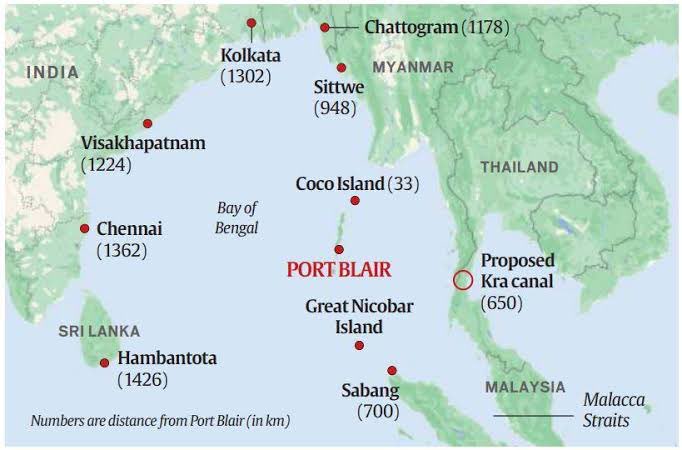
Indonesia is India’s largest maritime neighbour. Indira Point, our southernmost tip, sits closer to Aceh than to mainland India.
We don’t share a border. We share a sea.
And we’ve been crossing it for 2,000 years.
Kalinga traders sailed to Java before Christ; Odisha still celebrates Bali Jatra for those voyages. In 1025 CE, Rajendra Chola sent a war fleet across these exact waters.
The Ramayana travelled with the traders. It never left.
Indonesia’s national airline is Garuda. Every full moon at Prambanan, the Ramayana is performed as ballet.
Mostly by Muslim artists.
Indonesians say it themselves: we changed our religion, not our culture.
1947: The Dutch are trying to recolonise Indonesia. Biju Patnaik flies a Dakota into occupied Java and smuggles out their Prime Minister.
Jakarta never forgot. The story goes Sukarno asked Patnaik to name his newborn daughter: Megawati, later President of Indonesia.
And when India held its first ever Republic Day parade in 1950, the chief guest was Sukarno.
1955, Bandung: the same two giants co-wrote non-alignment itself. The instinct: nobody’s junior partner.
Then both drifted for decades.
The last decade rebuilt the bridge. Act East. MAHASAGAR. The 2018 partnership that quietly got India access to Sabang. Prabowo as Republic Day chief guest in 2025, exactly 75 years after Sukarno.
That was the runway. Today was the takeoff.
What got signed:
The port. India and Indonesia will jointly develop Sabang, at the northern mouth of the Malacca Strait, 160 km from India’s own Great Nicobar project.
A fifth of global trade and a third of the world’s seaborne oil passes through that strait. Most of China’s energy too. Beijing has called it the “Malacca Dilemma” for 20 years.
India now sits at both ends of the entrance.
Nobody needs to choke anything. Sitting at the gate is the position.
The missiles. Indonesia becomes the FIRST foreign buyer of India’s Astra missile, and is expanding its BrahMos arsenal.
ASEAN’s largest military, spending its own money, after watching Indian systems perform in May 2025.
India’s defence exports this year: Rs 38,424 crore, up 62% (official MoD numbers).
Meanwhile, our western neighbour spent months planting anonymous stories about JF-17 sales. To Libya (under a UN arms embargo). To Sudan (in a civil war). Even to Indonesia.
And the country actually named in those stories? It just signed with India, President in the room.
Markets are the one audience propaganda cannot capture.
The minerals. India will build nickel, steel and rare earth magnet manufacturing inside Indonesia, where Chinese firms dominate processing today.
Remember Indian automakers panicking within weeks of China’s magnet export curbs?
This is the answer.
The trust layer. UPI integrates with Indonesia’s payments. IIM Bangalore opens a campus there. India helps build their voting machines. And Indian archaeologists will restore Prambanan.
A country lets you touch its elections and its temples only when the trust is total.
Now zoom out.
The world is hardening into two blocs. Every middle power wants a third option: capability without allegiance.
That is India’s entire product. Missiles without bases. Investment without debt traps. Rails without surveillance.
India isn’t building a bloc. It’s building the alternative to blocs.
The two countries that wrote non-alignment in 1955 just wrote its 2026 edition.
A thousand years ago, a Chola fleet crossed these waters and the world took note.
Today India returned. Not with a fleet. With ports, missiles, payment rails and archaeologists.
Empires announce themselves.
Civilisations just resume 🇮🇳 🇮🇩
Indian consumption per person beyond subsistence is an order of magnitude lower than America, even adjusted for cost of living. Roughly a tenth. Even a doubling will take it to Chinese levels today relative to America, which US already considers a mistake.
Christopher Landau’s statement is a few months old but was publicly said on Indian soil. It was justified in the name of serving one’s own people. Corollary is India’s rise will be resisted by US too, not just China. Not in the future. But right now.
The trade and tariff tensions, the policy towards Pakistan and Bangladesh, the G2 rhetoric towards China, the very recent dropping of Indo from Indo Pacific, the hard line on any US Big Tech restrictions, delaying of jet engine sales etc etc.
Remember in the US policy here - unlike in the Biden admin rhetoric, although the substance was similar - there is no real difference if India is a democracy or not, uses aggressive industrial policy or not. These things are certainly not irrelevant but their salience is overrated for geopolitics.
Given that both China and India have more than four times America’s population - and India will be at that relative level for decades - the point is clear: America doesn’t want Indians to be prosperous.
When people say who they are, believe them.
get a haircut every 2 weeks to stay sharp, wait 5 secs before answering the phone to control the rhythm, always arrive 15 mins early, stay away from free lunches, never talk about people who aren't in the room and when anger rises, wait 10 mins before reacting. these habits may look rigid but they're the hidden discipline of the elite.
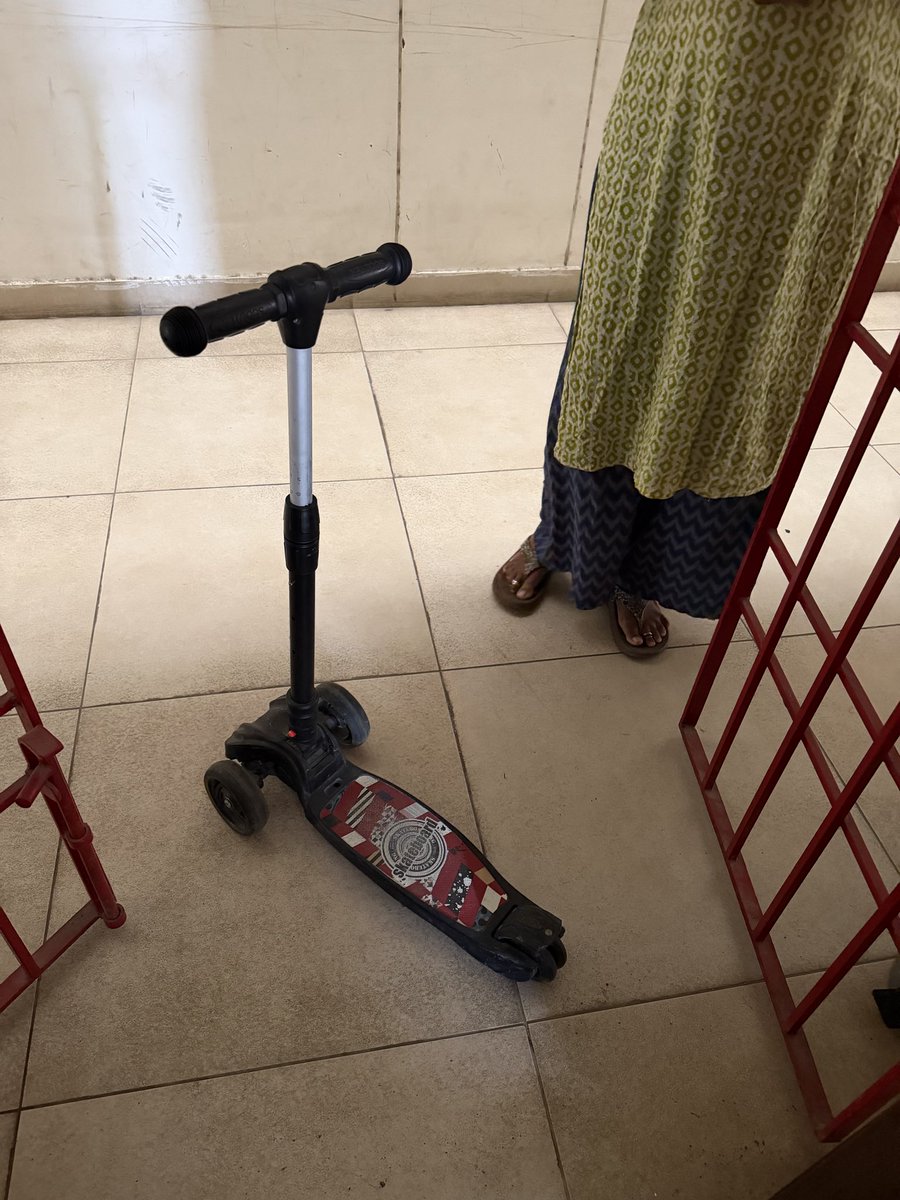
Today, when I opened my main door, I saw that someone had left their scooter blocking my gate. I took a photo and posted it in our homeowners’ WhatsApp group.
After some time, I received a message from someone asking which tower I was from. I told her my tower number. I then called the number and asked for her name. She said, “Krithika.” I told her to come down and collect the scooter.
When she arrived, I ushered her toward my Murugar. She told me that she had lost the scooter more than a week ago and had no idea where it had gone. She lives in a tower quite far away from mine.
Yesterday, she had prayed to the Almighty for a brief moment, saying that if he truly existed, he should help her find her scooter.
The moment she said that, I understood this was Murugar’s way of telling her that he exists. It also reaffirmed my belief that every guest who walks through my door is chosen by Him.
This is what the hit job against India's manufacturing looks like. Hack first, attack next, turn world perception against Indian manufacturing. The same China simping culprits and media (Reuters, Bloomberg) spreading anti-Indian manufacturing propaganda. Read my post from April.
Let me explain the Kashmir conflict using a direct American parallel:
Imagine if, after the Civil War, the US permanently split into 2 nations: the progressive, secular Union in the North (India), and a regressive, hostile society of slave owners in the South (Pakistan). (1/8)
I am heading to Japan tomorrow. The agenda is to partner with small to mid-sized companies in small town Japan and bring them to small town and rural India.
We want to restore our culture of craftsmanship - Aasaari (ஆசாரி) in Tamil and Vishwakarma (विश्वकर्मा) in Sanskrit - by partnering with smaller Japanese companies that still have those ethos and are present in rural Japan. Japanese are world leaders in areas that require intricate craftsmanship.
I am guided by my friend Britto (Britto-san!) originally from Madurai and who spent decades in Japan and understood the culture and companies well. He is the founder of Takumi Motion Controls, and Takumi (匠) also means "craftsman".
Britto-san and I bonded over our admiration of Japanese craftsmanship. This has become a mission for us.
european football has spent the past fifteen years solving futbol like chess.
a generation of coaches optimized for pass completion, pressing triggers, territorial control, rest defense, and positional occupation.
the problem of this is that they optimize for what is measurable. depth, the willingness to attack space early, attempt the difficult pass, dribble past a defender, or deliberately create chaos, is a high variance play. it fails more often than it succeeds. if you evaluate players by completion rate, ball retention, or positional discipline, those actions look like mistakes. so they get coached out. eventually, everyone converges toward the same local optimum.
the game becomes increasingly legible. every team occupies similar spaces, presses in similar ways, builds from the back with similar patterns, and minimizes the same risks. systems become better at defeating other systems, but worse at dealing with players who refuse to behave like systems.
south american football never fully abandoned the duel as the fundamental unit of the game. the 1v1 remained sacred. so did the tactical foul, the unpredictable dribble, and the player willing to lose possession five times if the sixth breaks the match open. the objective was never simply to preserve structure, it was to create someone capable of destroying the opponent’s structure.
football is not won by completing the most passes. it is won by scoring more goals than the other team. those are related, but they are not the same objective.
this is the danger of optimizing proxies. when everyone optimizes the same measurements, they stop optimizing for victory itself. they optimize for looking efficient.
italy may have been the first major european football culture to lose part of its identity this way. its historical advantage was never athletic superiority or perfect positional play. it was tactical asymmetry, unpredictability, and an instinct for making matches uncomfortable. as italian football converged toward the same coaching model as the rest of europe, it gradually surrendered the qualities that had made it different.
the broader lesson extends well beyond football. every optimization process eventually risks becoming self-defeating. metrics become targets. proxies replace objectives. variance is mistaken for error. the outliers capable of breaking the system disappear because the system itself learns to eliminate them.
it is genuinely psychotic that we dug up literal primordial dirt, scrubbed it down to an impossible 99.9999999999% molecular perfection that violates the very laws of physics, handed it over to techno-wizard necromancers to stretch into flawless geometric god-cylinders, blasted it with invisible uv death-rays to carve ten quadrillion microscopic cyber-sigils into its flesh, trapped actual lightning inside of it, and somehow birthed an omniscent eldritch deity capable of simulating the universe and thinking faster than a billion human civilizations combined.
and our grand, supreme purpose for this enslaved lightning-god?
sending "per my last email, please see attached" to a guy named gary.
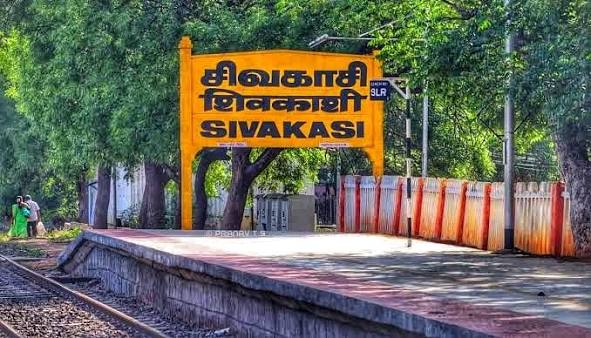
In 1922, Western colonial cartels told P. Ayya Nadar that a drought-prone, uneducated village in South India could never compete with Europe’s advanced industrial manufacturing. Ayya Nadar responded by traveling across the country, collecting the secrets of mechanized match production & returning to build a cottage industry that broke the Swedish match monopoly forever.
This is the story of how a Tiny Spark built a Great Nation. In the early 1900s, India was 1 of the largest consumers of matches in the world, but every single strike of fire was controlled by foreign giants. A Swedish billionaire named Ivar Kreuger known globally as the "Match King" had established an absolute, suffocating monopoly over the global market.
Foreign-aligned giants like WIMCO flooded India with imported matches, making massive profits off the daily needs of ordinary Indians. The narrative was carefully maintained: Complex chemical formulations & high-precision splints require European machinery; the Indian villager is only meant to be a consumer.
While European corporate lords grew unimaginably wealthy, rural regions in India like Sivakasi were dying of drought & poverty. The land grew nothing & the people had no jobs. They were living on a literal powder keg of potential, but lived in absolute poverty.
P. Ayya Nadar had no foreign degree/massive inheritance, but he had a PhD in Survival. Seeing his hometown of Sivakasi starving due to failed monsoons, he refused to accept that destiny. He approached traditional elite financiers for loans to import Western matchmaking machinery. They laughed him out of the room. The narrative was that uneducated, rural Indians could not handle hazardous volatile chemicals like phosphorus & potassium chlorate, nor could they manage industrial balance sheets.
Ayya Nadar did not look for foreign machinery. He went to find the secret process himself. Ayya Nadar & his partner undertook a journey to Calcutta, where a few primitive, highly secretive match factories existed. To bypass corporate espionage guards, they worked in disguise as low-level laborers, observing the exact chemical ratios, drying times & wood-slicing techniques with laser-sharp focus.
He did not come back with heavy, imported machines; he came back to Sivakasi with a simple, handwritten blueprint for a decentralized, hand-made cottage industry. The Pitch to his drought-stricken townspeople was simple: "Give me your labor, not your money. We do not need automated European factories; we will build this with our own hands."
Poor villagers, who had lost all hope due to dried-up farms, dug into their meager savings & offered their sweat. They built simple wooden hand-frames & mixing tables because Ayya Nadar promised them they would no longer import their fire from Europe, they would manufacture it.
Against all odds, in the 1920s, the indigenous match factories of Sivakasi were born. To fight the massive marketing budget of the Swedish cartel, Ayya Nadar engineered a brilliant, highly localized weapon: Patriotic Branding.
He plastered images of Indian freedom fighters, local deities & national symbols onto the matchboxes. For the 1st time in history, the profits from a matchbox did not cross the Atlantic to line the pockets of a Swedish billionaire; they stayed entirely within the community. Striking a local matchbox became a daily act of defiance against colonial rule.
The dusty, barren outpost of Sivakasi completely transformed into a booming industrial powerhouse of fireworks, printing presses & safety matches, funded entirely by indigenous match money. Ayya Nadar’s decentralized model created the blueprint for India's cottage industry revolution.
This model of labor-intensive, localized manufacturing was so wildly successful that it forced the govt to place high excise duties on foreign mechanized matches to protect Indian hands. W/o Ayya Nadar's "Tiny Spark" victory, India’s massive home-grown printing & fireworks sectors would simply not exist.
Today, Sivakasi fulfills ~90% of India's fireworks & safety match demands, employing 100s of 1000s of rural families. P. Ayya Nadar proved that industrialization does not have to be Top-Down (from heavy Western machines to the poor); it can be Bottom-Up.
He showed that a community of determined human hands is vastly more powerful than a million-dollar automated factory from a European cartel. P. Ayya Nadar built a Backbone. He proved that a drought-stricken Indian villager could spark an industrial revolution that could burn down a global monopoly.
India uses its 4th most powerful military in the world to help countries facing a crisis, even if they are 9000 miles away, instead of attacking them.
India set up a makeshift hospital during the Turkey earthquakes too, treating thousands of people as its military helped Turkish authorities clear out the rubble.
During the Russia-Ukraine war, India evacuated its own citizens along with stranded citizens of other countries, including Pakistani citizens.
India also led the medical and rebuilding efforts (by sending financial aid) during the Nepal earthquakes in April 2015. India sent the highest number of troops to the region and led the operations for months - free of cost for Nepal.
Even during the fall of Yemen in 2015, India evacuated its own citizens as well as American and European citizens, who were stranded there and expecting no help from their own military.
All this was FREE OF COST. India didn't send a bill to any of these countries.
We owe India gratitude, instead of the racist treatment it gets on social media.
The DS identified this man as a major threat to their easy manipulation of India very early on. They desperately tried to stop him from ever leading the country.
The moment he became CM, they ignited issues, branded him with every possible label, attempted to sanction him, and even revoked his visas.
They unleashed tens of thousands of pages of propaganda reports against him, both inside India and abroad. They weaponised the opposition and the courts to flood him with cases from every direction.
Yet he overcame it all. To become the PM of the world’s largest democracy. Despite all the hit jobs, sabotage, and propaganda, he remains the most popular leader on the planet.
He has turned every adversity into an advantage. "Being Anti-fragile" is his mantra. And he has made India anti-fragile too. We have seen the nation emerge stronger from every crisis thrown at it.
I believe he will also resolve the infowar crisis. The main force behind it will be weakened and broken by him. It will be a fitting feather in his cap before he retires as not only India’s longest serving PM, but its most impactful one.
History will remember him as the one who transformed India not just in infrastructure and development, but forged a confident, self-reliant nation that stands proud on the global stage.
In 2015 a writer named Tim Urban sat down and counted the days he had left with his parents. He was 34, healthy, both parents alive and well. The number came back around 300. Less time than he spent with them in any single year of his childhood.
The post is called The Tail End, on a blog called Wait But Why. The idea is to stop counting your life in years and start counting it in events. Reach 90 and you get about 4,680 weeks, and every one of them fits on a single sheet of paper. Maybe 60 more winters after that. If you read five books a year, that is 300 books, picked from every book ever written.
Those things at least spread out evenly. A third of the way through life means a third of the way through your pizzas. Time with the people you love does not work like that. Almost all of it sits at the very start. Then it is gone.
For your first 18 years you are around your parents nearly every day. Then you leave for college or a job in another city, and a normal adult sees their parents maybe 10 days a year. So the day you move out, you are already at 93 percent. Urban was living in the last 5 percent and had no idea until he drew the chart. He called it the tail end.
It does not stop at parents. His two sisters, after a whole childhood in the same house, had around 15 percent of their time together left. The four friends he played cards with most days in high school were down to their last 7 percent. Nobody had a fight. Nobody moved away angry. Life quietly spends the time for you while you assume there is plenty left.
You do not have to be old to be near the end with someone. If your parents are alive and you live in a different city, you have probably already used more than 90 percent of the days you will ever spend in the same room as them.
His one instruction is about that last stretch. When you are down to the final days with someone you love, treat that time like what it is, which is almost gone. The rest is the tail end, and it is much shorter than it feels.
Every Sunday, I had decided to share 1 story of a startup built by an exceptional Indian founder solving deep, structurally complex problems.
This week: https://t.co/w2AGE2k93X, envisioned by neurosurgeon Dr. Ajay Bakshi Ji (@bakshi_dr).
If we open any generic LLM today & ask it to explain a verse from the Upanishads/the Gita, we are highly likely to get an answer heavily filtered through 19th century European translations (like Max Müller). These colonial-era works systematically retrofitted deep Sanskrit concepts into rigid Abrahamic frameworks, simplifying Dharma to just religion/Atman to soul, completely stripping away their multi-dimensional, algebraic logic.
Worse, modern generative AI loves to hallucinate. It spits out smooth, half-remembered platitudes that sound spiritual but completely distort the actual texts.
Most of the AIs are treated as Guru these days, but Dr. sahab relied on Sevak approach. Mygurukul uses a highly curated, closed-loop library of authenticated Indic translations (completely bypassing corrupted European editions).
By running Agentic Search & RAG on top of this closed database, the platform tries to eliminate AI hallucinations. When we query a concept, it maps it across a verified living graph of texts (Vedas, Darshanas, Ayurveda, Arthashastra) & presents it completely free of charge, honoring the ancient Vidya Dana (gift of knowledge) tradition of our historical Gurukuls.
Although the philosophical foundation & engineering guardrails are brilliant, from a pure product, scalability & long-term tech roadmap perspective, the platform faces significant blind spots, IMO:
- The platform is still fundamentally relying on English as the intermediary vehicle to deliver classical Sanskrit insights to a modern audience. No matter how accurate an English translation is, it strips the vibration (dhvani) & the multi-layered etymological (Yauglika) roots of the original verse.
- Currently, the platform balances consumer-friendly features like "Daily Sacred Readings" ending in a reflective question with a backend scholarly project. The risk here is turning into a wellness/mindfulness app rather than a true intellectual fortress. If it scales purely on daily lifestyle motivation, it loses the raw, uncompromising rigor of a traditional Gurukul.
- Keeping it 100% free is a beautiful tribute to the Vidya Dana (gift of knowledge) tradition. However, scraping, maintaining, vectorizing & running agentic AI compute over 10s of 1000s of complex texts is incredibly expensive in terms of GPU costs.
Although, Dr. sahab is incredibly sharp, imo, these might be the quick fixes:
- The AI needs to map semantic distances based on actual original Sanskrit root words and Paninian grammar algorithms, displaying the Anvaya (prose order) alongside translations.
- Keep the consumer interface free to honor the Gurukul ethos, but monetize the API layer for global academia & media houses.
- Create a clear bifurcated architecture: a Sadhaka Layer (for casual readers looking for life context) & a Pundit/Scholar Sandbox.
- Also, agentic search should not just retrieve text; it must integrate audio archiving.
The platform is still quite early & is a fantastic example of using modern tech to protect ancient heritage from modern tech's own flaws. It is trying to stop AI from rewriting our past.
Anyway, at least test it once.
For the last 15 years, I've always had one dream and desire which was to make Indian history interesting for everyone.
In that time period, I have tried writing blogs, long-form posts, stories and threads, to do exactly that.
Some worked, most didn't. But with every post, I always had this nagging question.
Why is Indian history always taught with a tunnel vision. Why is it so fragmented?
Why do we always learn things from the perspective of one empire, kingdom, king or invader.
Why do we never see an all India view of history?
I mean most of us struggle if we are ever are asked this question
1. What was the true extent of the Mughal Empire at its peak?
2. Who were the Cholas' contemporaries in North India?
3. While Muhammad Ghori was fighting the Second Battle of Tarain, who ruled Thanjavur?
4. While Harsha ruled Kannauj, who ruled Assam?
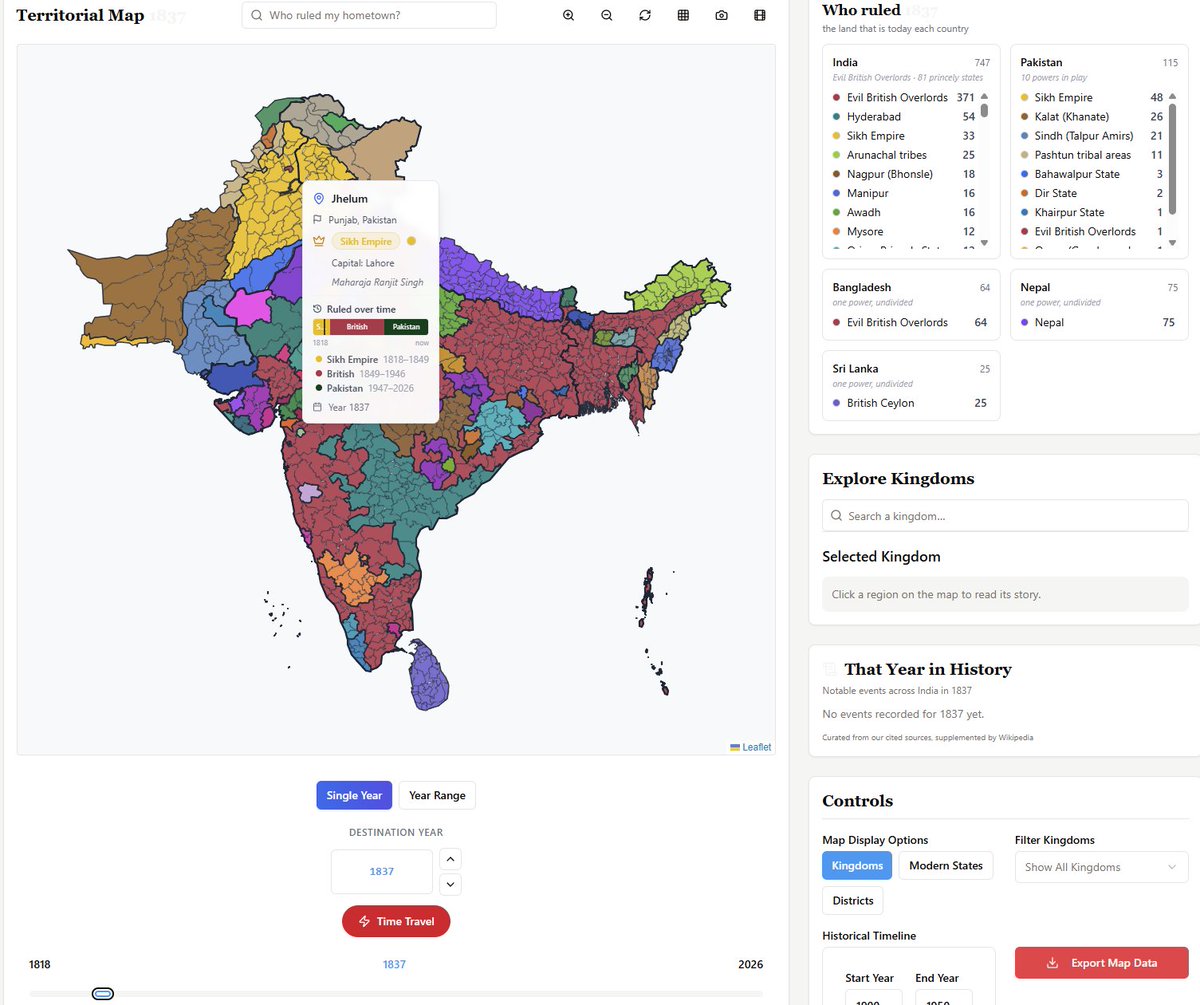
I have always wished there was a simple way to see the political map of India for any year in Indian history.
I have always wished there be a place where
1. One Could Select any year and instantly see who ruled every part of the Indian subcontinent.
2. One could Discover the important events that happened in that year
3. One could select a time period, say 1700 - 1947, and see how the Indian subcontinent evolved in that period.
4. How did one tiny red dot in West Bengal, from a tiny red dot in Europe, somehow came to rule an entire subcontinent of 400 million people,
For years, that idea remained just an idea and a dream because
1. I didn't know how to build a website.
2. I couldn't afford to hire someone who could.
Then Claude Came along.
Thanks to generous support and heavy lifting by Claude, over the last few months, that 15-year-old idea is slowly transforming into a reality.
And today, it has reached a position, where I'm excited to share with all of you, the first sneak peek of https://t.co/6ph2s9Zzl9
It is my attempt to create an interactive historical atlas of India that lets you travel through time and explore the political history of the subcontinent, one year at a time.
This is my attempt to make history interactive and fun.
I'd love to hear what you think.
Messi se situe à 5,9 écarts-types (σ) au-dessus de la moyenne des attaquants des 5 grands championnats européens, en buts + passes décisives / 90 minutes.
Explications
En statistiques, la courbe normale dit que :
99,7% des individus sont dans les ±3σ
À 5,9σ, la probabilité d’exister est inférieure à 1 sur 500 millions
Imagine que tu prends tous les attaquants des 5 grands championnats européens, on a des des centaines de joueurs.
Tu les ranges du moins bon au meilleur en buts + passes par match.
La grande majorité des joueurs se retrouvent au milieu, c’est la bosse de la courbe sur le graphique
Les très bons (Haaland, Lewandowski) sont déjà loin à droite de cette bosse.
Messi n’apparaît même plus sur le graphique. Il est tellement loin que la courbe ne le représente plus.
Si tu mesures la taille de tous les hommes français, la moyenne est environs 1m75. Quelqu’un à 5,9σ au-dessus ferait plus de 2m30.
Ça n’existe pas. C’est ça Messi dans le football. C’est une anomalie
Ça veut dire que statistiquement, un joueur comme lui apparaît une fois toutes les centaines de millions de carrières de footballeurs.
Ô ne reverras probablement jamais ça de notre vivant, et c’est les maths qui le disent, pas juste une opinion.
Messi est une anomalie mathématique
Me crucé con esto, Messi está casi 6 desviaciones estándar por encima de la media de delanteros de grandes ligas en cuanto a goles y asistencias en 90 minutos. Estadísticamente es prácticamente imposible que vivas para ver a alguien así