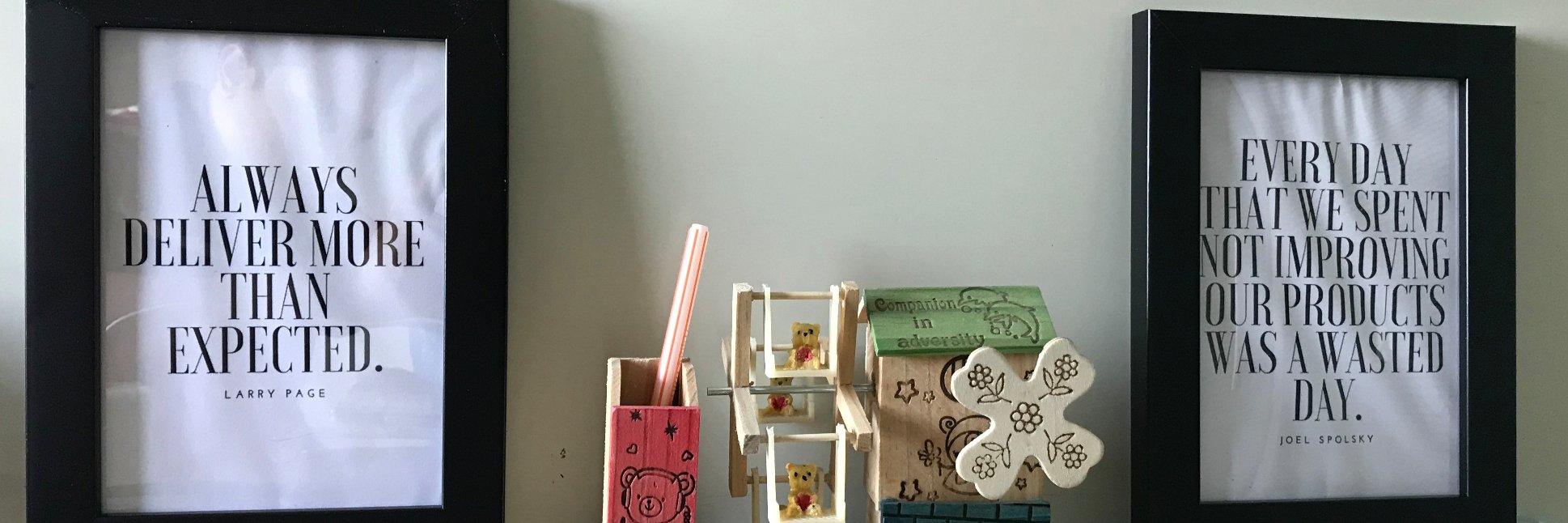
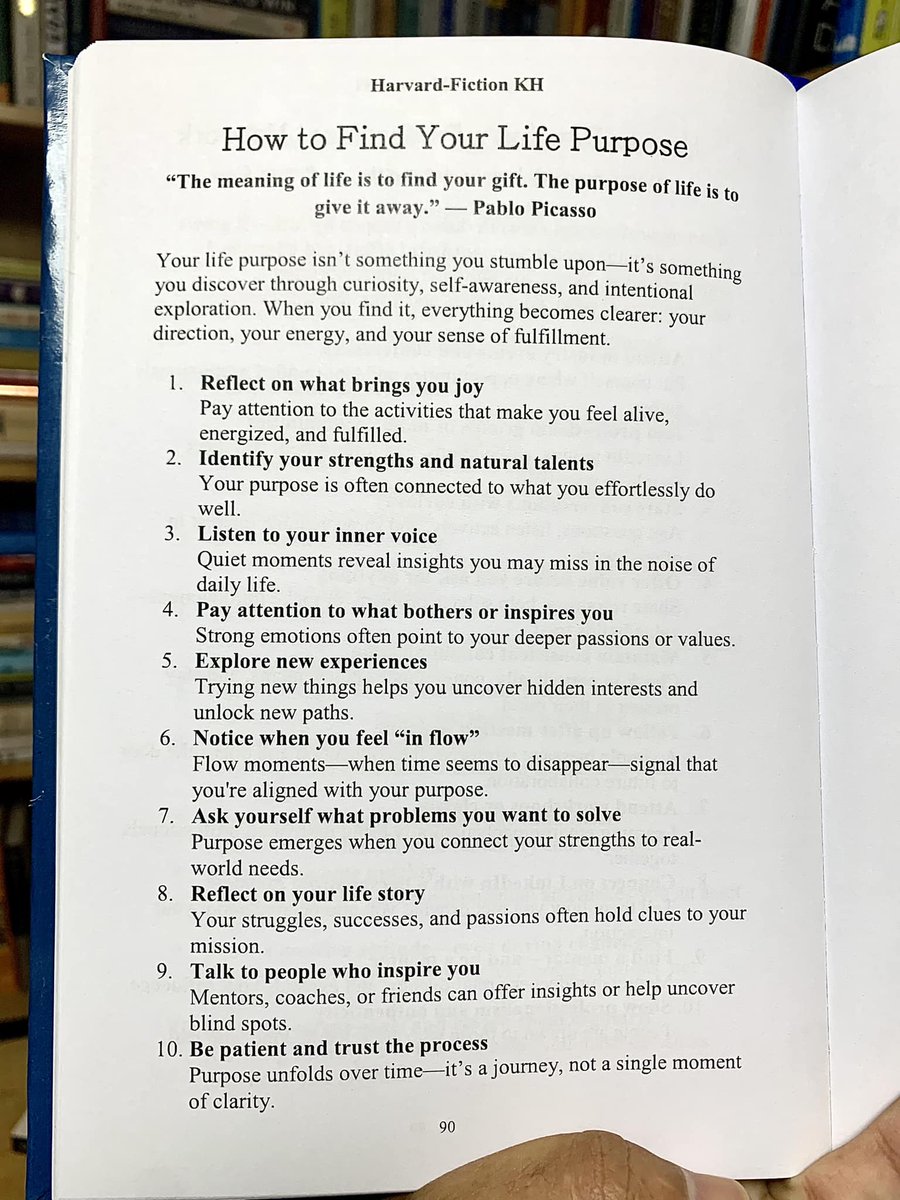
Weekends are for relaxing, and I find reading to be a great way to unwind, temporarily escaping the pressures of life and immersing myself in the world of books. Books often inspire me and stimulate my creativity.
Design Linked Incentive (DLI) scheme is showing good results.
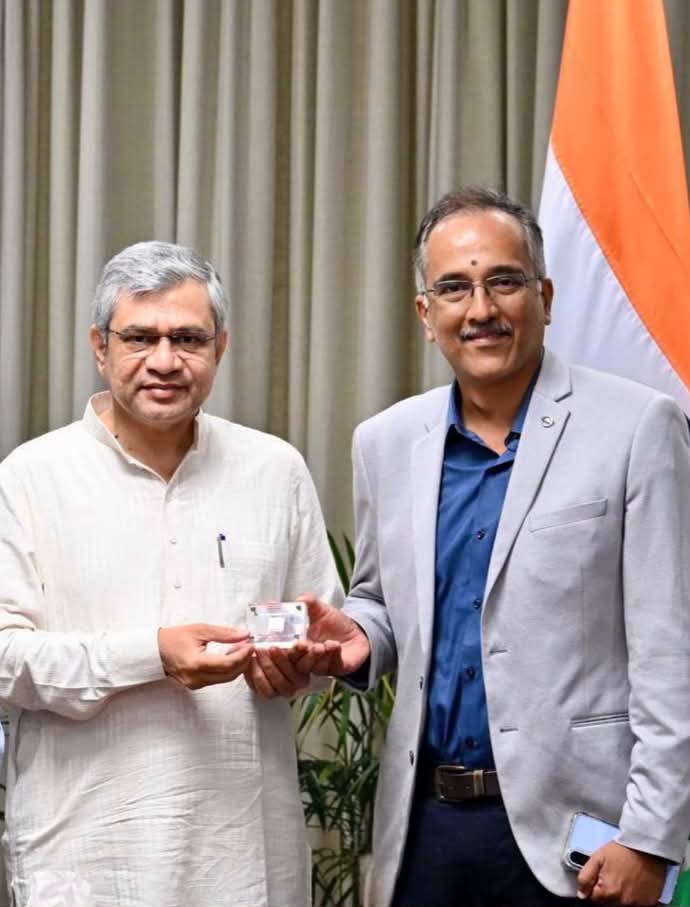
@netrasemi has designed India’s first Edge AI System-on-Chip (SoC) ‘NETRA A2000’, at advanced 12 nm node.
At commercial scale this will power smart vision devices for surveillance, automotive, robotics, drones, etc.
Charlie Munger, the Stoic: "Life will have terrible blows in it. Horrible blows. Unfair blows. It doesn't matter. And some people recover and others don't."
"There, I think the attitude of Epictetus is the best. He thought that every mischance in life was an opportunity to behave well. Every mischance in life was an opportunity to learn something. Your duty was not to be submerged in self-pity, but to utilize the terrible blow in a constructive fashion."
I originally learned it from a data compression textbook in college.
From ML connection pov, the David MacKay book is well renowned (freely available)
There is also a small focused book just on information theory from James Stone.
Managing gigabytes also covers it but very much an applicattion book in compression related areas.
I think there are many other books/tutorials published on arxiv.
If you love computers, you'll love this book. Trust me.
It includes exciting plot twists like "We're out of bits but need to add a new instruction", and then a bunch of "navigating to the moon" stuff. But it's great.
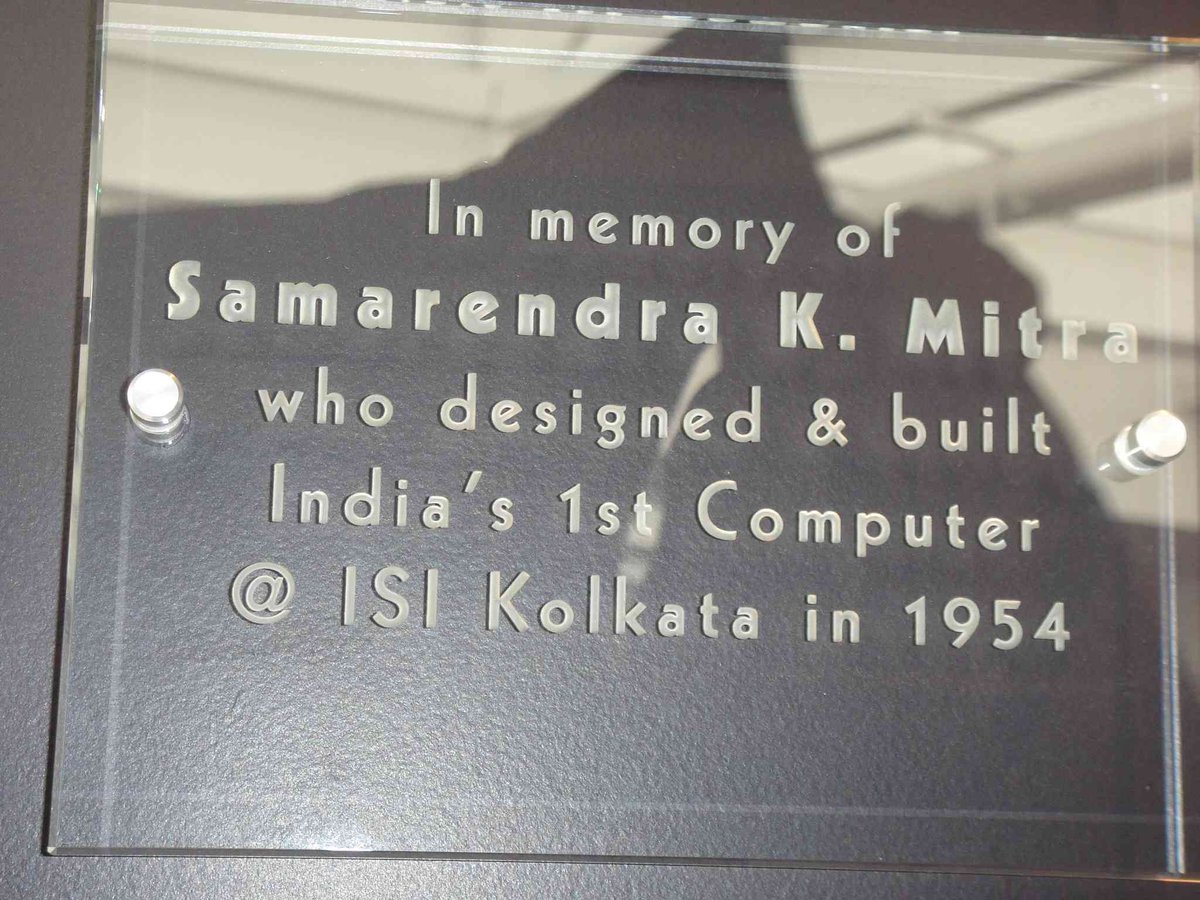
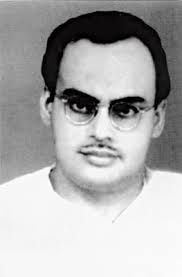
How a Polymath Built India’s 1st Computer from Scrap Metal & Shocked the Cold War Superpowers. In 1949, a brilliant young mind from Calcutta walked through the corridors of the Institute for Advanced Study in Princeton under a UNESCO fellowship. He was not just sitting in the back of lecture halls; he was engaging in deep, lengthy mathematical discussions with Albert Einstein, attending atomic physics lectures by Niels Bohr, & rubbing shoulders with Robert Oppenheimer.
But while his peers chose to stay in the luxurious, cutting-edge labs of the West, Samarendra Kumar Mitra packed his notes & returned to a young, impoverished India. He walked into the Indian Statistical Institute (ISI) in Calcutta, took over a tiny, empty room with a single part-time technician, & decided that if India wanted to join the atomic age, it would have to build its own brain.
Mitra did not come from nowhere, but his family's intellect was heavily rooted in standard colonial systems, a mold he shattered completely. His father was Sir Rupendra Coomar Mitter, a legendary academic powerhouse who scored double gold medals from the University of Calcutta (1 in Mathematics, 1 in Law). He eventually became the Chief Justice (Acting) of the Calcutta High Court during the independence of India in 1947.
While his family legacy pointed directly toward a clean, safe career in law/standard mathematics, Samarendra was an insatiable polymath. He refused to pick a single lane. He earned 2 separate Master’s degrees: 1 in Chemistry & another in Applied Mathematics. He then immediately began working on complex air-driven ultracentrifuges at the Palit Research Lab.
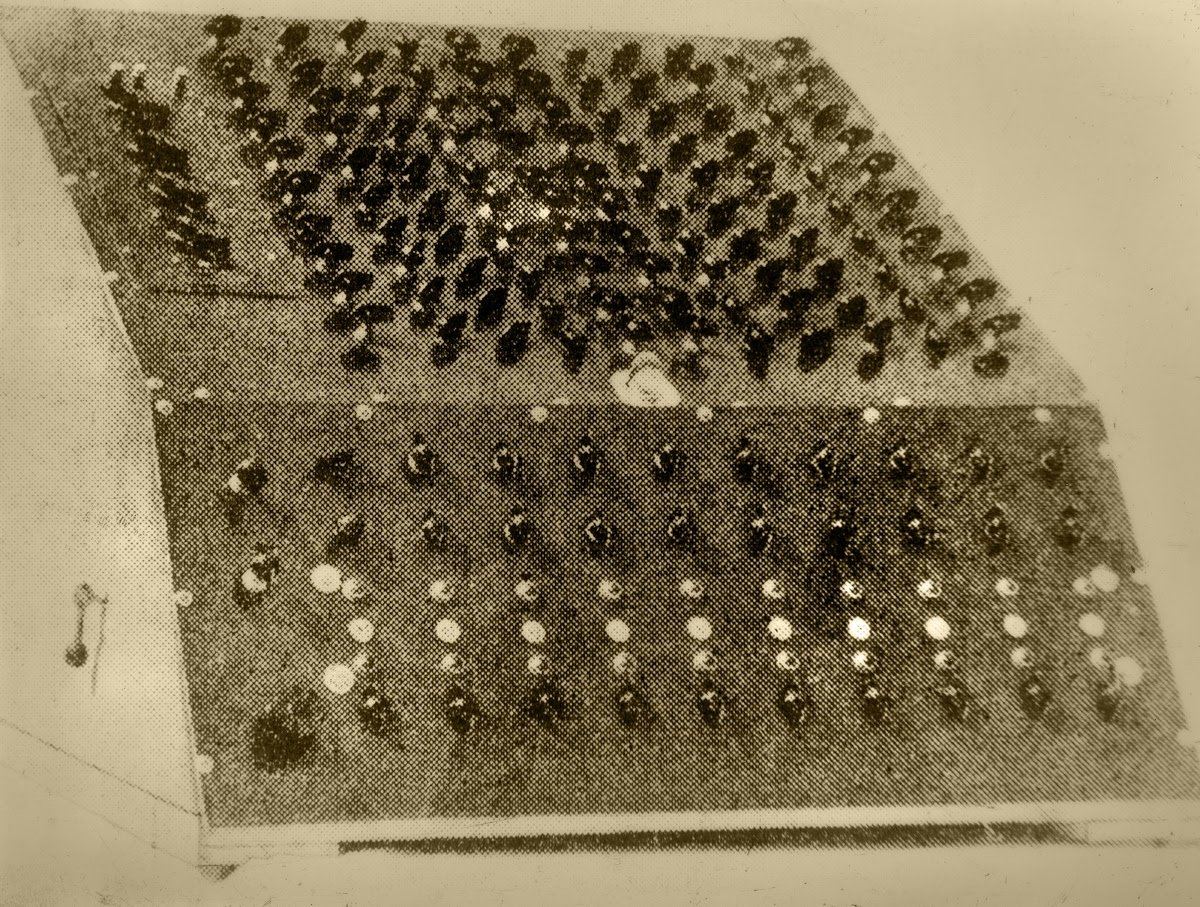
When Prof Prasanta Chandra Mahalanobis met Mitra in England, he realized this was the man who could build India's calculating future. In 1950, Mitra founded the Electronic Computer Laboratory at ISI Calcutta. He was given almost no ready-made components. In 1953-54, designing every piece under his direct personal supervision & built alongside a technician named Ashish Kumar Maity, Mitra constructed India's 1st indigenous electronic analog computer.
This was not a commercial machine. It was a massive wall of custom electronics designed specifically to solve simultaneous linear eqns with 10 variables using a highly modified version of Gauss–Seidel iteration. When Prime Minister Nehru visited ISI, Mitra booted up the machine to show him that India no longer needed to wait for Western shipments to calculate structural/engineering/economic data.
Mitra was pursuing his formal PhD in Physics under the legendary Meghnad Saha (the man who gave the world the Thermal Ionization Equation). In 1956, Meghnad Saha died suddenly of a heart attack on his way to a meeting. A devastated Mitra, out of sheer devotion & grief for his fallen mentor, refused to submit his doctoral thesis to any other prof/university. He walked away from the title of "Dr." entirely by choice, choosing to remain a quiet prof & researcher w/o the formal vanity of the degree, letting his machines speak for his intellect instead.
He did not just stop at analog. When the world shifted to digital, Mitra led the charge. In 1955, as a UNTAA Adviser on Computing in Moscow, Mitra managed to pull off a massive diplomatic & technical heist. He secured technical aid amounting to Rs. 1 Crore from the USSR to bring computing components to India. In 1963, Mitra spearheaded a joint collaboration b/w ISI & Jadavpur University. Under his direct leadership, they bypassed the 1st gen vacuum tube systems entirely & built the ISIJU-1 in 1964, India’s 1st 2nd-gen, fully transistor-driven digital computer.
Samarendra Kumar Mitra is the ultimate ghost because he chose the shadows. He sat with Einstein, argued with Oppenheimer, & could have held any chair in America. Instead, he chose a sweltering room in Calcutta, gave up his own PhD out of respect for a dead mentor, & manually soldered the wires of India's 1st digital dawn. Every tech park in Bangalore, every lines of code written by an Indian engineer, sits on top of a foundation poured by a man who did not even care to put 'Dr.' before his name.
Reality, Information & Frequency.
All physical phenomena can be described as information carried by waves: frequency and amplitude.
In this visualization, we see the conceptual descent from high-frequency components (fine detail, rapid oscillations) to lower-frequency, longer-wavelength behavior that appears as macroscopic “form” or matter.
A Fourier Transform decomposes any signal into its frequency components: revealing the hidden frequencies that build the observable world.
Higher frequencies carry sharper details and rapid changes. Lower frequencies shape the overall structure.
This powerful mathematical tool is fundamental in physics, from quantum mechanics to signal processing, showing how complex reality emerges from simpler wave patterns.
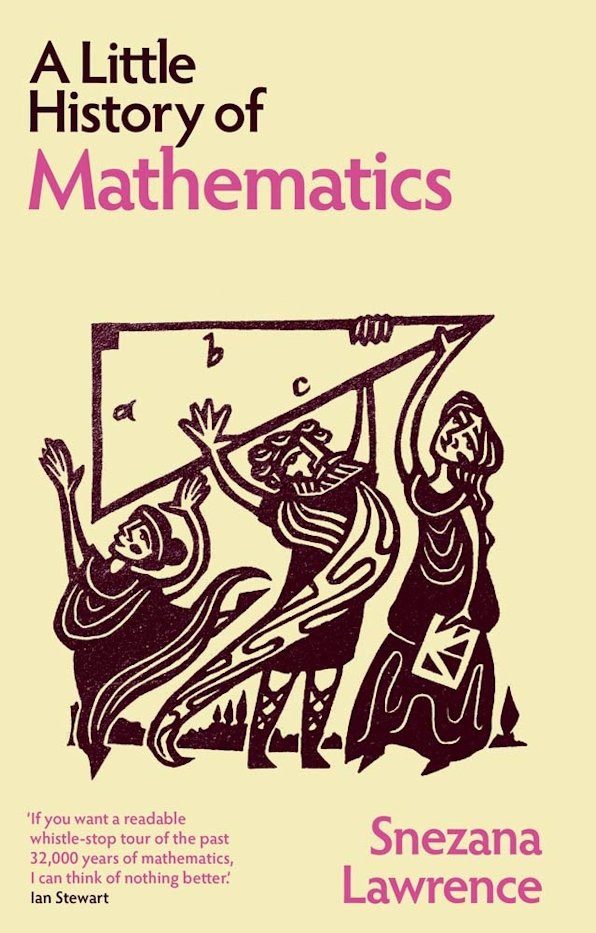
A wonderful book. Unlike so many books I've read, it does not assume the reader is already into mathematics. It offers definitions, wraps chapters in biographies, and does its best to go beyond the West without neglecting it. A great gift even for precocious teenagers, I think!
David Silver RL Course (Lecture 8): Integrating Learning and Planning
AlphaGo is a beautiful example of integrating learning and planning.
🔹 The policy network gave AlphaGo intuition: which moves look promising?
🔹 The value network gave AlphaGo judgment: how good is this board position?
🔹 Monte Carlo Tree Search gave AlphaGo lookahead: simulate possible futures, expand the most useful branches, and back up value estimates through the tree
Learning gives intuition, planning gives imagination, and search turns both into action.
My note:
https://t.co/1y1P3C451c
Google's "Attention is All You Need" paper came from trying to get a 3% gain in Google Translate.
Innovation is a consequence of production. "If you don't make the thing, you cede your opportunity to innovate on the thing."
~ Palantir's CTO @ssankar
Atlassian's revenue: $1.79 billion last quarter
Atlassian's move: fire the engineer who built their infrastructure
his move: post a 38-minute breakdown of every system he built, free for anyone to copy
what he revealed:
> Envoy proxy instead of enterprise load balancers
> sidecar architecture for auth, logging, rate limits
> DynamoDB + SQS for async provisioning
> Packer + SaltStack for automated VM deployments at scale
Atlassian charges per employee across 350,000 customers
this guy just handed you the enterprise playbook for free
save this