@Mathaba2022@m_Effort_@tiredfeminist_ If you place an embargo on your dissertation, the title is searchable on Google but the full content is not available. Whoever searches for the paper will know you placed an embargo on it. Everyone will know the school you completed. That’s not the same for that account.
Honorific is also correct. It’s functioning as an adjective here (describing the purpose of the lecture - to honor or recognize or pay respect to the lawyer)
Yale University holds Honorific Lectures and this is of similar magnitude. NIH does the same. The heading is correct.
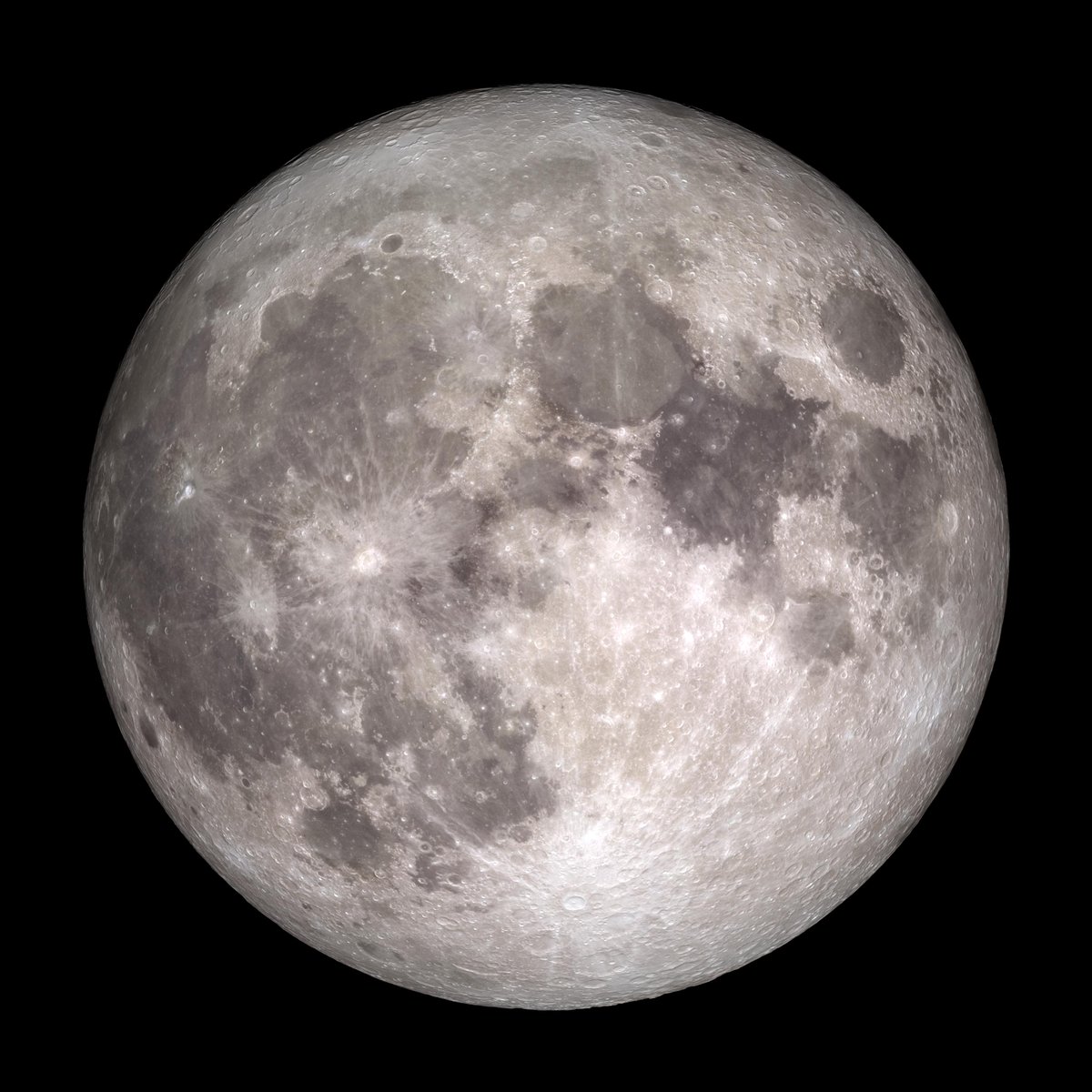
For those wondering why Artemis II isn’t flying straight to the moon, it’s because the moon revolves around the Earth. The math has to be just right so they don’t miss and can safely go around the moon and return home.
Really neat visualization here. 🚀 🌖
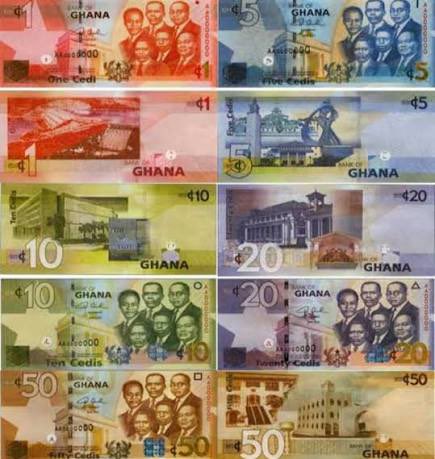
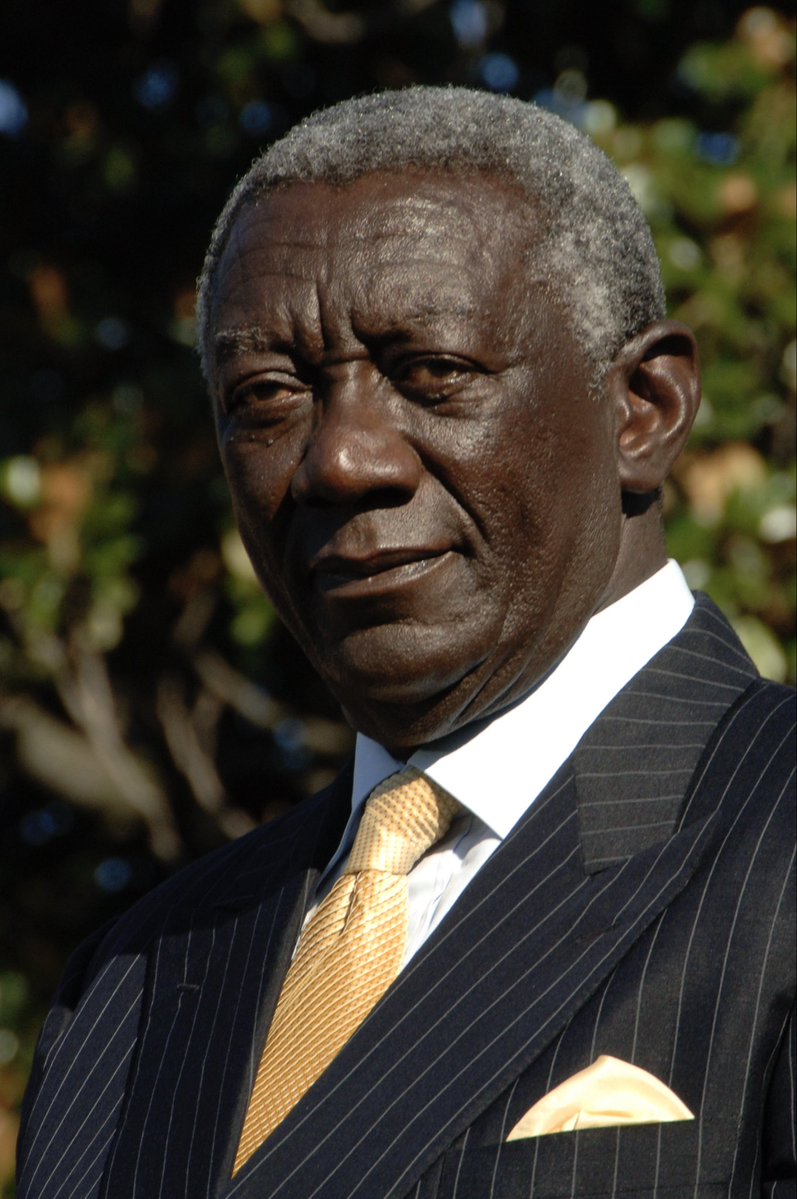
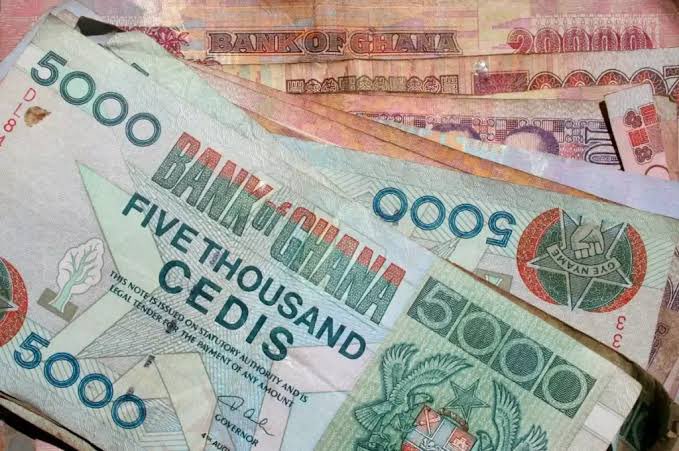
Kufuor’s 2007 currency change was the biggest heist in Ghana’s history! They slashed 4 zeros (10,000 old cedis = 1 new GH¢) & promised ‘no change in value’ while prices skyrocketed from rounding & confusion. It cost the state $66.2 million in printing new notes, upgrades & campaigns.
Time to wake up!
...if you're going to the Moon. Our Artemis II crew started their second flight day with the sounds of John Legend's "Green Light" (feat. Andre 3000). "Sleepyhead" by Young and Sick roused the crew earlier today.
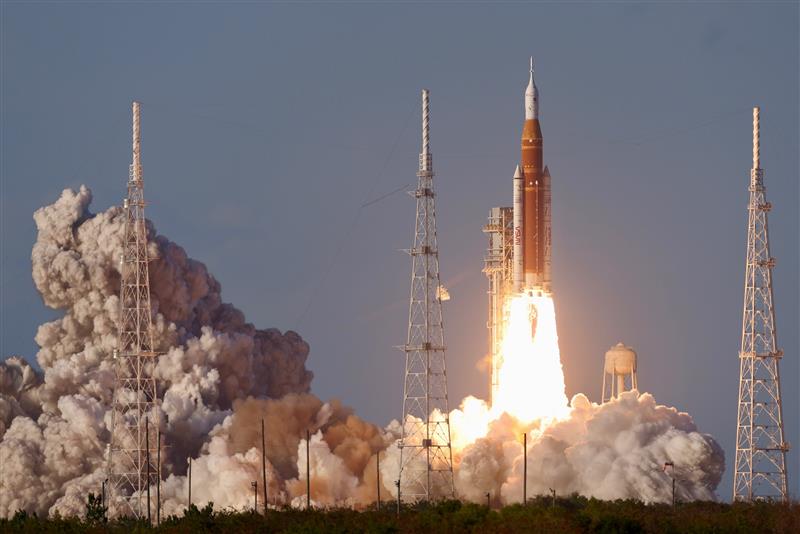
For the first time in over 50 years, humans are Moonbound.
At 6:35 p.m. EDT (2235 UTC) NASA’s Space Launch System rocket and the Orion spacecraft lifted off from the agency’s Kennedy Space Center in Florida, sending four astronauts on a planned test flight around the Moon and back. https://t.co/0Q9ZB4IWVI
Terence Tao spent a year at the Institute for Advanced Study - no teaching, no random events of committees, just unlimited time to think. But after a few months, he ran out of ideas.
Terence thinks that mathematicians and scientists need a certain level of randomness and inefficiency to come up with new ideas.
The Terence Tao episode.
We begin with the absolutely ingenious and surprising way in which Kepler discovered the laws of planetary motion.
People sometimes say that AI will make especially fast progress at scientific discovery because of tight verification loops.
But the story of how we discovered the shape of our solar system shows how the verification loop for correct ideas can be decades (or even millennia) long.
During this time, what we know today as the better theory can often actually make worse predictions (Copernicus's model of circular orbits around the sun was actually less accurate than Ptolemy's geocentric model).
And the reasons it survives this epistemic hell is some mixture of judgment and heuristics that we don’t even understand well enough to actually articulate, much less codify into an RL loop.
Hope you enjoy!
0:00:00 – Kepler was a high temperature LLM
0:11:44 – How would we know if there’s a new unifying concept within heaps of AI slop?
0:26:10 – The deductive overhang
0:30:31 – Selection bias in reported AI discoveries
0:46:43 – AI makes papers richer and broader, but not deeper
0:53:00 – If AI solves a problem, can humans get understanding out of it?
0:59:20 – We need a semi-formal language for the way that scientists actually talk to each other
1:09:48 – How Terry uses his time
1:17:05 – Human-AI hybrids will dominate math for a lot longer
Look up Dwarkesh Podcast on YouTube, Apple Podcasts, or Spotify.
After the LOR, why do they ask students to write an SOP again? The LOR is one part of the application materials, and students need it to complete their applications, whether the letter is strong or not. Professors can write what they know about the student and leave the rest for the student to cover in the SOP. It is also not possible for professors, even the three recommenders a student chooses, to know a student from head to toe, let alone all of their students.
Students’ transcripts and CVs should be sufficient for professors to recommend them for admission. They are not necessarily writing a biography but rather commenting on a student’s ability to succeed in school, and the student’s grades should suffice. Any information the professor does not know about the student can simply be left out.
I was in large classes for almost all the courses I took, and that was the same case for everyone in my department. How do more than 200 students build relationships with professors? That’s not practical.
Assuming more than 300 students try to build relationships with one professor, do you think the professor will be able to remember everyone equally?
Getting a recommendation letter from a lecturer in Ghana is not impossible.
But here is a hard truth many students don’t like to hear:
A strong recommendation letter requires a real relationship.
You can’t disappear in a class of 300 students for four years and then show up in final year asking for a “strong letter.”
Lecturers can only recommend what they actually know about you.
→ your curiosity
→ your work ethic
→ your initiative
→ your character
For context, I received 4–5 recommendation letters from lecturers in Ghana, and it was relatively straightforward.
Interestingly, in the US many professors will tell you something very direct:
“I’m sorry, I can’t write you a strong recommendation because I don’t know you well enough.”
Recommendation letters are not about:
→ grades alone
→ transcripts
→ certificates
They are about engagement and trust.
And in large classes, students have to be intentional about being known.
⸻
So I tell all undergrads in Ghana to be intentional about building a professional relationship with their professors.
💬 Honest question for students and lecturers:
Should recommendation letters be based purely on grades, or on actual mentorship and engagement?
This is my argument. And I’m glad all my mentor Professors are sensible and practice whatever has been written here. And as for my Prof mommy, just send her your transcript and prove to her you were her former student.