Schemas tell you shape.
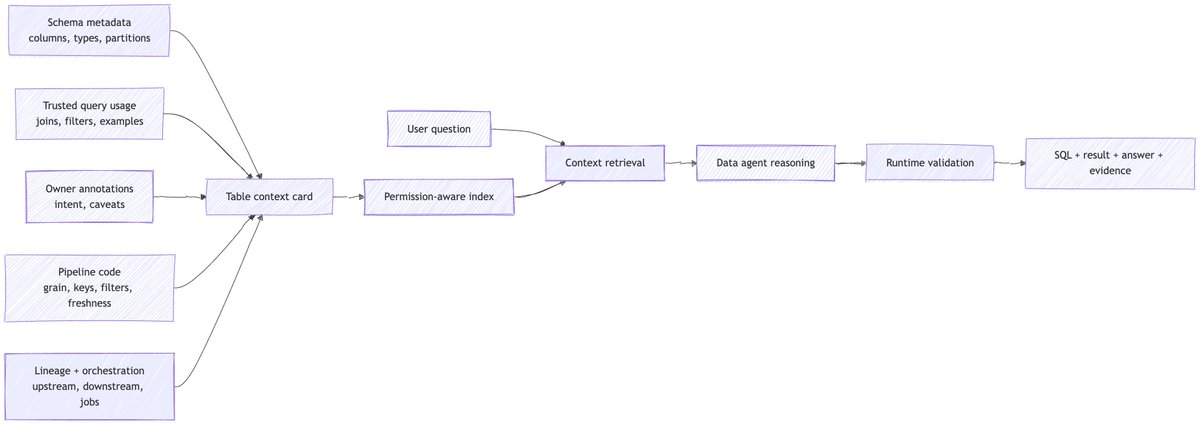
Pipeline code tells you meaning.
In Part 4 of The Data Agent Stack, I wrote about why production data agents need code-enriched context: grain, freshness, filters, exclusions, and provenance before they write SQL.
https://t.co/Nk3TGaO8TZ
The hard part of a data agent is not the model call.
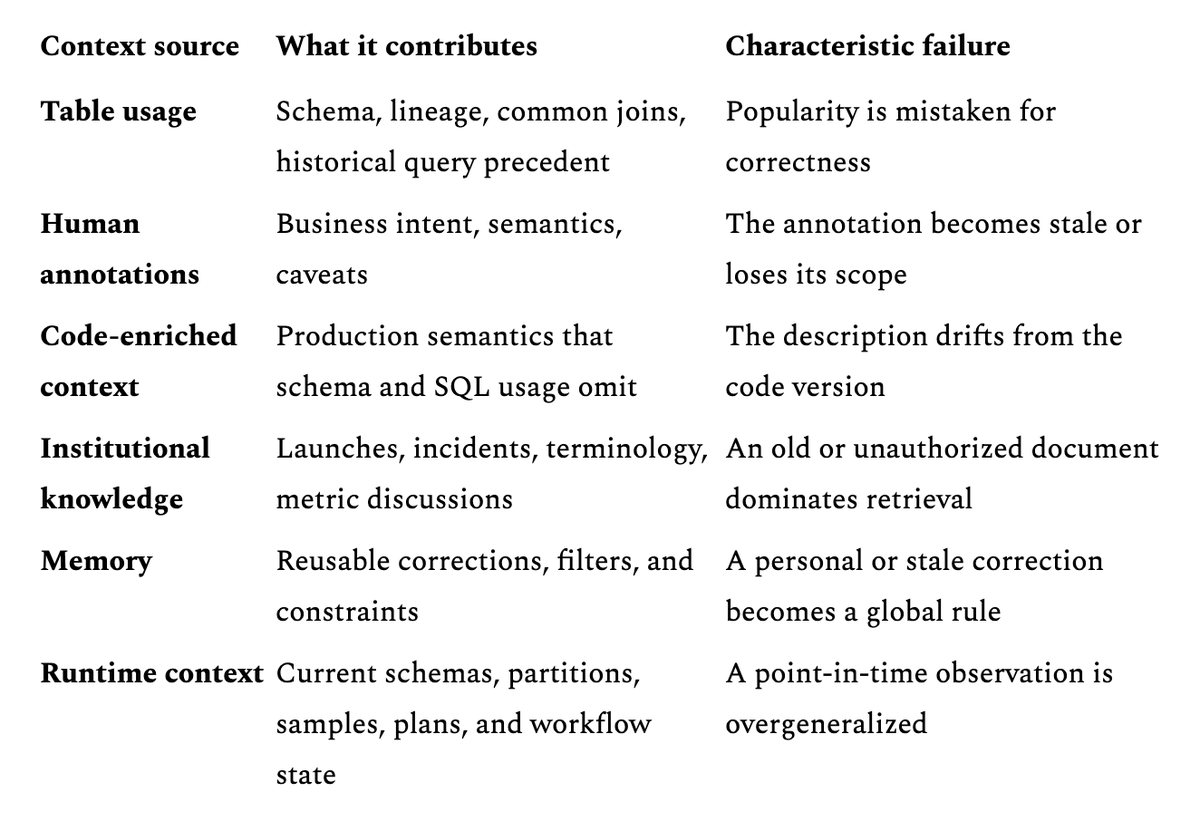
It is deciding what context the model sees before it reasons.
Part 3 breaks down context assembly: table usage, annotations, institutional knowledge, memory, runtime checks, and provenance.
https://t.co/CQJPhG0yGq
No agent architecture can save messy data.
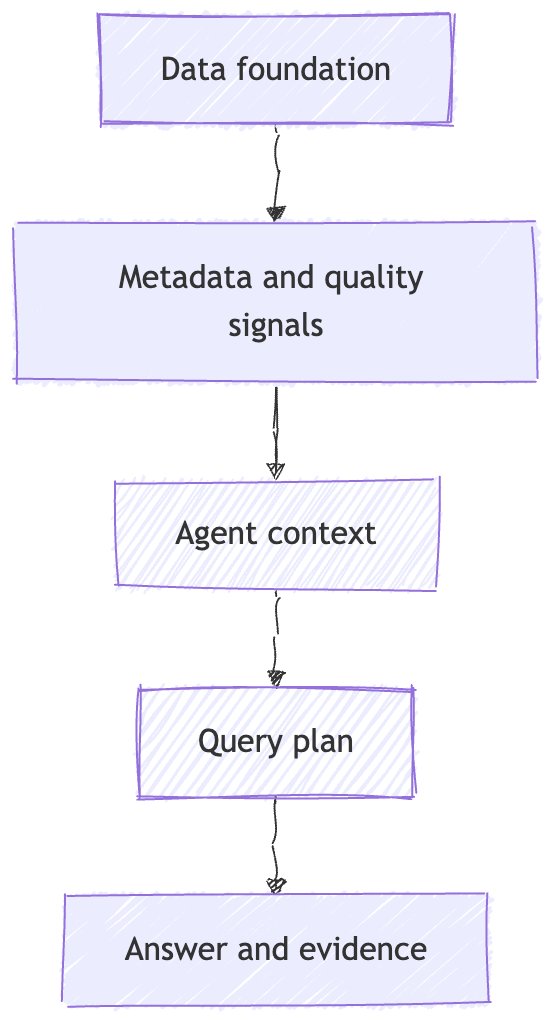
If ownership, freshness, lineage, and canonical tables are unclear, the agent will make that mess conversational.
Part 2 is about why the data foundation is the agent.
https://t.co/BhrwbdBNDl
A data agent is not just text-to-SQL.
It has to resolve meaning, find trusted data, execute safely, validate results, and show evidence.
I started The Data Agent Stack with the loop behind a verified answer.
https://t.co/M4SjMEAIiv
A demo can be a story.
Production is a reconstruction problem.
In the final part of The Agent Stack v1, I wrote about observability, evaluation, and feedback loops. Traces explain what happened. Evals decide whether it was good enough.
https://t.co/4TVJMH9UT2
Chat becomes risk when it becomes action.
Part 7 of The Agent Stack is about execution surfaces, identity, and approval boundaries: where tool calls actually act, under whose authority, and when a human needs to approve.
https://t.co/kOwOwfPUix
A tool is not just a function call.
It is a capability surface.
Part 6 of The Agent Stack breaks down tools, MCP, and why exposing a schema to a model is different from granting authority to act.
https://t.co/PRZ7CM6lE2
Context is assembled, not given.
Part 5 of The Agent Stack is about retrieval, memory, and the payload the model actually sees.
Memory is not learning. Retrieval is not truth. Context is a system boundary.
https://t.co/1A68VtVTKf
Useful agents need more than a loop.
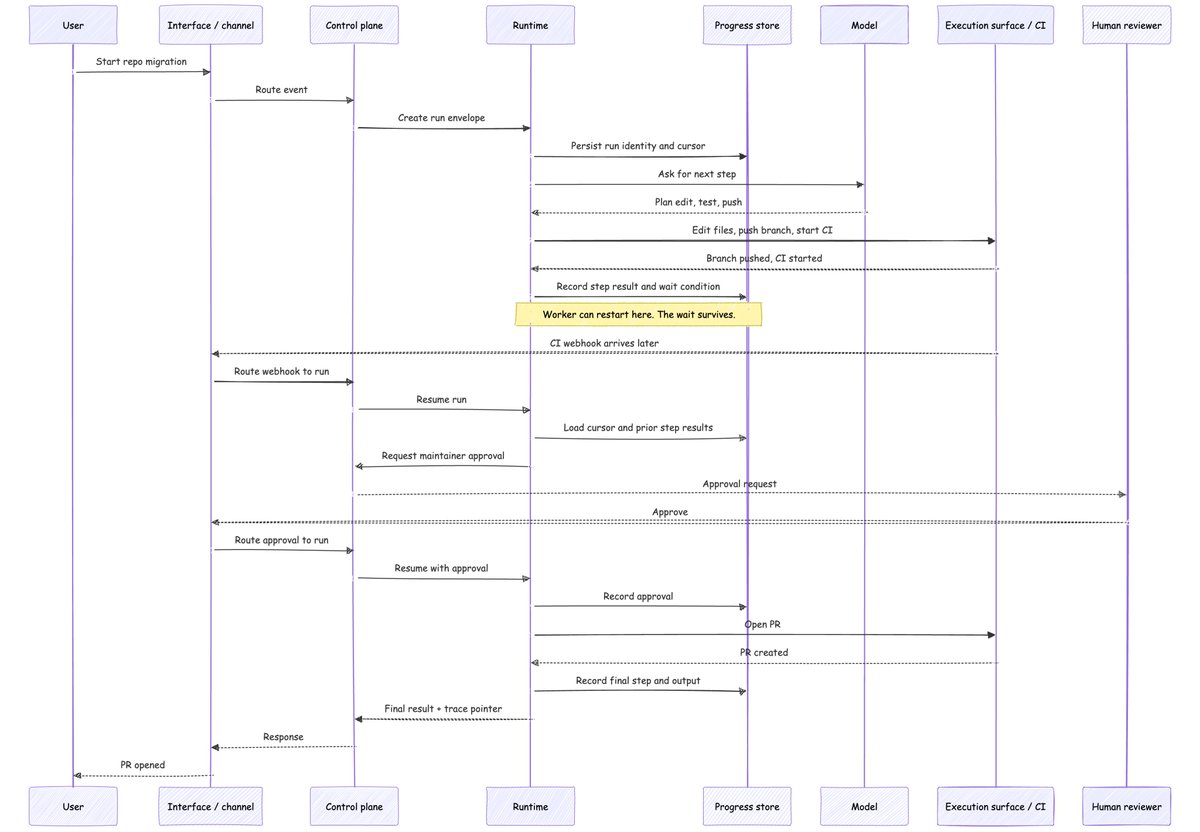
Once a run waits for CI, approval, a webhook, or a retry, the runtime needs durable progress.
Part 4 is about workflows, resumability, and what survives when the worker restarts.
https://t.co/9AOrgZT0c3
Continuity is not the same thing as control.
Part 3 of The Agent Stack is about control planes, sessions, and state ownership.
The system needs a source of truth for the run before the runtime starts moving work forward.
https://t.co/t23hXMqY7e
The agent stack starts lower than most people think.
Before tools, memory, and workflows, there are substrate constraints: compute, model serving, inference latency, context windows, batching, streaming, and cost.
Part 2:
https://t.co/CZMLlInqEN
“Agent” has become too overloaded to be useful by itself.
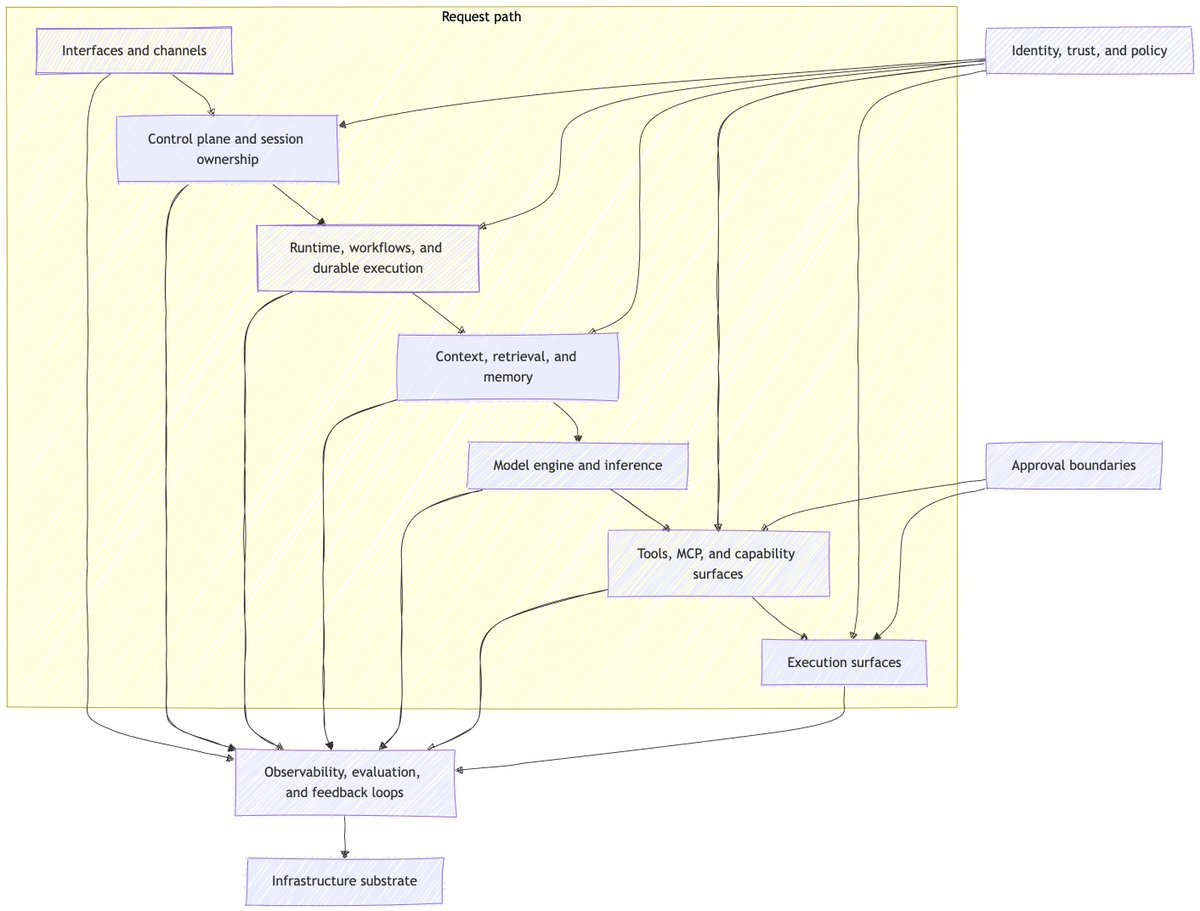
So I mapped the stack: interfaces, control planes, runtimes, models, context, tools, execution surfaces, trust, evals, and infrastructure.
Part 1 of The Agent Stack v1:
https://t.co/vP7iXjhE1n
A demo proves an agent can act once.
Production needs evidence, recovery, and evaluation.
In Part 6 of OpenClaw Architecture, I wrote about traces, queue health, durable logs, and feedback loops.
https://t.co/45WxPh8UVk
A tool is where chat becomes action.
In Part 5 of OpenClaw Architecture, I break down tool policy, execution targets, approvals, plugins, and why a capability list is really an authority map.
https://t.co/oWzwqMJdHV
Agent security is not just model safety.
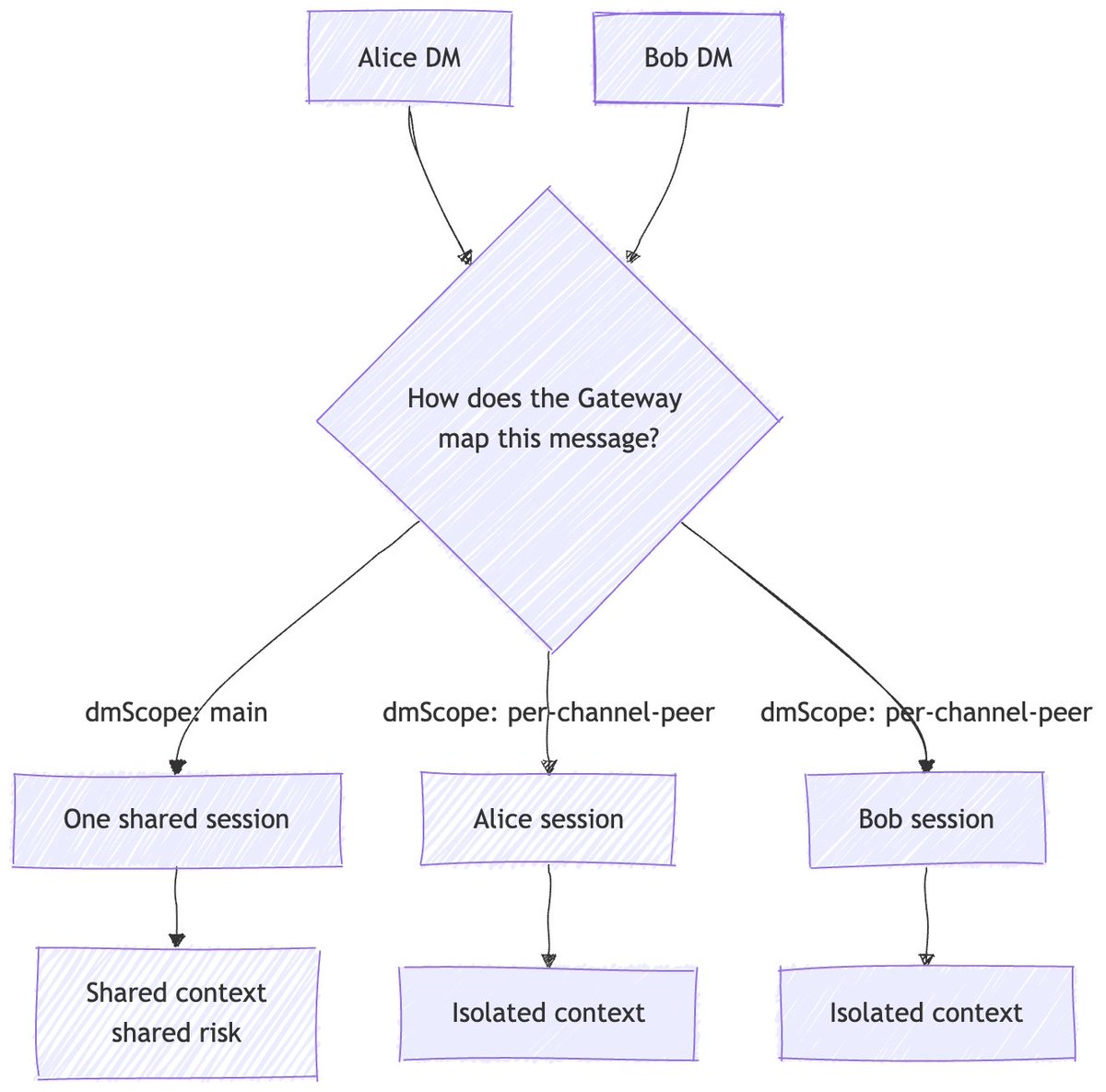
It is about where authority lives, how sessions are isolated, and what tools can touch.
Part 4 of OpenClaw Architecture maps the real authorization boundaries.
https://t.co/kkq2v7B9qJ
Memory is not learning.
It is durable state plus explicit rehydration.
In Part 3 of OpenClaw Architecture, I cover files, search indexes, compaction, provenance, and who owns the source of truth.
https://t.co/oNAk0whgGl
Agents feel haunted when concurrency and state ownership are unclear.
In Part 2 of OpenClaw Architecture, I cover session lanes, queue modes, steering, dedupe, and invariants that keep runs sane.
https://t.co/VaTMFfEZgM
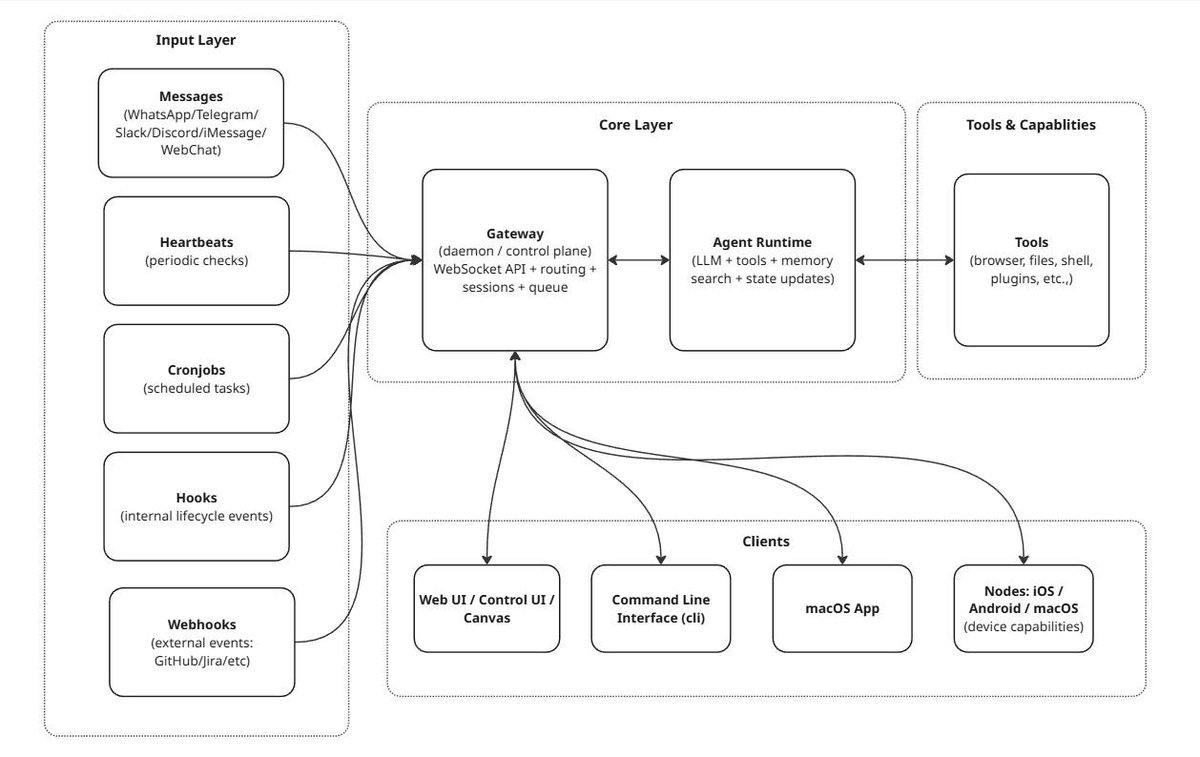
Agent demos can feel magical. Under the hood: inputs, state, and a loop.
OpenClaw Architecture Part 1 breaks down the control plane, sessions, queues, triggers, and event loop behind an “always-on” agent.
https://t.co/hLr4xCmio9
I spent part of the weekend diving into security boundaries + authorization of OpenClaw. In agent systems, most security problems aren’t model problems. They’re boundary problems: what authority can the system still spend after reading untrusted input?
https://t.co/gI4gfWU5Pf