Goosebumps!
Sri Lanka’s 🇱🇰 anthem on the top of the podium as Yevan David wins 🏆 Race 2 of EuroFormula Open 2025 (Round 6) at the Red Bull Ring.
Proud moment for the nation🇱🇰💪!
#Motorsport#SriLanka#EuroFormulaOpen#LKA
𝗨𝗻𝗱𝗲𝗿𝘀𝘁𝗮𝗻𝗱𝗶𝗻𝗴 𝗠𝗶𝗰𝗿𝗼𝘀𝗲𝗿𝘃𝗶𝗰𝗲 𝗔𝗿𝗰𝗵𝗶𝘁𝗲𝗰𝘁𝘂𝗿𝗲
Have you ever wondered why companies like Netflix and Amazon seem to roll out features at the speed of light? The secret might be hidden in their tech stack based on Microservice architecture.
At its core, Microservice architecture involves breaking down an application into a collection of small, loosely coupled services. Each service runs a unique process, communicates through a well-defined API, and is located in a separate codebase that can be managed by a small development team and deployed independently.
Key elements of microservice architecture:
𝟭. 𝗟𝗼𝗮𝗱 𝗕𝗮𝗹𝗮𝗻𝗰𝗲𝗿: Ensures even distribution of incoming network traffic across various servers.
𝟮. 𝗖𝗗𝗡 (𝗖𝗼𝗻𝘁𝗲𝗻𝘁 𝗗𝗲𝗹𝗶𝘃𝗲𝗿𝘆 𝗡𝗲𝘁𝘄𝗼𝗿𝗸): A distributed server system that delivers web content based on the user's location. It's about bringing content closer to the end-user, making page loads faster.
𝟯. 𝗔𝗣𝗜 𝗚𝗮𝘁𝗲𝘄𝗮𝘆: Manages requests by directing them to the appropriate microservice using REST API or other protocols.
𝟰. 𝗠𝗮𝗻𝗮𝗴𝗲𝗺𝗲𝗻𝘁: Monitoring and coordinating the microservices, ensuring they run efficiently and communicate effectively.
𝟱. 𝗠𝗶𝗰𝗿𝗼𝘀𝗲𝗿𝘃𝗶𝗰𝗲𝘀: Each microservice handles a distinct functionality, allowing for focused development and easier troubleshooting. They can talk with each other using RPC (Remote Procedure Call). Services are responsible for persisting their own data or external state.
𝗕𝗲𝗻𝗲𝗳𝗶𝘁𝘀:
✅ 𝗦𝗰𝗮𝗹𝗮𝗯𝗶𝗹𝗶𝘁𝘆: Scale up specific parts of an app without affecting others.
✅ 𝗙𝗹𝗲𝘅𝗶𝗯𝗶𝗹𝗶𝘁𝘆: Each microservice can be developed, deployed, and scaled independently.
✅ 𝗥𝗲𝘀𝗶𝗹𝗶𝗲𝗻𝗰𝗲: If one microservice fails, it doesn't affect the entire system.
✅ 𝗙𝗮𝘀𝘁𝗲𝗿 𝗗𝗲𝗽𝗹𝗼𝘆𝗺𝗲𝗻𝘁𝘀: Smaller codebases mean quicker feature rollouts.
𝗗𝗿𝗮𝘄𝗯𝗮𝗰𝗸𝘀:
❌ 𝗖𝗼𝗺𝗽𝗹𝗲𝘅𝗶𝘁𝘆: More services can lead to a more complex system.
❌ 𝗗𝗮𝘁𝗮 𝗖𝗼𝗻𝘀𝗶𝘀𝘁𝗲𝗻𝗰𝘆: Maintaining consistency across services can be challenging.
❌ 𝗡𝗲𝘁𝘄𝗼𝗿𝗸 𝗟𝗮𝘁𝗲𝗻𝗰𝘆: Inter-service communication can introduce delays.
❌ 𝗘𝗿𝗿𝗼𝗿 𝗵𝗮𝗻𝗱𝗹𝗶𝗻𝗴: When an error happens, it's hard to debug why and where it happened.
While Microservice architecture isn't a silver bullet, it's a tool for modern software development.
#softwareengineering #microservices #softwaredesign
Free Education vs. Freedom to Educate:
Time for Sri Lanka to Move Forward, Not Backward
For over seven decades, Sri Lanka has proudly upheld the principle of free education. It is a cornerstone of our social fabric, an ideal that has empowered generations, fostered upward mobility, and built the backbone of our professional class. But like all ideals, it must evolve with time and context. Clinging to outdated interpretations will only lead to stagnation, missed opportunities, and an accelerating brain drain.
Let’s be clear: no country in the world provides free tertiary education to all qualifying students. Different countries adopt different models, some offer full scholarships to top performers, others implement reasonable fee structures subsidized by the state or philanthropic endowments. Many rely on student loans or bursary systems, balancing equity with sustainability.
In Sri Lanka, we provide free education up to A/Levels for nearly every student. But when it comes to university admission, only about 15–16% of those who qualify through A/Levels are actually accommodated. What happens to the rest?
Do we ignore them? Abandon their dreams? Throw them into the streets?
In reality, many of these young people pursue education elsewhere,at private institutions or universities abroad. Their families pay dearly, draining billions in foreign exchange each year.
This is not rocket science. It is common sense.
If Sri Lanka could improve the quality and scale of its higher education sector, including both private and public institutions, we could educate more of our own, attract international students, earn foreign exchange, and position ourselves as a regional hub for knowledge and innovation.
We had this opportunity decades ago. The proposed Private Medical College in Ragama in the 1980s was tragically abandoned due to pressure from narrow-minded ideological forces. That short-sightedness has cost us dearly. Today, India, Malaysia, the UAE, China, Belarus, even Bangladesh and Nepal, have seized the opportunity we let slip through our fingers. They are now welcoming thousands of Sri Lankan students, and profiting in the process.
Meanwhile, our own institutions such as NSBM and SLIIT have proven that high-quality, self-sustaining, affordable, and job oriented education is possible right here in Sri Lanka. These universities are flourishing, producing graduates equipped for the modern job market, many of whom would not have had a chance under the traditional university system.
It is in this context that the government allowed KDU and Lyceum to establish medical faculties. This was not a betrayal of free education but a long-overdue step toward balancing national needs with individual aspirations.
So why the outrage?
Because a small but vocal group, trapped in a 1970s-style ideological echo chamber, continues to equate “free education” with the belief that only the state has the right to educate, and that education must be free for all, at all times, regardless of capacity, quality, or economic feasibility.
Ironically, many of the same senior members in government who once demanded 6% of GDP for education while in opposition, now struggle even to maintain previous allocations. Governance, as we know, is very different from making promises and demands from the opposition benches.
That is not what free education means.
True free education means providing every child with a fair start. But it also means giving society the freedom to educate, innovate, and grow. While we must preserve and strengthen our state university system, we must also open the doors for complementary private initiatives, subject to rigorous quality standards and proper regulation.
Let us not repeat the mistakes of the past.
Shutting down new opportunities is not a victory for social justice. It is a step backward, one that may take generations to correct. We must learn from other countries that have integrated public and private education systems successfully, often with better outcomes for both students and society.
Let us be bold. Let us be sensible. Let us do justice to our youth, not only by protecting their right to education, but by creating more avenues for them to learn, grow, and lead.
The choice is ours: move forward with vision, or stay trapped in the ghosts of yesterday.
I hope the government and relevant authorities will re-examine this ill-conceived decision. Instead of scuttling the progress of Sri Lanka’s forward march in higher education, rightfully led by wider sectors of the country, not just the state, it is time they encourage and facilitate the next phase of transformation.
I hope saner counsel will prevail, sooner rather than later!
I code with AI tools for 6-7 hours daily.
Built over 36 projects in last 12 months.
Truth: "Build me ........... app" in 1 prompt is not possible.
So, here're all the MISTAKES you might be making with AI code:
As a backend engineer.
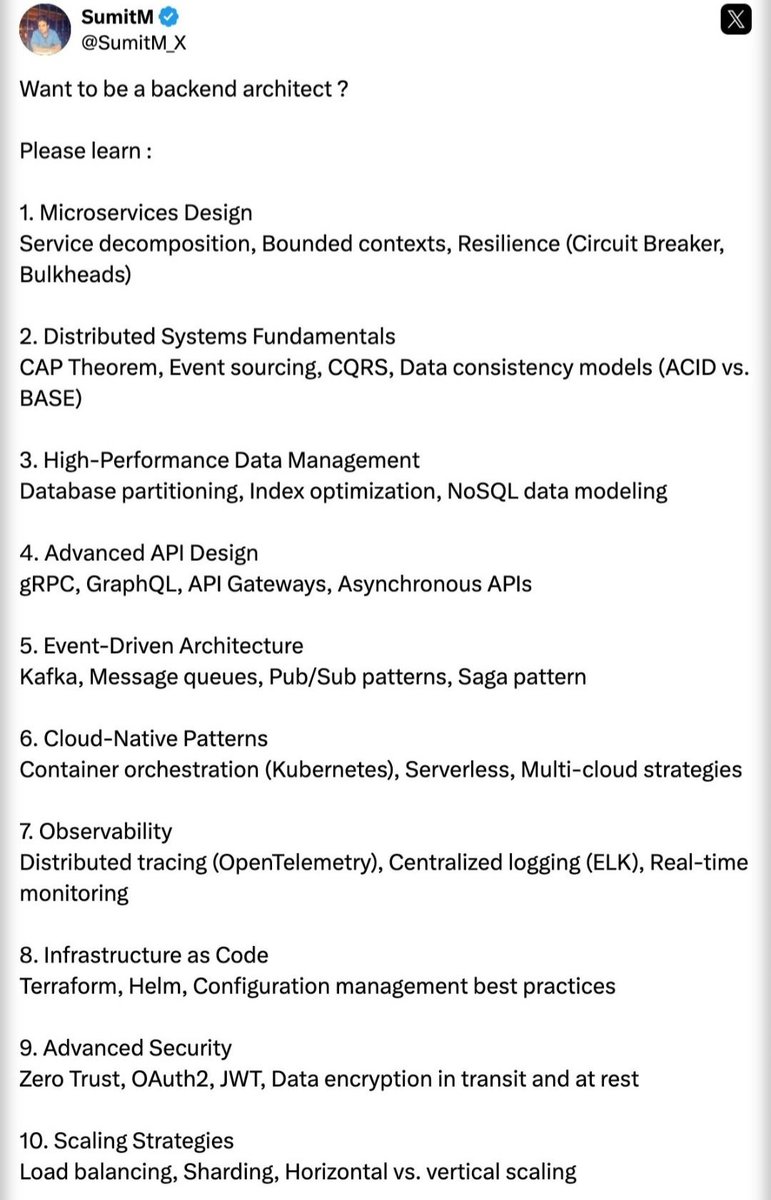
Please learn:
- System Design (scalability, microservices)
-APIs (REST, GraphQL, gRPC)
-Database Systems (SQL, NoSQL)
-Distributed Systems (consistency, replication)
-Caching (Redis, Memcached)
-Security (OAuth2, JWT, encryption)
-DevOps (CI/CD, Docker, Kubernetes)
-Performance Optimization (profiling, load balancing)
-Cloud Services (AWS, GCP, Azure)
-Monitoring (Prometheus, Grafana)
Pick up a language..
Stop jumping from one language to the other
3 must-read books if you are a Software Developer:
1) Clean Code
2) Head First Design Patterns
3) Designing Data-Intensive Applications
What else would you add to this list?
Last year, I had the incredible opportunity to meet Francois Greeff at Richard Branson's Necker Island.
Their team including Jacques & Kye spend a week in Sri Lanka at Surge Global building their next venture after a $180M exit.
Today, startups and fortune 500 companies alike leverage Surge's capabilities to drive bold strategies, build epic tech, and grow their revenues.
This interview covers my journey as a founder, our first clients, signing away majority, being replaced as CEO, almost losing my life to the easter attacks, struggling during a fuel shortage to building Sri Lanka's leading digital consultancy & many more.
I've done a lot of podcasts throughout my career but I don't think I've done anything as detailed or well produced.
Enjoy - It's a long one.
Congratulations to @anuradisanayake and the NPP for winning a tsunami of a victory in this parliamentary election with a clear mandate from all our people of every race, religion, region and more.
All Sri Lankans need to hear the message and help make the country better: Enough of divisive politics that have eaten Sri Lanka for a long time. This is as clean a whiteboard as our style of proportional representation democracy can deliver.
I will do my part to help in any and every way I can.
Starship is now more than twice as powerful as the Saturn V Moon rocket and, in a year or so, it will be three times as powerful at 10,000 metric tons of thrust.
More importantly, it is designed to be fully reusable, burning ~80% liquid oxygen and ~20% liquid methane (very low cost propellant).
This enables cost per ton to orbital space to be ~10,000% lower than Saturn V.
Starship is the difference between being a multiplanet or single planet civilization.
Building a new world on Mars is now possible.
Automated code generation is one of the biggest use cases for generative AI.
Meta gave SF’s top hackers 24 hours, thousands of dollars in prizes, and a ton of compute to see what’s possible.
Here’s what we saw at the @AIatMeta x @FactoryAI Codegen Hackathon in SF (🧵):