Michael Howell says equities will make new lows, and Bitcoin will be one of the first signals the pain is over.
He laid out the full liquidity roadmap:
- Why Bitcoin peaked first
- Why the Fed isn't really squeezing
- How the Treasury is quietly monetizing debt
- The exact sequence he's watching for the 2027 turn
Here's the breakdown (with my IR commentary):
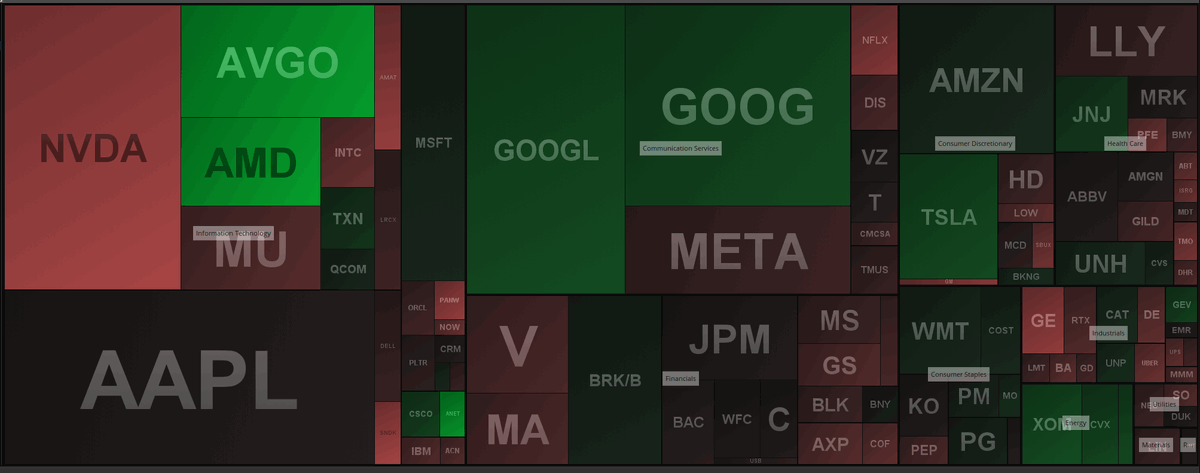
Yesterday’s rally may have looked impressive, with a huge number of stocks up 10%, 20%, even 30%. But when you put those moves into perspective, it’s clear the market still has work to do.
$QQQ recovered only a relatively small portion of its recent decline and remains below a declining 10-day moving average. Most of the AI/Tech names look similar - big percentage rallies, but still badly damaged charts in well-established downtrends.
Volume on both the Nasdaq and NYSE was below the previous day. Nvidia reinstating its founder appeared to be the catalyst that ignited the rally, but the market was already heavily oversold and poised for a bounce. One day and one man are not enough to change the trend.
So the question is whether the major indexes have established a low or yesterday was simply a sharp oversold rally within an ongoing correction. Historically, some of the biggest rallies occur during bear markets.
Even if the major indexes fail to reach bear market correction percentage declines, a bear market in tech has already occurred. There are far too many stocks down 50-80%, to dismiss the declines as healthy pullbacks.
What happens from here is what matters. We need to see follow-through buying, broader participation and improving breadth. More importantly, before getting aggressive, I want to see quality stocks setting up and breaking out of sound bases - not simply broken leaders bouncing back into well-established downtrends.
Interest rates remain an obstacle. Minutes from the Fed’s October meeting showed that policymakers remain concerned about inflation and that additional tightening may still be necessary.
On the positive side, we’re entering what has historically been a favorable November-December period, and the months following midterm elections have also tended to be strong, particularly during the first half of the following year.
One could argue whether those historical tailwinds will be strong enough to overcome a rising-rate environment. But I should also point out that we would never allow seasonality, cycle work - or the Fed, for that matter - to override what the market itself is actually telling us.
Those are all factors to consider, but in my world, price and volume, breadth, leadership and the action of individual stocks ultimately have the final say.
For now, the market still has to prove itself. https://t.co/JXzFFTmMtn
So you saw the bear side of this tape,
if you are still unfucked , get ready for the bull side of the tape with possible 4% to 5% up days soon
It is all about instability ahead of the biggest bear market of the century
Couple of things to know about Friday’s lows.
NDX reached 20% pullback mark on Friday
SPX made a perfect touch of its yearly opening level right below 6900
Both are extremely important levels for big algos and can trigger mechanical reactions
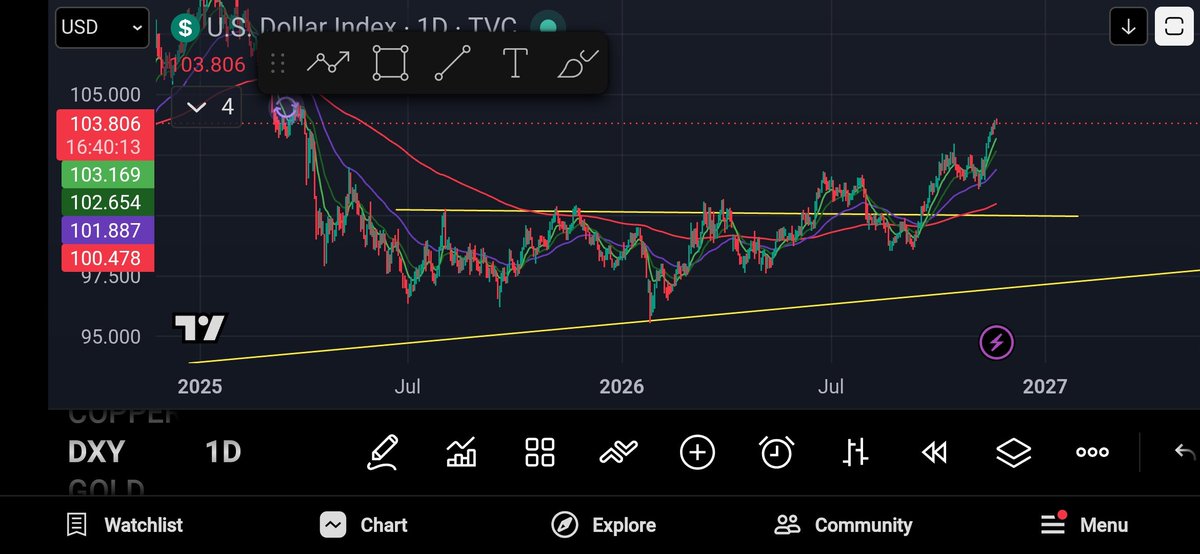
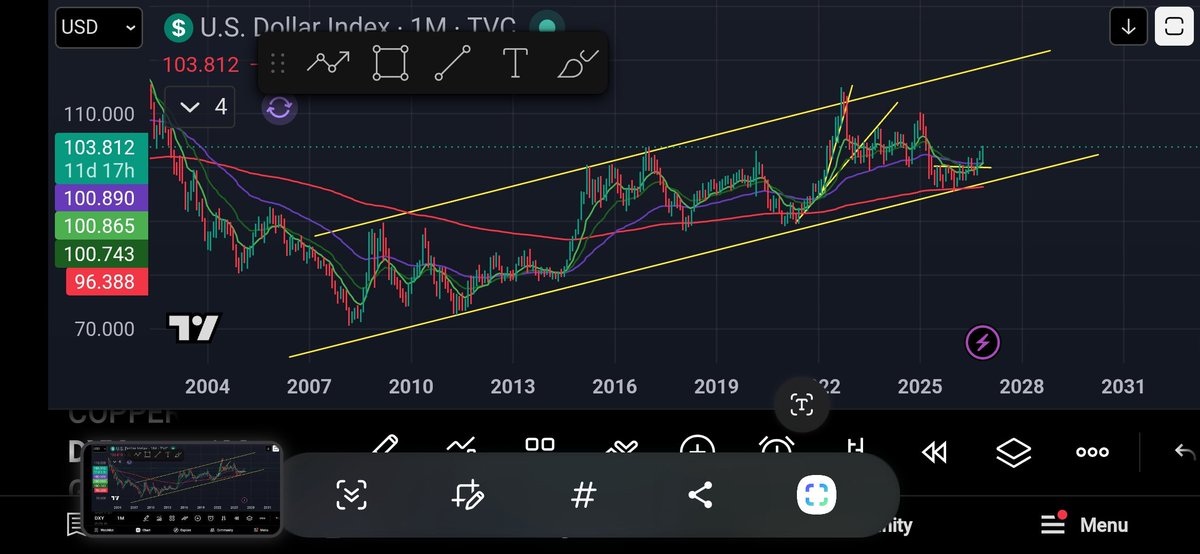
DXY following through as expected and everything in the market in its purest form is a USD trade. If this goes higher it places head winds on major indicies. At best most indicies will track sideways, at worst way lower.
Risk /reward, you decide.
Depending on your strategy, you might go weeks without seeing a valid setup.
Don’t let boredom or impatience lower your standards and turn mediocre setups into acceptable trades.
When you fail to respect risk, you will win some battles, but you will lose the war.
At times, you’ll look like a genius. Over time, you’ll be proven a fool.
This I can gaurantee.
About 16 months ago, I met a trader who was making way more money than me. I'm talking about an entire collection of supercars, everything I could've ever dreamed of owning at the time.
He invited me to watch him trade one morning, and of course, I'm not an idiot... I'm taking that offer. I sat there watching him scan, build his watchlist + prepare for the open, and the funny thing was, nothing he was doing was particularly special. Heck, his routine looked almost identical to mine. About 30-40 minutes into the session, he shuts off his monitors, turns around and goes, "wanna grab some food?" I'm sitting there confused... "wait, aren't we gonna trade?" He goes, "nah, I'm done for the day." done? brother, the market hasn't even been open an hour. And that's when something started clicking for me.
He wasn't sitting there trying to squeeze every last dollar out of the market. He knew what he was looking for, and once the opportunity was gone, so was he. Then he showed me his trade statements... this guy averaged around 10 trades a month. TEN. I was over here convincing myself I needed to be involved in every move I could get my hands on. That morning taught me something I've spent the last 2 years trying to get better at... the difference between a mediocre trader and a great one isn't some secret strategy, it's the ability to sit on your effing hands when there's nothing worth trading.
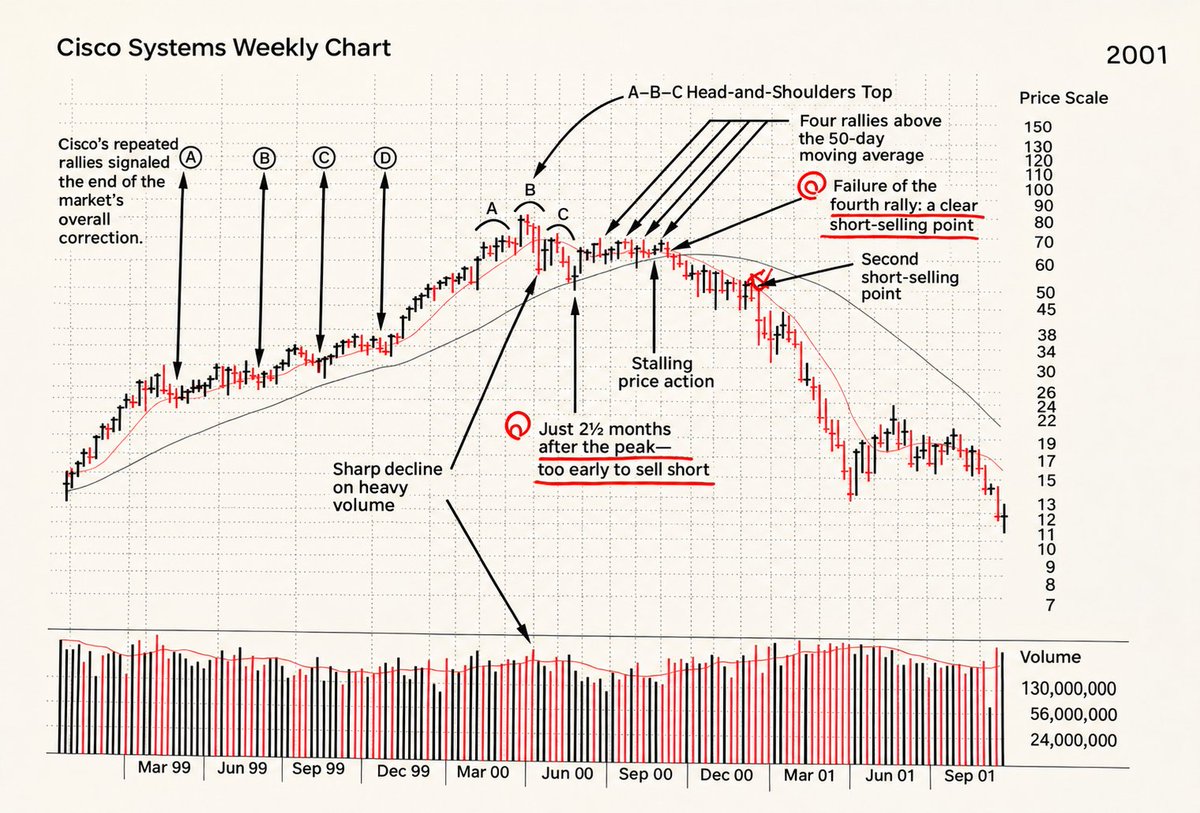
Has the look of the stage 3 top transitioning into a stage 4 decline. Usually there is one "last gasp" where price tries to recapture and roll if it ultimately goes lower. $QQQ
When I make a trade, my thinking is never about being right or even wrong. It's about risk vs. reward. I call it Bell Curve Thinking. I ask myself, if I make this trade 1000 times, does it come out a winner. Is it likely that the trade's upside is at least 2-3X the my stop? If I get those right, the rest takes care of itself.
My most recent $SPY short is a perfect example. The stock fell 5X my stop. I had the opportunity to capture 5Rs. But that's precisely what afforded me to hold for a bigger move while improving my stop to breakeven. I made that decision based on the odds at the time. If I turn out to be wrong... nothing lost. Next.
My Trading Process, Tools, Routine, and Core Beliefs
A 60 pages of experience-based lessons and insights curated from 15 years of my tweets.
1. Glossary – Terms and Expressions I Use
2. Charting – My Approach Using TradingView
3. My Screeners – Workflow of Finviz & Tradingview
4. Process & Routine – Moving Ideas to the Focus List
5. Pre-Market Routine – Situational Awareness
6. Proficient Execution– Trade Design, Stops, % Risk
7. Post-Execution – Trade Management
8. Journaling – Fine-Tuning to Improve YoY % Return
9. Conviction – Internalizing These 6 Graphics
10. Full-Time Trading – What Does It Takes
11. Five Books I Highly Recommend To Everyone
12. Free Productivity Tools & Websites I Rely On
13. How I Delayed My Own Progress by 3 Years
14. Reflections and Experiences for You to Relate To
15. Closing Remarks – A Call to Inspiration
16. FAQ, Paired with Thought-Provoking Questions
17. Subtle Strategies to Attract Institutional Attention
https://t.co/0F5tgGM49z
Managed to finish this project early as a Christmas gift🎄for everyone — enjoy!
This is a big reason I don���t like it when people say “I’m a profitable trader now” or “I’ve finally made it” especially when they’re in their 20s and have 3 years of experience 🤣🤣
Every week I think about how could I become the worst trader in the world and destroy myself. If you start from the worst then you always are on guard for becoming the worst.
As shown below even great traders are susceptible to boom and bust so you have to always be on guard.
Wish there was more to post about. Right now it's just waiting to see what happens. I made the mistake in the past of trying to force action in difficult environments and paid the price with large drawdowns.