Thrilled to share - as every year - the Africa focused outcomes of the 93rd @WOAH General Session. Key highlights include progress on PPR, FMD, ASF, veterinary governance reforms, new adopted standards and the endorsement of the 8th WOAH Strategic Plan : https://t.co/fSC8aWGlnF
@WOAH holds a 3-day tabletop exercise in Mombasa, simulating a deliberate release of bird flu to test Kenya’s readiness, stressing coordination among veterinary, health, security, and policy sectors to strengthen resilience against biological threats. Thanks to
@Dir_vetservices
DAY 2: What happens when an animal disease crosses into humans? Day 2 of Kenya’s 🇰🇪National HPAI Simulation Exercise pushed participants into that exact reality. What began as an outbreak in 🐓🐓🐓🐓 escalated rapidly when people got sick 🤢🤢🤢🤢, everything changed.
Day 1 of the National Tabletop Exercise on High Pathogenicity Avian Influenza (HPAI) in Mombasa is underway—bringing together experts from animal health, public health, and security sectors to test Kenya’s preparedness for a potential outbreak.
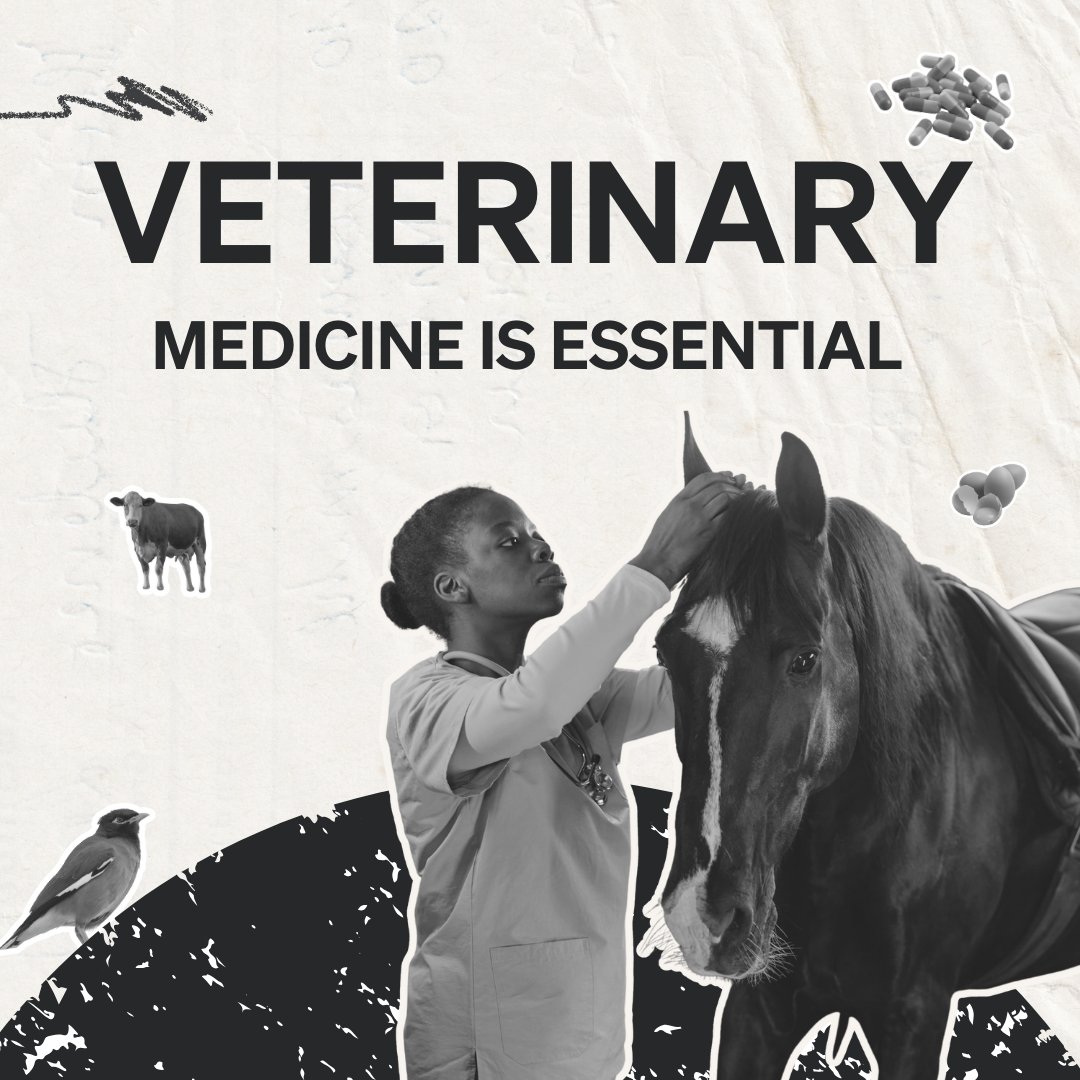
Today is the International Day of Veterinary Medicine. This day always brings me back to where our profession began.
Centuries ago, long before we had laboratories, surveillance systems or even a shared scientific language, veterinary medicine emerged from a simple truth: the health of animals shapes the health of people. Communities depended on their animals for food, transport, safety and survival. When animals fell ill, societies suffered. When animals thrived, so did people.
This connection, so basic, so powerful, is what gave birth to our profession. And it holds just as true today.
What began as a calling to protect animals has evolved into a greater responsibility: safeguarding food systems, preventing disease spillover, fighting antimicrobial resistance, protecting wildlife, and contributing to every dimension of One Health. The work of veterinarians now reaches far beyond the farm or clinic. It influences public health, international trade, food security, climate resilience and global security.
Yet even with all the progress, the essence of veterinary medicine has never changed. It is still a profession driven by compassion, by science, and by a profound sense of duty often carried out quietly, far from the spotlight.
Today, and every day, I am deeply proud of everyone who dedicate their lives to this mission. At WOAH, we see the impact of this work in every part of the world. We see how strong Veterinary Services protect communities. We see how their expertise allows countries to respond to outbreaks, secure safer food systems and build a healthier future for everyone.
This day reminds me why our work matters. Veterinary medicine is not just a profession. It is a pillar of global health and a force for stability, dignity and hope.
To all the veterinarians, veterinary paraprofessionals and animal health workers who supports this essential workforce: thank you. Your work carries forward a legacy that is centuries old and more vital than ever.
Happy International Day of Veterinary Medicine.
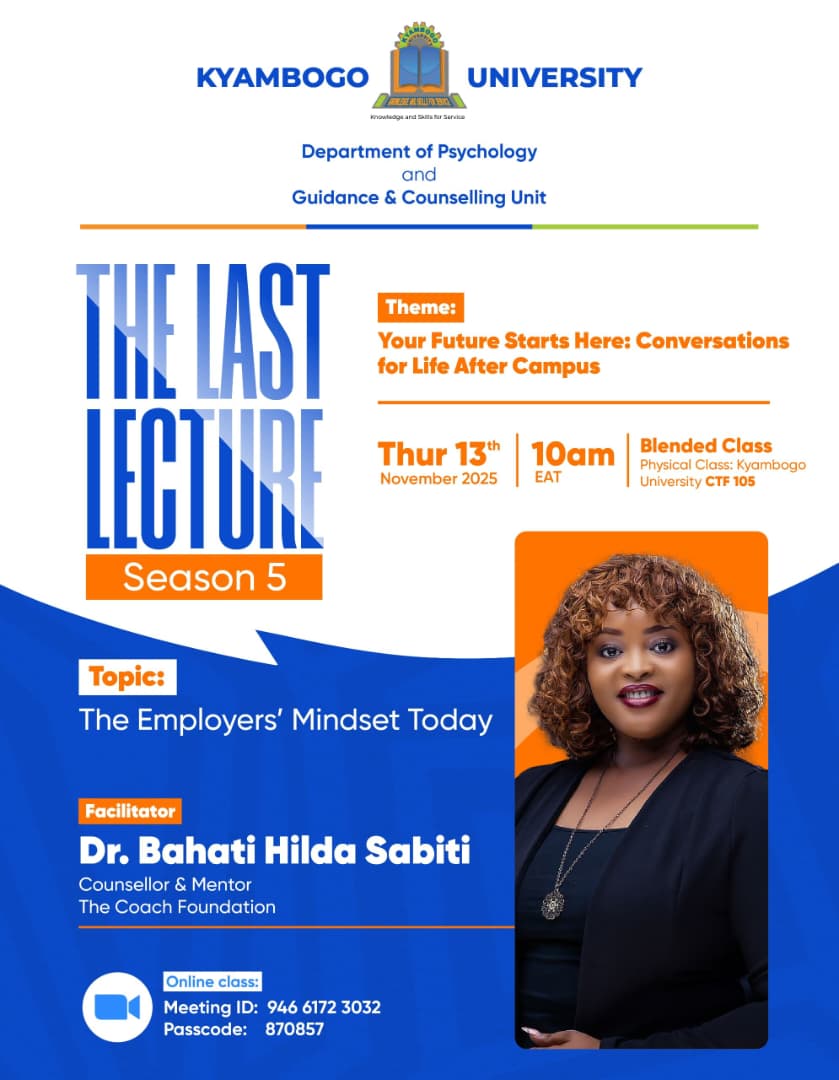
Our dear Students, your university journey is soon coming to an end, but your future is just beginning...
Are you ready to step into the real world? Join The Last Lecture Season 5 – themed Your Future Starts Here: Conversations for Life After Campus – presented by the Kyambogo University Department of Psychology and The Guidance & Counselling Unit.
Date: Thursday, November 13, 2025, at 10 AM EAT. This will be in-person at CTF 106 or Online via Zoom (ID: 946 6172 3032 | Passcode: 870857).
Hosted by: @KakindaAdrian (Counselling Psychologist & Mental Health Researcher, University of Dundee, UK) and @WinfredKyosaba Ms. Kyosaba Winfred Biribonwa (Principal Counselling Psychologist, Kyambogo University)
Speakers:
- @BahatiHilda Sabiti: The Employers’ Mindset Today
- @GittaEmmanuel : Life after the Gown: Managing Transition, Setbacks & Stability (Mental Health Corner)
- Rev. @MugaluNathan Balirwana: Relationships and Networks after University
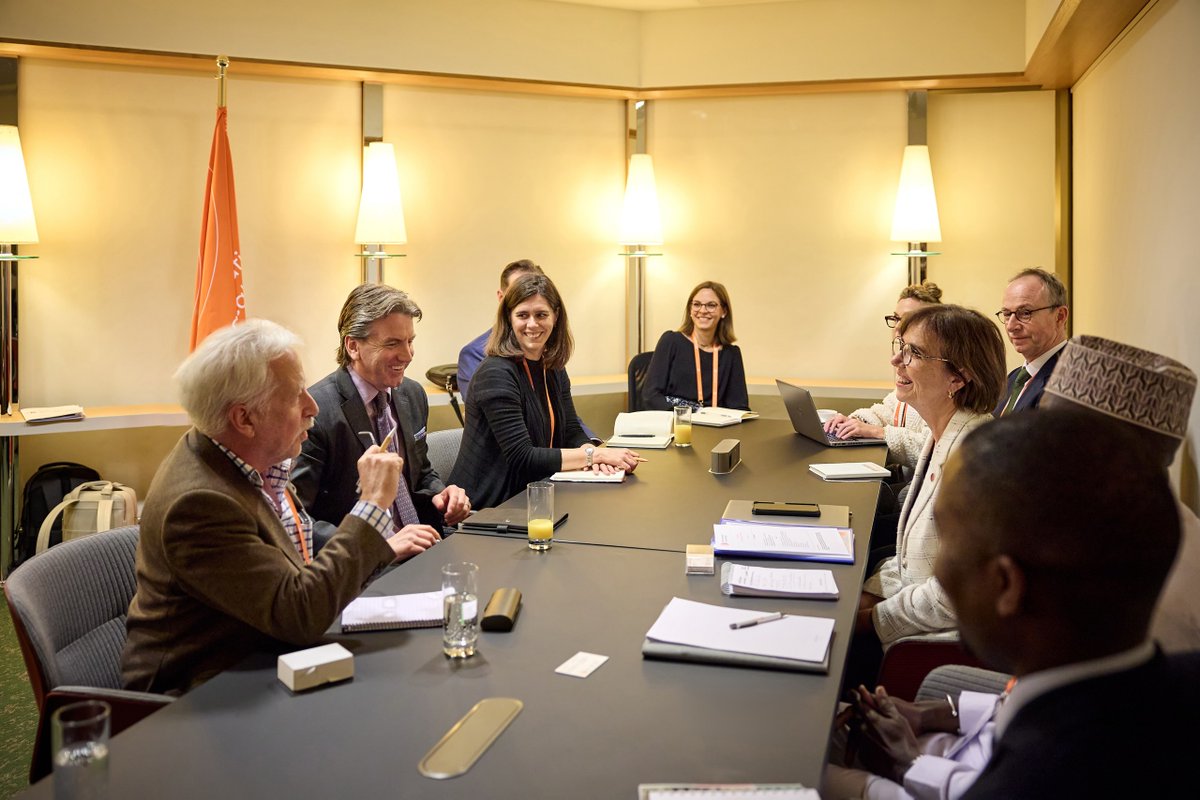
Last week, I met with @GPWMDofficial and the UK’s International Biosecurity Programme to discuss how we can strengthen our collective defences against biological threats. Their continued support to the World Organisation for Animal Health is a reminder that global biosecurity relies first and foremost on trust, between sectors, institutions and people.
At @WOAH, we work to reduce the risk of biological threats at their source. We integrate biosecurity and biological-threat reduction into global animal health strategies, provide technical guidance to countries, and collaborate with partners to assess risks and build preparedness.
The animal health sector is increasingly vulnerable to the accidental and deliberate introduction of pathogens and toxins, as well as natural events. Strengthening the capacity of frontline veterinarians is therefore both a technical priority and a shared responsibility across health and security sectors. It is important that veterinary services are recognised across society and government for their role in protecting national and international security.
WOAH’s approach combines science, multisectoral collaboration and political engagement, because managing biological threats requires expertise, commitment, and investment.
As we look to the future, we are determined to deepen collaboration with the security community and other partners. WOAH stands ready to build bridges and ensure that animal health expertise remains central to global efforts to prevent and respond to biological threats.
In a world more connected than ever, danger travels faster than we can see. A single act, deliberate or reckless, could unleash consequences beyond imagination.
We asked a question: What if it happened tomorrow? Our short film, The Fever, imagines a biological threat intentionally released on a farm and the ripple effect that follows.
It’s a story of vigilance, courage, cooperation and... the power of knowledge. Because when a crisis hits, animal health workers are our first line of defence - and only together can we prevent, detect and respond to the threats that endanger us all.
#BiothreatReduction25
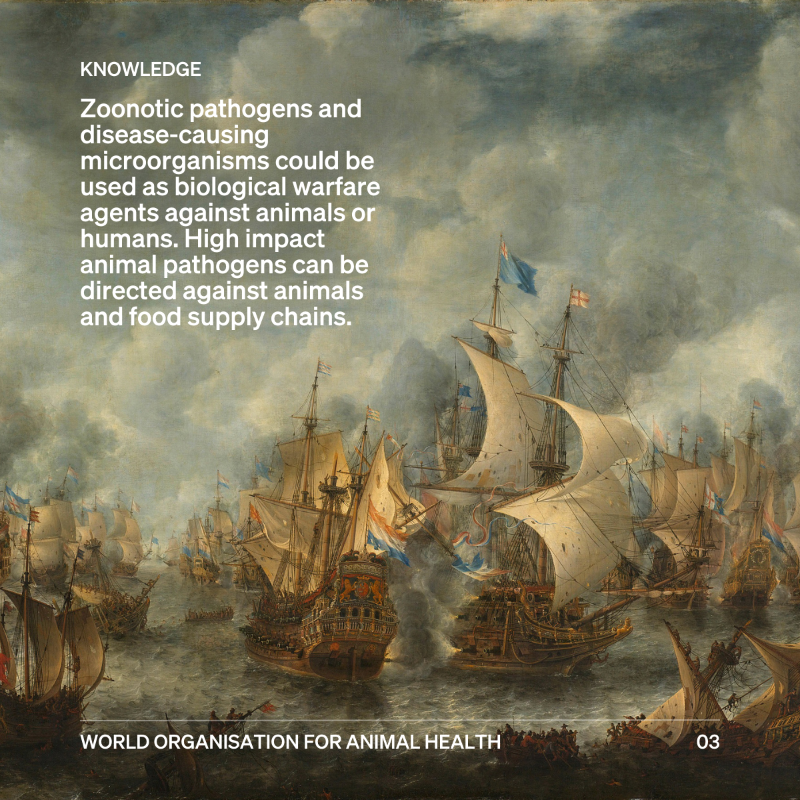
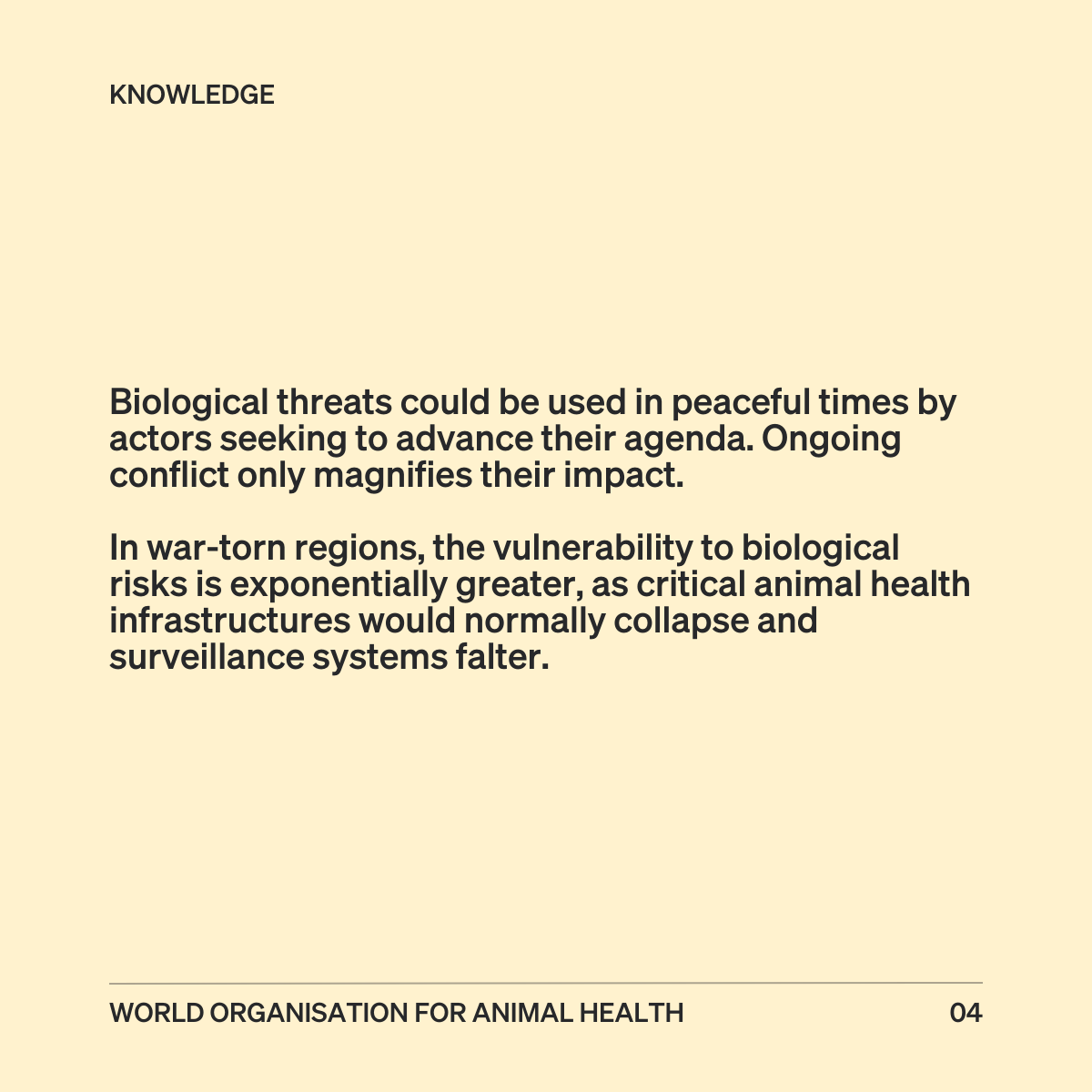
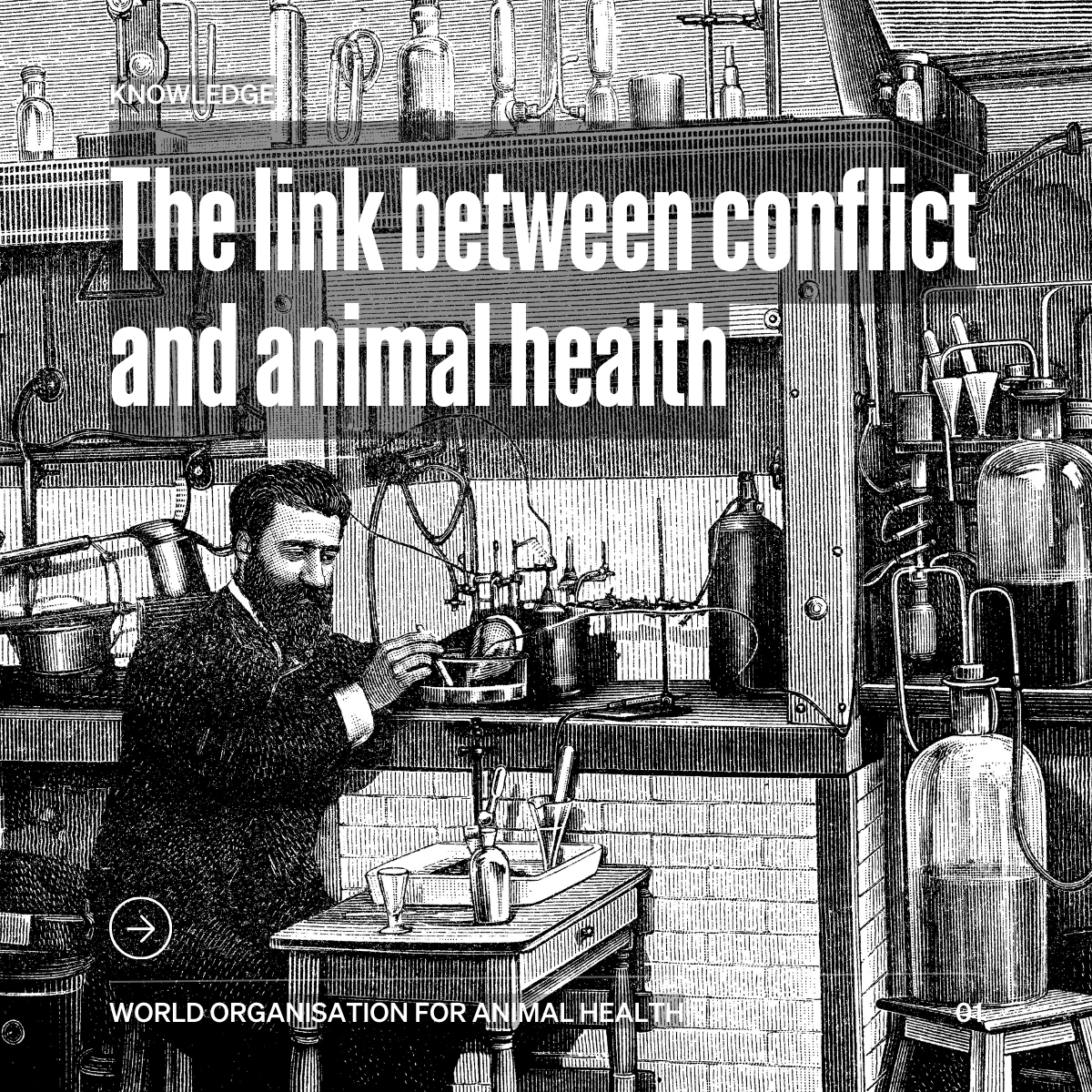
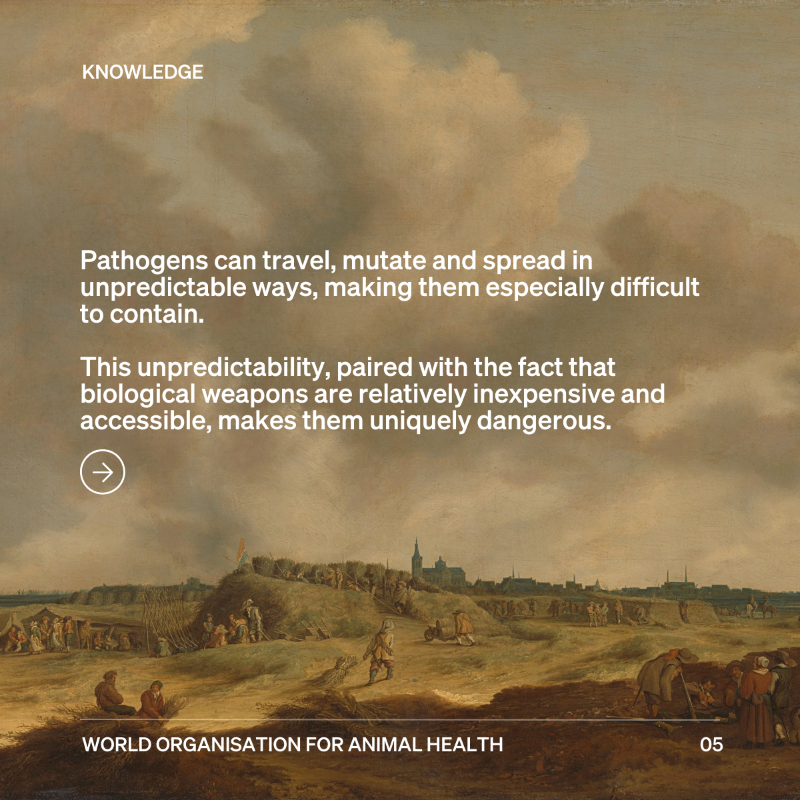
Outbreaks don’t just affect animals. They can disrupt economies, destabilise food systems and threaten global security. While naturally occurring diseases can catch the world off guard, deliberate biological threats pose an even greater danger with potentially catastrophic consequences.
In today’s interconnected world, no one is immune. A single outbreak can ripple across borders and sectors in a matter of days. That’s why collaboration isn’t optional; it is essential.
This October, @WOAH will bring global leaders together in Geneva to confront biological threats, strengthen preparedness and build a safer, more resilient future for all.
Here are four reasons why this event matters.
#BioThreatReduction25
As a coalition we are proud to support this work and look forward to working with all the partners involved, in advancing Kenya's and Africa's #bioeconomy.
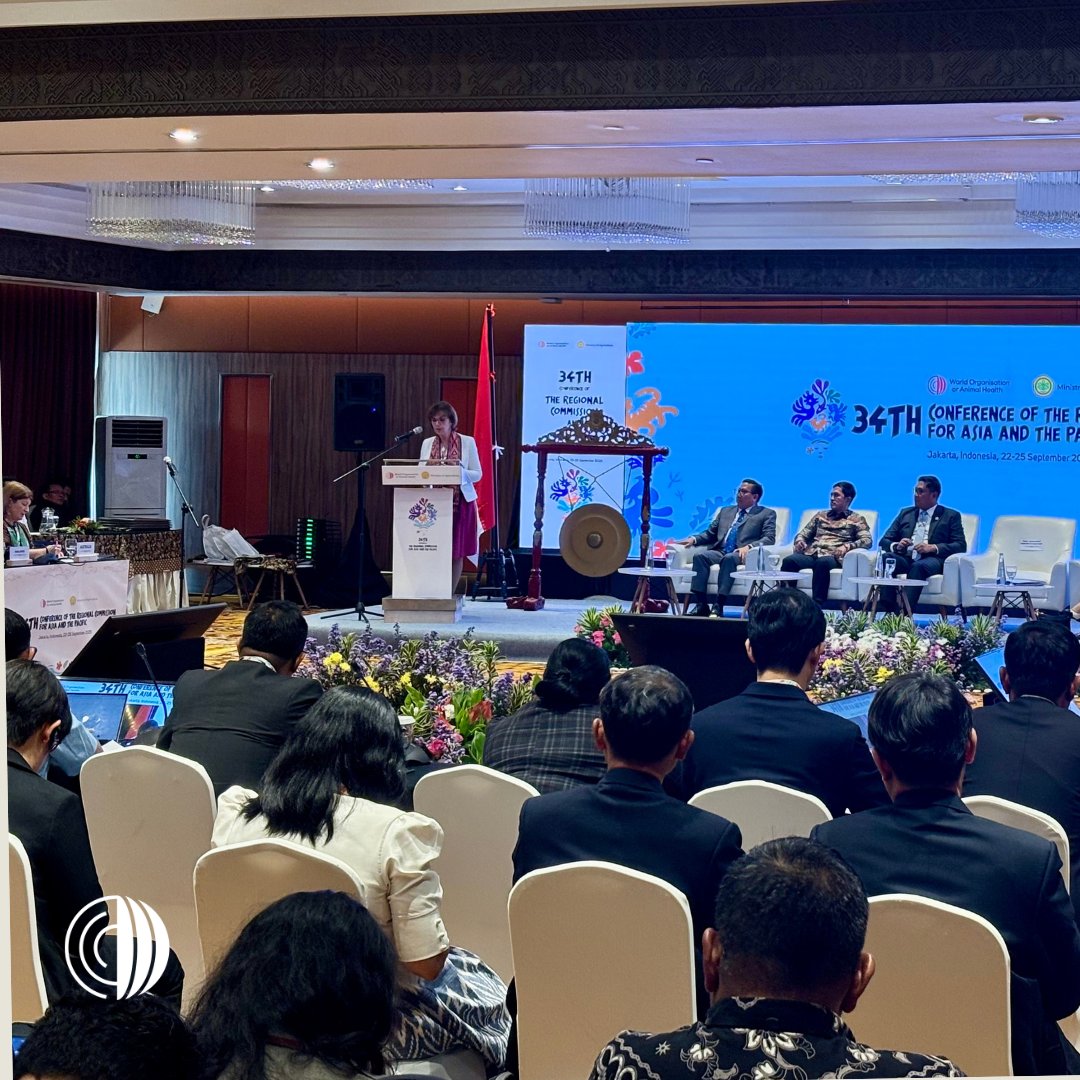
Jakarta has welcomed us with warmth and generosity, and it is here that we open the 34th Conference of the @WOAH_Asia Regional Commission for Asia and the Pacific.
The Asia-Pacific region is vast, diverse, and dynamic. It is home to immense biodiversity and growing economies, but also faces some of the world’s most pressing animal health challenges.
Over the coming days, our focus will be on the region’s pressing priorities: tackling transboundary animal diseases, advancing the role of vaccination, and securing sustainable financing for strong veterinary services.
Behind every strong health system lies strong veterinary services. They are the first responders to outbreaks, they are the backbone of resilient health systems.
As we meet here in #Jakarta, let us make this conference a turning point for animal health in Asia and the Pacific, one that strengthens solidarity, deepens partnerships, and ensures no country is left behind.
Join the livestream: https://t.co/KVFihOxtTe
In October, WOAH is hosting the Global Conference on Biological Threat Reduction, a high-level event uniting leaders across science, security, and policy to tackle the rising risk of biological threats. Join us from 28–30 October 2025 as we shape a safer future togetherIn October, WOAH is hosting the Global Conference on Biological Threat Reduction, a high-level event uniting leaders across science, security, and policy to tackle the rising risk of biological threats. Join us from 28–30 October 2025 as we shape a safer future togetherIn October, WOAH is hosting the Global Conference on Biological Threat Reduction, a high-level event uniting leaders across science, security, and policy to tackle the rising risk of biological threats. Join us from 28–30 October 2025 as we shape a safer future togetherIn October, WOAH is hosting the Global Conference on Biological Threat Reduction, a high-level event uniting leaders across science, security, and policy to tackle the rising risk of biological threats. Join us from 28–30 October 2025 as we shape a safer future togetherIn October, WOAH is hosting the Global Conference on Biological Threat Reduction, a high-level event uniting leaders across science, security, and policy to tackle the rising risk of biological threats. Join us from 28–30 October 2025 as we shape a safer future togetherIn October, WOAH is hosting the Global Conference on Biological Threat Reduction, a high-level event uniting leaders across science, security, and policy to tackle the rising risk of biological threats. Join us from 28–30 October 2025 as we shape a safer future together.
The BioPREVAIL Built Environment Design Challenge is now open, inviting innovators around the world to reimagine diagnostic containment laboratories with sustainability and equity at their core.
Led by WOAH, with support from @GAC_Corporate, this initiative is part of BioPREVAIL’s broader mission to strengthen One Health Security by designing labs that can be sustainably built, operated, and maintained in low-resource settings.
From startups to researchers, architects to engineers, applicants at any stage of development are welcome. Individuals and organisations are encouraged to apply by August 15 for priority consideration, with August 31, 2025 as the final deadline for submissions.
Find out more: https://t.co/MM40SfNcta
Patrice Lumumba overlooking the proceedings of the third training of @WOAH Focal Points for Veterinary Laboratories, starting today in Dakar, Senegal, for French speaking participants. Focus on biosecurity, biosafety, biological threats and managing labs in crises.
Three out of four originated in animals. Today, about 60% of all newly reported infectious diseases globally are zoonotic. This #WorldZoonosesDay, @WOAH calls for stronger surveillance, cooperation & investment in prevention and One Health.
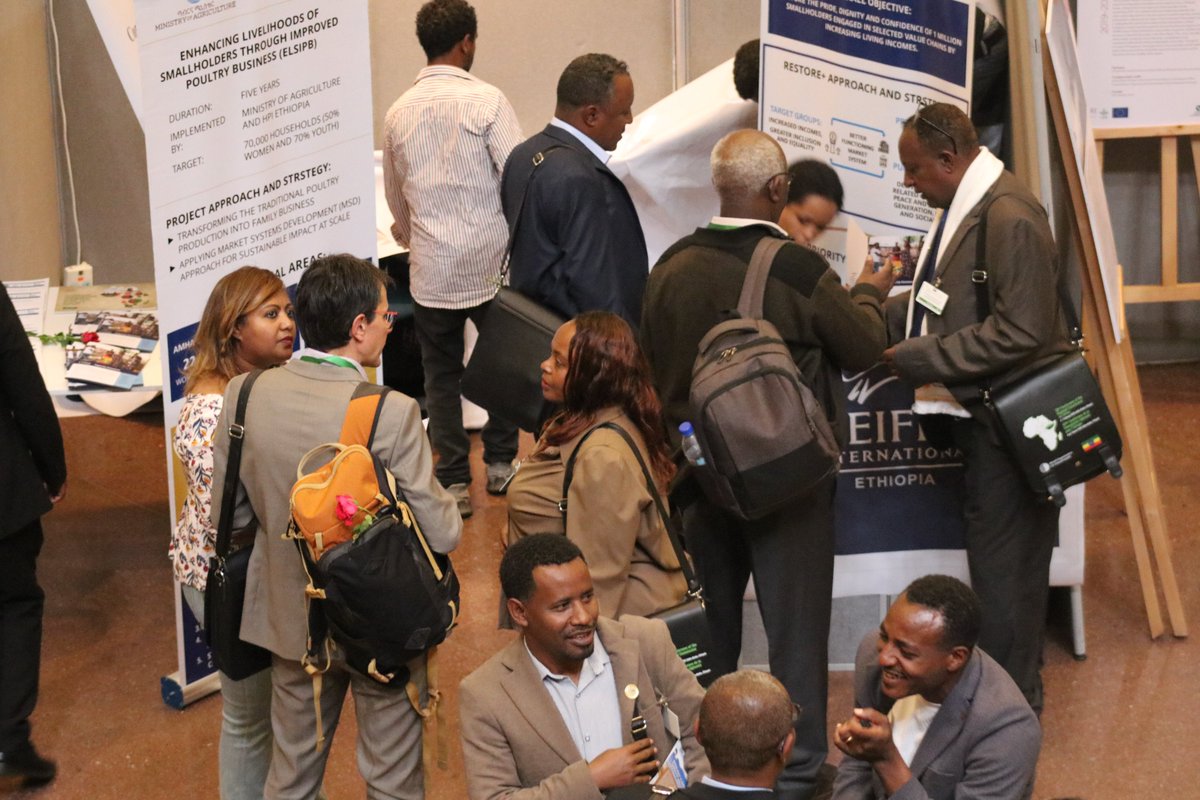
The 26th Conference of WOAH's Regional Commission for #Africa, is underway in Addis Ababa, #Ethiopia. The conference unites members who focus on improving animal health, welfare, and food safety in the African region, while addressing key challenges faced by #Veterinary Services across the continent. Photos from day 1.
@PatNanteza A combination of scrolling and storytelling...you get to interact with a visual story (combination of video, audio, image, texts) on a web page with previous sections disappearing when you scroll.
Are we ready for the next global crisis?
In this scrolly-telling piece, WOAH and partners reflect on the world's readiness to deal with biological threats (especially of a deliberate nature), lessons from past emergencies and potential solutions for preparedness and response efforts.
Enjoy the piece! @GPWMDofficial
#biothreats #emergencypreparedness
Are we ready for the next global #crisis?
Over the past 2 years, we documented a series of emergencies in three countries - Lebanon, Philippines and the Caribbean - to examine their impact on animal health. The underlying question is: are countries ready to face biothreatsAre we ready for the next global #crisis?
Over the past 2 years, we documented a series of emergencies in three countries - Lebanon, Philippines and the Caribbean - to examine their impact on animal health. The underlying question is: are countries ready to face biothreatsAre we ready for the next global #crisis?
Over the past 2 years, we documented a series of emergencies in three countries - Lebanon, Philippines and the Caribbean - to examine their impact on animal health. The underlying question is: are countries ready to face biothreatsAre we ready for the next global #crisis?
Over the past 2 years, we documented a series of emergencies in three countries - Lebanon, Philippines and the Caribbean - to examine their impact on animal health. The underlying question is: are countries ready to face biothreatsAre we ready for the next global #crisis?
Over the past 2 years, we documented a series of emergencies in three countries - Lebanon, Philippines and the Caribbean - to examine their impact on animal health. The underlying question is: are countries ready to face biothreatsAre we ready for the next global #crisis?
Over the past 2 years, we documented a series of emergencies in three countries - Lebanon, Philippines and the Caribbean - to examine their impact on animal health. The underlying question is: are countries ready to face biothreats?