In the end, symbolic manipulation tasks are probably "easier" in some cosmic sense than navigating-the-physical-world tasks.
So why is navigating the physical world so easy for us and symbolic manipulation so hard?
Because for us, navigating the physical world is the table stakes. Symbolic manipulation has no value if you are not already an apex physical-world-navigator.
This is such an important point. With all of the videos of and promise of humanoid home-help robots in the near future, I wondered: how far are we, realistically, from me being able to tell my clothes folding robot to please design and assemble a quadcopter drone for me from scratch using basic parts?
The informational subtasks--doing math, producing CAD designs, look at parts datasheets--all exist in the platonic realm, and so are very easy.
But at some point, the parts arrive in Amazon boxes, and you have to unbox them. You have to assemble them, which means screwing in each screw, and soldering each circuitboard surface mount component. This would take days for a person; it will likely take a robot weeks given demonstrated dexterity and working speed.
And at the end of all of that, it is likely that the drone won't even fly, or won't fly very well. And all of that--weeks of effort, terabytes of video, gigabytes of motor control commands--represents the completion of just one iteration, at which point you have to synthesize the lessons learned and start again.
The context sizes required for this are unimaginable given what we have now. I'm sure there will be huge strides, the challenge of acting in the real world remains daunting.
@adam__isom one time they did an episode of TNG that purported to explain why every lifeform they run into is humanoid. tl;dw is ~panspermia of an ancient progenitor humanoid lifeform. (yes I know that doesn't work).
I think it is unlikely that "high T men" are going to coalesce and overthrow the current political system, firstly because I think the coalescence itself is unlikely, but secondly because I think the current political system is more robust than that.
We are witnessing unimaginable gains in force multiplication. The most visible of these are FPV drones (which will eventually give way to autonomous drones) and UGVs. But beyond that is the growth of realtime, theater-wide awareness from cheaply deployed surveillance technology and AI to wade through the flood of data. Realtime, theater-wide awareness makes it impossible for a hostile force to maneuver undetected, and shortens the kill chain from hours or days to mere minutes.
I suspect existing governments will largely succeed in controlling the diffusion of these capabilities to non-state actors, which means that even a hypothetical massive rebel army of "high T men" may easily be held at bay by a comparatively small palace guard.
@CXCarroll do I infer correctly from your banner that you're based in Utah? the local ACX meetup would love to hear your takes in person if you wanted to come sometime.
@Noahpinion I was shocked when I was in Japan in 2016 to discover that a lot of their aluminum beverage cans have walls that are like 1mm thick. They probably use as much aluminum in one can as we do in ten. Those things are indestructible!
@CarlZha I'm sure there are many aspects of the parent-child relationship here (going back to early childhood or before) that would be incomprehensible for Easterners.
@Boenau Is the measure of crashes (in which a reduction was observed) divided by e.g. daily traffic volume? It would be unremarkable if e.g. reducing traffic volume by half reduced crashes by half.
@tracewoodgrains Actually I take that back. Chinese cultural revolution is an example of something very similar to "cancel culture" happening in meatspace, all without the aid of social media.
@tracewoodgrains I'm inclined to believe that so long as something like Twitter exists, something like cancel culture will exist. It seems like a fundamental human behavior. There are antecedents in meatspace but social media is what allows it to scale and come into its own.
@PerfectUnion87@jake_gotta@nicholasjarboe What's more, it is in fact the case that some benefits are worth a certain number of deaths. We could make vehicular fatalities zero by getting rid of all cars, trains, etc. But few people who understand clearly what society would look like in that case would make that trade.
@jake_gotta One underappreciated aspect of speed limits is that it's not only about how safe YOU feel driving--it's also about the ability of someone e.g. pulling out of a blind driveway to actually be able to see far enough to verify that the coast is clear.
@Noahpinion This probably considered heating only and assumes no AMOC/Gulf Stream collapse? Consequences for Europe if collapse were to occur seem non-negligible.
@odinsbadeye@Noahpinion This discourse is not about the candidates themselves, but rather from what pool of talent they'll draw the several hundred most important/impactful federal employees: cabinet members, top few people at various departments and agencies, etc.
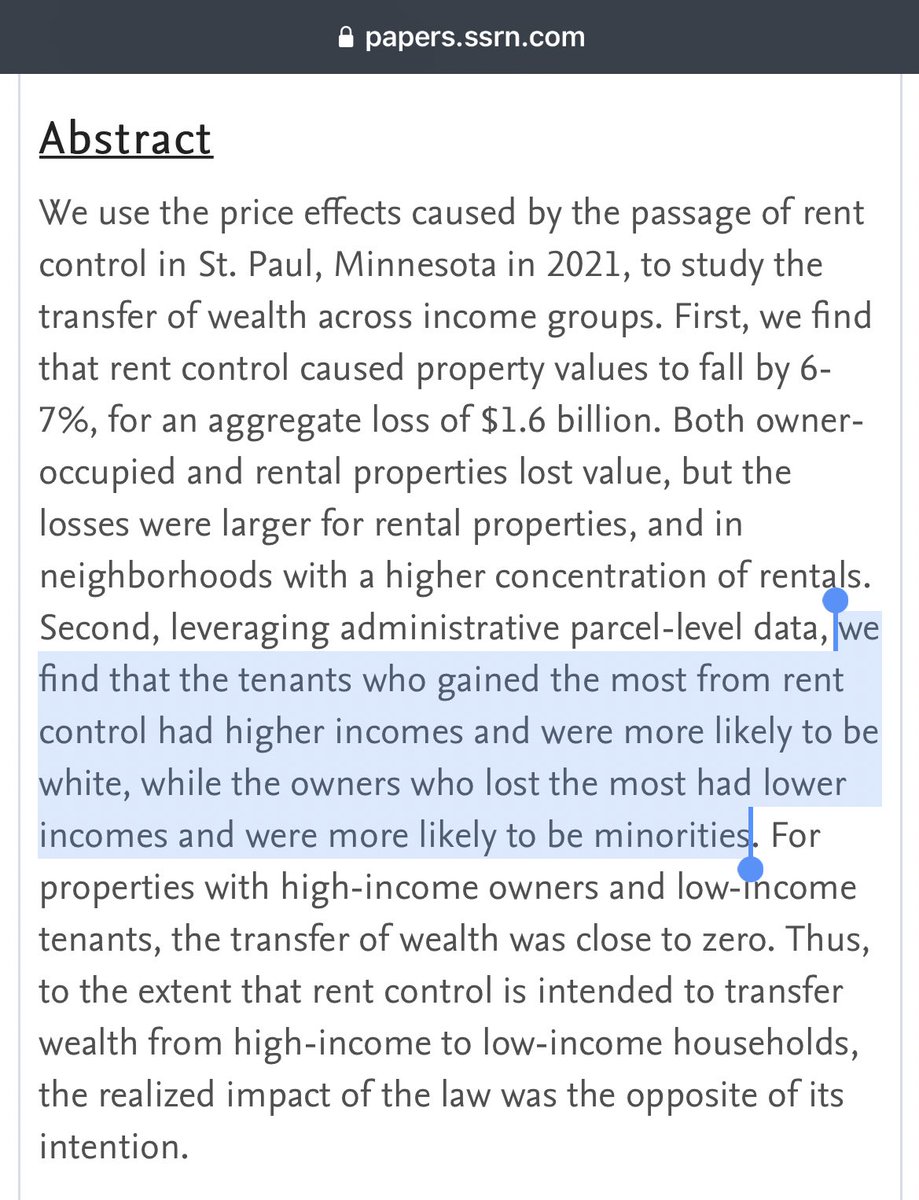
Serious question: do Swedes get *angry* about queue lengths the way people do about high rents? I certainly come down on the side of more supply as opposed to rent control, but a steelman might be that queues are for some reason more inherently tolerable for the human psyche.
@jessesingal I think people are angry because they perceive a discrepancy in how meticulously journalistic practices are followed according to what is being reported. Insofar as the discrepancy is real, it should be resolved by applying the higher standard universally, not the lower one.
@ymeskhout I think "luxury beliefs" as a term has taken on a watered down meaning of "a belief one can only maintain if one is wealthy/insulated, because it would be damaging otherwise." I agree that the claim that these beliefs are ultimately about displaying affluence is not compelling.