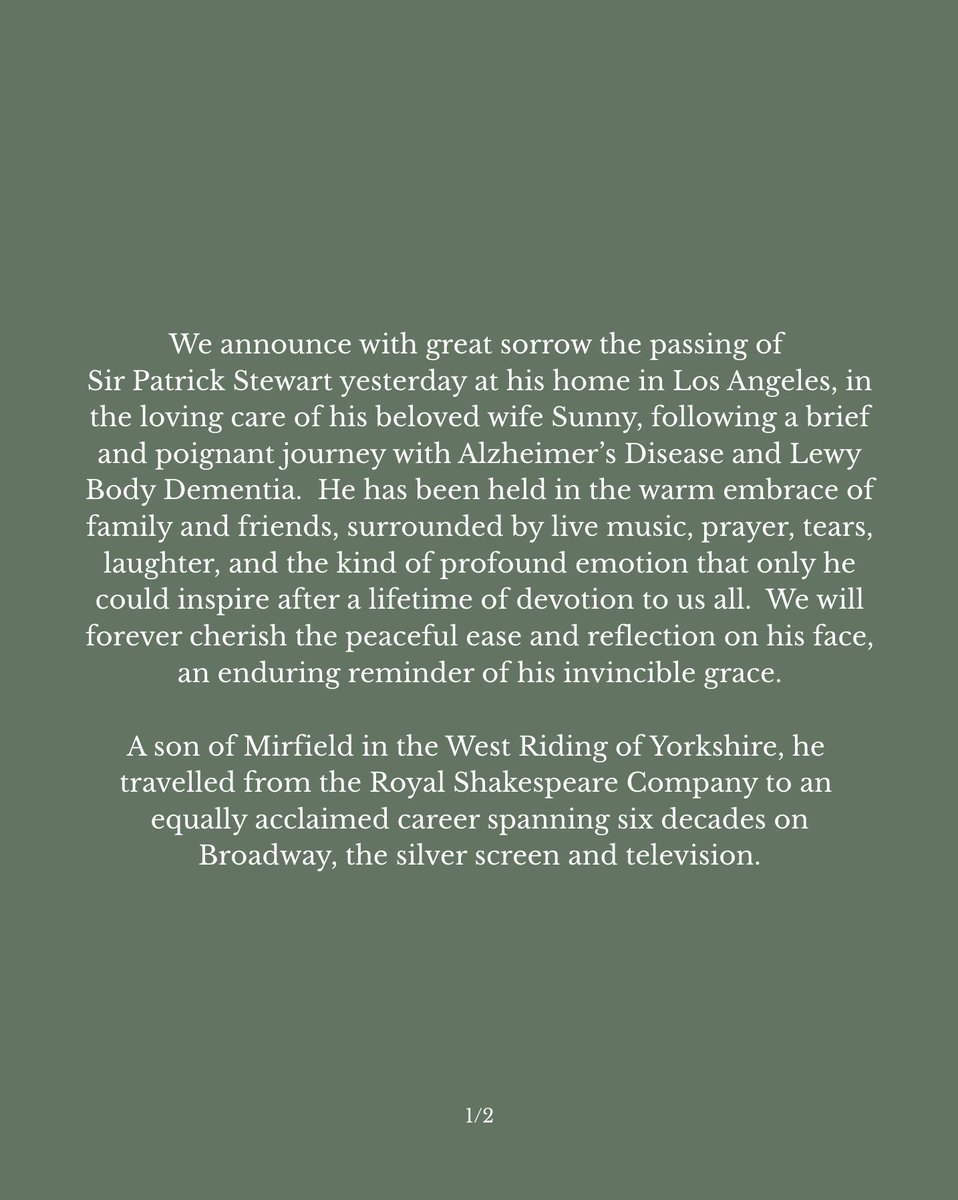
In lieu of flowers, memorial contributions may be made to:
Johns Hopkins Alzheimer’s Disease Research Center Fund
https://t.co/luC5CdcWDy
Alzheimer’s Foundation of America Caregiver Resources
https://t.co/zvNptfyuNd
Photo Credit: Tommy Garcia
@GergelyOrosz Very little. It's also why getting stuck on "slop" is such a siren's song for developers intend on living in the past. The net value of the system is now it's observable behavior. So decisions, design, scope, taste.
Yep. This is the future of software building. In fact, half of this is already true. It’s just not everywhere yet. The diffusion of this predicted future will take time though. 3-5 years tops.
I made something with atoms, not bits!
I’m proud to have built a small sensory space in an unused area under the stairs of my kid's school.
Here's the write up: “Building Quiet” https://t.co/7neZcNpurC
“The world’s most advanced superintelligence is only as useful as the underlying enterprise knowledge it has access to.” 👌
I’ve always admired how @levie runs Box, and pleased to see it growing strongly, especially with the wobble SaaS is having.
As always, context is king.
Yesterday, at Box we reported our Q2 results with revenue of $321.1 million for the quarter, up 9%, or 11% in constant currency (our highest constant-currency growth rate in 14 quarters), and we raised our full-year revenue target to $1.290 billion. Overall, this growth is being driven by the demand we're seeing from enterprises aiming to get the most out of their enterprise content and transform in the era of AI.
As I shared on our earnings call, during the quarter I spoke with many enterprise technology leaders who highlighted their primary goals and challenges in implementing AI. One of the most common topics is how enterprises can get the right context to AI agents, as well as tap into the full value of their unstructured data, in a secure and governed way.
The world’s most advanced superintelligence is only as useful as the underlying enterprise knowledge it has access to. Agents need access to the critical information that makes up the bulk of corporate knowledge --like contracts, research materials, financial documents, marketing assets, product roadmap information, and so on-- most of which lives within an enterprise’s unstructured data.
We've long been able to query, calculate, and automate work that deals with structured data; but the vast majority of data in an enterprise is unstructured, often in the form of our enterprise content. Instead of sitting on millions or hundreds of millions of files they know very little about, companies can now use AI agents to ask questions about this data, mine it all for intelligence, and automate nearly any workflow that involves this enterprise content.
The technology leaders I'm talking to are also recognizing that as AI model capabilities advance across AI labs --like OpenAI, Anthropic, SpaceXAI, Meta, Google, NVIDIA, and a variety of open-weight providers-- they will need applied AI platforms that can bring the full power of these models to their processes. And with AI token usage continuing to grow exponentially, the ability to draw the right cost-performance mix becomes essential. Rather than migrating data and workflows into separate systems to unlock AI's benefits, enterprises need the ability to swap models or agents on their workflows and information at any time.
Finally, as we saw with the recent OpenAI Hugging Face incident, enterprises will increasingly need platforms that can securely protect their corporate data and ensure that neither humans nor agents can get access to information they shouldn’t have access to. As external AI agents interact with enterprise data, enterprises will need platforms that offer robust guardrails, comprehensive audit logs, and real-time security alerts to ensure content remains protected and governed at all times.
Given all of these dynamics, there's going to be a tremendous amount of opportunity for various plays to bring intelligence to the critical workflows inside of enterprises at the applied AI layer. At Box. we're focused on building the leading intelligent content management platform to empower enterprises to transform how they work with their unstructured data at scale. And we're looking forward to partnering with all of the other companies bringing intelligence into organizations as well.
Update: gaff-check 0.2.0 is now live and adds official recorded-crime context by Garda sub-district—annual CSO category counts plus a separately labelled wider-division trend.
Install with npx -y [email protected].
Buying a home in Ireland means checking planning, sold prices, flood risk, radon, zoning and BER data across half a dozen sites.
I built Gaff-check to bring those public records into your AI assistant — free, open source, and with no API keys:
https://t.co/99hUdrr8if
I want more transparency about how online content is made.
Writers who use AI often want to disclose its role, but a “Seems like AI slop” label is too blunt an instrument.
So I built Authorship Notes, an open format for declaring how a work was made.
https://t.co/DYOG0vGNYJ
For anyone with endless ideas, this agent age is nirvana as those ideas are met with endless execution, endless exploration. I've never had has much fun working with computers as I do right now. What a time to be alive.
With a fresh coat of paint I am relaunching my personal website today starting with a post about the future of enterprise software, humbly offered:
https://t.co/J11hl1vWZr