abis baca konten dokter ttg ibu lahiran ter-plot twist yg pernah aku baca.
wanita usia 23th mengaku lagi hamil pertama kali, udh di induksi selama 24jam tp gagal. disarankan untuk operasi SC, beliau setuju. semua persiapan udh dilakuin, dr puasa, cek lab, informed consent, dll.
tiba diruang operasi si ibu dah rebahan tiba2 histeris menolak operasi. gmw di bius maunya lnjut induksi aja. udh diedukasi kekeh mau lnjut induksi aja.
akhirnya diturutin, gjdi SC. di edukasi sekeluarga dan pihak manajemen RS pun ikut andil. gak ada 1 jam si ibu minta SC lg krna abis dimarahin suamina.
tp pihak nakes blg egk bisa krna sdh ttd menolak tindakan dan sudah makan minum. dan trnyata yg paling gong tuh...
ini bkn kehamilan pertama, dr awal egk jujur. ini kehamilan ke 3.
👶anak pertama gak diakuin krna hamil diluar nikah dan lakinya kabur
👶anak kedua sm gk diakuin jg krna lakinya kabir dan masuk penjara
👶anak ketiga yg skrg lg dikandung, sudah nikah resmi sm suami yg skrg
tapi tapi tapi 3 anak diatas ternyata punya bapak yg SAMA. jdi laki yang kabur, dipenjara, dan sah skrg itu laki-laki yg sama😭😭
Two small island economies blew up in 2008. Iceland and Ireland. Their names differ by one letter, and their handling of the crisis differed by everything that matters.
Iceland's three big banks, Kaupthing, Landsbanki, and Glitnir, had grown assets to roughly ten times the country's GDP by 2008. Pure credit-fueled madness. When the music stopped, the Icelandic government did the unthinkable: it let them fail. Bondholders ate the losses. The state refused to socialize private bank debt onto 320,000 citizens who never signed up for it. Capital controls went up, the króna collapsed, and the politicians actually prosecuted bankers. Twenty-six of them went to prison. Sigurður Einarsson and Hreiðar Már Sigurðsson, the men who ran Kaupthing, served real sentences.
Ireland took the opposite road. In September 2008, the Irish government issued a blanket guarantee covering the liabilities of its major banks, including Anglo Irish Bank, a property-lending casino that should have been allowed to die in peace. The taxpayer absorbed the bill. By the time the rescue ended, Ireland had poured around 64 billion euros into its banks, roughly 40 percent of GDP. The state took on private gambling debts, then went to the Troika in 2010 hat in hand for an 85 billion euro bailout, and accepted years of austerity to pay for losses it had no business owning.
Both economies recovered. Both eventually grew again. The difference is who paid and who learned. Iceland made creditors and reckless bankers bear the consequences of their own decisions, which is the entire point of capitalism: profit and loss, not profit and bailout. Ireland protected the people who made the bad bets and handed the invoice to schoolteachers and shopkeepers.
You will hear economists call Ireland's GDP rebound a triumph (much of that "growth" is multinational accounting fiction, Leprechaun economics, but that's another lesson). What they skip is the moral architecture. When you guarantee bank liabilities, you abolish the discipline that makes markets work. You tell every banker in the country that downside is optional.
Iceland jailed its bankers. Ireland reimbursed theirs.
Kasus ini benar-benar keji & bikin ngeri. Perempuan disekap bertahun-tahun, disiksa sadis sampai bibirnya hilang, buta, & penuh luka. Motifnya cuma uang. Semoga pelakunya segera tertangkap & dihukum seberat-beratnya. Perempuan, jangan pernah abaikan insting & red flag di hubungan. Semoga korban bisa pulih & mendapat keadilan.
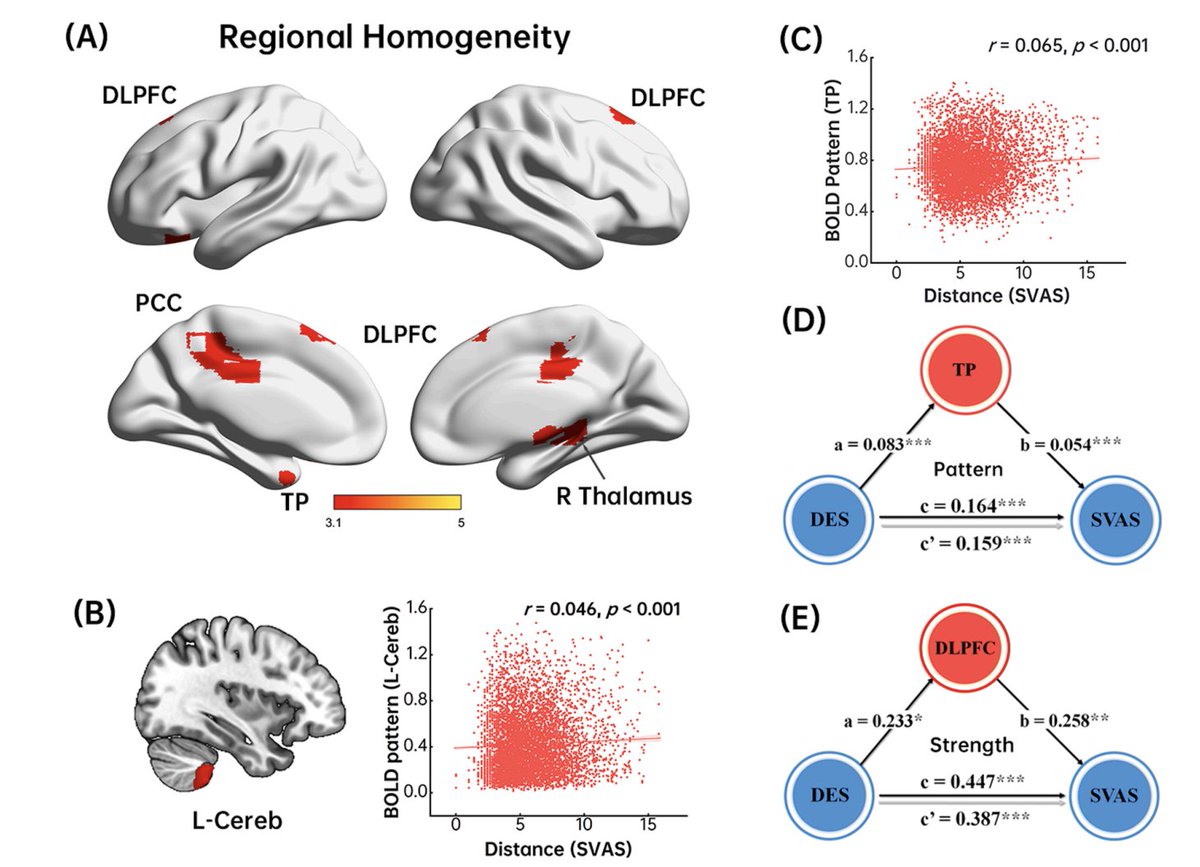
Gue berusaha mengurangi menonton short video setelah tahu akibatnya bisa mengubah struktur otak.
Jadi ada penelitian tahun 2025 yang melakukan MRI otak pada 111 mahasiswa untuk dilihat hubungan antara sering menonton short video dengan volume gray matter otak.
Hasilnya menunjukkan orang yang rutin menonton short video ternyata memiliki area otak yang lebih sensitif terhadap instant gratification. Penelitian ini menyebutkan bahwa perubahan struktur otak tersebut bisa semakin membuat scrolling video menjadi tidak terkendali.
Penelitian lain menunjukkan bahwa rutin menonton short video berhubungan dengan penurunan kemampuan kognitif serta penurunan kemampuan untuk mengontrol diri sendiri.
Sumber:
Neuroanatomical and functional substrates of the short video addiction and its association with brain transcriptomic and cellular architecture
🚨 BREAKING: NotebookLM can now teach you like a private university tutor.
Here are 10 prompts that make studying 10x easier:
Save this before it blows up.
Astaga, ternyata Dasar Hukum Pajak tidak dikenakan Pajak atas Duit MBG itu cuma SURAT EDARAN KEPALA BADAN?
SURAT EDARAN INTERVENSI KE UNDANG-UNDANG
Bisa buat Judul Thesis atau minimal Skripsi ini 🤣
@bakuldimsum_ innalillahi wa inna illaihi rojiun semoga keluarga yg ditinggalkan kuat ya kak
Kuat banget temen kakak praktek di 3 RS
andai gaji nakes gede mungkin 1 tmpt kerja udah cukup
PENELITIAN TERBARU!!!
Ternyata ada 19 kanker yang diketahui berhubungan erat dan risikonya meningkat pada orang obesitas.
5 kanker dengan risiko tertinggi antara lain:
1. Endometrium (58%)
2. Kerongkongan (47%)
3. Ginjal (30%)
4. Kandung empedu (27%)
5. Lambung (23%)
Persentase di atas adalah peningkatan risiko untuk setiap peningkatan indeks massa tubuh 5 kg/m2.
Semoga bermanfaat!
Sumber:
-Adiposity and cancer: systematic review and meta-analysis
I'm a cardiologist. Something just happened today that I genuinely did not see coming — and it could change the future of preventive medicine more than anything I've written about on this platform.
Midjourney — the AI company that became famous for generating images from text prompts — just announced a medical hardware division and unveiled a working prototype of a full-body scanner unlike anything that's ever existed.
It's called the Midjourney Scanner. And it works like this.
You step into a shallow pool of water. You stand on a platform that slowly descends — about two inches per second — through a ring containing roughly half a million tiny ultrasonic transducers, each the size of a grain of sand. Every one of them acts as both a speaker and a microphone, sending ultrasonic waves through your body from every angle and recording what comes back.
60 seconds later, you step out. The scan is done.
No radiation. No magnets. No claustrophobia. No IV contrast. Just sound, water, and an almost incomprehensible amount of computing power — roughly 2 petaflops processing 17 gigabytes per second of raw acoustic data — reconstructing a 3D map of your entire internal anatomy down to half a millimeter resolution.
Organs. Tissues. Blood vessels. Bones. Muscle. Fat distribution. All segmented by AI in real time.
As a cardiologist who has spent months writing about how the standard screening playbook misses the majority of future heart attacks — this is the technology I've been waiting for without knowing it existed.
Here's why this matters for the future of your heart.
Right now, getting a detailed look inside your cardiovascular system requires either a CT scan (radiation), an MRI (magnets, claustrophobia, 45-60 minutes, $1,000+), or a coronary CT angiogram (radiation, IV contrast, limited availability). These are powerful tools. I order them regularly and they save lives.
But they're reactive. You get them when something is already suspected. They're expensive. They're uncomfortable. And for most people, they happen once — maybe twice — in a lifetime.
Imagine instead: a 60-second scan with no radiation that you could repeat monthly or quarterly. Tracking cardiac structure over time. Watching body composition shift. Detecting changes in organ size, fluid distribution, or vascular architecture before symptoms ever develop. Building a longitudinal dataset of YOUR body that AI can analyze for patterns no single snapshot would reveal.
That's what Midjourney is building toward.
The company plans 50,000 scanners worldwide over six years, with capacity for a billion scans per month. The first location — the "Midjourney Spa" in San Francisco — opens at the end of 2027 with 10 scanners alongside saunas, cold plunges, and a gym. The scan costs a few dollars. The experience is designed to feel like wellness, not medicine.
The technology is built on Butterfly Network's ultrasound-on-chip platform — 40 modules per scanner — combined with Midjourney's own AI segmentation and reconstruction stack. David Holz, the founder, claims the system aims for image quality comparable to MRI in many aspects but at nearly 100x the speed with zero radiation.
Now the caveats — because I'm a physician and the caveats matter enormously.
This is a Gen 1 prototype. About a dozen people have been scanned so far. Current scan time is actually closer to 20 minutes, not 60 seconds — the system is bottlenecked by bandwidth and reconstruction algorithms. The 60-second target is aspirational for future hardware generations.
It is not FDA-cleared for diagnostic use. Midjourney is starting with body composition maps — a category below diagnostic imaging in the regulatory hierarchy. The path from "beautiful 3D body scans" to "clinically validated diagnostic tool that your cardiologist can act on" runs through years of clinical trials, comparative studies against MRI and CT gold standards, and FDA review.
No independent clinical validation has been published. The imaging claims come from Midjourney's own demonstrations. Comparative data against established modalities does not yet exist.
And the privacy implications of full-body internal scans at planetary scale — a billion scans per month — is a conversation that hasn't even started yet.
So I want to be precise. This is not ready for clinical medicine today. It may not be ready for years. Many ambitious medical hardware projects have failed in the gap between prototype and product.
But.
The fact that a working prototype exists — producing real segmented 3D anatomy from sound waves and compute alone — means the physics works. The engineering works. The question is no longer "is this possible" but "how fast can it be validated and scaled."
And if it is validated — if the resolution holds up against MRI, if the AI segmentation proves reliable, if the regulatory path clears — then what we're looking at is the most significant new imaging modality in 50 years.
For my entire career, preventive cardiology has been limited by the fact that seeing inside the body is expensive, slow, uncomfortable, and infrequent. We catch disease late because we image rarely. We image rarely because imaging is hard.
A 60-second, no-radiation, spa-based full-body scan that costs a few dollars would demolish every one of those barriers.
I've written about AI detecting inflamed arteries. About gene editing curing cholesterol. About GLP-1 drugs rewriting metabolic medicine. About cellular reprogramming reversing aging.
This is the missing piece: the ability to see inside every human body, routinely, safely, and affordably — so all of those interventions can be deployed before the disease arrives instead of after.
The company that taught AI to generate images from imagination just built a machine that generates images from the human body.
The future of medicine showed up today from the last place anyone expected.
bener, dulu pas tinggal di hongaria 2023 minimum salarynya sekitaran 13 jutaan untuk unskilled labour, 17 jutaan untuk professional.
biaya student apartment: 2 juta perbulan (udah ada water heater, wifi, aircon, dapur communal tiap lantai).
biaya sekali makan di luar: 20-30K hotdog, paskitani/indian food 100K an bisa buat dua kali makan. kalau masak bisa 20-25K sekali makan.
internet perbulan: 300K unlimited pake yettel.
biaya transportasi: dalam kota 110-120Kan perbulan pakai student discount gaada limitnya, kalau kereta antar kota 70K perbulan pakai student discount.
bonus: udara bersih, jalur pedestrian yang luas, jarang bahkan hampir gaada macet.
minus: masjid kecil dan jauh (agak sulit buat yang muslim, tapi mereka gak diskriminatif).
tinggal diitung-itung aja gak beda jauh sama ngekost di depok biayanya kecuali di public transportnya. eropa tengah sangat underrated dan worth it buat jadi retirement plan yang mau slow living.
this is actually incredible
a full body ultrasound scanner that takes 60 seconds instead of spending an hour in an MRI tube, without radiation, hospitals or a $2000 bill
soon you’ll just walk into a health spa, order a coffee, step into the pod, and walk out with a 3D map of your body
the future is finally starting to look like the future
Salah satu artikel terbaik mengenai cara optimalisasi Claude. BAGUS BANGET untuk kalian yang sedang belajar Claude.
Sekali lagi, sempetin baca artikel ini!
Thank me later!