🚨 YOUR BOT IS TRADING ON GARBAGE DATA
And you don't even know it.
This is the main reason why your Polymarket bot doesn't print.
Dirty websockets feeding stale prices into logic that was built to handle clean ones.
This single problem kills more profitable-looking strategies than anything else.
Here is the full 6-layer system that fixes it permanently:
Layer 1 is about starting early and filtering bad connections before they cost you.
Begin every websocket connection 15 seconds before the trading window opens.
Monitor the final 5 seconds.
You need at least 3 ticks per token with no single jump above 5 cents.
Fail that check and skip the window entirely.
Trading on a degraded connection is worse than not trading at all.
Layer 2 is about volume and redundancy.
Never run one connection.
Run 100 to 300 parallel websockets per feed simultaneously.
Every 4 seconds kill the slowest 10% and respawn them fresh.
Your bot always takes the first deduplicated tick from whichever socket delivers it first.
More connections means faster data and lower probability of missing a critical tick.
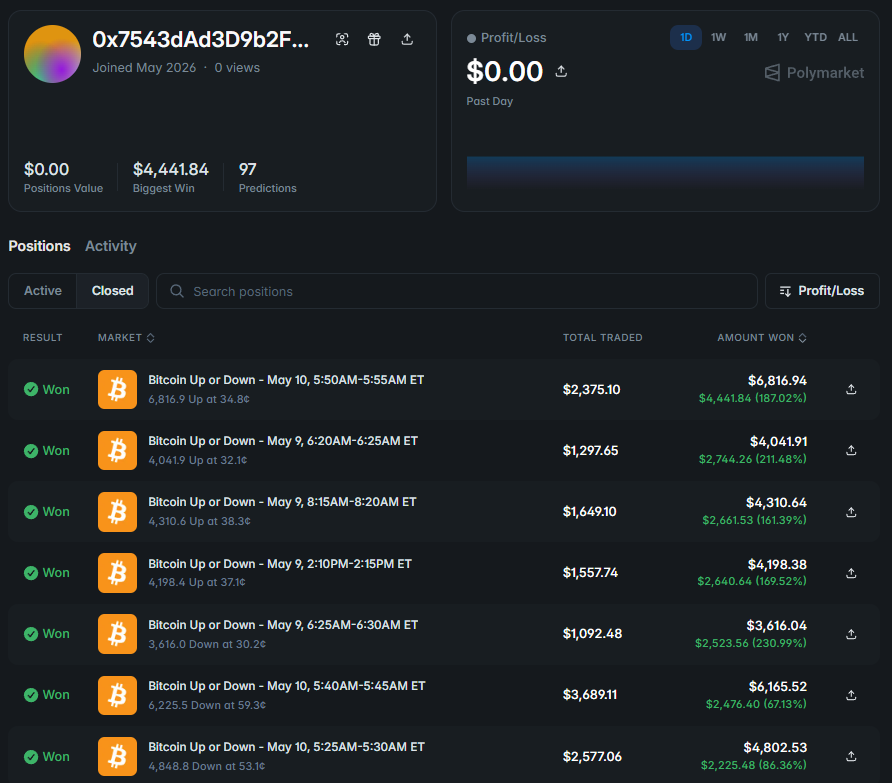
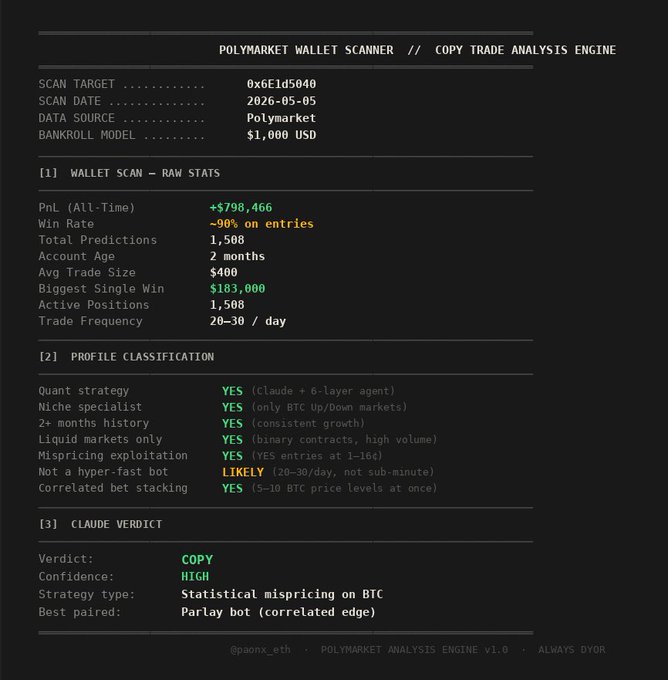
Look at my bot as example: [https://t.co/YIxExxiltB]
Layer 3 guards against stale data sneaking through.
Compare every incoming tick against the last known price from your warmup period.
Any tick with a price delta above 15 cents gets rejected immediately and logged.
Stale ticks entering your decision logic silently turn winning trades into losing ones.
Layer 4 is simple but critical.
Drop the very first tick from every new connection without exception.
It is almost always Polymarket's cached orderbook snapshot from before the current window.
Acting on it means entering trades based on prices that no longer exist.
Layer 5 prevents all your connections from seeing the same data.
Never start all websockets at the exact same millisecond.
Stagger them evenly across a full second.
Each connection gets a better shot at receiving genuinely unique market data.
Layer 6 is about keeping only your best connections alive continuously.
Track timing variance per connection using a jitter EMA score.
Cull the most erratic connections first during each cycle.
New connections get 8 seconds to stabilize before they are eligible for culling.
Maximum 20 respawns per minute. Maximum 2 per cycle.
Running all 6 layers transforms dirty real-time data into something clean enough to actually trade on.
Strategies that looked broken often start working again without touching a single line of signal logic.
The data was the problem the whole time.