Claude Fable 5 will be available again globally tomorrow.
After a series of productive conversations with the US government, we're redeploying the model with a new set of classifiers to target and block more cybersecurity tasks. In the near term, some routine tasks like coding and debugging will fall back to Opus 4.8. We’ll continue to refine these classifiers over the coming weeks to reduce false positives and better distinguish genuine misuse from legitimate requests.
We’ve also begun drafting a consensus framework—with Amazon, Microsoft, Google, and other Glasswing partners—for assessing the severity of AI jailbreaks and how AI developers should respond to them. We invite other industry partners and model providers to join us in this effort.
Finally, we’re scaling up our collaboration with the US government on model testing and safeguards. This will include pre-release access to models and safeguards for evaluation, information sharing on jailbreaks and misuse, and dedicated resources for joint research.
Thank you to our users for your patience, and to our partners across the government, industry, and the research community who worked alongside us to make Fable 5 available again.
Read our full blog: https://t.co/VHyum831ri
To read your brain without surgery, today's system needs you to sit still inside a machine chilled to around 270 degrees below zero, in a room lined with metal to block out the Earth's magnetic field. That is what "non-invasive" buys you right now.
It needs all of that because the signal is almost nothing. The magnetic trace from typing runs about 100 femtotesla, tens of millions of times weaker than the Earth's field around you, faint enough that a car passing outside can bury it. The hardware sensitive enough to catch it can cost close to $2 million and lives in a handful of research labs.
There's a second limit here. The system reads the act of typing itself, the signals your brain sends to your fingers, so the nine volunteers had to physically type memorized sentences while wearing the scanner. For the best of them, version 2 read 78% of words right, and across all nine the average was 61%. Version 1 was published today in Nature Neuroscience, and most of the jump to version 2 came from feeding the model ten times more data, roughly 22,000 typed sentences instead of 2,000.
Set that next to the surgical route. A 2024 study in the New England Journal of Medicine placed electrodes into the brain of a man with ALS who had lost the ability to speak. By the second day he was hitting 90% accuracy across a 125,000-word vocabulary just by trying to talk, and with more training it held near 97% for months. He did not type a single key, which is the whole point, because the people this technology is meant for often can't move their hands at all.
So the trade runs both ways. Skip the surgery and you stay tied to a machine you can't carry out of the room, and you have to be able to type. Accept the surgery and someone who can't speak gets conversation back from their wheelchair. The non-invasive path still matters, because brain surgery is a bar most people will never clear, and a version that works outside the lab would reach far more of them. The wearable scanner that might get there already exists, no liquid helium required. It still has to run inside a shielded room, and it still costs about as much as an MRI machine.
🧑🏫3hr Long Deep Agents Course
Great course from a member of the community on Deep Agents
Covers task planning, file systems for context management, subagent-spawning, and long-term memory
https://t.co/FC3TXff85w
Good new first: Sol is a smart, efficient, and a significant step forward. It is the same price as GPT-5.5. Also launching in the GPT-5.6 family is Terra, with 5.5-level performance at half the price.
Bad news: at the request of the US government, it is launching today in limited preview instead of the open access launch we were planning on. We are working with the government to get to general availability as fast as we can.
I think it is quite reasonable to roll out models--especially as they reach significant new levels of capability--in this way. It fits with our long-held strategy of iterative deployment. But this isn't quite the process that we think is optimal.
Now we will with the government to attempt to get to a transparent, reliable process for early access, and to ensure that as long as our safeguards work as intended we can release widely. We want to be a reliable, dependable partner that works with all stakeholders, and we also want to live by our mission of benefiting all of humanity. I believe the government shares most of our goals, and that they are overall doing a good job in a very difficult situation.
We will work as quickly as we can to get this model in your hands and we hope you will love it.
Introducing a limited preview of GPT-5.6 Sol, our next generation frontier model, as well as GPT-5.6 Terra, a balanced model for efficient, everyday work, and GPT-5.6 Luna, a fast and affordable model for high-volume work.
https://t.co/OoM83SyISN
Today I offered $1,000,000 for a basketball.
Yes, a basketball.
A Wilson official NBA basketball that probably costs around $200.
So what makes it worth $1 million?
It was the ball from Game 4 of the NBA Championship, when the Knicks came back from a 29-point deficit and won.
That makes it different.
There are a lot of basketballs. There is only one ball from that game.
My offer was turned down because others believe it is worth more.
That is what value is.
It is not always about what something costs to make. It is about scarcity, history, emotion, timing, and what someone is willing to pay for a one-of-a-kind asset.
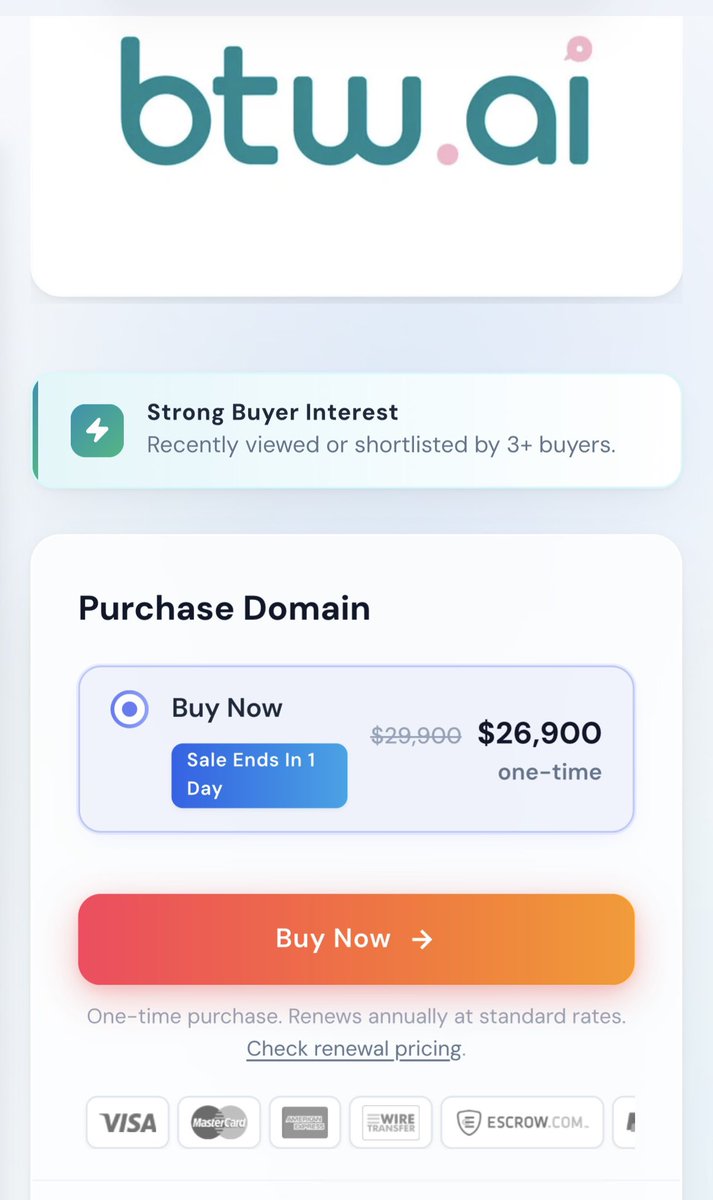
That is also why ultra-premium domain names sell for seven and eight figures.
A domain is just letters until it becomes the best possible identity for a company, category, or movement.
There are endless domain names, but there is only one https://t.co/YachDVkGzA, one https://t.co/gJ6LolJwPV, one https://t.co/3ojw62FLFX.
As someone who has brokered three of the top five domain name sales of all time, I have seen this firsthand.
The best assets are not valued by what they cost to create.
They are valued by what they mean to the right buyer.
#NBA #Knicks #SportsMemorabilia #DomainNames #DigitalAssets
I'm joining OpenAI next week!🥹 The job search turned out to be really challenging but also super rewarding, so I wrote a small blog to share what I learned along the way and hopefully make the process a little less mysterious for the next person. https://t.co/6FigSBdenD
I've started at @AnthropicAI this week, working with amazing folks in interpretability & alignment! Lots to learn, but excited to keep pushing on broader questions I care about at frontier scale: building AI systems to be coherent, interpretable, introspective, and aligned
Liquid trees are an experiment to work around lack of space in big cities: they contain 600 liter of water and work by using microalgae to bind CO₂ and produce pure oxygen through photosynthesis
[📹 nanaibrahim2023]
"From AGI to ASI": new paper from our team.
This report investigates how AI might develop beyond AGI. It describes theoretical limits, potential pathways, and potential bottlenecks.
https://t.co/x0ZEV2xhNw