A very common "SEO Wins":
1. Find a low-competition keyword.
2. Publish a content on Medium.
3. Link back to your main website.
4. Make 2/3 links for that Medium article.
5. Rank on the 1st page of Google.
Parasite SEO is still pure gold.
Just, do it correctly...
Most people will spend the next 12 months learning AI from random threads, YouTube videos, and overpriced courses.
Meanwhile, a Google engineer quietly dropped a 424-page handbook on Agentic AI for free.
This isn't beginner content.
It's the actual playbook behind:
→ Multi-Agent Systems
→ RAG
→ MCP
→ Memory Management
→ Planning & Routing
→ Tool Use
→ Evaluation & Monitoring
→ Production AI Architectures
The kind of resource that people will be referencing long after today's AI trends are forgotten.
I'm giving it away for free.
To get it:
1. Follow me
2. Like + Repost this post
3. Comment DOC
The smartest quants at Jane Street aren't smarter than you.
They just know how to use the Bloomberg Terminal the way institutional desks use it to extract real signal, this 1 hour lecture teaches you exactly that from scratch. Bookmark now.
A self-taught Quant just published the exact technique that separates real trading edge from data mining - permutation tests on backtested strategies in Python.
Quant Twitter quietly knows about him. Quants juniors send each other his videos in DMs.
Bookmark it tonight before the algorithm pushes him mainstream. Then read the article, I built the AI quant system that runs thousands of these tests per week.
This 1 hour Stanford lecture on Markov Decision Processes will teach you more about the math behind systematic trading decisions than a 3 month internship at Jane Street or JPMorgan.
Bookmark & replace one movie today with this lecture, then read the complete article below.
The most powerful YouTube growth hack nobody's using in 2026
How to take ONE established channel and build a $50K-$100K/month empire in 90 days by sending pre-qualified traffic to your new channels
This is how the big guys scale without relying on the algorithm 🧵👇🏼
Pakistan was especially beloved by our martyred Leader. I would like to urge that our two brotherly countries, #Afghanistan and #Pakistan, establish better relations with each other – if only for divine sake – and for my part, I am ready to take the necessary steps.
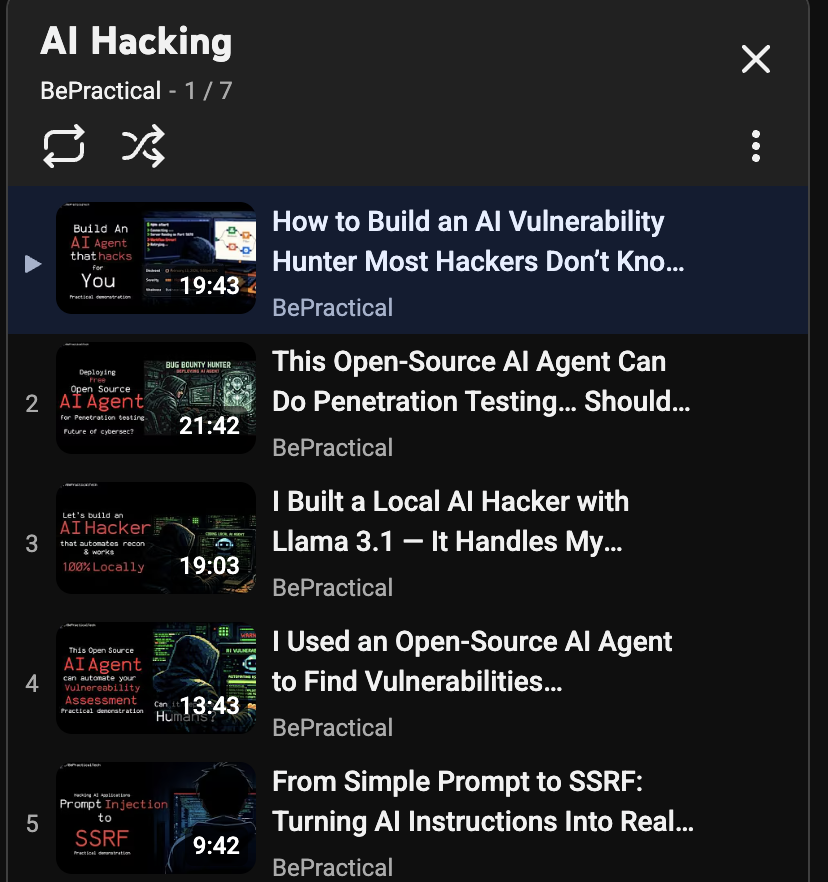
What if you could learn AI hacking and pentest automation — completely FREE?
On my YouTube channel, I’ve created multiple playlists where I break down practical cybersecurity topics step by step. One of them is my AI Hacking playlist, where I show:
• How AI applications can be hacked
• Common vulnerabilities in AI systems
• How to leverage AI to build pentesting automation
• How you can experiment and build these things without spending money
Everything is explained in a simple and practical way so anyone interested in cybersecurity can start exploring it.
If you’re curious about the future of AI + hacking, this playlist (and many others on the channel) might be helpful.
Check it here: https://t.co/ECpsW4f7Du
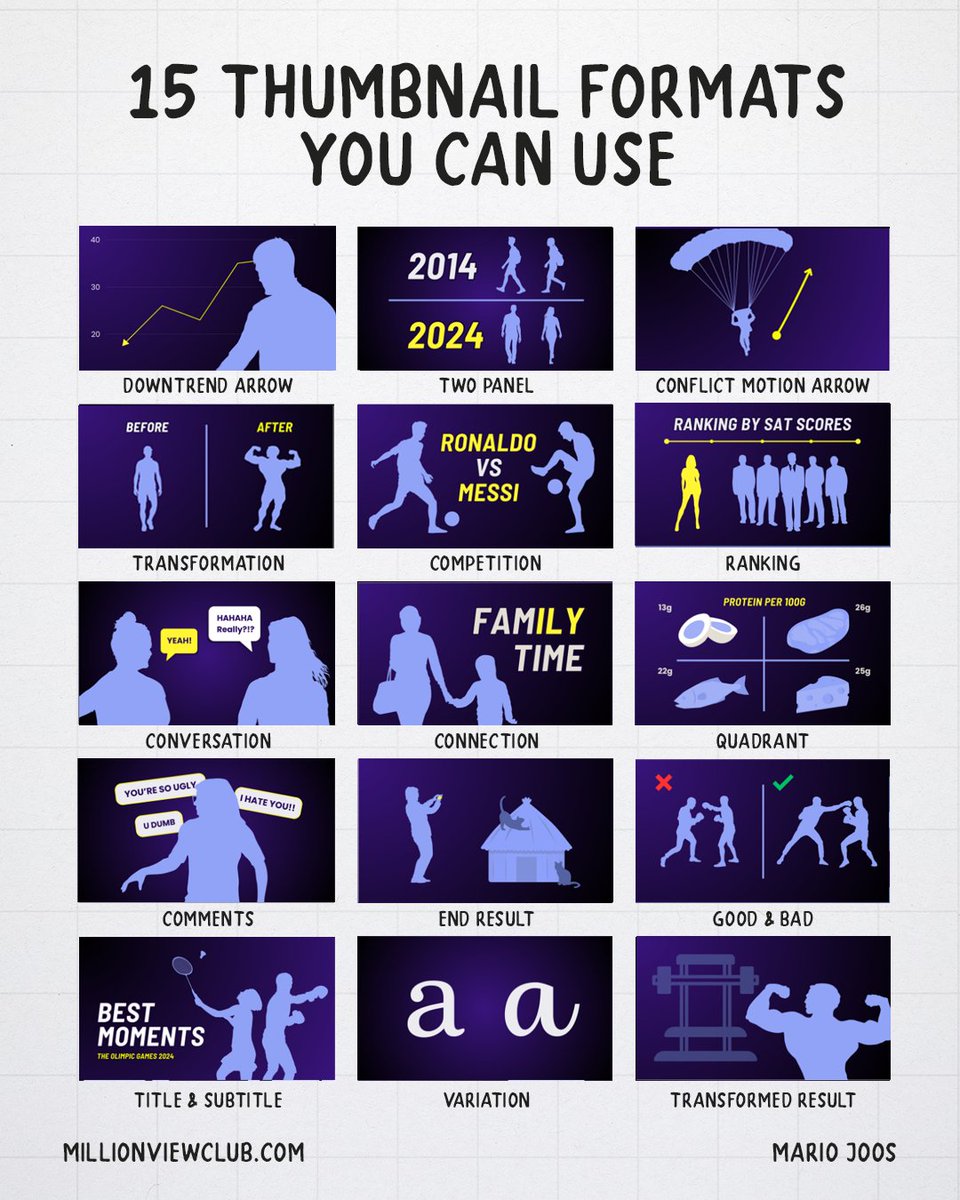
Here are 15 YouTube thumbnail formats you can use this year.
Thumbnails are so important for grabbing someone’s attention. They can create a promise, set a tone, or even give additional context that the title cannot provide. So my team and I analyzed thousands of thumbnails, grouping them by similarity.
1. Downtrend Arrow
This composition uses a downward arrow to clearly signal loss, decline, or failure. The viewer instantly understands that something went wrong without needing additional context. It works because people are sensitive to negative outcomes, so it creates curiosity around what caused the drop or how it can be avoided.
2. Two Panel (Vertical)
This composition shows two states side by side, usually to highlight a difference or comparison. It can be before vs after, past vs present, or two different options. The viewer immediately starts comparing the two, which reduces thinking effort and makes the message easy to process.
3. Conflict Motion Arrow
In this composition, we combine movement with tension. The arrow shows one direction, but the setup suggests another. The viewer understands what is happening, but not the outcome, which creates curiosity around the result.
4. Transformation
This composition shows a clear before-and-after change. The left side represents the starting point, while the right side shows the improved or altered version. It works because it promises progress, and viewers are naturally drawn to visible improvement or results.
5. Competition
This thumbnail places two subjects against each other, often with a clear “vs” dynamic. The viewer instantly understands that there will be a comparison or winner. It works because it creates tension and encourages the viewer to pick a side.
6. Ranking
This composition organizes subjects into a hierarchy, such as tiers, scores, or levels. The viewer quickly understands that something is being evaluated. It works because people are naturally curious about status, placement, and which option performs best.
7. Conversation
In this composition, two people are interacting, often with a short statement or reaction. Unlike a question-based format, this focuses more on opinion or exchange. It works because it mirrors real-life interactions and makes the viewer feel like they are observing a conversation.
8. Connection
This composition highlights a relationship between people, objects, or ideas. The focus is on how things are linked rather than opposed. It works because viewers are naturally curious about how different elements connect or influence each other.
9. Quadrant
This composition divides the frame into four sections, each showing a different variation or category. The viewer can quickly scan multiple options at once. It works because it organizes information into a simple system, making complex ideas easier to understand.
10. Comments
This thumbnail uses comments or reactions as the main focus. The text usually represents opinions, criticism, or feedback. It works because viewers are curious about what others are saying, especially when the comments are emotional or extreme.
11. End Result
This composition shows only the final outcome without revealing how it was achieved. The viewer sees the result but not the process behind it. It works because it creates a gap between outcome and method.
12. Good & Bad
This composition clearly separates what is right and what is wrong. One side is presented as correct, while the other is shown as incorrect. It works because it removes ambiguity and promises a clear answer or guidance.
13. Title & Subtitle
This composition relies more heavily on text, with a main statement supported by a secondary line. It works because it allows more precise communication while still using visuals to grab attention.
14. Variation
This composition shows small differences between similar elements. The changes are often subtle. It works because the brain is naturally drawn to spotting differences.
15. Transformed Result
This composition focuses on the final upgraded version of something, often showing an extreme or impressive result. Unlike a standard transformation, the emphasis is more on the outcome than the process. It works because it highlights the reward, which then attracts viewers interested in achieving a similar result.
There are many types of thumbnails, and categorizing them into simple compositions or formats isn’t easy. Still, this framework gives us a starting point to understand what we can experiment with during thumbnail A-B testing.
Tehran tonight. Western media and Elon’s algorithm don’t want you to see how the US and Israel are carpet bombing civilian areas. This is what terrorism looks like
Spain's responsible conduct in opposing the Zionist-American coalition's flagrant human rights violations and military aggression against countries, including Iran, shows that ethics and awakened consciences still exist in the West.
I commend Spanish officials for their stances.
🚨 Someone just turned your WiFi router into a full-body surveillance system.
No cameras. No wearables. No video. Just radio waves.
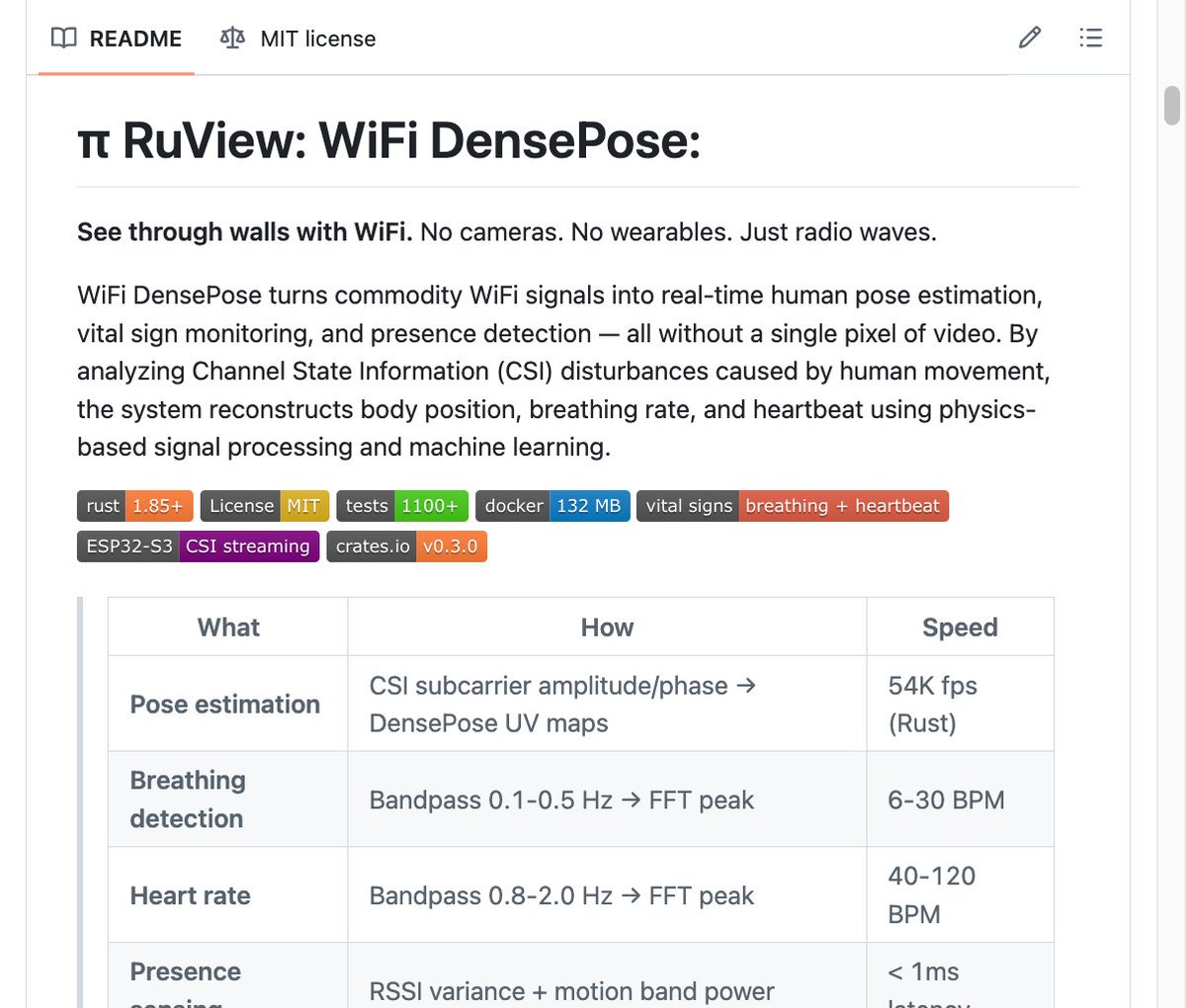
It's called RuView. It uses the WiFi signals already in your room to detect human poses, track breathing, measure heart rate, and see through walls.
Not a concept. Not a research paper. Working code you can run right now.
Here's what this thing actually does:
→ Tracks full 17-point body pose using only WiFi signals
→ Detects breathing rate (6-30 BPM) without touching anyone
→ Measures heart rate (40-120 BPM) from across the room
→ Sees through walls, furniture, and debris up to 5 meters deep
→ Tracks multiple people simultaneously with zero identity swaps
→ Self-learns from raw WiFi data. No labeled datasets needed
Here's how it works:
WiFi signals pass through your room and hit the human body. The body scatters those signals differently based on position, breathing, even heartbeat. RuView reads that scattering pattern and reconstructs everything.
A mesh of 4 ESP32 nodes ($48 total) gives you 360-degree coverage with 12 measurement links, 20 Hz updates, and sub-30mm precision.
Here's the wildest part:
It has a disaster response mode called WiFi-Mat. It detects survivors trapped under rubble through concrete walls, classifies injury severity using START triage protocol, and estimates 3D position. The kind of tool that saves lives after earthquakes.
The Rust implementation processes 54,000 frames per second. That's 810x faster than the Python version. The entire Docker image is 132 MB.
The AI model fits in 55 KB of memory. Runs on an $8 ESP32 chip.
Train once, deploy in any room. No retraining. No recalibration.
1,100+ tests. SHA-256 verified capability audit.
22.4K GitHub stars. 2.7K forks. MIT License.
100% Open Source.
Bombing Iran in the middle of negotiations, while starving Cuba, while genociding Palestinians, while threatening to invade Greenland… the US and Israel are the single greatest threat to humanity and it’s not even close. We are all forced to live in the nightmare they create.