🔘 \\ DOW-UAP-PR116, Unresolved UAP Report
▶️ SPID Design Analysis
This fourth batch of UFO files, DOW-UAP-PR116, released by the U.S. Department of War on 2026.07.10, has blown up many websites!
Why is the alien craft so bizarre and seemingly malicious?
If read and analyzed carefully, it should be a terrible misunderstanding! There are many techniques to distinguish the authenticity of UFO videos and photos, especially for alien technology crafts—namely, the craft's configuration, flight mode, flight speed, flight attitude, and reasonable flight angles.
Therefore, the introduction mentions : ”It also describes the phenomenon as appearing similar to a “large, somewhat deformed balloon.”
The submitted written eyewitness report states : 「The object itself was a darker, maroonish color, approximately 12-15ft in height. Structurally, it appeared as a large, somewhat deformed balloon, but we were unable to verify that as we passed at the merge.」
In the last century, fake UFOs of the so-called "summonable" variety were created by releasing balloons from a distance. The biggest giveaway was their slow drifting with the wind. Because it is difficult for current human technology to make a large, round object move without visible propulsion.
In recent years, many CGI-synthesized UFOs have been poorly faked. A common characteristic is their extremely high complexity and asymmetrical balance. This violates the principles of flight design and high-tech logic, resulting in engineering flaws
. This particular UFO is likely an intentional hoax—multiple balloons stuffed into a bizarrely shaped box. Its slow speed, drifting just like a balloon, is another dead giveaway.
▶️ \\ DOW-UAP-PR116, Unresolved UAP Report
https://t.co/t98prHLWH8
https://t.co/ugVfQSWWSh
.
📋 [Release 04] DOW-UAP-D091, Range Fouler Debrief, Atlantic Ocean, 2020 [.pdf]
https://t.co/5BD2VsIQcF
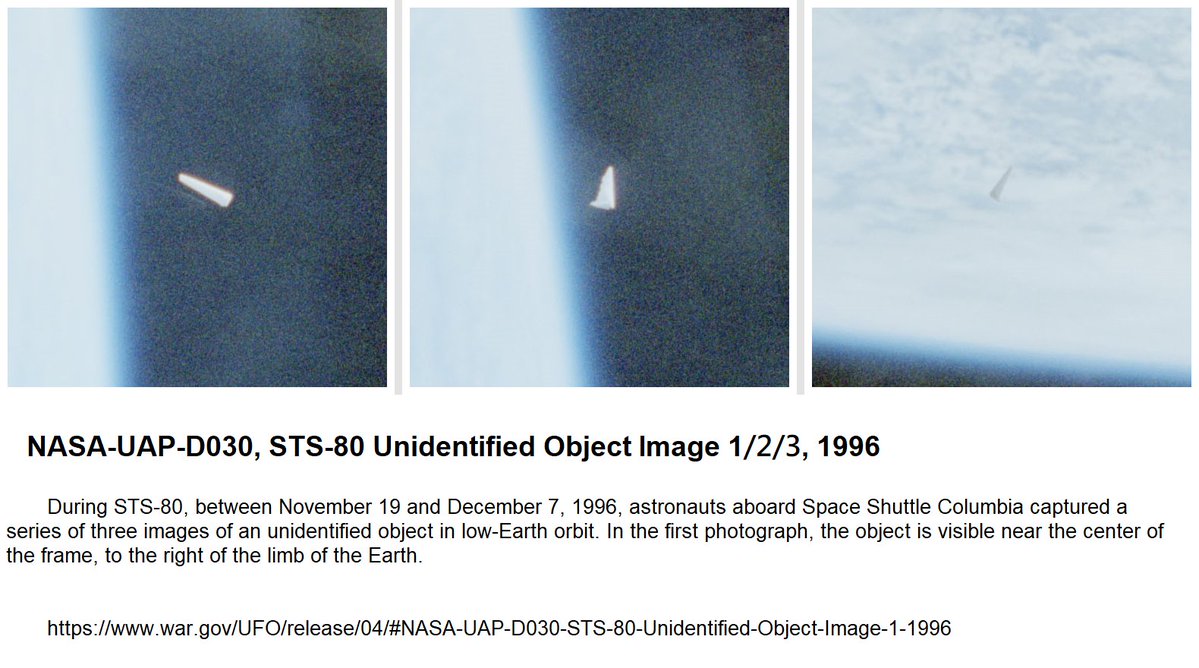
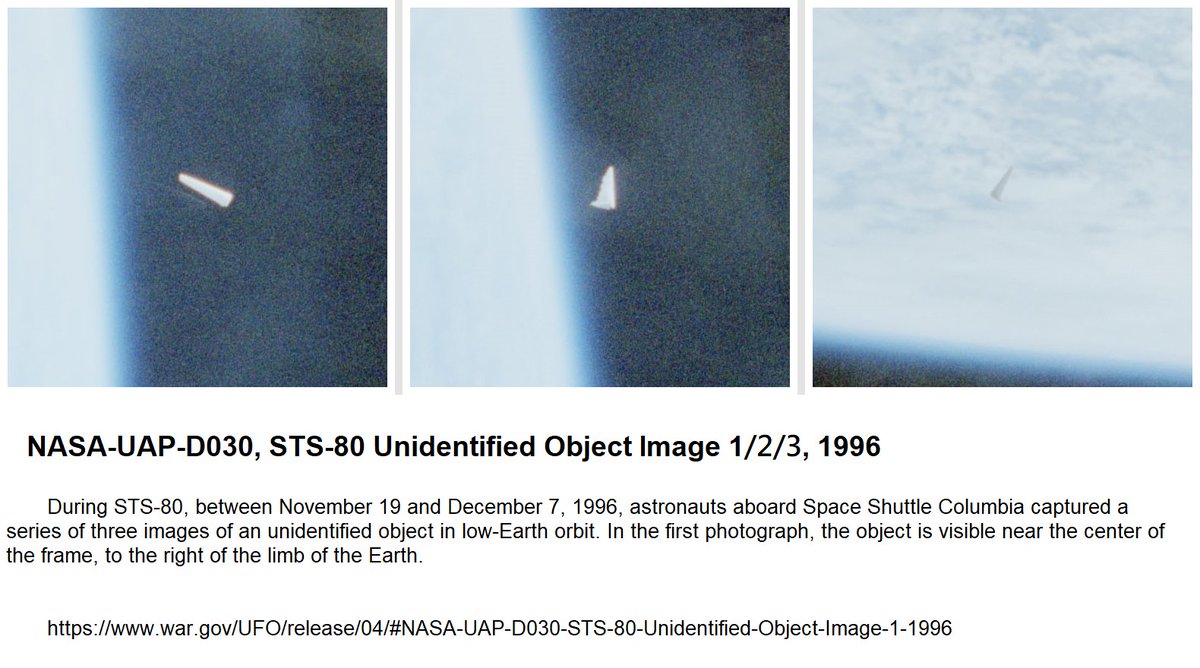
NASA-UAP-D030, STS-80 Unidentified Object Image 1, 1996
During STS-80, between November 19 and December 7, 1996, astronauts aboard Space Shuttle Columbia captured a series of three images of an unidentified object in low-Earth orbit. In the first photograph, the object is visible near the center of the frame, to the right of the limb of the Earth.
https://t.co/9OH05v6hbj
"Happy 250th Birthday, America! It’s time for NASA to finally stop lying to the public about UFOs and aliens, starting today."
@elonmusk I hope to return to the United States before I die (I'm too old, so the chances are slim). If I have the opportunity, SpaceX will be a key destination for my visit!
🔘 The U.S. Department of War Releases the Fourth Batch of UFO Files
https://t.co/l1HdAUpJYn
Representative Screenshot on the Explanation Page: P. 35 / 45
▶️ SPID Design Analysis
Based on my personal research into "flying wings," the third chapter of the fourth batch of UFO files released by the U.S. Department of War selects the flying wing in this photo as a representative example; however, there is actually no textual explanation or annotation provided in the file itself.
P. 35 / 45 Image: Man-made research object.
P. 34 / 45 Image: UFO.
Regarding the P. 35 / 45 Image: This appears to be a ground-based mock-up from human research on flying wings. It is incapable of flight due to the lack of any noticeable propulsion design.
However, it is observable that there is a protrusion in the center with a transparent front section, which likely indicates the cockpit location. With no power source and no visible control surfaces, attempting to tow this into the sky as a glider would make for a highly dangerous experimental flight. This is because the tailless nature of a flying wing configuration makes it impossible to effectively control flight stability. Unless it involves high-level alien technology—even considering several flying wing models among U.S. military aircraft—human technology has not yet reached the advanced state of extraterrestrial technology.
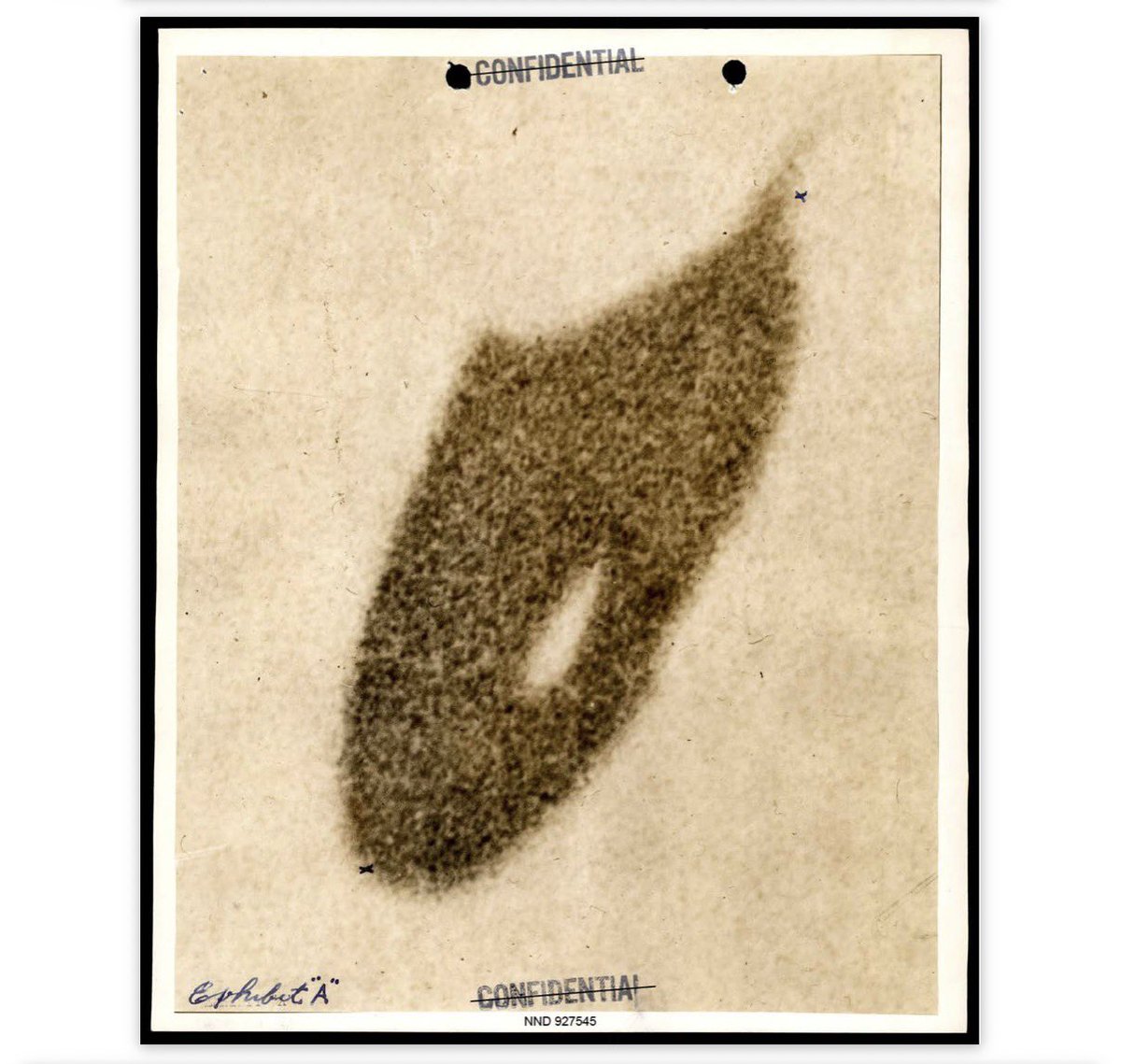
Regarding P. 34 / 45: The photo taken in 1948 is authentic. There is no way such an airborne craft could have existed back then unless it belonged to high-tech extraterrestrials. Furthermore, it appears to have been deployed for earth-based missions, much like the flying wing craft from the 1947 Roswell UFO incident, though the two have different designs, and this particular craft is even more advanced.
.
.
📋 Regarding the Photo Explanation: AI Text Recognition (OCR)
▶️ P. 33 / 45
CONFIDENTIAL
Identification of Subject Matter (as per sample)
MCIA / MCIT19 Feb 48
1. Reference is made to the films taken by Mr. Rhoades (Incident #40) which were forwarded for examination. The following data were derived from a study of the specimen:
a. It is concluded that the image is of true photographic nature, and is not due to imperfections in the emulsion, or lack of development in the section in question. The image exhibits a "tail" indicating the proper type of distortion due to the type of shutter used, the speed of the object and the fixed speed of the shutter. This trailing off conforms to the general information given in the report.
b. The report states the object was seen at approximately 2000 feet at the time of exposure. The observer also reports being able to see clearly a canopy of enclosure. The visual acuity of an average person would allow for this perception, but certainly not much further as the subject had low visual contrast, being gray against a gray sky. If we can establish the distance from camera to subject, we will have quantity #1. The report states that a 620 camera was used, indicating several possibilities, since the 620 is nomenclature for the spooling and width of the film we may have negatives 2 1/4" x 2 1/4", 2 1/4" x 3 1/4" and 2 1/4" x 4 1/4". The sample submitted had been cut and it was not possible to establish the exact frame size. The 2 1/4" x 2 1/4" size was ruled out, leaving 2 1/4" x 3 1/4" and 2 1/4" x 4 1/4". If it were the former, then the focal length of the lens would be 4", and using 2000 feet as the approximate subject distance and the image size at 7/64", we have an approximate size of 44 feet as the diagonal of the object. Now if we choose the latter value of 5" for focal length, we have an approximate value of 55' for the diagonal. Points of measurement are indicated from x to x on Exhibit "A".
📋 Download
https://t.co/JlBP5Y9ama
🔘 MQ-25 WIKI
The United States Navy began its efforts to develop an aircraft carrier-based UAV in 2006. The original UCLASS concept was for a stealthy strike platform capable of penetrating enemy air defenses. In 2012, lethality and strike requirements were diluted in order to create an intelligence, surveillance and reconnaissance (ISR)-oriented aircraft that could be developed quickly to conduct low-intensity counter-terrorism missions.[2]
....
Northrop Grumman announced on 25 October 2017 that it was withdrawing its X-47B from the MQ-25 competition, saying the company would have been unable to execute the program under the terms of the service's request for proposals.[16] The company's departure signaled to some analysts that the Navy's requirements could favor wing-body-tail designs, not the flying wings thought to be proposed by Northrop Grumman and Lockheed Martin.[13]
https://t.co/T6CZSVB56E
.
.
⏹️ Modified X-47B Breaks Cover As Testbed For MQ-25 Bid
August 12, 2017
https://t.co/0snlIv9v8E
📸 https://t.co/DM6Vz3RRF8
Credit: Anonymous
🔘 SPID Design Analysis
The LM C-130 has always been a legend in military transport aircraft spanning centuries! However, it's quite puzzling and perplexing that, given the LM's military aircraft design and technology, modern designs should have been incorporated into the C-130's nose and cockpit. I personally believe that propeller-driven transport aircraft will remain irreplaceable in the future! A significantly improved and upgraded C-130X would undoubtedly attract even more business opportunities.
🔘 About Northrop Grumman X-47B
▶️ SPID Design Analysis
It is definitely a very excellent aircraft. It is quite a pity that it was discontinued after the completion of its experiments.
The critical issue lies in three major problems with the flying wing design. The attached image is one of the illustrations from a US patent application for a "stealth wing" in 2018 (USPTO US 10773791 B2). It demonstrates a design that turns into an unmanned aerial refueling tanker after attaching the "stealth wing," which is different from NG's (Northrop Grumman's) design.
.
.
🔖 Design Issues of Flying Wing Aircraft
2021. 04.06.
▶️ Analysis from 5 Years Ago
📌 Figure 20 of the patent diagram, taking a stealth unmanned refueling tanker as an example; the IDF fighter jet is in the bottom right corner.
During the application period for the US patent in July 2018, it happened to coincide with the design review and evaluation of the US MQ-25 stealth drone. Therefore, the designs of LM (Lockheed Martin) MQ-25 and NG X-47B were added for explanatory purposes.
.
📍 Northrop Grumman modified an actual X-47B aircraft in preparation to participate in the bidding. However, due to insider information revealing that a winner had already been predetermined, they ultimately declared their withdrawal and did not participate.
📹 https://t.co/XOtXcBWnt9
.
📍 Lockheed Martin proposed a stealth flying wing aircraft design. Since there was no physical aircraft built, only illustrations and videos are available.
📹 https://t.co/r22fz900CV
.
📍 In the end, Boeing's conventional configuration won the bid (opting for a safe and stable design, which conversely reduced the requirements for stealth).
📹 https://t.co/QiDTRnsRvh
OTD in 2013: The first arrested landing at sea by an unmanned aircraft was completed aboard USS George H.W. Bush (CVN 77) by Northrop Grumman’s X-47B Unmanned Combat Air System (UCAS) "Salty Dog" 502.
🔘 About Northrop Grumman X-47B
▶️ SPID Design Analysis
It is definitely a very excellent aircraft. It is quite a pity that it was discontinued after the completion of its experiments.
The critical issue lies in three major problems with the flying wing design. The attached image is one of the illustrations from a US patent application for a "stealth wing" in 2018 (USPTO US 10773791 B2). It demonstrates a design that turns into an unmanned aerial refueling tanker after attaching the "stealth wing," which is different from NG's (Northrop Grumman's) design.
.
.
🔖 Design Issues of Flying Wing Aircraft
2021. 04.06.
▶️ Analysis from 5 Years Ago
📌 Figure 20 of the patent diagram, taking a stealth unmanned refueling tanker as an example; the IDF fighter jet is in the bottom right corner.
During the application period for the US patent in July 2018, it happened to coincide with the design review and evaluation of the US MQ-25 stealth drone. Therefore, the designs of LM (Lockheed Martin) MQ-25 and NG X-47B were added for explanatory purposes.
📍 Northrop Grumman modified an actual X-47B aircraft in preparation to participate in the bidding. However, due to insider information revealing that a winner had already been predetermined, they ultimately declared their withdrawal and did not participate.
📹 https://t.co/XOtXcBWnt9
📍 Lockheed Martin proposed a stealth flying wing aircraft design. Since there was no physical aircraft built, only illustrations and videos are available.
📹 https://t.co/r22fz900CV
📍 In the end, Boeing's conventional configuration won the bid (opting for a safe and stable design, which conversely reduced the requirements for stealth).
📹 https://t.co/QiDTRnsRvh
🔖 Design Issues of Flying Wing Stealth Fighters
2019.10.29.
▶️ An analysis from 7 years ago
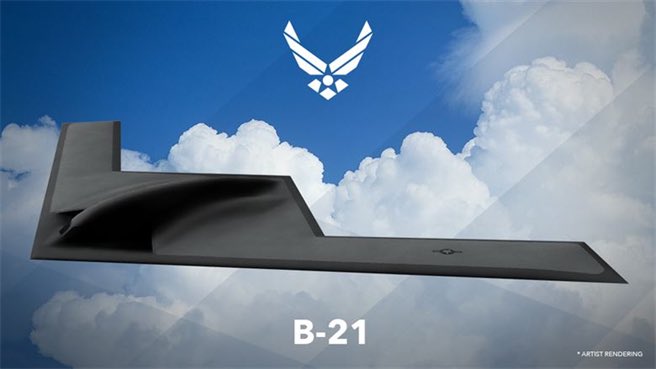
The development delays of the US B-21 and China’s H-20, these two new flying wing stealth bombers, come as no surprise.
Even though 30 years have passed since the B-2's successful maiden flight on July 17, 1989, there are still unresolved problems in flight physics to this day. The "Flying Wing" design (without a vertical tail) adopted by the B-2 currently suffers from three major problems that the US military keeps classified, undisclosed, and will not admit to: it can only fly at subsonic speeds, safety and control issues, and combat mission execution issues.
Even Northrop, an expert that has built many flying wing aircraft across different eras, and despite receiving assistance from MIT (Massachusetts Institute of Technology) for the B-2 back then, remains completely helpless and without solutions to the actual problems today! China's H-20 adopts the addition of winglets to stabilize flight and control, but this is not a truly perfect solution.
Since Hugo Junkers applied for a patent for the flying wing in 1910, 3 out of the accumulated problems have remained unresolved for 109 years. It is believed that countermeasures were found in another MIT mechanical design patent in 2018, which might perhaps be introduced first into the two stealth bombers, the B-21 and H-20, for real-aircraft validation. This "stealth wing" ( USPTO US 10773791 B2 ) was designed by a Taiwanese person, and theoretically, it can absolutely pass the test of computer flight simulations.
Furthermore, the design issues of flying wing aircraft (without a vertical tail) have been encountered once again by America's three major military aircraft manufacturers—Boeing, Lockheed Martin, and Northrop Grumman—in their development of sixth-generation stealth fighters.
.
.
🔘 SPID Design Analysis
.
■ The Three Major Problems of Flying Wing Aircraft Design
Why is it that from 1908, since the first German applied for a patent for a flying wing aircraft, up until 2018—
Flying wing aircraft without a vertical tail possess three major problems, and the key is the absence of a tail wing to stabilize the fuselage.
▶ 1. Inability to achieve supersonic flight.
The B-2 bomber can only fly at subsonic speeds, and the B-21 will inevitably be the same.
▶ 2. It is only safe under good weather conditions.
Stability is poor in harsh weather, as there will be control conflicts between the wing-surface directional control surfaces and maintaining fuselage stability.
▶ 3. Inability to perform agile combat flight, and effectively evade pursuit by fighter jets and missiles in enemy combat zones.
When the control surfaces of a flying wing aircraft are raised, they create an alternative form of drag during high-speed straight-line flight or turns.
🔖 Design Issues of Flying Wing Stealth Fighters
2019.10.29.
▶️ An analysis from 7 years ago
The development delays of the US B-21 and China’s H-20, these two new flying wing stealth bombers, come as no surprise.
Even though 30 years have passed since the B-2's successful maiden flight on July 17, 1989, there are still unresolved problems in flight physics to this day. The "Flying Wing" design (without a vertical tail) adopted by the B-2 currently suffers from three major problems that the US military keeps classified, undisclosed, and will not admit to: it can only fly at subsonic speeds, safety and control issues, and combat mission execution issues.
Even Northrop, an expert that has built many flying wing aircraft across different eras, and despite receiving assistance from MIT (Massachusetts Institute of Technology) for the B-2 back then, remains completely helpless and without solutions to the actual problems today! China's H-20 adopts the addition of winglets to stabilize flight and control, but this is not a truly perfect solution.
Since Hugo Junkers applied for a patent for the flying wing in 1910, 3 out of the accumulated problems have remained unresolved for 109 years. It is believed that countermeasures were found in another MIT mechanical design patent in 2018, which might perhaps be introduced first into the two stealth bombers, the B-21 and H-20, for real-aircraft validation. This "stealth wing" ( USPTO US 10773791 B2 ) was designed by a Taiwanese person, and theoretically, it can absolutely pass the test of computer flight simulations.
Furthermore, the design issues of flying wing aircraft (without a vertical tail) have been encountered once again by America's three major military aircraft manufacturers—Boeing, Lockheed Martin, and Northrop Grumman—in their development of sixth-generation stealth fighters.
.
.
🔘 SPID Design Analysis
.
■ The Three Major Problems of Flying Wing Aircraft Design
Why is it that from 1908, since the first German applied for a patent for a flying wing aircraft, up until 2018—
Flying wing aircraft without a vertical tail possess three major problems, and the key is the absence of a tail wing to stabilize the fuselage.
▶ 1. Inability to achieve supersonic flight.
The B-2 bomber can only fly at subsonic speeds, and the B-21 will inevitably be the same.
▶ 2. It is only safe under good weather conditions.
Stability is poor in harsh weather, as there will be control conflicts between the wing-surface directional control surfaces and maintaining fuselage stability.
▶ 3. Inability to perform agile combat flight, and effectively evade pursuit by fighter jets and missiles in enemy combat zones.
When the control surfaces of a flying wing aircraft are raised, they create an alternative form of drag during high-speed straight-line flight or turns.
▶️ SPID Design Analysis
If the F-47's wings were to adopt an arrow-shaped design, it wouldn't be surprising, as it would resemble the design of the X-36 from 1997.
The key reason for returning to a traditional design instead of a delta wing is that it encounters a problem inherent in tailless designs. Breaking the sound barrier (reducing drag) is one challenge, but flight stability remains a crucial issue...
Analysis of tailless fighter designs reveals that flying wing aircraft face three major problems, a solution mentioned in a US patent application.
The F-47 only solves part of the problem; increasing speed is not a complete solution.
Adding canards increases agility in air combat. Once in this combat mode, radar stealth becomes more important than anything else, making it an absolutely necessary design element.
The image shows a concept drawing of Boeing's F/A-XX from many years ago. This was Boeing's past vision of a sixth-generation stealth fighter.
🔘 China learns from SpaceX rocket recovery
1. It's fair to say that a good design will inevitably attract study and imitation. The same applies to the world of patents. Your design may inspire others to improve and refine it. The 20-year protection of a patent is intended to prevent good designs from being monopolized, thus hindering future learning and use.
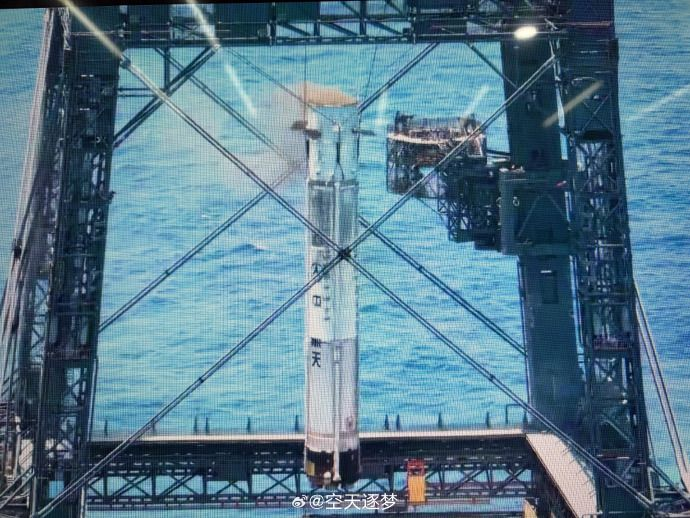
2. From a technical perspective, this sea-based recovery device uses a hollow protective frame. Once the recovered rocket lands inside the frame, even if it tilts, it won't fall into the sea. There must also be a remote-controlled pre-shutdown step. This can be seen as an experimental verification method, which should be removed when the technology matures.
3. However, it's worth observing SpaceX's ground-based recovery station's clamp-wall auxiliary design; there should be even better improvement plans… Let's wait and see!
🔘 China learns from SpaceX rocket recovery
▶️ SPID Design Analysis
1. It's fair to say that a good design will inevitably attract study and imitation. The same applies to the world of patents. Your design may inspire others to improve and refine it. The 20-year protection of a patent is intended to prevent good designs from being monopolized, thus hindering future learning and use.
2. From a technical perspective, this sea-based recovery device uses a hollow protective frame. Once the recovered rocket lands inside the frame, even if it tilts, it won't fall into the sea. There must also be a remote-controlled pre-shutdown step. This can be seen as an experimental verification method, which should be removed when the technology matures.
3. However, it's worth observing SpaceX's ground-based recovery station's clamp-wall auxiliary design; there should be even better improvement plans… Let's wait and see!
China's Long March 10B demo successfully completed stage separation before the first-stage booster was caught by a barge off China's coast.
This marks China's first successful reusable booster recovery, joining SpaceX and Blue Origin in achieving the feat.
🔘 China learns from SpaceX rocket recovery
▶️ SPID Design Analysis
1. It's fair to say that a good design will inevitably attract study and imitation. The same applies to the world of patents. Your design may inspire others to improve and refine it. The 20-year protection of a patent is intended to prevent good designs from being monopolized, thus hindering future learning and use.
2. From a technical perspective, this sea-based recovery device uses a hollow protective frame. Once the recovered rocket lands inside the frame, even if it tilts, it won't fall into the sea. There must also be a remote-controlled pre-shutdown step. This can be seen as an experimental verification method, which should be removed when the technology matures.
3. However, it's worth observing SpaceX's ground-based recovery station's clamp-wall auxiliary design; there should be even better improvement plans… Let's wait and see!
🔘 China learns from SpaceX rocket recovery
▶️ SPID Design Analysis
1. It's fair to say that a good design will inevitably attract study and imitation. The same applies to the world of patents. Your design may inspire others to improve and refine it. The 20-year protection of a patent is intended to prevent good designs from being monopolized, thus hindering future learning and use.
2. From a technical perspective, this sea-based recovery device uses a hollow protective frame. Once the recovered rocket lands inside the frame, even if it tilts, it won't fall into the sea. There must also be a remote-controlled pre-shutdown step. This can be seen as an experimental verification method, which should be removed when the technology matures.
3. However, it's worth observing SpaceX's ground-based recovery station's clamp-wall auxiliary design; there should be even better improvement plans… Let's wait and see!
🔘 China learns from SpaceX rocket recovery
▶️ SPID Design Analysis
1. It's fair to say that a good design will inevitably attract study and imitation. The same applies to the world of patents. Your design may inspire others to improve and refine it. The 20-year protection of a patent is intended to prevent good designs from being monopolized, thus hindering future learning and use.
2. From a technical perspective, this sea-based recovery device uses a hollow protective frame. Once the recovered rocket lands inside the frame, even if it tilts, it won't fall into the sea. There must also be a remote-controlled pre-shutdown step. This can be seen as an experimental verification method, which should be removed when the technology matures.
3. However, it's worth observing SpaceX's ground-based recovery station's clamp-wall auxiliary design; there should be even better improvement plans… Let's wait and see!
🔘 SPID Design Analysis
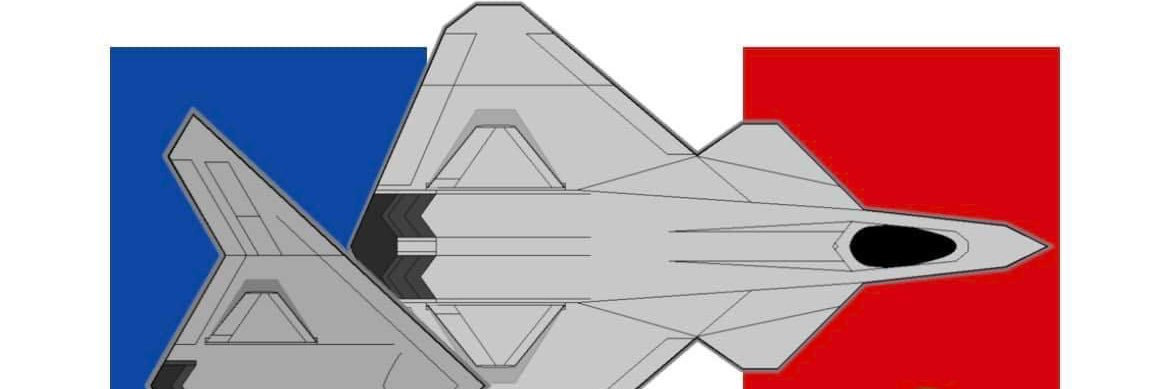
The YF-23, which first flew in 1990, was an outstanding design of its time, but unfortunately, its airframe was too large. Today, its configuration could be evolved and improved while retaining some of its advantages. However, this would amount to a major overhaul, as shown in the right image.
Northrop did not produce its best 1988 NATF naval carrier-based aircraft design (left image). It is speculated that several factors contributed to this setback, including the US Air Force's unacceptability of the delta wing and canard design of European fighter jets, as well as some controversial design details, such as the serrated V-tail. (Northrop and Grumman merged in 1994).
The YF-23's V-wing would appear outdated if used in the 2019 FCAS, because sixth-generation stealth fighters feature a tailless design—a generational shift in fighter jet design!


![id21sp's tweet photo. 🔘 \\ DOW-UAP-PR116, Unresolved UAP Report
▶️ SPID Design Analysis
This fourth batch of UFO files, DOW-UAP-PR116, released by the U.S. Department of War on 2026.07.10, has blown up many websites!
Why is the alien craft so bizarre and seemingly malicious?
If read and analyzed carefully, it should be a terrible misunderstanding! There are many techniques to distinguish the authenticity of UFO videos and photos, especially for alien technology crafts—namely, the craft's configuration, flight mode, flight speed, flight attitude, and reasonable flight angles.
Therefore, the introduction mentions : ”It also describes the phenomenon as appearing similar to a “large, somewhat deformed balloon.”
The submitted written eyewitness report states : 「The object itself was a darker, maroonish color, approximately 12-15ft in height. Structurally, it appeared as a large, somewhat deformed balloon, but we were unable to verify that as we passed at the merge.」
In the last century, fake UFOs of the so-called "summonable" variety were created by releasing balloons from a distance. The biggest giveaway was their slow drifting with the wind. Because it is difficult for current human technology to make a large, round object move without visible propulsion.
In recent years, many CGI-synthesized UFOs have been poorly faked. A common characteristic is their extremely high complexity and asymmetrical balance. This violates the principles of flight design and high-tech logic, resulting in engineering flaws
. This particular UFO is likely an intentional hoax—multiple balloons stuffed into a bizarrely shaped box. Its slow speed, drifting just like a balloon, is another dead giveaway.
▶️ \\ DOW-UAP-PR116, Unresolved UAP Report
https://t.co/t98prHLWH8
https://t.co/ugVfQSWWSh
.
📋 [Release 04] DOW-UAP-D091, Range Fouler Debrief, Atlantic Ocean, 2020 [.pdf]
https://t.co/5BD2VsIQcF](https://pbs.twimg.com/media/HM7fcpMaUAA_ctO.jpg)
![id21sp's tweet photo. 🔘 \\ DOW-UAP-PR116, Unresolved UAP Report
▶️ SPID Design Analysis
This fourth batch of UFO files, DOW-UAP-PR116, released by the U.S. Department of War on 2026.07.10, has blown up many websites!
Why is the alien craft so bizarre and seemingly malicious?
If read and analyzed carefully, it should be a terrible misunderstanding! There are many techniques to distinguish the authenticity of UFO videos and photos, especially for alien technology crafts—namely, the craft's configuration, flight mode, flight speed, flight attitude, and reasonable flight angles.
Therefore, the introduction mentions : ”It also describes the phenomenon as appearing similar to a “large, somewhat deformed balloon.”
The submitted written eyewitness report states : 「The object itself was a darker, maroonish color, approximately 12-15ft in height. Structurally, it appeared as a large, somewhat deformed balloon, but we were unable to verify that as we passed at the merge.」
In the last century, fake UFOs of the so-called "summonable" variety were created by releasing balloons from a distance. The biggest giveaway was their slow drifting with the wind. Because it is difficult for current human technology to make a large, round object move without visible propulsion.
In recent years, many CGI-synthesized UFOs have been poorly faked. A common characteristic is their extremely high complexity and asymmetrical balance. This violates the principles of flight design and high-tech logic, resulting in engineering flaws
. This particular UFO is likely an intentional hoax—multiple balloons stuffed into a bizarrely shaped box. Its slow speed, drifting just like a balloon, is another dead giveaway.
▶️ \\ DOW-UAP-PR116, Unresolved UAP Report
https://t.co/t98prHLWH8
https://t.co/ugVfQSWWSh
.
📋 [Release 04] DOW-UAP-D091, Range Fouler Debrief, Atlantic Ocean, 2020 [.pdf]
https://t.co/5BD2VsIQcF](https://pbs.twimg.com/media/HM7fcpIboAAE1fN.jpg)






![id21sp's tweet photo. 🔘 \\ DOW-UAP-PR116, Unresolved UAP Report
▶️ SPID Design Analysis
This fourth batch of UFO files, DOW-UAP-PR116, released by the U.S. Department of War on 2026.07.10, has blown up many websites!
Why is the alien craft so bizarre and seemingly malicious?
If read and analyzed carefully, it should be a terrible misunderstanding! There are many techniques to distinguish the authenticity of UFO videos and photos, especially for alien technology crafts—namely, the craft's configuration, flight mode, flight speed, flight attitude, and reasonable flight angles.
Therefore, the introduction mentions : ”It also describes the phenomenon as appearing similar to a “large, somewhat deformed balloon.”
The submitted written eyewitness report states : 「The object itself was a darker, maroonish color, approximately 12-15ft in height. Structurally, it appeared as a large, somewhat deformed balloon, but we were unable to verify that as we passed at the merge.」
In the last century, fake UFOs of the so-called "summonable" variety were created by releasing balloons from a distance. The biggest giveaway was their slow drifting with the wind. Because it is difficult for current human technology to make a large, round object move without visible propulsion.
In recent years, many CGI-synthesized UFOs have been poorly faked. A common characteristic is their extremely high complexity and asymmetrical balance. This violates the principles of flight design and high-tech logic, resulting in engineering flaws
. This particular UFO is likely an intentional hoax—multiple balloons stuffed into a bizarrely shaped box. Its slow speed, drifting just like a balloon, is another dead giveaway.
▶️ \\ DOW-UAP-PR116, Unresolved UAP Report
https://t.co/t98prHLWH8
https://t.co/ugVfQSWWSh
.
📋 [Release 04] DOW-UAP-D091, Range Fouler Debrief, Atlantic Ocean, 2020 [.pdf]
https://t.co/5BD2VsIQcF](https://pbs.twimg.com/media/HM7fcpMbYAAgZho.jpg)