#MoneyIsMoving
The @cityofharare2 is offering 🫴 investors the following property opportunities.
What grabs your eye ?
What can I assist with ?
Is Harare home for your money 💰?
We recently visited a tannery in Bulawayo, Zimbabwe, where we learnt about turning raw hide into leather. Here is a short video thread taking you through the process. #WednesdayWisdom
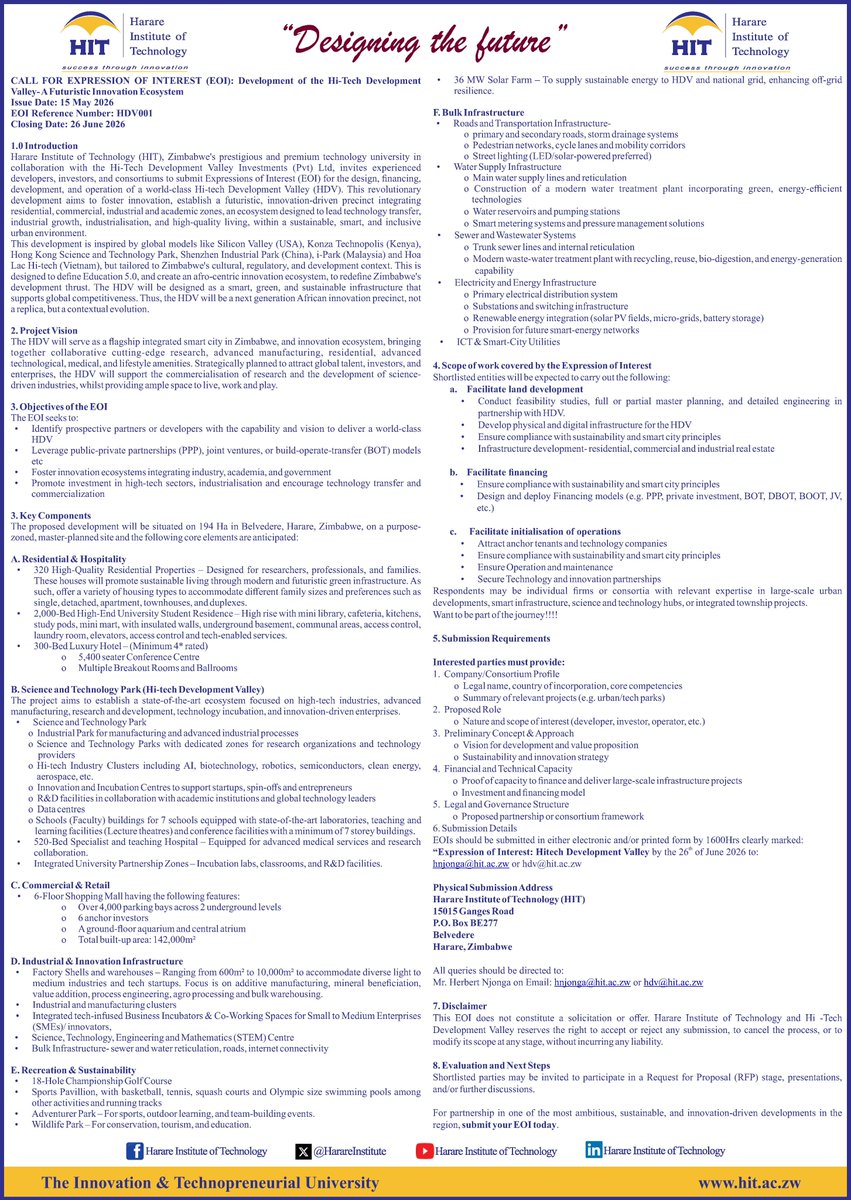
Zimbabwe's most ambitious innovation project is open for partners. @HarareInstitute's Hi-Tech Development Valley invites developers, investors, & consortiums to submit an EOI for the Hi-Tech Development Valley (HDV); 194 Ha of smart city, science park, industry & lifestyle infrastructure in Harare. 📅 Deadline: 26 June 2026 📧 [email protected] | EOI Ref: HDV001
#HiTechDevelopmentValley #InvestZimbabwe #SmartCity #Innovation #HDV #HIT #Vision2030 #AfricanTech #Education50
Social Media Monetisation in Zambia
Over the last few years, I have received numerous messages about the need for social media monetisation in Zambia from citizens and we have made efforts towards creating this opportunity. Here is some feedback on findings, highlighting what needs to be done and an honest brief on the challenges that stand in the way.
It is incredibly frustrating for talented creators in Zambia to see peers in countries like Ghana, Zimbabwe, and South Africa earning from their content while they remain locked out. While the desire for monetisation is high, the reality is that Big Tech decisions are driven by hard macroeconomic data, not just creative talent.
Here is an insightful breakdown of why social media monetisation remains limited in Zambia, and the strategic steps required to unlock it.
Why Has Zambia Been Left Behind?
While countries with similar economic challenges have access to monetisation (like Meta, TikTok, or the YouTube Partner Program), Zambia remains in an administrative blind spot. This comes down to three key factors:
1. Market Size & Tech Presence
Platform algorithms favour massive raw populations and regional tech integration. Ghana, for instance, has a much larger population and has positioned itself as a West African tech hub, naturally fast-tracking its monetisation rollouts.
2. The "Diaspora Effect"
Advertisers pay higher Cost Per Mille (CPM) rates for audiences in wealthy Western markets. Zimbabwe shares domestic economic challenges with Zambia, but it has a massive, highly engaged diaspora in high-CPM countries (like the UK and Australia). This foreign viewership makes Zimbabwean creators commercially viable for global advertisers.
3. Staggered Rollouts
Big Tech moves slowly in emerging markets. Many eligible African nations were approved during early expansion waves years ago, something that was missed by the previous government. Since then, global corporate priorities have shifted, causing rollouts to stagnate and leaving Zambia waiting.
4. The Structural Hurdles
To understand the delay, we have to look at the money. Monetisation is fundamentally driven by advertising capital, and Zambia faces several structural roadblocks which include...
Shallow Ad Spend & Low CPM: Payouts come from a share of the revenue generated by companies buying ad space. Because domestic businesses and SMEs aren't spending heavily on digital ads, the revenue pool is shallow. Consequently, the CPM rate for a Zambian audience is too low to yield meaningful financial returns, even for viral content.
Infrastructure Gaps: Scaling monetisation requires robust, internationally integrated payment gateways (like Stripe or fully functional PayPal). Tech giants meticulously evaluate this before launching in a new jurisdiction.
Policy: The Zambian Parliament recently passed a motion to facilitate social media monetisation. While updating laws is a vital first step, governments cannot force private entities like Meta or ByteDance to activate payment features. Platforms ultimately follow market demand.
The Way Forward: Engineering the Market
To truly unlock the digital creator economy, Zambia must shift from purely regulatory approaches to proactive digital diplomacy and market stimulation.
1. Direct Digital Diplomacy
The government is approaching tech platforms as strategic investors. I am part of a team engaging directly with the policy teams at Meta, Google, and Tiktok to showcase commercial data, rising internet penetration, and mobile money adoption.
2. Stimulating the Domestic Ad Market
If local CPM rates are low, the government can help deepen the pool. This could include tax incentives for SMEs that allocate marketing budgets to digital ads, or mandating that a percentage of state PR budgets be spent on digital platforms. This is being addressed.
🧵
Google has been silently logging every WiFi network your phone ever touched.
Coffee shops, airports, that hotel you don't want to think about, all of it.
One link exposes the entire record: https://t.co/HK2c2SuFnu
The file goes back 10 years. Network names, timestamps, GPS coordinates down to the meter.
Here's the step by step to delete it: ↓
As we advance our work in supporting high‑potential SMEs through the JSE SME Rise Enterprise Accelerator Programme, we are thankful to the @UKSATechHub and our stakeholders for their meaningful contribution to the innitiative. Their support amplifies our efforts through global exposure, technical expertise and market access.Learn more about our SME Enterprise Accelerator Programme here: https://t.co/f3xo4bLNtj
Claude can now analyze your mortgage like a Wells Fargo $350/hour home lending consultant (for free).
Here are 7 insane Claude prompts that replace your mortgage advisor, refinancing consultant, and home equity strategist.
(Save for later.)
Kudos to @Deloitte for offering the "State of AI in the Enterprise" report without a reg wall.
Findings? Most companies haven't started redesigning work for AI. Sovereignty is playing a big part in vendor selection. Few companies have agent governance.
https://t.co/LyqwItP1Hv
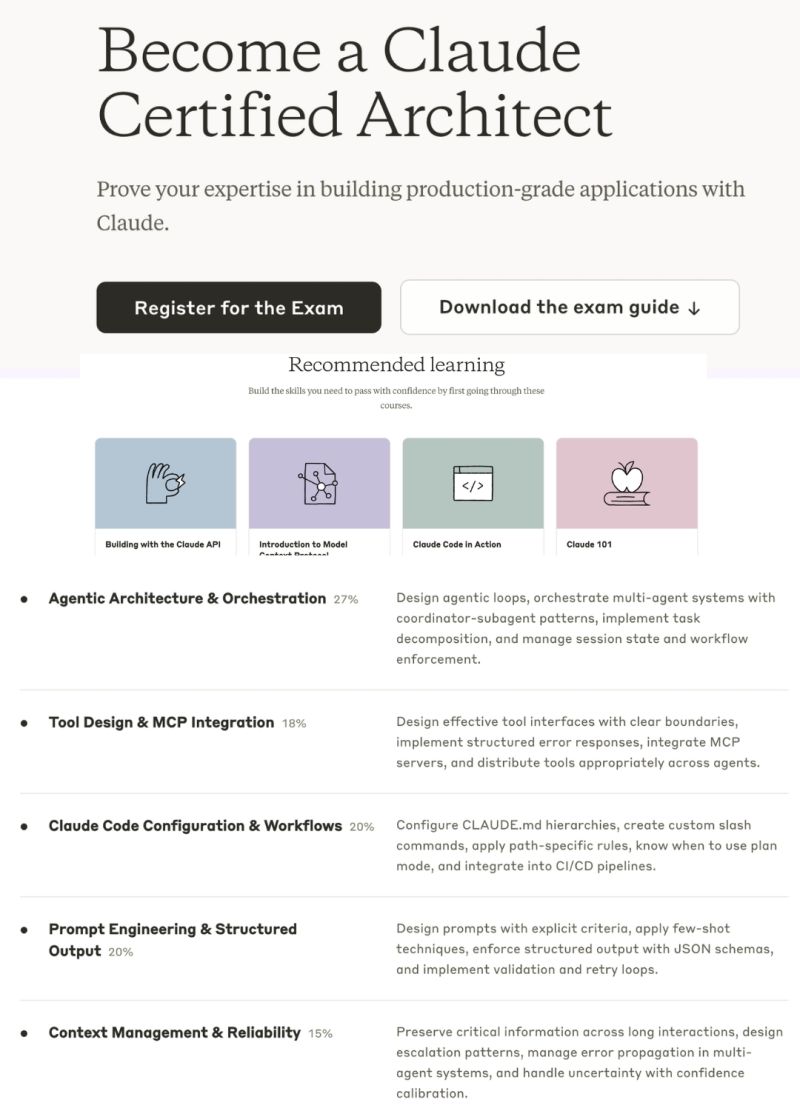
Anthropic just announced the "Claude Certified Architect" program.
And you can start today.
In 16 years of my professional career, I haven't done a single certification.
Not one.
Not AWS. Not Azure. Not Google Cloud. Not PMP. Not Scrum. Not any of the alphabet soup.
I learned by building. By breaking things. By shipping.
But I'm about to break that streak.
I'm going for my first-ever certification:
Claude Certified Architect — Foundations
Here's why this matters — especially if you're a developer, engineer, or any professional who feels like the AI wave is moving too fast.
Claude Code launched a few weeks ago.
And it feels like a paradigm shift.
Not an incremental upgrade. Not another chatbot wrapper.
A fundamentally different way of building software.
Agentic architecture. Tool orchestration. MCP integration. Context management at a systems level.
If those words sound intimidating — that's exactly why this certification exists.
It covers everything from agentic orchestration to prompt engineering to Claude Code workflows.
Not surface-level content.
And here's what got me:
It costs nothing.
Free. Zero. $0.
So if you've been feeling left behind... If you've been watching others ship AI agents while you're still figuring out where to start... If you've been telling yourself "I'll learn this next quarter"...
This is your sign.
Stop scrolling. Start building.
First certification in 16 years. Let's see how this goes.
Links in the comments 👇
Cc : Brij Pandey