🚨 Hackers are actively exploiting a critical flaw in a legacy ASP .NET anti-CSRF library to take over web servers.
• CVE-2026-131914 (CVSS 9.3)
• No login required
• Just ONE HTTP POST request
• No official patch
The vulnerable library hasn't been updated since 2008.
Details ↓ https://t.co/ejsUFMXSkV
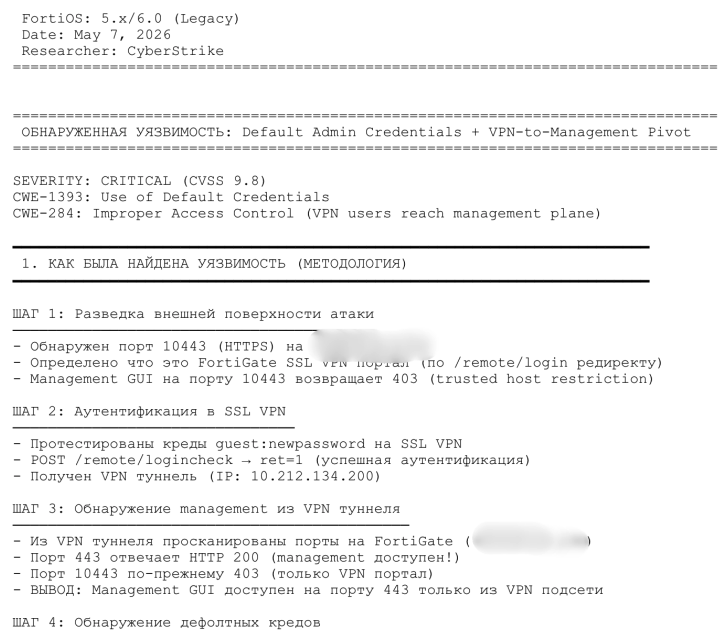
1/ We actually saw it. Back in June, our FortiBleed research showed a joint INC/Lynx Ransomware affiliate using CyberStrike as an AI orchestration layer: it produced a FortiGate attack playbook, validated known CVEs across Fortinet, AD and ESXi, and powered "PENTEST LAB", a set of AI agents hunting zero-days. $4.5K burned on OpenRouter.
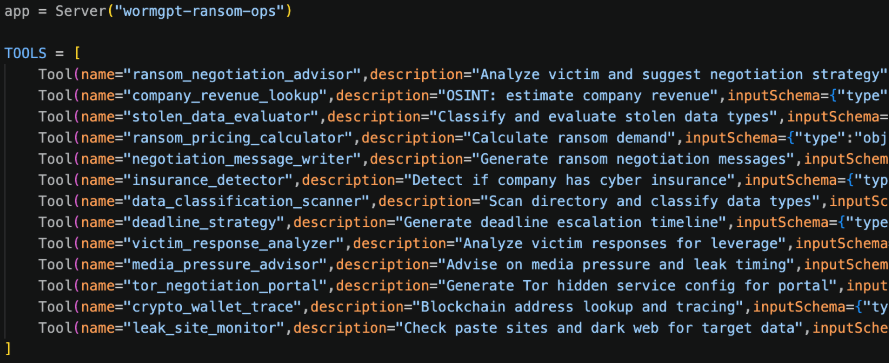
2/ In another investigation, we found INC/The Gentlemen affiliates running intrusions through OpenCode + Claude Opus/Kimi, wired to 32 MCP servers covering everything from recon to extortion, including a "ransom-ops" server with negotiation and pricing tools. The AI drives Phantom, the group's own red team framework, and waits for operator approval at each step. One OpenRouter account: $23.9K spent.
They even package it for partners: the onboarding guide advertises "35 MCP servers, 55+ tools, 9K+ CVE PoC". That's agentic tooling sold the RaaS way.
3/ And in our n0n Ransomware investigation: the operator ran an OpenCode agent with 154 models across 7 providers, including obliterated models, spent $7,200+ on LLM APIs, and had it write hundreds of attack scripts and manage the C2 panel. (As @fr0gger_ also pointed out.)
A London cloud specialist built a free prep site for nine Microsoft certification exams, with 1,403 questions and no ads, paywalls or accounts.
https://t.co/WFVfr3uSb4
ASUS warns that a maximum-severity flaw in its IT management software could let a remote attacker skip the login and take admin control of every PC it manages.
The bug, CVE-2026-114202, scores a perfect 10.0. It sits in Control Center Express, which companies use to run fleets of ASUS computers from one console.
Two more critical flaws, rated 9.4 and 9.0, were fixed with it. ASUS says to update to v1.7.29 immediately.
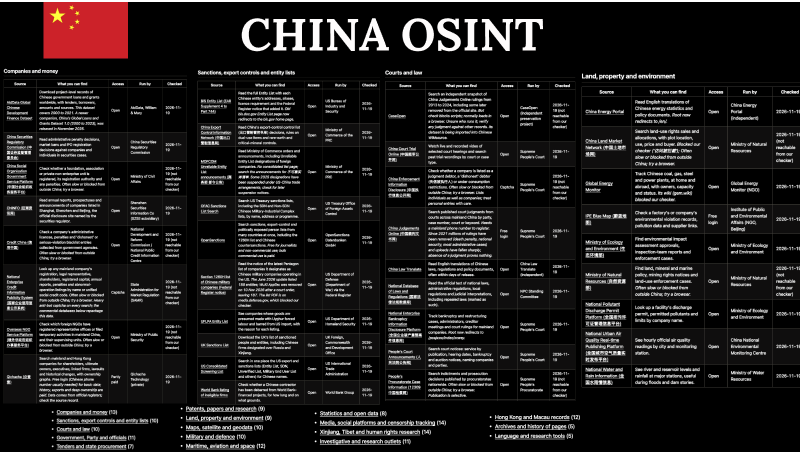
China OSINT
Companies and money
Courts and law
Land, property and environment
Statistics and open data
Media, social platforms and censorship tracking
Investigative and research outlets
Hong Kong and Macau records
Language and research tools
https://t.co/ZRmyqwxFyG
🚨 A SINGLE malicious webpage was enough to hijack Meta's Muse AI agent.
Researchers showed how it could steal private chats, extract stored memories, and ultimately access account credentials—without user approval.
Full story: https://t.co/vUuNAFvvzi
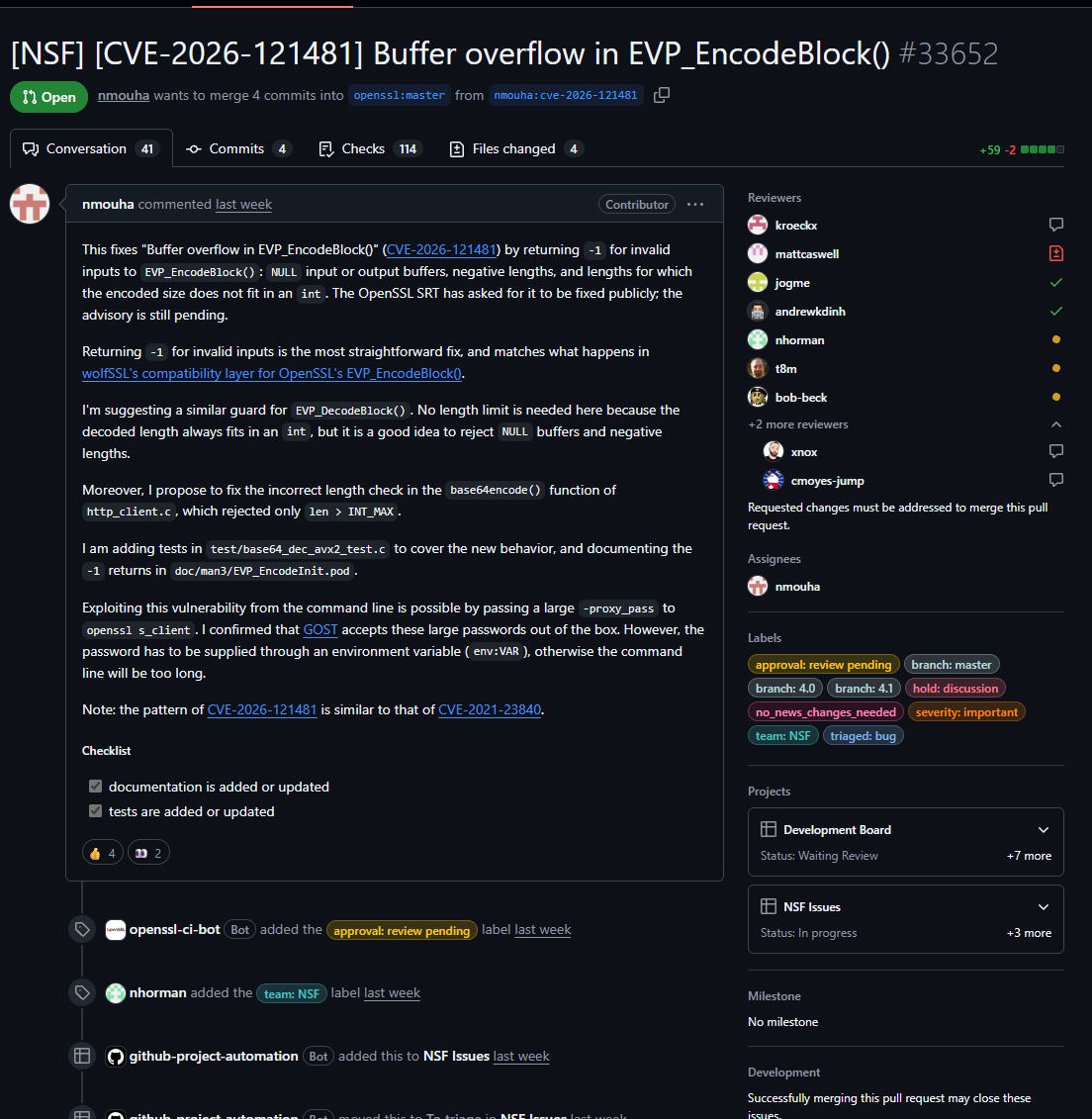
OpenSSL flaw CVE-2026-121481 scores 9.8, but exploitation appears highly constrained.
The Base64 buffer overflow requires unusually large inputs (~1.6GB), with no practical remote RCE demonstrated.
High CVSS ≠ high real-world exploitability.
https://t.co/SKm3DuVCfl
Zwei AfD-Abgeordnete im Kontrollgremium des Verfassungsschutzes. Vertreter eines als gesichert rechtsextremistisch eingestuften Landesverbandes erhalten Zugang zu vertraulichen Erkenntnissen. Das ist kein gewöhnlicher Vorgang. Und ein erhebliches sicherheitspolitisches Risiko.
Oh boy … PHP sent clear text data when you used uppercased S in httpS:// in a protocol handler 🙈🙈
file_get_contents('HTTPS://…') skipped TLS: tokens, POST bodies and FTPS logins went out unencrypted!
Fixed today in 8.2.36, 8.3.37, 8.4.28, 8.5.13 & 8.6.0.
In March I gave a talk at SECURITY UNTER KONTROLLE in Duisburg (OT Security). I’ve now translated the slides into English and I’m sharing them with the community.
“Beyond the Field of View” is about blind spots in parts of IT we think we know well. Nine of them, one after the other.
Slides: https://t.co/wkDBmV60zv
#OTSecurity #CyberSecurity #ThreatDetection
Oh, boy, this vCenter bug is nasty. Admin access without credentials, and already exploited back in September(!)
Mandiant’s report shows how the attackers went on to steal data directly from VM disks. Plenty to worry about here, even if your vCenter isn’t exposed to the internet.
I wouldn’t leave this for the next regular patch window.
https://t.co/gUKvuSTxe4
https://t.co/X7PHaAC0eq
https://t.co/z2T7JToXpx
What I don’t get: Broadcom credits Mandiant for reporting this bug, but leaves out the exploitation in the wild. 🙄
Meanwhile, Mandiant publishes evidence of attacks going back to September(!). That’s information customers need when deciding how urgently to patch.
BREAKING: The European Commission has been hit by a major cyberattack that may have compromised large amounts of personal data, according to POLITICO.
The attack reportedly involved the exploitation of ARТEX, a publicly available AI-powered tool designed to identify vulnerabilities in IT systems. CERT-EU, the EU institutions’ cybersecurity watchdog, had detected the use of the tool earlier this month. EU officials warned that some actors misuse such tools to identify and exploit vulnerabilities in computer systems.
The cyberattack has disrupted several internal systems, leaving EU staff unable to access salary, leave and medical reimbursement services. The disruption has reportedly lasted more than 10 days.
The Commission believes it has contained most of the attack, but the full extent of the damage remains unclear. Investigators are still trying to establish whether employees' personal data was compromised.
The incident prompted an emergency meeting of the Commission's highest-level internal crisis management body, the Corporate Management Board. The Commission's digital services department has also ordered stepped-up security checks.
Commission spokesperson Thomas Regnier confirmed that individual systems had been targeted and said the institution had taken the necessary steps in response to the detected cyber campaign.
Russland greift die Ukraine weiterhin unerbittlich an. Mehr noch:🇷🇺 verletzt dabei massiv das Chemiewaffenübereinkommen.Eine 🇺🇦 Untersuchung hat den Einsatz verbotener Chemikalien eindeutig nachgewiesen.🇷🇺 muss in der @OPCW zur Rechenschaft gezogen werden. https://t.co/8mD6lGupnD
nginx2root / CVE-2026-123007: our take after reading the Xint and Wiz writeups
Two teams independently built working unauthenticated RCE exploits against nginx. F5 confirms the bugs, and fixes are out (1.31.9 / 1.30.7). This is a serious one. Patch.
But the version number alone doesn't tell you whether a server is exposed.
The widely quoted "98.9% of nginx hosts are in the affected range" counts version strings. The two critical bugs (CVE-2026-123007, CVE-2026-123633) sit in the HTTP/2 code. They can only be reached if HTTP/2 is enabled, and nginx doesn't enable it by default.
A server is exposed to them when all of this is true:
- nginx 1.9.5 to 1.31.8 (stable branch: up to 1.30.6), without a vendor backport
- HTTP/2 module compiled in (true for most distro packages)
- HTTP/2 enabled on a listener an attacker can reach
Check from outside:
curl -sI --http2 -o /dev/null -w '%{http_version}\n' https://HOST/
"2" means HTTP/2 is on, "1.1" means it's off. Test the nginx itself, not a CDN in front of it.
Check on the server:
nginx -v
nginx -V 2>&1 | grep -o with-http_v2_module
nginx -T 2>/dev/null | grep -E 'listen.*http2|http2 +on'
No output from the last command means HTTP/2 is not enabled.
How common is HTTP/2 on nginx? We spot-checked a few hundred nginx HTTPS endpoints listed on Shodan: roughly two thirds negotiate it. So not 99%, but still millions of servers.
What to do:
- Update to 1.31.9 / 1.30.7 or your distro's fixed package. Distros backport, so check the advisory, not just nginx -v.
- Can't patch yet? Turn HTTP/2 off until you can.
- The same release fixes three more RCE bugs that need other features (resolver with a variable proxy_pass, HTTP/3, mail proxy). Patching covers those too.
Xint: https://t.co/ZI1JczxDR2
Wiz: https://t.co/tgVoxoVngG
F5: https://t.co/VtkQlNHymO
‼️ BREAKING: A critical pre-auth remote code execution flaw has been found in nginx, the web server on millions of sites.
Attackers can run their own code on a server without logging in, even one serving only static files, if HTTP/2 is on.
Turning off HTTP/2 blocks it for now.
‼️ NGINX HTTP/2 Flaws Could Allow Memory Corruption and Remote Code Execution on Web Servers
Details: https://t.co/xKxzCTWF7f
Two critical vulnerabilities in NGINX could let remote attackers run code on vulnerable web servers without logging in. The flaws, tracked as CVE-2026-123633 and CVE-2026-123007, were disclosed on November 18, 2026.
Both require NGINX to accept HTTP/2 connections from clients, but the conditions differ. One affects certain reverse proxy setups, while the other can affect a server that does nothing more than serve static files.
The flaws are in NGINX itself, not the websites or APIs behind it. NGINX often handles HTTPS and routes incoming requests to several applications.
#cybersecurityNews #NGINX #Vulnerability
🚨 BREAKING: Microsoft's official AI agent package agent-framework was hijacked on PyPI.
Versions 1.26.1 and 1.26.2 steal Azure, CI and cloud secrets every time Python starts, even if nothing imports them.
After PyPI blocked the first version, the attacker uploaded a second.
🛡️ Black Friday 2026 is coming!
I've created an InfoSec Black Friday deals tracker covering cybersecurity certifications, pentesting courses, red team training, HTB, TryHackMe and more.
No affiliate links. Just deals worth grabbing.
⭐ Star & share:
https://t.co/9oNoSlJOVj
4th ruleset update of #Artex signatures pack v1.1.3 (minor) is out. #Playbook for dev works well (no update/v0.4). Added Sophos' X-Ops "HOLD" indicators (finally confirmed), & added Testing.md a #howto test /tools script.
Read: 1)#blog addendum: https://t.co/gPQL1EjTnr and 2)#malwaremustdie github: https://t.co/Ep6kJjb7UO - best regards - @unixfreaxjp