New thread: mapping electoral changes in India over the past 45 years (national & provincial)
Some comparative, some standalone, few analytical, some topical, many forgotten, all HQ.
Requests welcome. Pl use hashtag:
#Indian_electoral_history_in_maps
1. UP 1985 Lok Sabha
⏩ On FCAS - the next generation French stealth fighter, senior French diplomatic sources say 'everything is open' when it comes to a possible partnership with India but point out that this depends entirely on India formally approaching France. It's too premature to go beyond this at the moment.
⏩ They indicate that they are assessing all options after the recent breakdown in talks between France and Germany on the contours of the FCAS project.
⏩ They also explain that Franco-German defence cooperation is essential for the EU.
⏩ Without delving into the specifics of how/whether Indian weapons will be integrated onto future Rafales in IAF service, the senior diplomatic source explained that the new deal process is different from the earlier one and that intense negotiations were underway.
India has cracked the hard engineering of making a chip. It can now be designed, fabricated and packaged on Indian soil - capabilities built in under four years.
But then the harder half is just beginning, and it's got to do with the commerce of chips.
For example
- Vervesemi asked Dholera's own tech partner PSMC for a quote. It came back 20% above the Taiwan/Korea fabs they already use.
- Indian packaging houses quoted 3x foreign prices; one needed 6+ months just to build the tooling.
Founder's verdict:
Indian packaging is off by 3–5x - "not ten or fifteen per cent."
Where Indian semi story is stalling:
- India installs 50 million smart meters a year. Every chip inside is imported.
- Vervesemi has a qualified Indian alternative, already shown to the Power Ministry. No mechanism exists to get it into the meter.
Why? Product companies - the Qualcomm/Broadcom/MediaTek layer that turns a design into a line on a manufacturer's bill of materials - doesn't exist in India yet.
A single fab needs $4–5 billion of volume to break even. We're not sure India is putting that on the table yet.
What the next phase has to fix:
- Preferential foundry pricing until Indian fabs scale
- An L1-tender carve-out so Indian chips aren't auto-disqualified for costing 2x in the early years
- A BIS rule counting active-component content, not just resistors and connectors
- Expected in policy form before July 2026
This @swarajyamag deep-dive by @dikshayadav_ & Ankit Saxena is a slightly LONG read but it kinda gives you the inner picture of where India stands today.
https://t.co/tsD1dWcHa7
The majority of Malayalis, like me, are NOT ignorant enough to believe your baseless claim that Pinarayi Vijayan destroyed Kerala's public finances.
When we examine page 160 of Kerala's Fiscal Health, it is evident that Kerala's finances are strong because 72.63% of the state's total revenue receipts come from its own revenue, whereas the corresponding figure for all states taken together is only 58.17% in FY 2025-26.👇🏻
Indian scientists just made history.
Researchers from IIT Madras and IISc Bengaluru just pulled off something impossible.
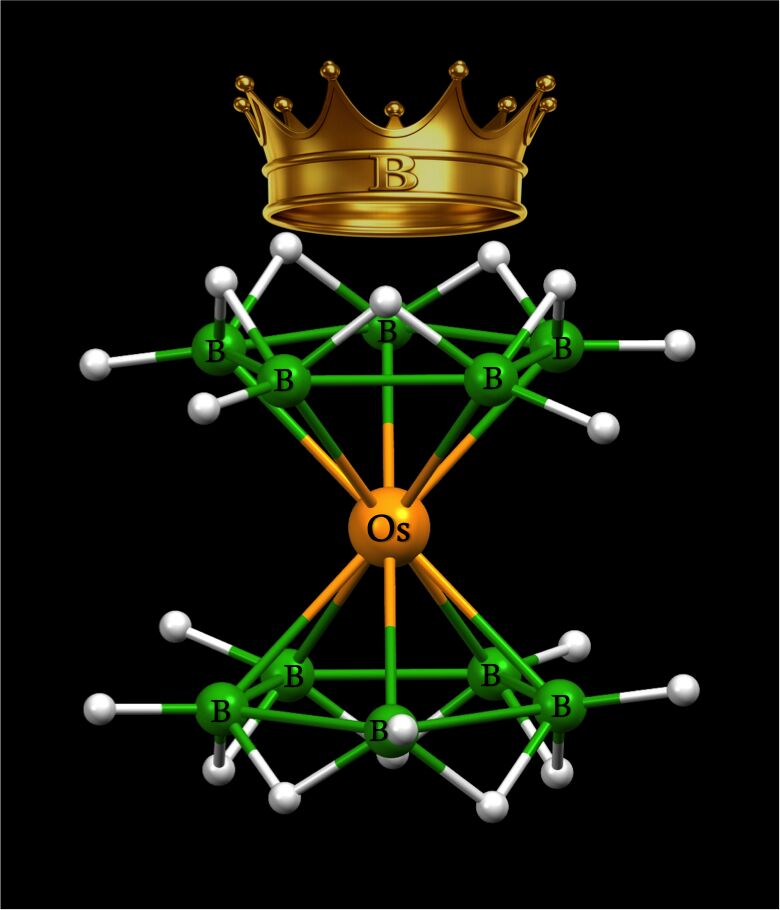
They've created the world's "first carbon-free ferrocene".
This means we can finally build the next generation of incredibly durable tech.
Let me explain.
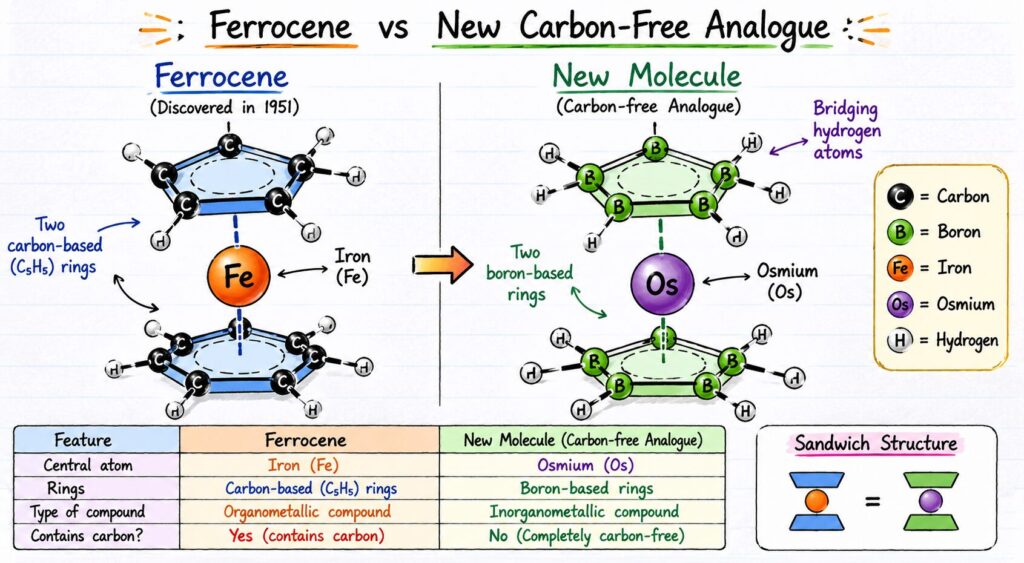
See, ferrocene is this wild organometallic molecule - where an iron atom is perfectly sandwiched between two carbon rings.
But it’s insanely stable.
Which is why it is already used in rocket fuels, car gasoline additives, long-life batteries, and even cancer medicines.
And for the last 75 years, everyone thought it was impossible to build the same stable structure without using carbon.
But this team of Indian scientists proved everyone wrong.
They created the same perfect sandwich structure - by swapping iron for osmium and carbon rings for boron rings.
And what they got was the world's first carbon-free ferrocene - which is so much stronger than the carbon bonds.
By doing so - they've opened up a whole new era of chemistry. And we have no idea how many amazing things we might discover.
But to think all of this started in India is truly amazing.
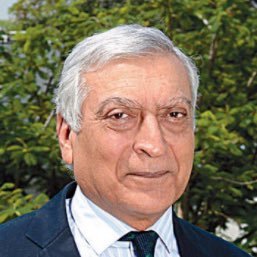
Kudos to everyone on this team: Sundargopal Ghosh, Stutee Mohapatra, Suvam Saha, Urvashi Gupta, Deepak Patel - from IIT Madras, Gaurav Joshi and Eluvathingal D. Jemmis - from IISc Bengaluru.
'Here’s how India can unlock $500 billion exports and 24 million jobs'
@Sanjay_1818 and @tgsv, co-founders of Trade Sentinel, and Baran Pradhan, former Research Analyst, Centre for Social & Economic Progress, write
#ThePrintOpinion
https://t.co/i7jEdwK7u3
Really nice words, Anmol. Thank you 🙏. Completed 10 years with @SwarajyaMag this month. Great gang. I would also mention some of my other close friends like @TejeshKM@Tushar15 and @prasannavishy who, too, motivated me to constantly keep improving the quality of my output. Anyway, no resting on our oars. Onward and upwards.
My colleagues at @SwarajyaMag churn out such stories consistently. Purpose and relevance with depth and clarity.
You might have come across feedback like 'Swarajya has upped it's game', 'something has changed', and similar. (If you haven’t, your algo needs fixing and it's one FOMO you should have)
Well, its these guys below 👇
I see it first hand. Just the amount of hard work they put in for each and every story.
- researching and reading (sometimes more than one book for a 2000 word story),
- speaking to relevant people (for weeks),
- finding the best angles to present the story (incl. the multiple iterations by @amargov and @ArushTandon),
- working on supporters material like infographics,
- And then also bracing all the brickbats that come with the job.
@nishthaanushree@ArushTandon@astrokaran@prakharkgupta@dikshayadav_@bingaspeaks@AdithiGurkarr
And then we have veterans like @arvindneela@ideorogue
Not to forget the star of @amargov's eyes - Raghavan S Rao. 🕵♂️