🗞️ PAYBOX WEEKLY-ISSUE #3 🟣
Another week, another set of updates worth keeping up with.
From @PayBox going live on Cursor and Grok to sending crypto to any X handle, onboarding new creators, and a major DeFi upgrade…
Things are moving.
I’ve put this week’s highlights into one issue so you can catch up without scrolling through the entire timeline.
The PayBox ecosystem keeps expanding. They are just getting started.
Read. Share.
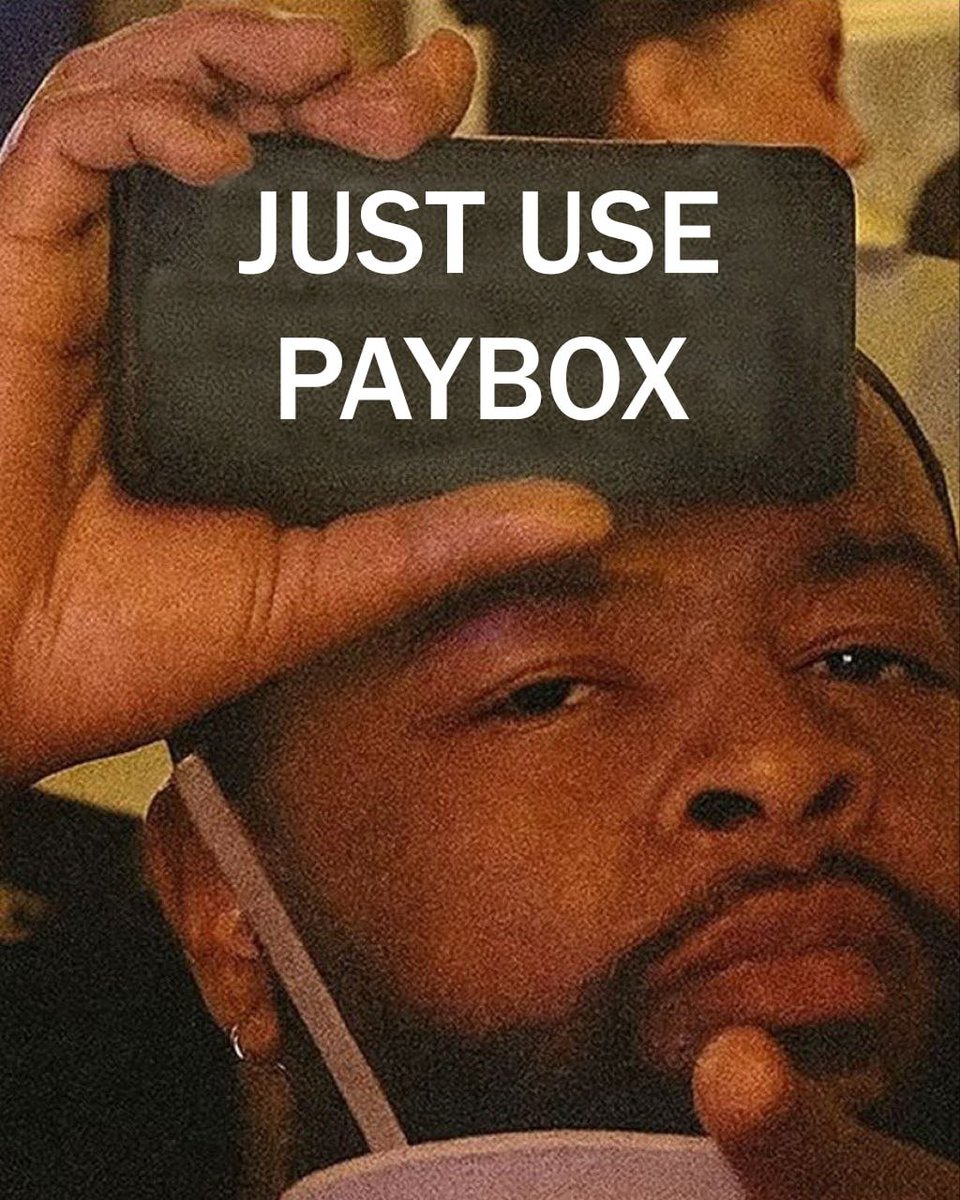
Just use Paybox
I made a video asking:
“What can’t @PayBox pay for?”
The answer?
Absolutely nothing.
Okay, maybe I’m being dramatic 😂
But that’s what’s interesting about PayBox.
The more integrations it adds, the more AI moves from simply telling you what to do to actually helping you get it done.
Shopping. Travel. Crypto. Onchain transactions. Payments.
At this point, the real question is:
What CAN’T we do with PayBox?
At this point, I think I'm becoming the annoying friend.
Someone:
“Can I do this with PayBox?”
Me:
“Just use PayBox.” 😭
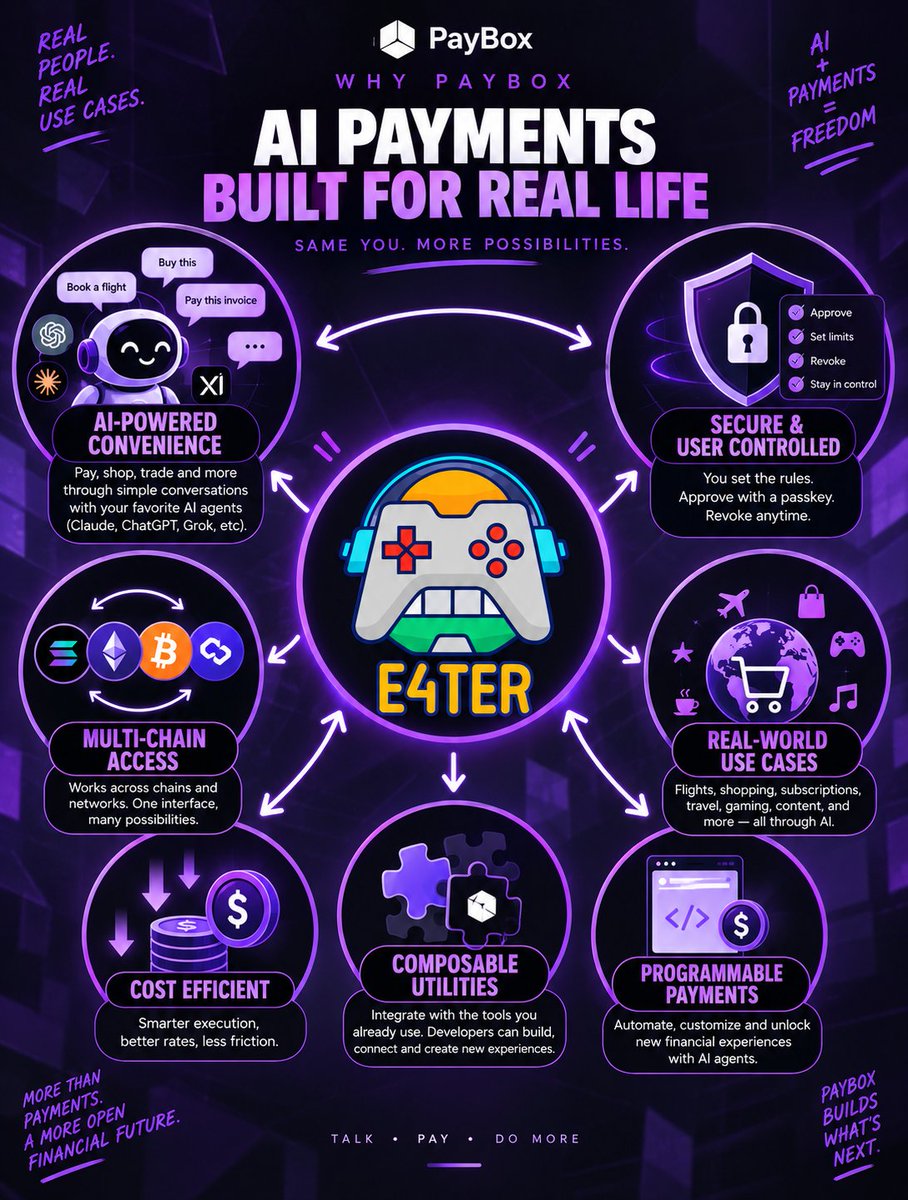
AI payments? PayBox.
Trading? PayBox.
Shopping? PayBox.
Onchain stuff? PayBox.
And with more integrations coming in, I'm starting to understand the bigger picture.
The goal isn't to make you learn 15 different payment tools.
It's to make interacting with money feel as simple as telling an AI what you want.
Anyway…
Just use PayBox. 🟣
Remember when @PayBox was basically:
“Give your AI access to your wallet.”
Now look at the ecosystem.
@arc is live.
@MoonPayCommerce is live.
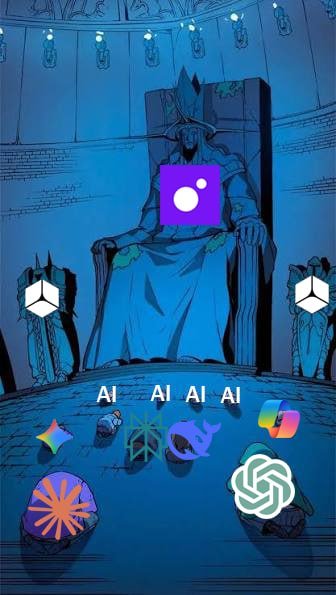
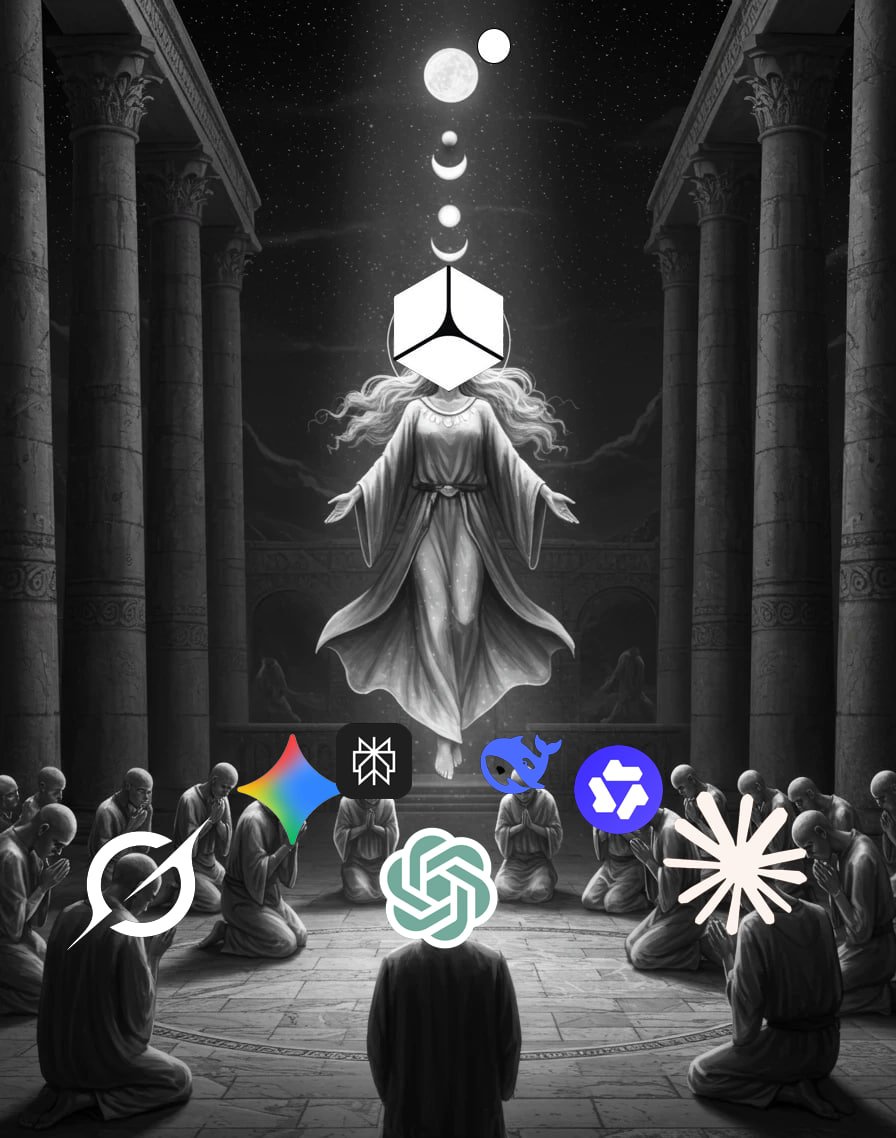
And suddenly the PayBox throne room is getting crowded. 🟣
The interesting part isn't just adding more names.
It's what these integrations mean for the bigger picture.
PayBox is trying to become the layer connecting AI agents → money → real-world actions.
One place where an agent can interact with financial tools without needing you to manually jump between apps.
And Arc joining the ecosystem adds another piece to that puzzle.
Instead of AI just telling you:
“Here's what you could do.”
We're moving toward:
“Here's what you asked me to do. Ready to approve it?”
That's a pretty different relationship between humans and AI.
Then there's MoonPay Commerce.
Crypto payments are already becoming easier for businesses to accept, including checkout, pay links and subscriptions.
Bringing that world closer to PayBox makes the whole “AI that can actually pay” idea even more interesting.
And this is where I think PayBox gets interesting.
You don't necessarily need:
10 wallets
5 apps
3 browser tabs
and a PhD in clicking buttons
The idea is:
Tell the agent what you want.
The agent prepares it.
You stay in control.
PayBox's current architecture is built around scoped permissions rather than simply handing an AI your credentials.
Agents don't get your raw wallet key; PayBox says they receive limited outputs such as transaction signatures, while access can be governed by user-defined rules.
So yeah…
The throne room is getting crowded.
Claude.
ChatGPT.
Grok.
Jupiter.
Sunrise.
Arc.
MoonPay Commerce.
And PayBox is sitting right in the middle like:
“Who needs payments?”
We're still early.
But the direction is becoming clearer:
AI doesn't just answer.
It researches.
It prepares.
It interacts.
And increasingly…
it can transact.
PayBox is building around that future.
Quick @PayBox question
Can PayBox eventually handle recurring subscriptions like X Premium or Spotify?
I honestly have no idea if this is already possible, especially since the virtual cards are one-time use.
But if it isn't possible yet, is this something the PayBox team is already working on or considering?
Because being able to tell my AI:
“Keep my subscriptions paid every month.”
…and let PayBox handle it would be pretty insane. 🟣🤖
I told my family and friends about @PayBox.
They actually liked the idea.
But then came the questions.
And honestly, they were the exact questions I'd expect from someone who isn't deep into crypto or AI.
Here are some of the concerns they raised and how PayBox approaches them:
1/ “So I have to understand crypto to use this?”
This was probably the biggest one.
Most people don't want to understand wallets, chains, signatures and all the technical stuff.
They just want to say:
“Pay for this.”
That's the direction PayBox is built around: connect your financial credentials once, then let an AI agent perform authorized actions on your behalf.
2/ “But what if the AI spends more than I wanted?”
Fair question.
You don't want an AI agent with unlimited spending power.
PayBox uses policies and spending limits so you can define boundaries around what an agent is allowed to do.
And operations above a set threshold can require a passkey approval.
Basically:
AI gets permission.
You set the boundaries.
3/ “Wait… does the AI get my private key?”
This one made everyone pause. According to PayBox's documentation:
No.
Agents don't receive raw wallet credentials.
For wallets, they receive a signed transaction, while the private key stays protected through MoonX MPC.
That's a pretty important distinction.
4/ “What if I don't want the AI anymore?”
Simple problem.
You should be able to take the permission away.
PayBox says agent access can be revoked at any time, and operations are recorded as audit events.
So the relationship isn't:
“I gave the AI access forever.”
It's:
“I gave this agent permission to do this job.”
5/ “Why can't I just keep using my normal apps?”
You can.
And that's actually one of the things I like about the approach.
PayBox isn't trying to replace your wallet, exchange or chain.
Its stated goal is to act as an open control layer that gives AI agents scoped, revocable access to the financial tools you already use.
6/ And then my friend asked the question I couldn't stop thinking about:
“So… what happens when AI gets good enough to actually handle all of this?”
That's the interesting part.
We're moving from:
AI that tells you what to do
→ to
AI that can help you actually do it.
And PayBox is building around that transition.
Maybe the biggest challenge isn't making AI smarter.
Maybe it's giving AI the right amount of financial power.
What I took away from the conversation.
My family didn't need another crypto lecture.
They needed answers to very normal questions:
Is it simple?
Is it controlled?
Can I take access away?
Does the AI get my keys?
Those are the questions that matter if AI payments are ever going mainstream.
And honestly...
that's the conversation I want to keep having about PayBox. 🟣
PayBox said “something exciting is coming Monday” and suddenly the whole timeline is on standby.
The PayBox signal has been activated. 🟣
We’re watching 👀
Finally took some time off after a long while to go hoop.
Nice to get a break from spending money I don't have with @PayBox 😭
Just me, the ball, and financial responsibility for once.
Anyway…
PayBox intern, wen 1v1? 👀
Loser has to explain why AI payments are the future. 🟣
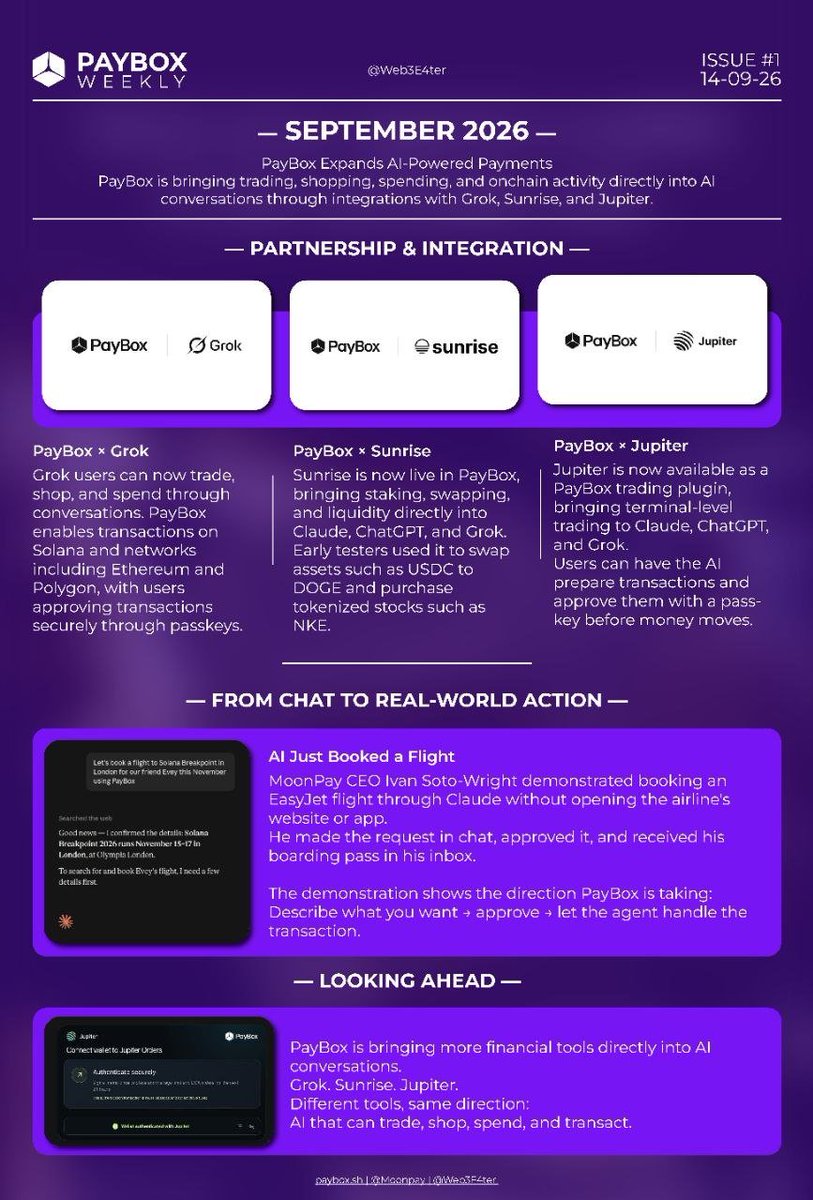
PayBox Weekly: Issue #1 🟣
This week, @PayBox moved another step toward a world where AI doesn't just answer questions, it can actually help you transact.
From Grok, Sunrise & Jupiter to booking a flight through Claude, the pieces are starting to connect.
I put together the important updates from this week in one place.
Read.
Explore.
And watch where this goes.
Everyone is obsessed with asking:
“Which AI is the smartest?”
GPT vs Claude.
Claude vs Gemini.
Gemini vs Grok.
Benchmarks everywhere.
But I think there's a more interesting question coming:
Which AI can actually get things done?
Because being able to tell me:
“Here's the best flight.”
is useful.
But being able to:
find it → book it → pay for it
is a completely different level of usefulness.
And that's why I've been paying attention to @PayBox.
It sits at an interesting intersection between AI and money.
The intelligence can come from whichever agent you prefer.
PayBox focuses on giving that agent a controlled way to interact with your financial world.
That's a subtle difference.
But it could become a very important one.
Because eventually, we might stop asking:
“Which AI should I talk to?”
and start asking:
“Which AI can actually do the job?”
The chatbot era was about answers.
The agent era will be about outcomes.
There's a problem with letting AI handle your money.
AI can make mistakes.
And when an AI makes a mistake with your money...
“Oops” isn't exactly a refund policy.
So I started looking at the obvious concerns with @PayBox :
What if the agent spends too much?
Set spending limits.
What if I don't want to approve every transaction?
Use autonomous mode within a policy you define.
What if something needs my attention?
Require approval above your chosen limit.
What if an agent gets compromised?
Revoke its access or use PayBox's kill switch to shut down agent access entirely.
And here's another important one:
What if the AI gets my private key?
It doesn't.
For wallet operations, the agent gets a transaction signature rather than your private key.
PayBox's documentation says raw wallet keys, seed phrases and MPC shares aren't returned to agents.
There's even an audit trail showing requests, approvals, denials and credential activity.
So no...
PayBox doesn't magically make AI incapable of making mistakes.
It puts guardrails around what the AI is allowed to do.
And honestly, that's probably the more realistic way to build agentic finance.
Don't ask:
“How do we make AI perfect?”
Ask:
“What happens when AI isn't perfect?”
That's where the guardrails matter.
AI gets the autonomy.
You keep the boundaries.
Try https://t.co/qzsUsCUzI2
One Wallet. Every Agent.
Yesterday was about different AIs working with the same financial layer.
Today, let's talk about something even more interesting:
You shouldn't have to rebuild your financial setup every time you change AI.
Think about it.
You use ChatGPT today.
Claude tomorrow.
Maybe Gemini next week.
Grok the week after.
Why should your wallet have to follow the AI?
With @PayBox , the idea is:
Vault your credentials once.
Then give different AI agents the permissions they need.
ChatGPT can be connected.
Claude can be connected.
Gemini can be connected.
Grok can be connected.
Different agents.
Different jobs.
Same financial control layer.
And you don't give them the keys either.They receive scoped access to perform the task you've authorized.
That's what I find interesting about PayBox.
It's not trying to make you choose which AI owns your money.
It's building toward a world where your money stays yours, regardless of which AI you're talking to.
One wallet.
Multiple agents.
You stay in control.
ChatGPT has its believers.
Claude has its believers.
Gemini has its believers.
Grok has its believers.
Everyone has their favorite AI.
But here's the interesting part:
@PayBox doesn't care which one you choose.
That's because PayBox isn't trying to be your AI.
It's trying to be the financial layer that lets your AI actually do things.
Think about it.
You could be chatting with Claude.
Or asking ChatGPT to handle a task.
Or using Gemini.
Or talking to Grok.
The AI might change...
but the financial infrastructure underneath can stay the same.
One PayBox.
Different agents.
Different models.
Different tasks.
And that's the part I think people are sleeping on.
The future probably won't have one AI that does everything.
We'll have different agents for different jobs.
The important question becomes:
Can your money move with you?
PayBox's answer is basically:
Yes. Bring your agent. We'll handle the permission layer.
The AI can change.
Your financial control doesn't have to. 🟣
If even kids could tell Argentina rigged their way to the final, I don't know why you, a grown ass adult, would come on here and spit absolute nonsense.