International financial institution unlocking the economic potential of rural communities in Asia and the Pacific by #FinancingTheFirstMile. Follow to see how.
"It was magic to come to India."
Claudia ten Have, Secretary of @IFAD, looks back on the Executive Board's visit: what IFAD's investment at the first mile looks like off the page, and the women farmers and young people making it work.
#FinancingTheFirstMile
IFAD’s experience in Indonesia shows what is possible.
Through READSI, machinery was combined with training, finance, stronger farmer organizations and market connections. Some 43,000 farmers benefited, including around 13,500 women.
The future of agricultural mechanization isn't just about better machines, it's about better systems.
That was the message from @IFAD Regional Director Reehana Raza at the opening of Asia-Pacific Conference on Sustainable Agricultural Mechanization, hosted by @FAOAsiaPacific 🧵
From 23 to 26 November, FAO is hosting the Asia-Pacific Conference on Sustainable Agricultural Mechanization in Manila, Philippines.
Join and discover how advancing sustainable #AgriculturalMechanization can contribute to transforming agrifood systems: https://t.co/olVREzIlRv
In Megamendung, young paprika farmers supply 800 kg a week to a national restaurant chain.
In Garut, a cooperative grows year-round at lower cost, and women's groups sell to supermarkets and school meals.
Market access is creating rural jobs for young people.
Rural transformation begins at the first mile of food systems.
In West Java, IFAD VP @g_mukeshimana met young entrepreneurs, women's groups and cooperatives — financed through @IFAD's YESS and UPLAND projects — turning pineapple stems into yarn and exporting coffee to Japan.
IFAD VP also explored turning mangrove and seagrass restoration into an investable blue carbon model with DG Kartika Listriana of @kkpgoid, and discussed how #IFAD14 aligns with Indonesia's priorities at the Ministry of Finance.
#FinancingTheFirstMile
Day 2 in Indonesia 🇮🇩
IFAD Vice-President @g_mukeshimana and Vice Minister Alim Setiawan Slamet of @kementan discussed bringing more young people into farming as producers, entrepreneurs and innovators, to raise productivity, value addition and market access.
At #COP31, IFAD showcased new evidence and financing solutions to turn climate adaptation into an investment in rural resilience.
#FinancingTheFirstMile https://t.co/thWLT0MKKw
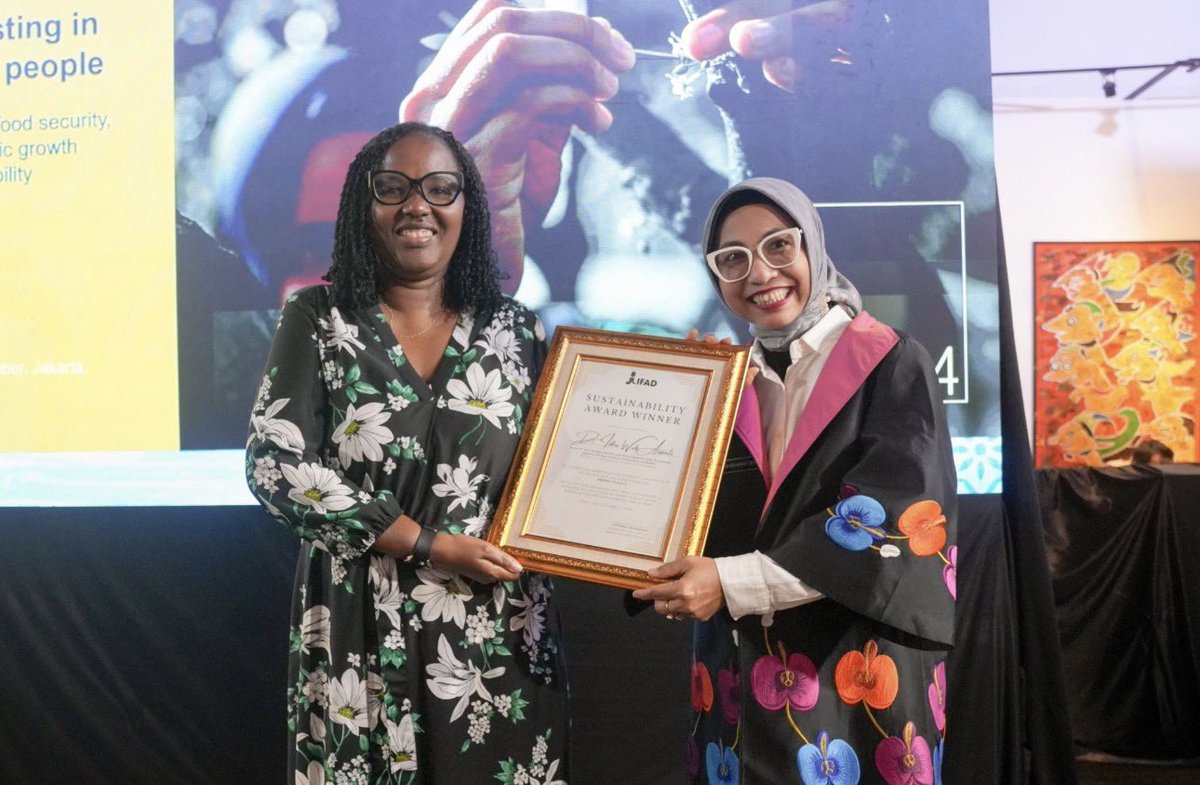
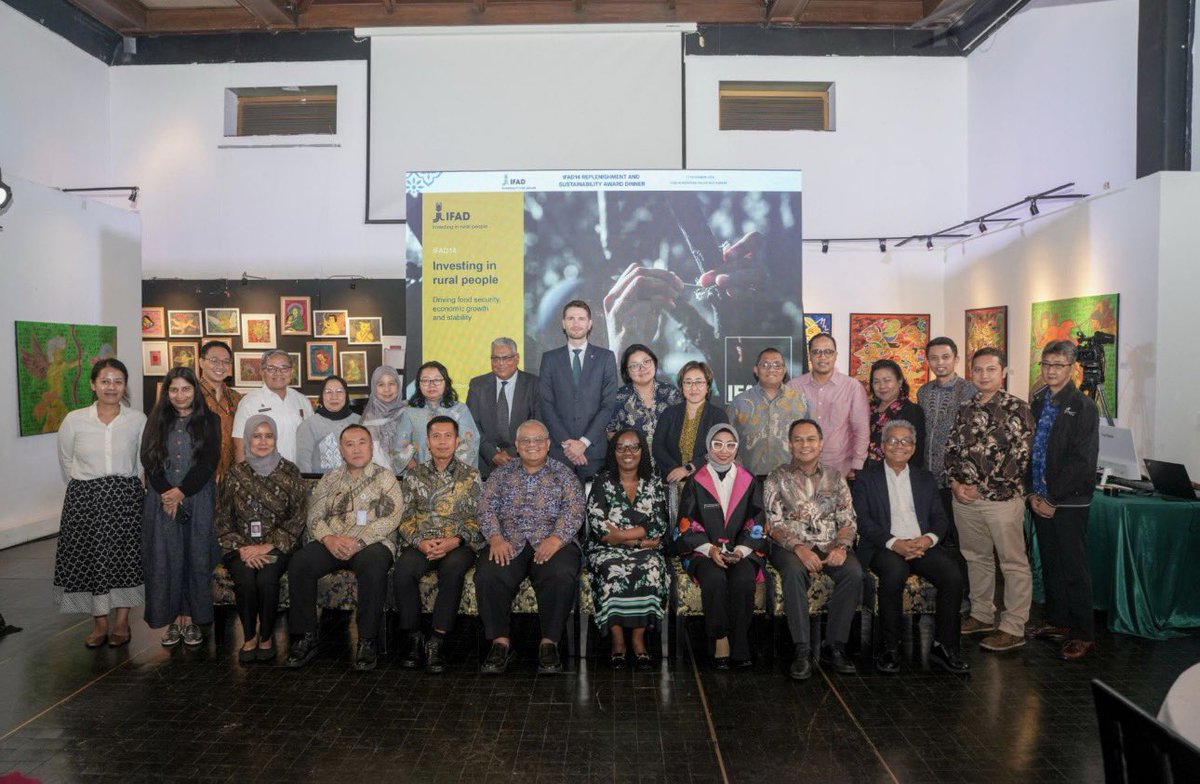
A partnership of nearly 50 years: IFAD convened five Indonesian ministries to look ahead to IFAD14, and honoured the READSI project with the IFAD Sustainability Award.
#FinancingtheFirstMile | @IndonesiaInRome
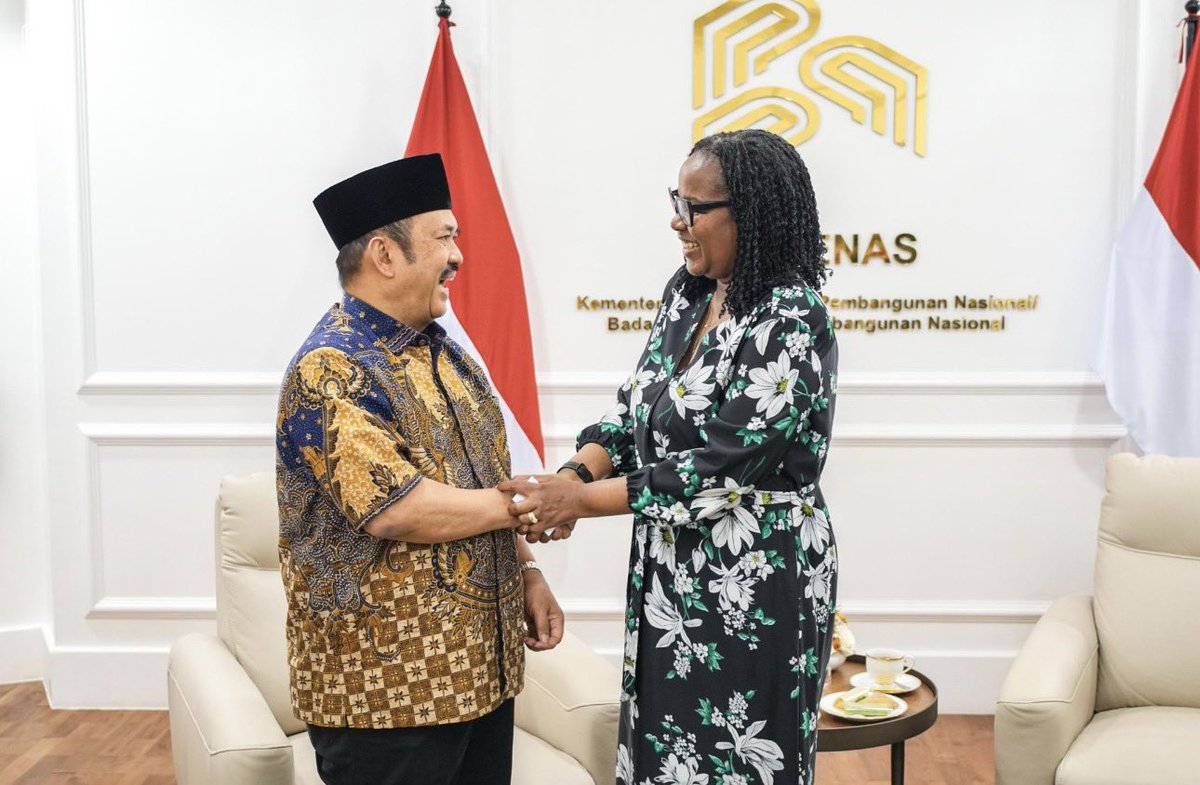
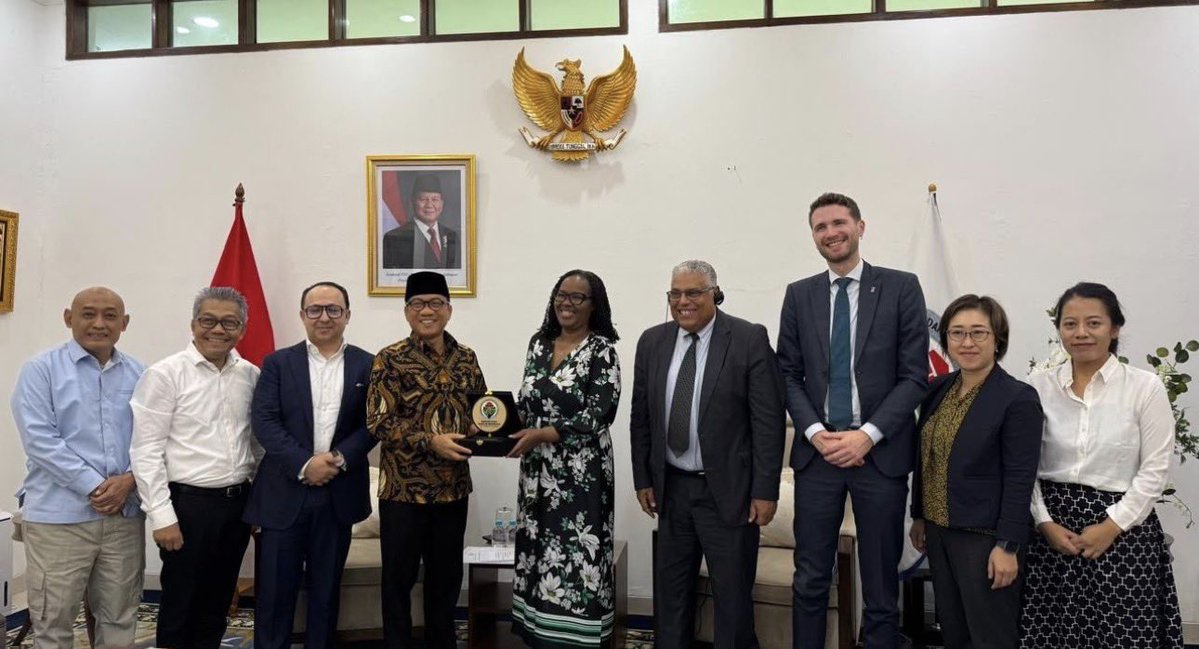
In Indonesia this week, @IFAD Vice-President @g_mukeshimana met Rachmat Pambudy, Minister of National Development Planning, and Yandri Susanto, Minister of Villages, discussing jobs for rural youth, stronger village economies and resilience to shocks such as El Niño.
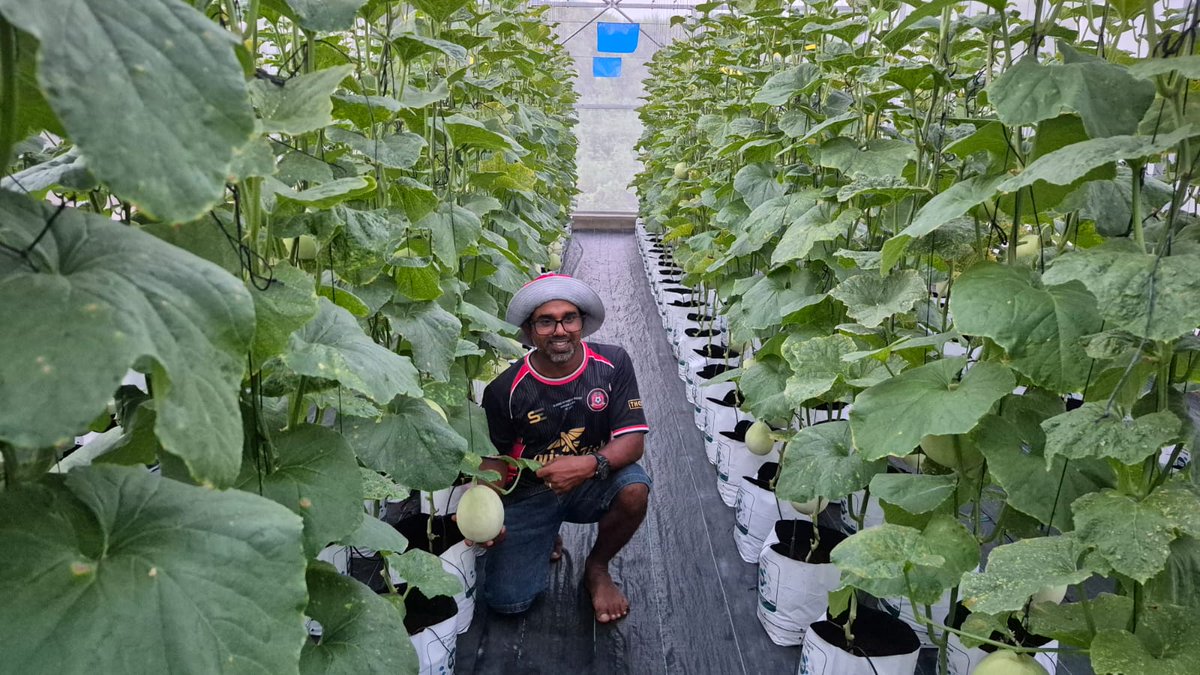
@IFAD@SherinaTabassum@AgriBusinessMV@MAAWmv@UNMaldives@MoFAmv Ibrahim’s greenhouse cost about US$10,400. The project covered half the cost, and Ibrahim is paying back the other half as a low-interest loan, about US$190 a month.
Read more about how MAP’s matching grants help Maldivian farmers 👇
https://t.co/X0aiTLppSP
Through MAP, an @IFAD-financed project in the Maldives, Ibrahim Amir received a greenhouse and training to grow melons with less water and fertilizer.
He expects to harvest 550 kg next month, worth about US$2,500. With 3 cycles a year, that's close to US$600 a month.
The pledge comes soon after Bangladesh and IFAD agreed two new investments worth US$324 million, delivered through national institutions with the Government of Denmark’s support. Together, they are expected to reach about 2.5 million rural people: https://t.co/FfIKvN1AJX
A longstanding partner, Bangladesh has renewed its support with a pledge to #IFAD14.
@IFAD is pleased to announce this contribution, which strengthens our capacity to invest in rural people at the first mile of food systems.
Bangladesh has renewed its investment in IFAD with a US$2 million pledge to IFAD's 14th Replenishment.
The pledge reaffirms Bangladesh's commitment to building climate resilience in vulnerable rural areas, expanding rural finance and enterprise, and creating jobs for rural young people and women.
#FinancingTheFirstMile | #IFAD14
When @FAO, @IFAD , and @WFP work together, we can achieve more than any one of us can alone.
IFAD brings its distinctive role as an international financial institution to the RBA partnership: mobilizing resources for long-term investments in rural people and economies, while drawing on the complementary technical, policy, humanitarian and operational strengths of FAO and WFP.
Congratulations to Nepal and Niger RBA country teams, the co-winners of the 2026 RBA Award of Excellence for Country-Level Collaboration, for showing what this complementarity can deliver in practice.
In Nepal, a joint RBA programme with @UN_Women to strengthen rural women's economic empowerment has helped increase farm incomes by 63% and reduce household food insecurity from 44% to 31%.
In Niger, the RBAs are supporting a government-led initiative, alongside other UN partners, to strengthen food systems, better coordinate investments and advance national food security and self-sufficiency.
And these are not isolated examples. This year's 13 nominations received from across all regions show the potential of bringing together different mandates, resources and capabilities around country priorities.
As Member States call for greater efficiency, less duplication and more impact, our collaboration needs to be increasingly country-driven, selective and grounded in comparative advantage. The RBA Blueprint and our joint Action Plan provide a strong foundation for doing so.
@FAODG@WFPChief
#FinancingTheFirstMile | #RBAs
@JPRWEE II – a joint initiative by @IFAD, @FAO, @WFP & @UN_Women – has already delivered results in Nepal:
💰Women’s control over income up from 62% to 83%
🏦2,300+ women opened bank accounts
💼550 women in leadership roles
🏫38 women’s groups linked to school feeding programmes
Initiatives expanding rural women’s opportunities in Nepal and driving food-system transformation in Niger share a common thread: the joint involvement of FAO, IFAD and WFP.
By combining their complementary expertise, the Rome-based agencies deliver results that advance rural transformation, food security and resilience.
In Nepal’s Madhesh Province, farmer incomes have increased by 63%, while women’s control over their incomes has risen from 62% to 83%. These results reflect the integrated approach behind the second phase of the Joint Programme on Rural Women’s Economic Empowerment, which brings together @FAO, IFAD, @WFP and @UN_Women.
In Niger, joint support is helping advance the Government’s Food Systems Strengthening Flagship Plan, laying the groundwork for a more resilient and inclusive food system.
This year, their collaboration in Nepal and Niger was recognized with the RBA Award of Excellence, highlighting the diversity and scope of the agencies’ work, from women’s economic empowerment and access to markets to national food-system transformation.
Read more at https://t.co/Wgu1zoo18W
Their priorities:
🤝 Strategic partnership and grassroots reach
💰 Direct financing and farmer-led investment
🏛️ Stronger institutions and accountable service delivery
🌏 Climate resilience and sustainable food systems
💡 Inclusive leadership, knowledge and policy influence
At the Asia-Pacific Regional Farmers’ Forum in Bangkok, farmers’ organizations representing 24 million small-scale producers across 34 countries reaffirmed their partnership with @IFAD.
They set out five priorities for climate resilience and food security 👇
Climate resilience depends on investments that strengthen local food systems, raise agricultural productivity and improve access to markets.
In #Vanuatu, IFAD has supported rural communities facing increasingly unpredictable weather, cyclones and environmental pressures that put agricultural production and rural incomes at risk.
Through the Pacific Islands Rural and Agriculture Stimulus Facility, funded by IFAD and the Australian Government, US$8.1 million reached nearly 5,000 households across the Pacific, strengthening food security, improving livelihoods and building resilience to climate shocks.
In Vanuatu, this support combined training in seedling production, soil management and climate-smart agriculture with more than 1,000 agricultural toolkits and nearly 4,500 seed packs. Investments in market infrastructure and income diversification, including duck farming, complemented this support, helping communities access economic opportunities and reduce their reliance on a single source of income.
As climate risks intensify, investing in rural producers’ skills, productive assets and market access is essential to protect livelihoods and strengthen the resilience of local food systems.
Read more at https://t.co/YgcDyvSd5D
@turkiyecop31 | #FinancingTheFirstMile | #COP31Türkiye | #COP31Antalya