Aquí nadie discute la calidad de Argentina, ni la grandeza de Messi, ni que sean campeones del mundo. Eso no está en discusión.
Lo que sí está en discusión es el arbitraje y el VAR.
A Egipto le anulan un gol retrocediendo varias acciones para encontrar una falta anterior. Perfecto: si ese es el criterio, entonces debe aplicarse para los dos equipos.
Pero antes del tercer gol argentino, Egipto reclama una falta en el área argentina. La jugada continúa y Argentina termina marcando. ¿Por qué allí el VAR no actúa con la misma rigurosidad?
Eso es lo que cuestiono: dos jugadas, dos criterios diferentes.
Y cuando estas cosas ocurren en un Mundial, inevitablemente aparecen las sospechas sobre la FIFA y sobre cuánto puede influir el VAR en el desarrollo del fútbol.
Argentina no necesita favores. Tiene fútbol, jugadores y calidad suficiente para ganar por sí misma.
Pero el fútbol se decide por detalles, y hoy los detalles arbitrales generan demasiadas preguntas.
Egipto hizo un partido extraordinario. Fue superior durante grandes momentos y obligó a Argentina a sufrir hasta el final.
Los goles argentinos pueden ser legítimos y bien ejecutados, pero eso no elimina la pregunta principal:
¿Por qué el VAR aplicó un criterio para Egipto y otro para Argentina? El fútbol necesita una sola vara para todos.
Porque cuando la tecnología deja de dar certezas y comienza a generar sospechas, el que pierde no es solamente Egipto. Pierde el fútbol.
Faker’s conversation with fans:
Life is long, and hardships may only last for a short period of time. So even when you’re going through difficult times, you should still believe that there will be many opportunities ahead in the future, and try to look at the bigger picture.
#fakerday
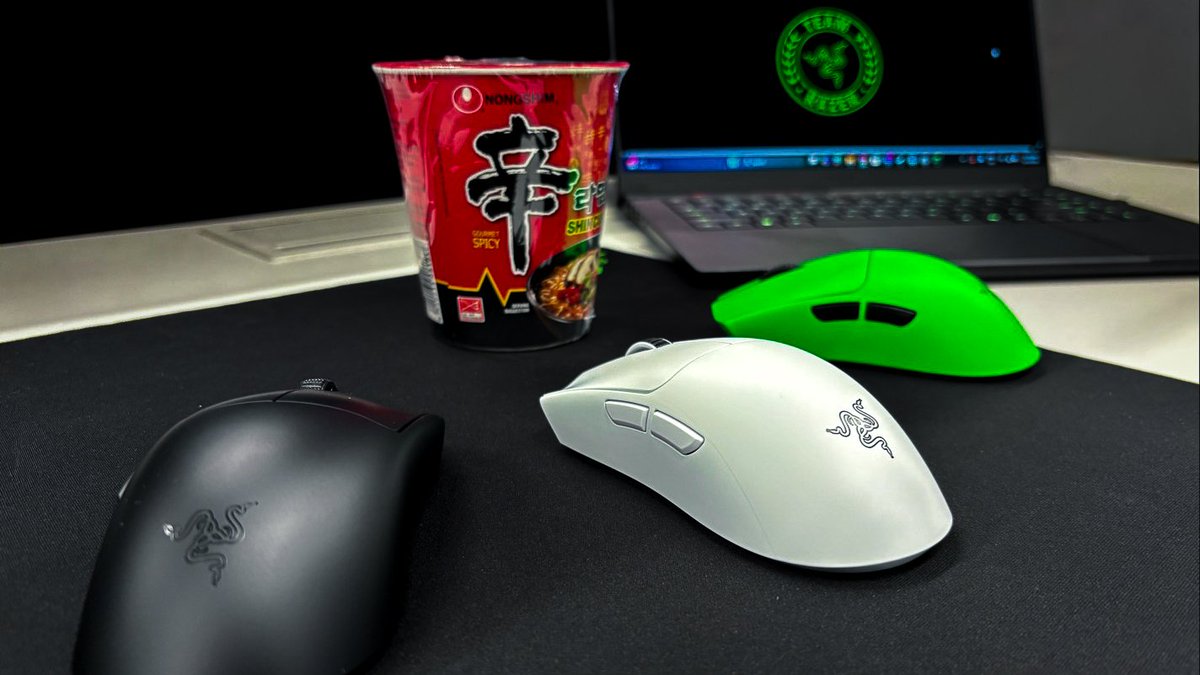
Got to test this out in the office for a while now - loving the glide and even though it's so thin it doesn't feel fragile at all. Glass pad enjoyers, please reach out, my DMs are open!
Feel very lucky to be working on this from start to finish. The #1 Chair achievement has been over a year of hardwork and dedication in the making. Kudos to the whole team and here to more #1s this year 🙏
The Razer Iskur V2 NewGen is the #1 most used gaming chair on https://t.co/6qbUjn1OrT, the leading source for pro gear insights.
Trusted by esports pros worldwide, engineered to keep you in the game longer.
Start your grind: https://t.co/QHsz0ErbJM
The Razer Iskur V2 NewGen is the #1 most used gaming chair on https://t.co/6qbUjn1OrT, the leading source for pro gear insights.
Trusted by esports pros worldwide, engineered to keep you in the game longer.
Start your grind: https://t.co/QHsz0ErbJM
LLM Knowledge Bases
Something I'm finding very useful recently: using LLMs to build personal knowledge bases for various topics of research interest. In this way, a large fraction of my recent token throughput is going less into manipulating code, and more into manipulating knowledge (stored as markdown and images). The latest LLMs are quite good at it. So:
Data ingest:
I index source documents (articles, papers, repos, datasets, images, etc.) into a raw/ directory, then I use an LLM to incrementally "compile" a wiki, which is just a collection of .md files in a directory structure. The wiki includes summaries of all the data in raw/, backlinks, and then it categorizes data into concepts, writes articles for them, and links them all. To convert web articles into .md files I like to use the Obsidian Web Clipper extension, and then I also use a hotkey to download all the related images to local so that my LLM can easily reference them.
IDE:
I use Obsidian as the IDE "frontend" where I can view the raw data, the the compiled wiki, and the derived visualizations. Important to note that the LLM writes and maintains all of the data of the wiki, I rarely touch it directly. I've played with a few Obsidian plugins to render and view data in other ways (e.g. Marp for slides).
Q&A:
Where things get interesting is that once your wiki is big enough (e.g. mine on some recent research is ~100 articles and ~400K words), you can ask your LLM agent all kinds of complex questions against the wiki, and it will go off, research the answers, etc. I thought I had to reach for fancy RAG, but the LLM has been pretty good about auto-maintaining index files and brief summaries of all the documents and it reads all the important related data fairly easily at this ~small scale.
Output:
Instead of getting answers in text/terminal, I like to have it render markdown files for me, or slide shows (Marp format), or matplotlib images, all of which I then view again in Obsidian. You can imagine many other visual output formats depending on the query. Often, I end up "filing" the outputs back into the wiki to enhance it for further queries. So my own explorations and queries always "add up" in the knowledge base.
Linting:
I've run some LLM "health checks" over the wiki to e.g. find inconsistent data, impute missing data (with web searchers), find interesting connections for new article candidates, etc., to incrementally clean up the wiki and enhance its overall data integrity. The LLMs are quite good at suggesting further questions to ask and look into.
Extra tools:
I find myself developing additional tools to process the data, e.g. I vibe coded a small and naive search engine over the wiki, which I both use directly (in a web ui), but more often I want to hand it off to an LLM via CLI as a tool for larger queries.
Further explorations:
As the repo grows, the natural desire is to also think about synthetic data generation + finetuning to have your LLM "know" the data in its weights instead of just context windows.
TLDR: raw data from a given number of sources is collected, then compiled by an LLM into a .md wiki, then operated on by various CLIs by the LLM to do Q&A and to incrementally enhance the wiki, and all of it viewable in Obsidian. You rarely ever write or edit the wiki manually, it's the domain of the LLM. I think there is room here for an incredible new product instead of a hacky collection of scripts.
You have no experience.
You’ve never started a company.
You’ve never had a full time job.
Nike is going to kill you.
You’re a kid.
You don’t have technical skills.
You shouldn’t build hardware.
Apple is going to kill you.
You can’t build hardware.
You can’t measure heart rate non-invasively.
Athletes don’t care about recovery.
Under Armour is going to kill you.
It won’t be accurate.
You don’t listen.
You’re an ineffective leader.
You can’t recruit great talent.
You’re going to have to pay every athlete.
You can’t measure sleep non-invasively.
It’s too expensive to research.
Athletes are a small market.
The product costs too much to make.
The product costs too much to sell.
Your valuation is too high.
Consumers aren’t going to want it.
Hardware is too hard.
You should measure steps.
Fitbit is going to kill you.
You can’t build a marketing engine.
You can’t raise enough money.
You need a real CEO.
Google is going to kill you.
You can’t be a subscription.
You can’t build a brand.
You can’t do consumer in Boston.
Your valuation is too high.
You shouldn’t make accessories.
You shouldn’t make apparel.
Lululemon is going to kill you.
You can’t predict Covid.
Stay in your niche.
You are going to run out of money.
You can’t build a health platform.
Amazon is going to kill you.
You can’t measure blood pressure.
You can’t get medical approvals.
The market is too small.
You don’t understand AI.
The market is too competitive.
It won’t work internationally.
The supply chain is too complicated.
You can’t build an AI.
You can’t raise enough money.
It’s too competitive.
Healthcare isn’t going to want it.
…
Just keep going ✌️
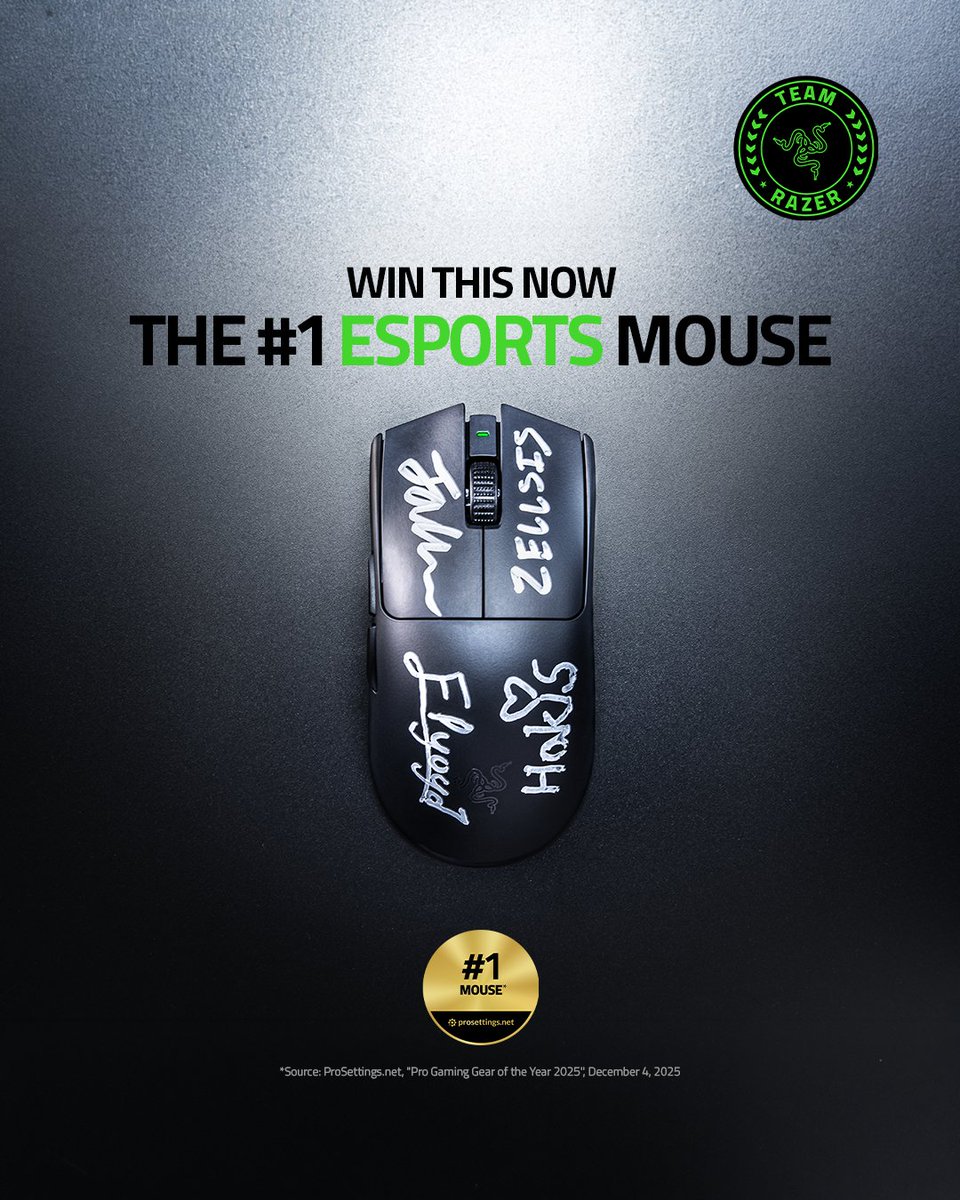
Four champions. The world’s #1 esports mouse.
Signed by Faker, Zellsis, Elyoya, and Hakis. Now this 1 of 1 mouse could be yours!
✅️Follow @TeamRazer, @faker, @Zellsis, @Elyoya_LoL, and @Alliance_Hakis
✅️Comment who is your favorite.
Good Luck! 🎁🌍
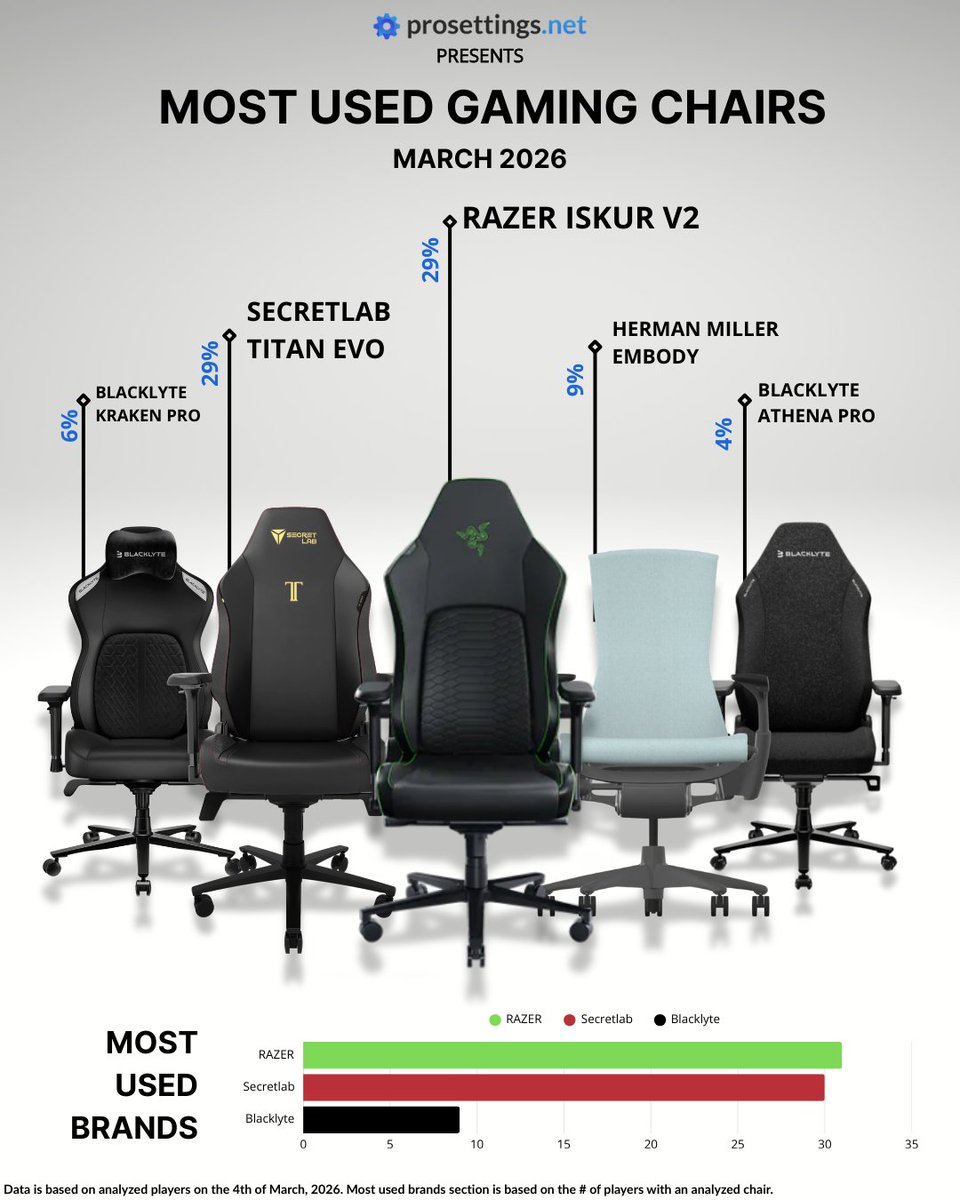
We haven't been tracking chairs for too long, but there are some interesting things going on.
The @Razer Iskur V2 causes team green to take the lead, while @secretlabchairs and @GoBlacklyte complete the top 3. We also see some very premium design in the form of the Herman Miller Embody.
We're excited to see where these chairs will end up as we gather more data!
From the frigid snow of Sapporo through the heat of battle, the new kings of Apex Legends rise.
Congratulation to Oblivion on winning the ALGS Year 5 Championship. A title run for the history books.
Truly a privilege to have the backs of these Apex Legends. #ALGS#RazerALGS.
A reminder from Atomic Habits:
New goals don't deliver new results. New lifestyles do. And a lifestyle is a process, not an outcome. For this reason, all of your energy should go into building better habits, not chasing better results.
We are honored to announce the #TeamRazerAwards. 🏆 Recognizing our esports players who exemplify dedication and excellence.
Three categories await your vote, with a special giveaway you can enter for voting.
Cast your vote, don’t miss out! https://t.co/1lap7czCOD