@RAEinforma El nombre de las plantas llamadas «amarilis» proviene de «Amaryllís» ('la que brilla'), nombre de una pastora de la poesía bucólica griega y latina.
En el libro de texto de Geografía de 1993 viene esta lección “El 8 de abril del año 2024 ocurrirá un eclipse total de Sol que podrá observarse en la República Mexicana.”
Y aquí estamos, a tres semanas de presenciar este evento astronómico. La temperatura bajará, los animales enmudecerán y la oscuridad convertirá la luz de sol en noche. No volveremos a ver un eclipse total solar así hasta dentro de 375 años.
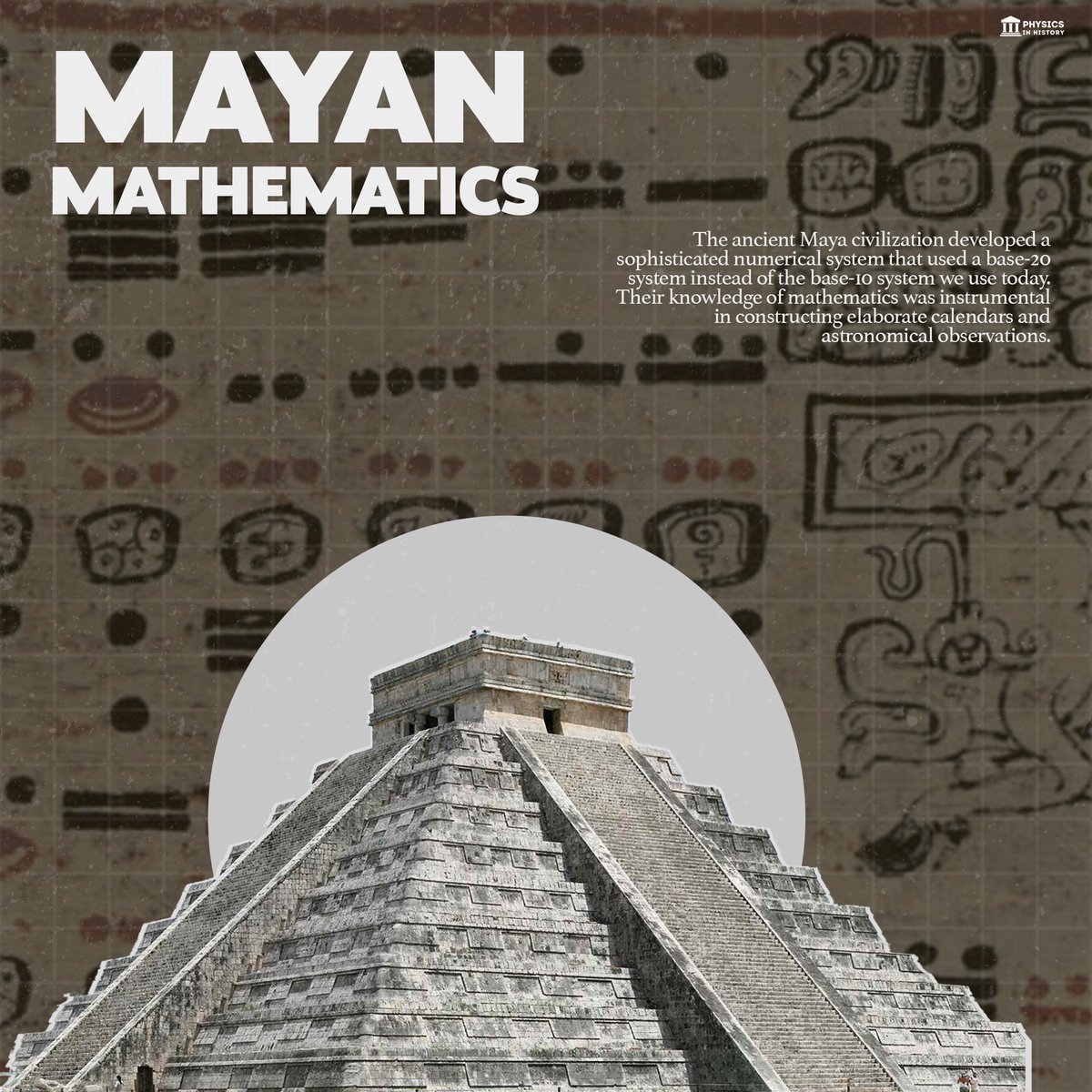
The Mayans were an ancient civilization that flourished in Mesoamerica from about 250 CE to 900 CE (classic period). They were known for their remarkable achievements in astronomy, art, architecture, writing, and mathematics. Some of the contributions of the Mayans in the development of mathematics are:
They developed a vigesimal (base-20) numeral system, which means that they used 20 as the base of their number system instead of 10 as we do today. They used dots and bars to represent the numbers from 1 to 19, and then arranged them vertically in powers of 20 to write larger numbers.
They used their numeral system to create an accurate and complex calendar, which consisted of three cycles: the Tzolkin (a 260-day sacred cycle), the Haab (a 365-day solar cycle), and the Long Count (a linear count of days since a mythical creation date). The Long Count cycle had a variation from the strictly vigesimal system, as it used 18 instead of 20 as the base for the third position, which corresponded to 360 days or a tun.
They applied their mathematical knowledge to astronomy, as they observed and recorded the movements of the sun, moon, planets, and stars. They calculated the length of the solar year, the lunar month, the synodic period of Venus, and the cycles of eclipses with remarkable precision. They also predicted future astronomical events using their calendar and mathematical formulas.