Congrats to @MalleshNanditha and Max Zhao for the smarts and thanks to @leukaemielabor for the data. Knowledge transfer to enhance the performance of deep learning models for automated classification of B cell neoplasms https://t.co/P1fT4VRSwL
Congrats to Chengyao and Simon on CADA, which is a phenotype-driven gene prioritization that is based on a case-enriched knowledge graph https://t.co/7o7pp3EJXl
We are looking forward to adding new results to our talks in August! In the meantime we would like to share these teasers from Emad and Tzung:
https://t.co/fIpr1oDpLI
https://t.co/M5eRMs9cwp
We are looking forward to adding new results to our talks in August! In the meantime we would like to share these teasers from Emad and Tzung:
https://t.co/fIpr1oDpLI
https://t.co/M5eRMs9cwp
We regret to announce that due to severe technical issues with the virtual platform brought to our attention this week, the ESHG is forced to postpone #eshg2021 to August 28-31.
We share your disappointment and sincerely apologise for the inconvenience https://t.co/GmWRCVLvD7
Every (=Cada) solved case counts! This is true in so many respects. Also, when it comes to phenotype-driven gene prioritization. Peng, et al describe how #ClinVar cases improve phenotype-driven gene prioritization:
https://t.co/9kzmRS8oVh
#GestaltMatcher is now in review. Plz contact @thsieh_tw if you need technical support with dysmorphic similarity scores for your own papers. https://t.co/DIf4urwjj4
congrats to @alkuraya and team, who linked a novel facial dysmorphism to #TMEM94. https://t.co/yuatBNSDLc Noteworthy: affected individuals of all 6 families could also have been matched by #GestaltMatcher
#GestaltMatcher is now in review. Plz contact @thsieh_tw if you need technical support with dysmorphic similarity scores for your own papers. https://t.co/DIf4urwjj4
#GestaltMatcher is now in review. Plz contact @thsieh_tw if you need technical support with dysmorphic similarity scores for your own papers. https://t.co/DIf4urwjj4
I am happy to announce that our work on our mouse model for GPI anchor deficiency is out in #PNAS: https://t.co/2PEimJVA40
If you are interested in a small summary, please scroll down (1/10). #GPIBD#Synaptopathy#DiseaseModeling
How do mating schemes affect the prevalence of recessive disorders in growing populations? There's fewer recessive disorders but greater mutational load during and after the growth phase for random mating. In the consanguineous, both parameters are hardly affected by growth.
Prevention is better than cure. At IGSB, we're working on risk assessments based on modeling polygenic disorders, #PRS. In collaboration with @Mymegeno, we aim to make these results available to everyone who's interested.
#GutBrainaxis Did you know you have 3 brains? Your head, your heart, your gut. Can our daily diet decide how we behave? At IGSB, we try to find out how our diets affect our decision making. Stay tuned !
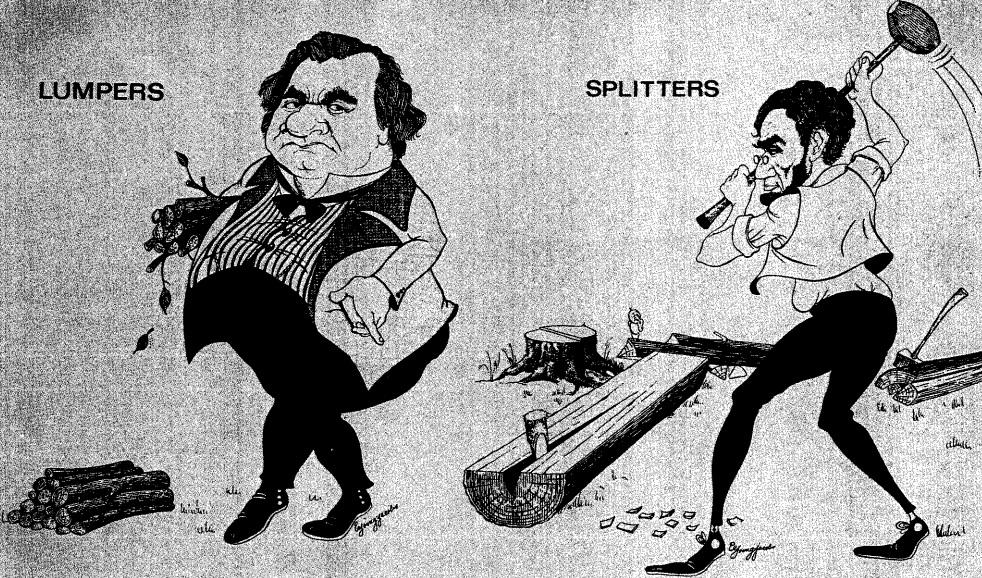
#GestaltMatcher: Could CNNs reconcile lumpers and splitters in genetics? We train our classifiers based on gene-specific labels (splitters approach), but as soon as we have a working network, we are able to perform similarity analysis (lumpers approach)
A hot topic in our lab: When is the right time to return to physical lab meetings? Although #Bioinformatics is great for #remotework, we can't wait to get back our inspiring lunch break conversations. Let us know what you do and don't miss! #AcademicChatter#COVID19