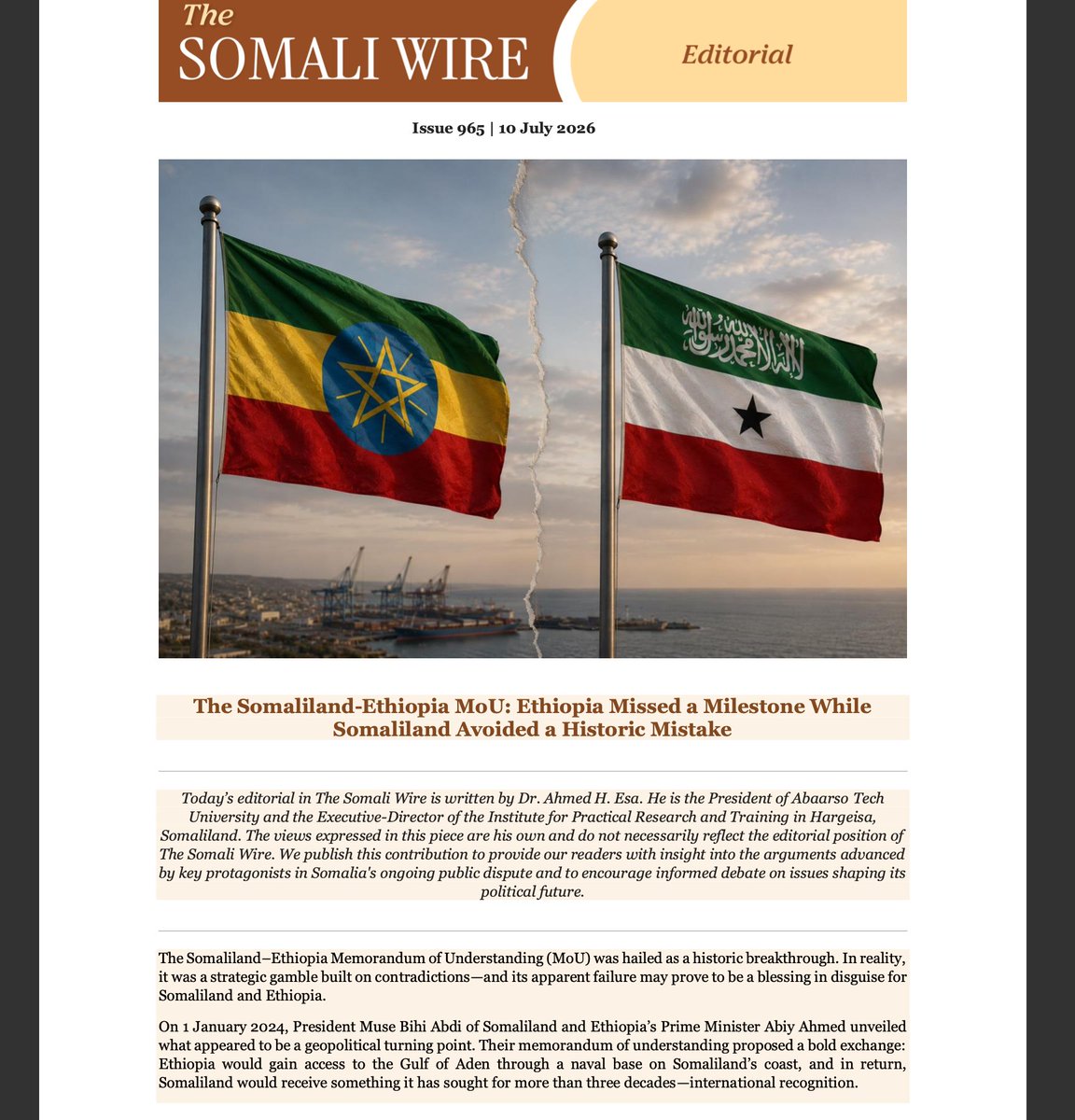
Prominent Somaliland academic Dr Ahmed H. Esa, this month's guest essayist for The Somali Wire, writes a powerful commentary on the stalled Ethiopia-Somaliland MoU.
Dr Ahmed's primary thesis is that the failure of the MoU may have been a blessing in disguise that allowed Somaliland to avoid a historic mistake.
To read this essay, go to https://t.co/aDLl9eA47H
@RAbdiAnalyst@bidhaanDahir Come on, Rashid! You reminded me of the extraordinary aroma of home-roasted coffee from Addis Ababa. I'm a coffee lover in Paris, and I would have loved to taste that roasted coffee from Nairobi. Unfortunately, it's much too far away from me!
@LePoint Encore Le Point, encore un journaliste français… et encore une occasion manquée.
Pourquoi une partie de la presse française refuse-t-elle de voir ce que tant d'observateurs voient déjà au Somaliland ?
"Le Somaliland est un pays qui s’est construit sur des ruines et des cendres. Mais nous pouvons contribuer à la sécurité du monde, notamment contre la piraterie qui s’étend. Il est temps de prendre conscience de l’importance du Somaliland »@SlndMoF https://t.co/CTVCXNqbNF
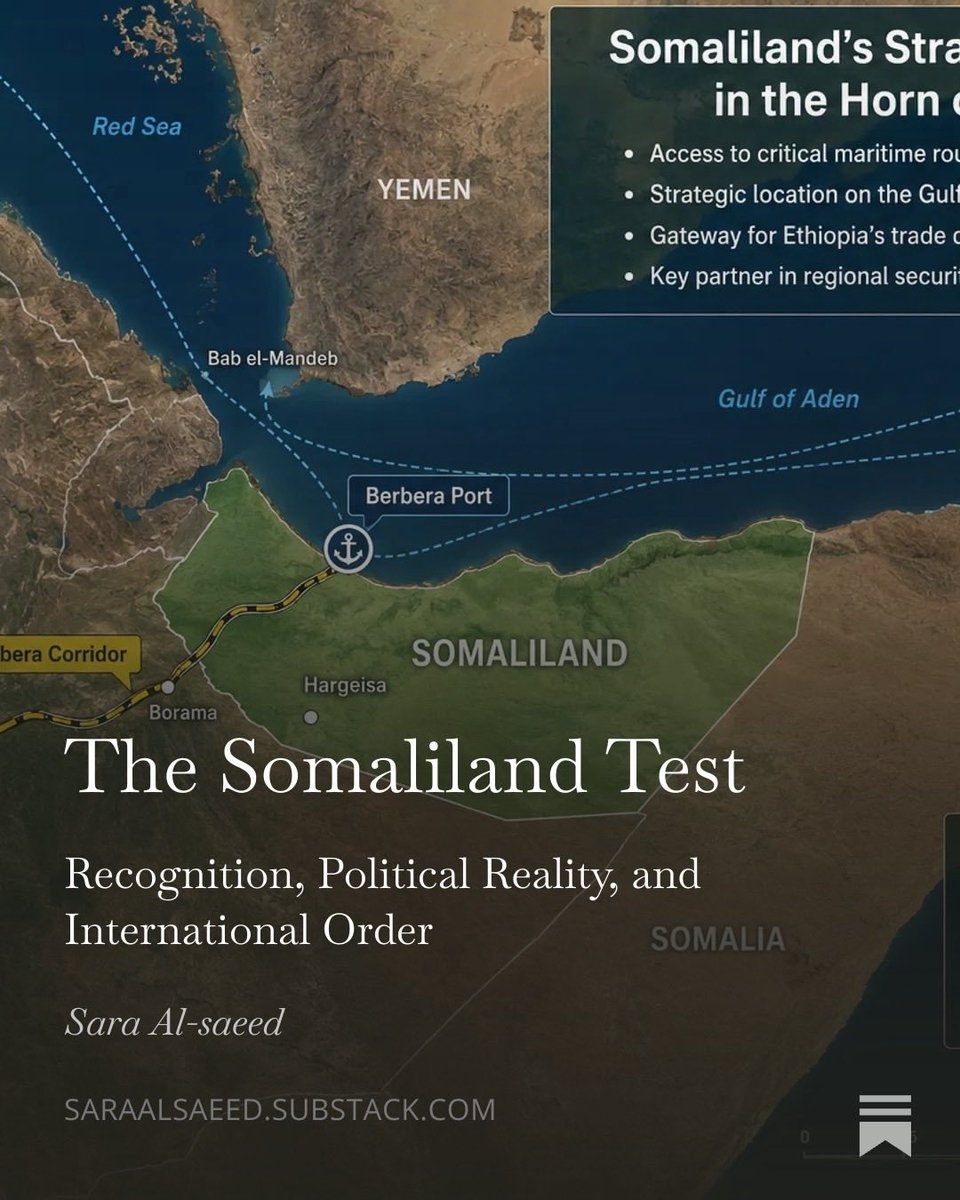
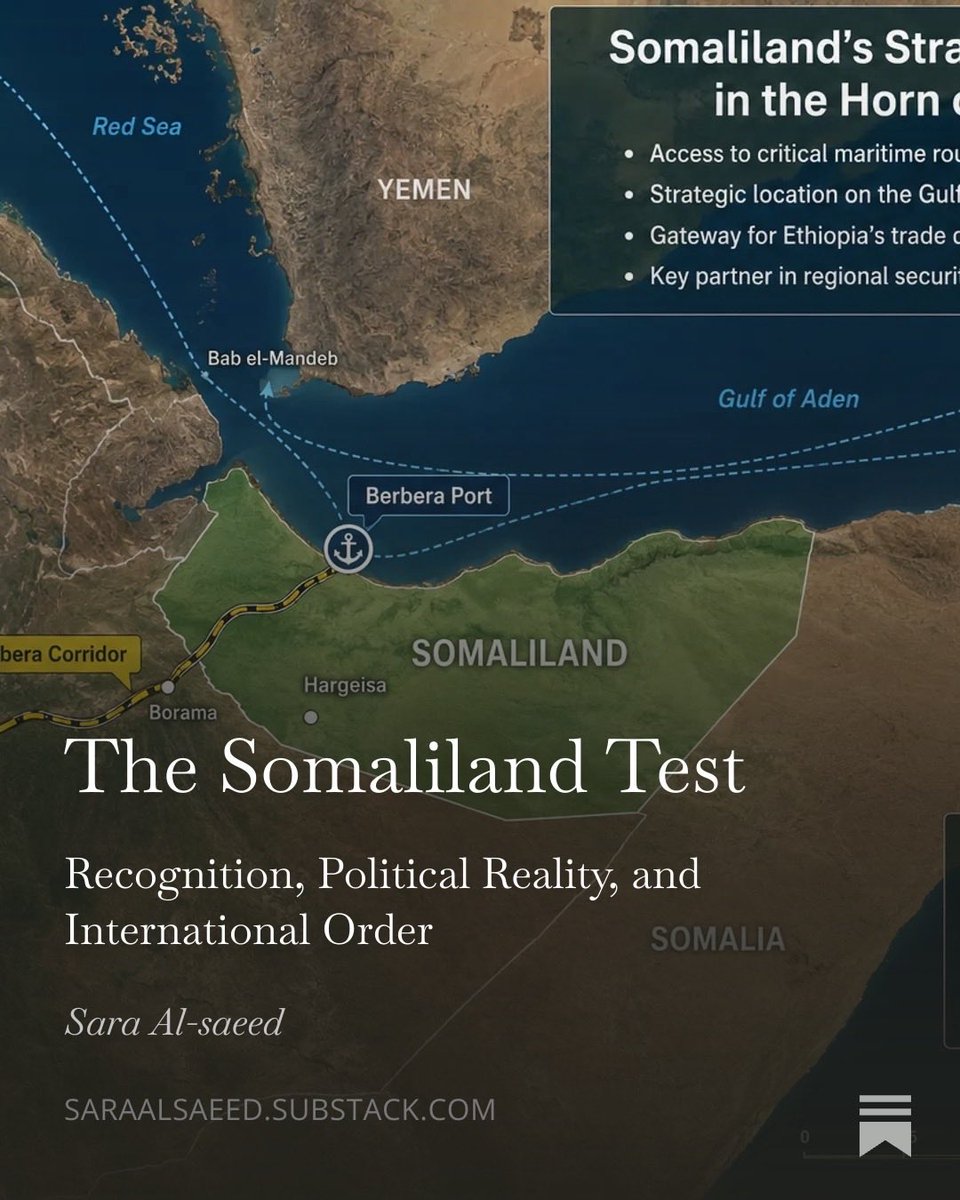
Here is an intelligent and nuanced read on the Somaliland recognition debate that is simply outstanding.
By @saraalsaeed91
Go on and read it.
https://t.co/fRoD0Soa9J
Strategic interests, regional stability, historical precedent, and geopolitical calculation all influence recognition decisions. States remain free to determine whom they recognise, and no international institution can compel them to act otherwise. https://t.co/KJVU9ljH4B
Can a political entity govern itself effectively for more than three decades and still remain outside the community of recognised states? In my latest article, The #Somaliland Test: Recognition, Political Reality, and International Order, I argue that the central question is no longer simply whether #Somaliland should be recognised. It is whether the international system still possesses a coherent standard for recognising enduring political realities. The article examines the intersection of international law, geopolitics, and state recognition, and asks what prolonged non-recognition means for the credibility of the international order itself.
#Somaliland #HornOfAfrica #InternationalLaw #Geopolitics #InternationalRelations
https://t.co/iktJfKUtg6
For Ethiopia, whose dependence on Djibouti remains a structural economic vulnerability, Berbera represents an opportunity to diversify maritime access and strengthen long-term economic resilience.
https://t.co/mVaoAttfhT
One should be wary of reasoning in terms of “international axes”: Somalilanders possess a profound sense of sovereignty and the conviction that they control their own destiny, and that an alliance is never an allegiance. https://t.co/NYMo3VrP8r
"<It quickly became evident that being a model pupil would not suffice to obtain recognition from the United Nations, which was awaiting recognition from the regional organisations of which Somalia is a member: IGAD and the Arab League." Géraldine Pinauldt https://t.co/NYMo3VrP8r
French cooperation, which arrived later, is also conducting a heritage enhancement project there, though it should be recalled that France was the first state to assist the emerging Somaliland army in the early 1990s by occasionally...by G. Pinauldt https://t.co/NYMo3VrP8r
“It’s our objective and our attention to work hard to make sure more countries to come and recognise Somaliland”
Says Somaliland’s former foreign minister, Mohamed Bihi Yonis
Congratulations to the United States on its 250th Anniversary! The Republic of Somaliland stands with the free world. Here's to liberty, partnership, peace, and a brighter future for all.
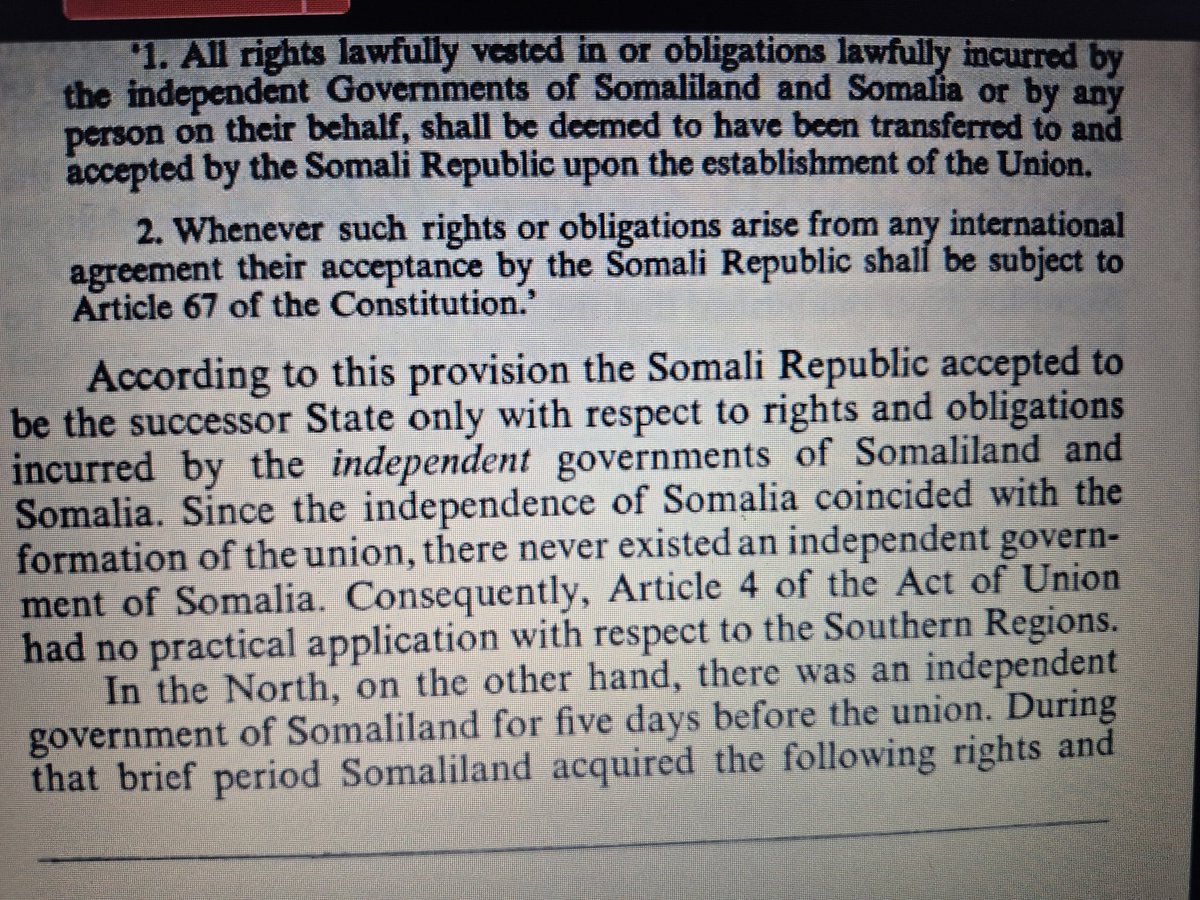
The last Constitutional development was the enactment of the Somaliland Order in Council, 1960, with the Constitution of the independent State of Somaliland annexed to it.