IJLT is a bi-annual, student-edited, peer-reviewed, open-access journal on law & technology published by National Law School of India University, Bangalore.
In 19(2)'s 4th article, Shimona Mohan & Sarthak Wadhwa analyse election safeguards for altered media, arguing that deepfakes are a communication-governance problem, and advancing a hybrid co-regulatory model. #techlaw#IJLT#electionfruad#deepfakes
Read: https://t.co/GUgWMwTXdc
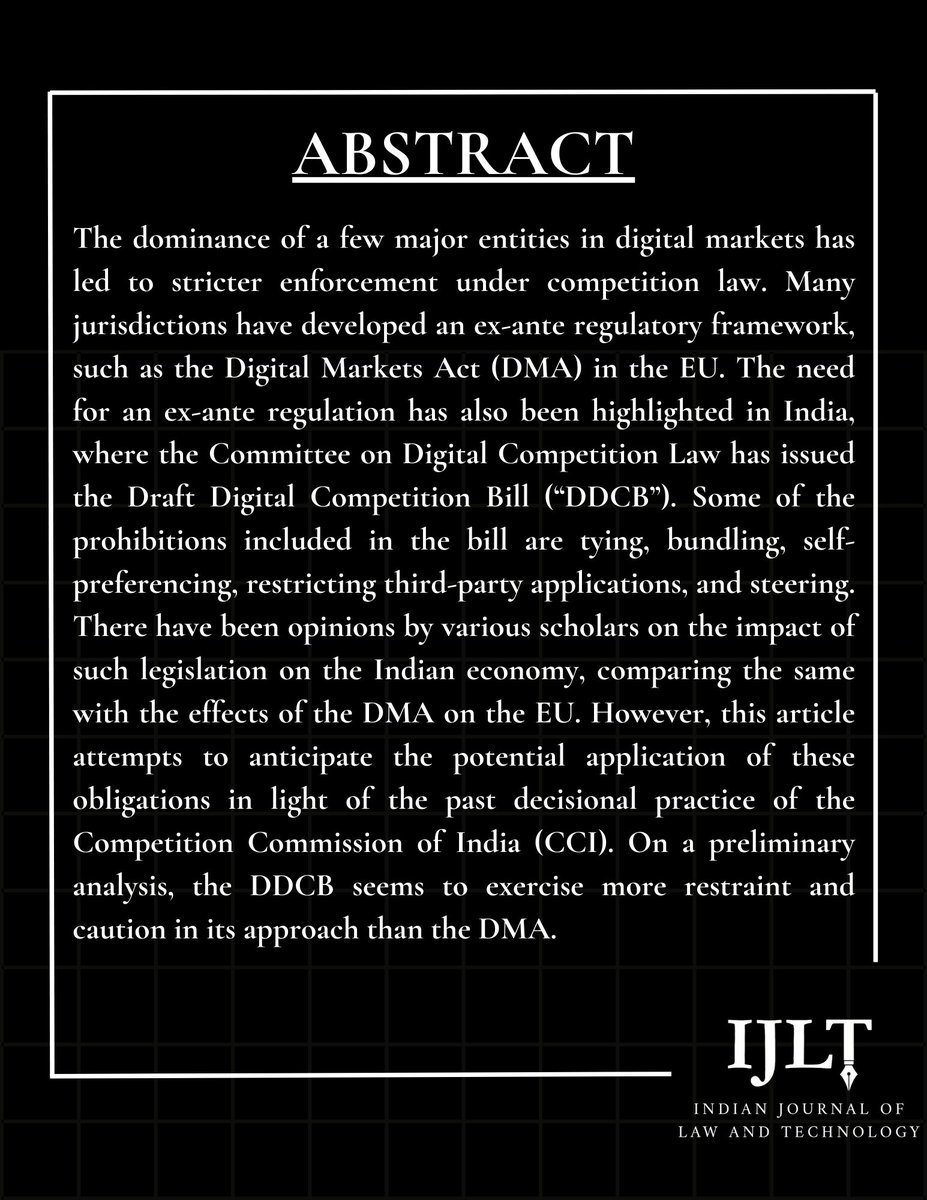
In 19(2)'s 3rd article, Pankhudi Khandelwal analyses the past decisional practice of the CCI to predict the impact of the Digital Competition Bill and explore the scope of likely change. #CCI#techlaw#IJLT#antitrust#DigitalCompetitionBill
Read: https://t.co/HrsPAmAmza
In 19(2)'s 2nd article, Eeshan Sonak and Saranya Ravindran analyse the shift to turnover-based GST for all online gaming, questioning its constitutionality. #GST#techlaw#IJLT#onlinegaming#tax
Read: https://t.co/qa3Ll8dmMc
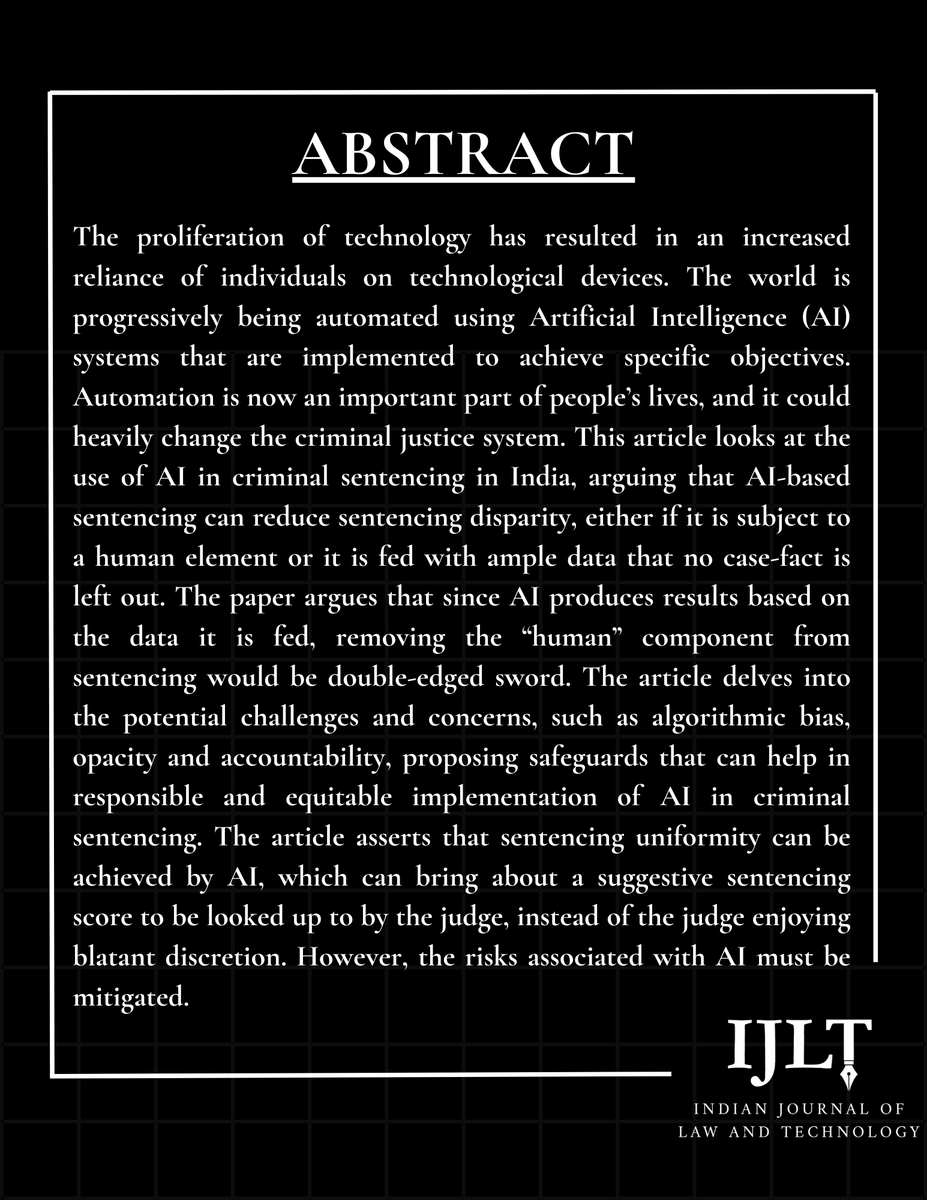
In 19(2)'s 1st article, Tasnimul Hassan argues that algorithmic tools could reduce sentencing disparity in India, and proposes safeguards against bias, opacity and unchecked discretion. #techlaw#AIethics#IJLT#AI
Read: https://t.co/V639k5OTmz
Volume 19 (2) of the Indian Journal of Law & Technology is out now! Dive into the latest insights at the nexus of law and technology. Visit https://t.co/jP2W5GL8em to explore. #techlaw#TMT#techpolicy#NLSIU
In 19(1)'s 5th article Sohini Banerjee and Pratik Datta review and critically analyse ‘The Future of Money: How the Digital Revolution is Transforming Currencies and Finance’ by Eswar Prasad. #crypto#DigitalAssets#cryptocurrency#tech#IJLT
Read: https://t.co/MXpfM9edNY
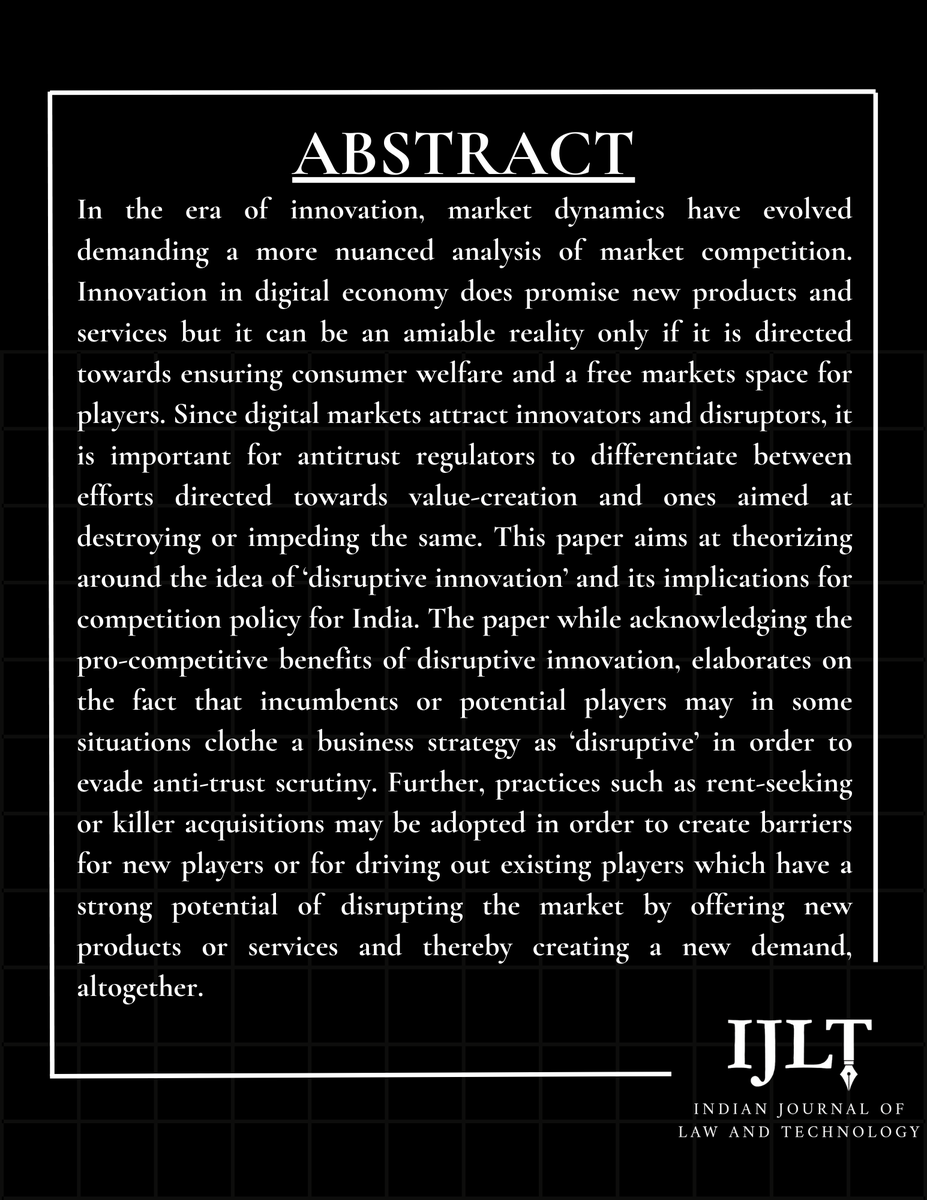
In 19(1)'s 3rd article Sudhanshu Kumar and Garima Gupta explore how competition policy must respond to disruptive innovations. #antitrust#cci#techlaw#IJLT#competitioncommission
Read: https://t.co/j9bzLhiAW2
In 19(1)'s 2nd article Sejal Chandak argues in favour of urgent legal reform to safeguard against gender-based algorithmic discrimination in workplaces. #employmentlaw#DataProtection#Equality#techlaw#IJLT
Read: https://t.co/qDlvlUJahE
In 19(1)'s 1st article Vasudev Devadasan cites India's framework to argue that safe harbour pertains to "secondary liability" and is conceptually distinct from compliance with "direct statutory obligations". #techlaw#platformliability#IJLT
Read: https://t.co/GwtzTn0GJa
Volume 19 (1) of the Indian Journal of Law & Technology is out now! Dive into the latest insights at the nexus of law and technology. Visit https://t.co/jP2W5GLG3U to explore. #techlaw#TMT#techpolicy#NLSIU
The SLR Board of 2024-25 is thrilled to announce the 2nd Edition of the SLR Workshop! This year, we will be hosting Dr Siddharth Narrain, who has worked extensively on public law, law and media, and human rights law. We will be releasing the registration link for the talk soon!
In this post, Kushagra Tiwari explores how AI training data opt-out mechanisms exacerbate global inequality, consolidate Western tech power and embed biases. He proposes solutions, including diversity standards, collaborative models, and new IP frameworks. #AI#Equality#techlaw
In this post, Harshal Chhabra and Arihant Sethia advocate for patent law reforms to address AI-generated inventions. Their 'Innovation Oversight' approach balances AI innovation and equitable access. #AI#IPRights#IJLT#techlaw
Read the post here: https://t.co/L1CMYfvLnJ
In this post, Shobhit S. from @CCGNLUD argues that Digital Personal Data Protection Act, 2023 facilitates opaque employee surveillance and fails to guarantee rights in connection with automated decision-making and data portability. Read this post here: https://t.co/naehUB9xSF
IJLT is accepting submissions on a rolling basis for both its 20th Volume and online Blog.
The Submission guidelines of the journal and the blog can be found on our website. Please contact us for any query regarding the review and publication process.
#callforpapers#techlaw
In this post, @riddhipvyas95 and @anmol_bharuka98 recommend modernization and consolidation of regulations related to e-signatures in India.
(The authors are Research Fellows at @AMS_Shardul.)
Read this post here: https://t.co/9NhIzhkBfh
In this post, Akshat Agarwal and Aditya Bhargava explore the inconsistencies in the Indian jurisprudence on personality rights with emphasis on the recent case of T-Series (Super Cassettes) v. Dreamline Reality.
Read the post here: https://t.co/ixxRXqrjtT