You will start seeing multiple such posts in next couple of years, you have to make sure this shouldn't get under your skin.
They will stab you the moment they will get an opportunity.
History is testament for this !
Unlike the much exaggerated Sati, the Chinese Xunjie or Widow Suicide system killed lakhs of women.
Widows were forced to starve themselves to death or poisoned so they didn't have sex after the husband's death. The Chinese society built thousands of arches (called Paifamg) to glorify the practice.
But literally nobody even knows about it today because information & media are frauds. Hence we must share it.
Ok we begin 🇮🇳,
A project that aims to kill corruption, babu culture, bureaucratic bottlenecks
that are slowing India down.
Made with super powerful Sarvam AI 105B parameter models.
Demo video out soon.
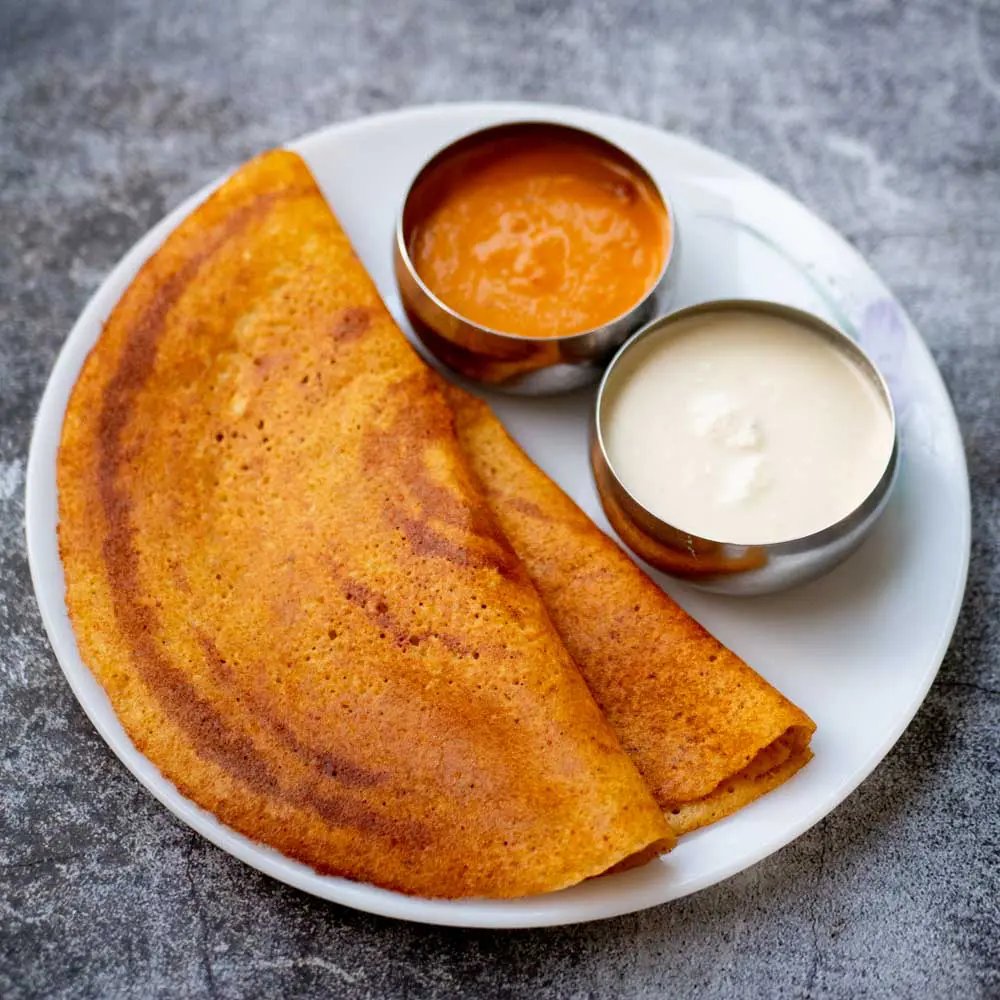
With Indian IT being the topic of the week, I thought it was only fair to trace the origins of the food that has probably powered more code, daily standups & production fixes than anything else: the dosa.
The history of the Dosa is a fascinating journey through time. What we eat today as a golden, paper-thin crepe was originally an ancient, rugged, protein-heavy pancake that relied completely on the structural biochemistry of an "aristocratic bean." The historical timeline highlights how the different regional iterations: Dosai, Thosai, Adai & Dosaka evolved over 2 millennia across South India.
The earliest references to Dosai (often spelled thosai/tocai) emerge from ancient Tamil Sangam literature. In this era, it was far from a delicate breakfast item. There were no flat iron tawas. Ancient Tamils cooked the batter on heavy, porous earthen clay platters/flat stones over open wood fires. Because clay plates retain uneven heat, spreading a batter thin was physically impossible.
Interestingly, the official status of the dosai was a non-fermented/minimally fermented pan-bread. It relied completely on the stickiness of the beans to bind the coarse grain together. It was dense, thick & highly filling, designed to sustain farmers & soldiers.
Running parallel to the early dosai was the Adai. Mentioned in the classic Sangam poem Madurai Kaanji, street vendors in the ancient city of Madurai sold these thick, griddled cakes to evening crowds. Unlike the dosai, which eventually streamlined into a rice & urad dal pair, the Adai retained its primitive, hyper-nutritious form. It used a combination of whatever lentils were on hand, pounded coarsely with red chilies & curry leaves & skipped fermentation entirely to provide immediate, heavy-duty protein release.
When the dish migrated into the royal Sanskrit texts of the Deccan region, it underwent a luxury upgrade. King Someshvara III compiled the Manasollasa, where he officially recorded the recipe for Dosaka:
Finely split, dehusked black gram (Masha) stone-ground into a velvety paste + Seasoned with asafoetida (hing), cumin, salt, and ginger juice + Cooked on a hot iron pan, then drenched in whole milk, ghee, & saffron.
The Dosaka was essentially a pure black gram cake. The royal chefs realized that if you whip urad dal paste vigorously, its proteins trap air bubbles naturally, giving you a soft, plush, cloud-like texture w/o needing an overnight rise.
If the ancient dosai & dosaka were thick, soft & spongy, how did we get the paper-crisp restaurant dosa? That change is a masterclass in food chemistry, pioneered by the cooks of Udupi, Karnataka, in the late 19th & early 20th centuries.
To achieve maximum crispiness, Udupi cooks radically flipped the grain math. They slashed the % of urad dal & spiked the batter with polished white rice & a handful of poha (flattened rice)/methi (fenugreek) seeds. When this rice-heavy, long-fermented batter hits a blazing hot, oiled iron tawa, the water vaporizes instantly. The starches in the rice undergo gelatinization & subsequent dehydration, locking into a rigid, brittle, wafer-thin matrix.
To summarize, the word dosa is not a modern invention, it describes a 2000 yr old evolutionary branch of South Indian culinary science. It started as a thick, sustaining bean-bread cooked on clay pots, transformed into a decadent, milk-infused delicacy for Chalukyan kings & was eventually re-engineered with high-starch physics by Udupi chefs to become the thin, golden, globally recognized icon it is today.
The concept of time travel in ancient Indian texts was written thousands of years ago. Everyone is familiar with Einstein's Theory of Relativity and the Hollywood movie Interstellar, which explains how time behaves in deep space. But did you know there is a mind-bending story where a king traveled into the future? Let me tell you about it.
The story begins with King Kakudmi, the ruler of an advanced empire called Kushasthali. He had a divine daughter named Revati. She was so accomplished and virtuous that no one on Earth was considered a match for her. The King was worried about who he could get his daughter married to. He decided to visit the creator of the universe, Lord Brahma, to seek an answer himself.
The King and Revati boarded their Vimana (aerial vehicle), left Earth, and headed straight for Brahmaloka. Brahmaloka—the cosmic realm of Lord Brahma—was located in deep space, far beyond the dimensions of this Earth. When they arrived, Lord Brahma was listening to a musical concert performed by the Gandharvas. The King decided to wait until the music finished. He waited for what he perceived to be only a short while.
As soon as the music ended, the King bowed down and showed Lord Brahma a list of powerful kings on Earth, asking, "Lord, which of these would be the right match for my daughter?"
Hearing this, Lord Brahma laughed aloud. He said, "O King, the people on your list are no longer alive. Forget their families; there is no one left even to utter the names of their empires."
Lord Brahma revealed something that laid the foundation for modern science. He said, "You think you have been here for only a short while, but while you were here, 27 Chatur Yugas (millions of years) have passed on Earth."
The ground slipped from under the King's feet. His entire empire, his people, and his generations had all turned to dust in the ashes of history. Lord Brahma even explained that the Yuga (era) on Earth had changed. The height, lifespan, and strength of the humans there were now much less than before. The King had literally crossed space-time and arrived in Earth's future.
This is exactly like Einstein's theory of time dilation, where time flows at different speeds due to gravity and space. This was clearly written in the Vishnu Purana centuries ago. Lord Brahma sent them back to Earth, where the Dvapara Yuga was then taking place, and there, Revati was married to Balarama, the elder brother of Lord Krishna.
But now, think about this: What if the lotus flower on which Lord Brahma sits is actually a black hole? What if the Gandharvas' musical concert is the sound of a neutron star? What if modern scientific theories are hidden within the stories of ancient India?
📽️harideepuniverse ✨
It's India 's Parliament that decides what laws are good for our country and not USA Senators. We don't need your foreign contributions to engineer conversions and run your agenda.
Who is targeting iPhone factories in India (Thread)
In 2020, over 90% of iPhones were made in China.
But this one supply chain model hurt Apple during covid
So after covid, Apple started shifting its factories in India and with this something mysterious with them started
1/17
Shocking: In a restaurant in Wuhan province of CCP's China, a Shang clan woman was beaten, slapped and spat upon by a shi clan man just because she mistakenly sat on a seat reserved for upper caste people.
In Jyotisha, Venus is called Shukra. It governs desire, relationships, the reproductive system, and the kidneys.
For years I have been noting a pattern in male charts where Venus is blemished. What I found behind it was not always obvious.
Many of these cases carried a history of multiple sexual unions, before marriage, after marriage, or both. Not as a moral judgment. As a karmic fact.
Our Shastras have always held the womb as sacred ground. Not metaphorically. Literally.
Every union leaves an energetic imprint on that space.
The ancients called this pollution of the kshetra, the field.
Science is now beginning to circle this territory too, finding traces of foreign biological material in women's bodies, though it is still working out what that means.
What Jyotisha already mapped centuries ago is the consequence.
The body's great purifier is the kidney.
When the field is polluted across lifetimes or within one life, the karma of that impurity seeks an outlet.
I have seen it show up as kidney or eye disease, in the native themselves or in those closest to them.
This is not about shame. It is about understanding that purity in the Shastra sense was never a social rule. It was always a karmic hygiene.
ISRAEL PUT ISRAEL FIRST. Truly admirable trait. No sacrifice is big enough when it comes to securing its own national interest.
Read ISRAEL'S MINISTER OF NATIONAL SECURITY's blunt message.