Over time, Indian cinema has gradually moved away from grand philosophical ideas and Jeevan Darshan (the philosophy of life), shifting its focus towards the practical realities of everyday existence. Films today are more concerned with personal struggles, social issues, relationships, and the challenges of modern life. In this shift, cinema seems to have traded its deeper exploration of life's meaning and purpose for a more immediate engagement with the realities of the world around us.
For the first time in history, we may soon see people writing “Taught by a machine” in their bios and CVs.
I’d love to see how two generations of students turn out- one taught entirely by AI, the other with human teachers along the way.
Who will be smarter? And who will understand humans better?
When Speaking Your Native Language Was Banned as "Vulgar"
In late 19th-century of Madras Presidency, traditional Telugu scholars (Classicists) labelled spoken, colloquial Telugu as grāmya ("vulgar" or "rustic") and banned it from literature, school textbooks, and public examinations. Teachers forced children from poor households to memorize archaic 11th-century poetic forms (granthika). When reformers fought to introduce modern spoken Telugu, Madras University formally rejected modern Telugu for university composition in 1914.
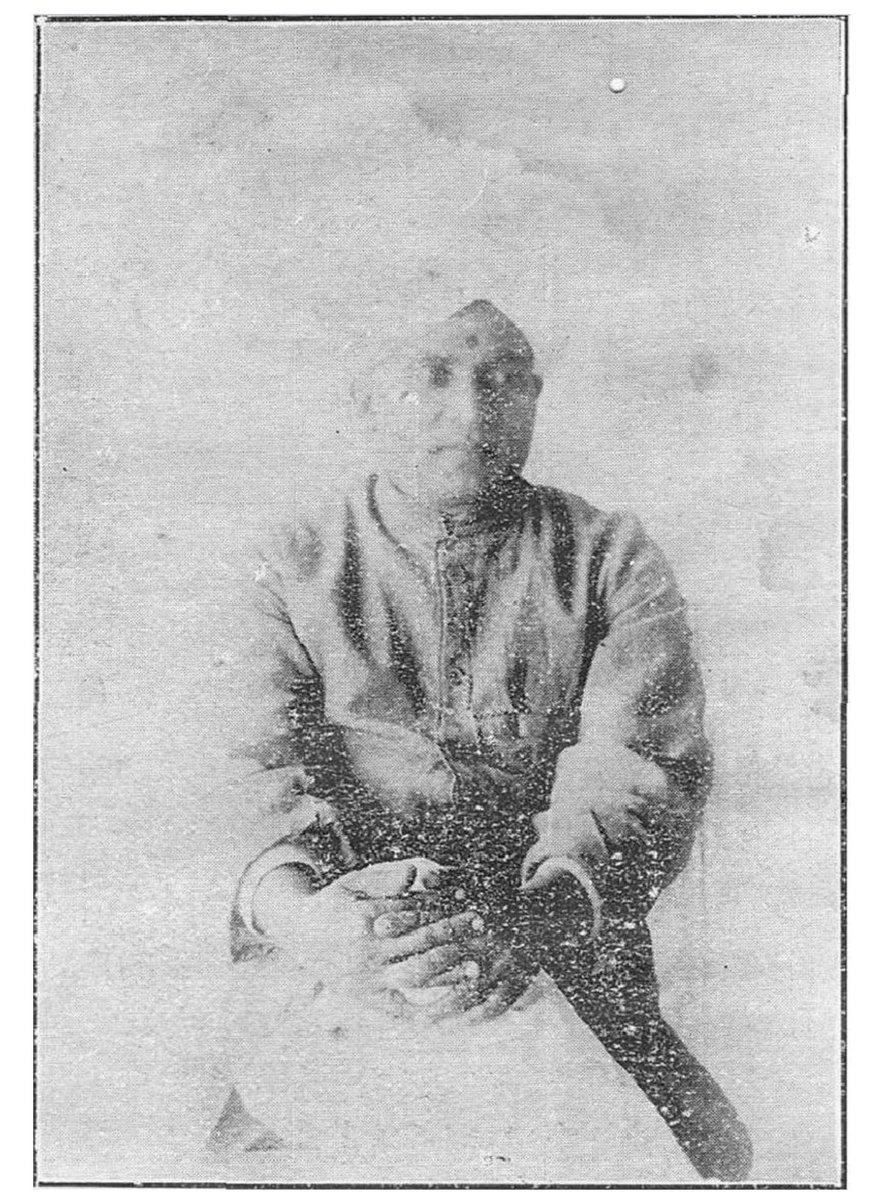
- 1911 portrait of Gidugu Venkata Ramamurthy, a reformer who advocated spoken Telugu in writing and education. He was directly involved in the composition debate discussed in Gurajada’s Minute of Dissent
Grammar and semantics go hand in hand. Many a time, when you start following grammatical rules, you often stumble upon some concepts that demand different structures. Therefore, the normal, ordinary rule that was till now operating and governing the same set of structures starts giving space to a new form of rule that does not occur because of any specific, exceptional grammatical rule, but because of the semantic difference that now demands a new rule.
Gossip is the standard operating procedure of Indian systems.
Too much of Indian democracy run on gossip,like whispers in corridors and selective leaks. It's the rumours about who said what, and informal networks that matter more than the official processes.
The National Archives of India @IN_Archives is closed on Sundays, and it shuts around 5:30 in the evening. So when is a working professional actually supposed to visit? Most people with regular office jobs are at work during exactly those hours.
If a place like the National Archives stayed open till 10 or 11 at night and was open on Sundays as well, it could be much more useful for working professionals who are interested in history, research, or simply want to explore the archives but can’t take time off during the week.
It’s true that Hindi is increasingly mixed with English, with English words making up as much as 70–80% of everyday speech in some specific contexts. But this pattern is almost urban. In much of the rural Hindi belt, the share is closer to 10–20%, and even those English words are often heavily localised in pronunciation and usage.
This is creating a split in contemporary Hindi. Urban youth and rural youth are beginning to speak noticeably different varieties of the language. One variety leans toward Hinglish, with frequent and fluid English mixing, while the other remains closer to Hindi but incorporates a smaller set of localised English terms.
My sense is that within a generation, Hindi may develop two prominent forms, one being Hinglish, and the other a more regionally rooted Hindi in which English-derived words are adapted so heavily to local phonology that they may barely sound recognisable in their original form.
When the younger generation speaks any Indian language with upwards of 70-8% English words inserted in between that is no longer “Linguistic modernity”, it is loss of language! Why not just speak English if you’re inserting so many English words in your language?
There are many reasons, but in my opinion, the dilemma of Hindi and its dialects solidified with colonial India’s first linguistic survey, in which languages and dialects were given a new form of grouping by George Grierson. In the first few decades of the last century, we saw how various languages and dialects were grouped under one rubric, which we sustained through our decadal Census. I see the continuation of this practice as a reason for the real and non-real mother tongue issue.
@ikrishna_pandey Sir I have a question to ask you regarding Hindi Language. How did the word Hindi came to be associated with a language ? There are lot who consider their real mother tongue as braj,Awadhi and ask for 8thschedule status for those languages, your thougths on this ?
हिंदी का लिखित स्वरूप भी उसके बोलचाल के स्वरूप से भिन्न है l हिंदी और उर्दू का भेद ही उसके लिखित स्वरूप पर निर्भर करता है (शब्द और लिपि, दोनों ही स्तरों पर ) | पर यहाँ चौंकाने वाली बात यह है कि हिंदी ने यह योग्यता बहुत ही कम समय में प्राप्त की l हिंदी के पास अपनी हजारों वर्षों की कोई थाती नहीं है l
India's lingusitic orthodoxy lies in denying it's lingusitic modernity.
India often treats its languages as ancient, fixed, and tied to tradition, while ignoring how modern and constantly changing they actually are.
Linguistic orthodoxy means rigid beliefs about language , like ideas about what counts as “pure,” “correct,” “classical,” or “authentic.” In India this can appear in arguments over “proper Hindi,” “pure Tamil,” Urdu vs. Hindi scripts, or anxiety about English influence.
Denying its linguistic modernity means refusing to acknowledge that Indian languages are already deeply modern.
They are mixed, evolving, urban, digital, influenced by migration, media, technology, and contact with other languages.
Hindi was first a geographical-cultural term. For example, Al-Hind was used in Arabic to refer to India, meaning the land of Hind. Also, is often said that Hindi/Hindu is Persian word, though Hindi/Hindi is a digression of the Sanskrit word Sindhi/Sindhu.
Further, Khariboli did not suddenly become Hindi. The base language was the language of the Delhi region, but it had many competing forms and names. For instance Hindavi was one of them. Its evolution is loosely as follows:
Sanskrit and/or Prakrits → Apabhramsha → Khariboli/Old Hindavi → Hindustani → Modern Hindi and Urdu
@ikrishna_pandey Sir I have a question to ask you regarding Hindi Language. How did the khadiboli language came to be known as Hindi language or how did the word Hindi came to be associated with a language ?
@ikrishna_pandey It is the most modern Indian language. Very English like in its ability to absorb vocabulary.
No wonder it is the fastest growing language also (50 crore speakers now).
@saurabhchandra True. And, the more it gets resistance, in any form, the more it becomes efficient. Hindi's present may be doubtful, but it's future isn't.
Hindi is probably the least “pure” major language in India.
It absorbed Persian, Arabic, Sanskrit and Now English words.
It broke every rule of linguistic purity and became modern because of it.
In one century it became the language of administration, cinema, migration, politics, markets, and everyday survival.
Yet Hindi is still the most casually blamed language in India.
India respects English influence, and celebrates Sanskrit influence.
But treats Hindi adaptation like contamination.